 This image is released under a CC BY-NC-SA 4.0
Licence
This image is released under a CC BY-NC-SA 4.0
Licence
License this image for commercial use at Science and Society Picture Library
LicenseThis image is released under a CC BY-NC-SA 4.0
Licence
License this image for commercial use at Science and Society Picture Library
LicenseThis image is released under a CC BY-NC-SA 4.0
Licence
License this image for commercial use at Science and Society Picture Library
License
Science Museum Group
© The Board of Trustees of the Science Museum
Science Museum Group
© The Board of Trustees of the Science Museum
Science Museum Group
© The Board of Trustees of the Science Museum
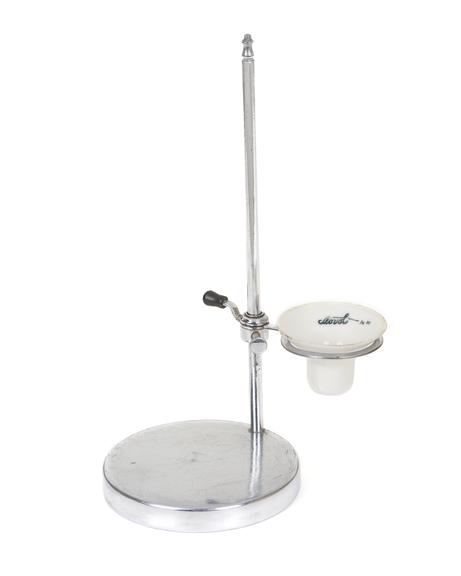
Local anaesthestic mixing thimble, for use with Novocaine tablets, porcelain, English manufacture, 1920-1940
In the 1880s, before it was made illegal, cocaine was a popular choice for local pain relief. Administered by injection to numb specific parts of the body, surgeons were able to operate on patients while they were awake.
Novocain or procaine is a chemical cousin of cocaine. Developed in 1905, by Alfred Einhorn (1856-1917) it is not addictive like cocaine. The name 'novocain' is partly form the Latin for new (nov) and caine was a common name for chemicals known as alkaloids used as anaesthetics. Novocain's action is for very short periods of time. Heinrich Braun (1862-1934), a German surgeon was the first to use it in 1905.
Related Objects
Two complete sets
Ceramic pot lid for areca nut Tooth paste
Ceramic pot lid for white cherry tooth paste