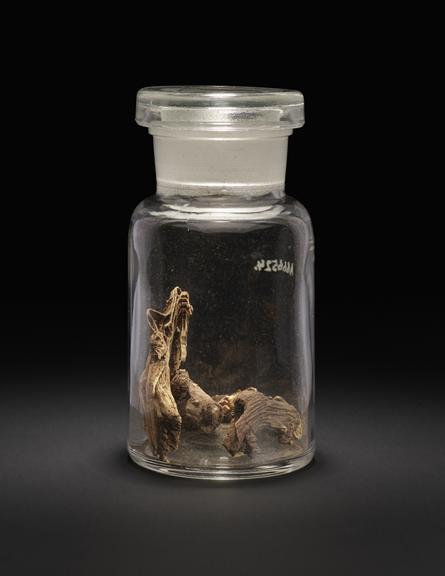
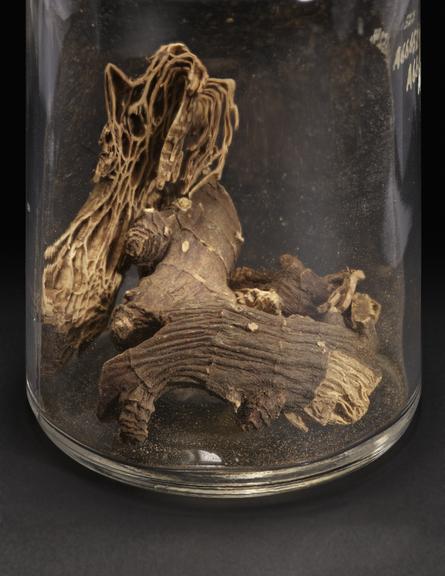

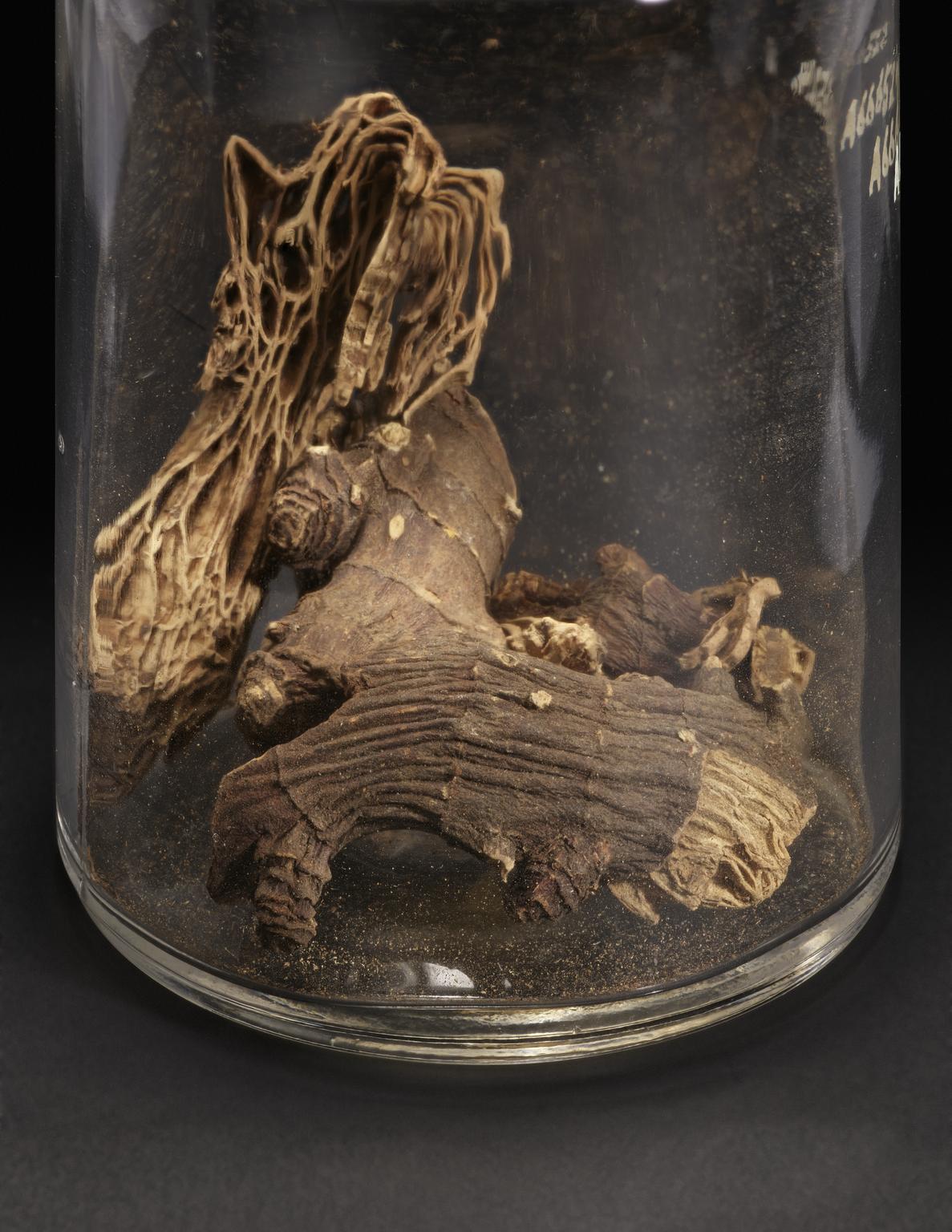
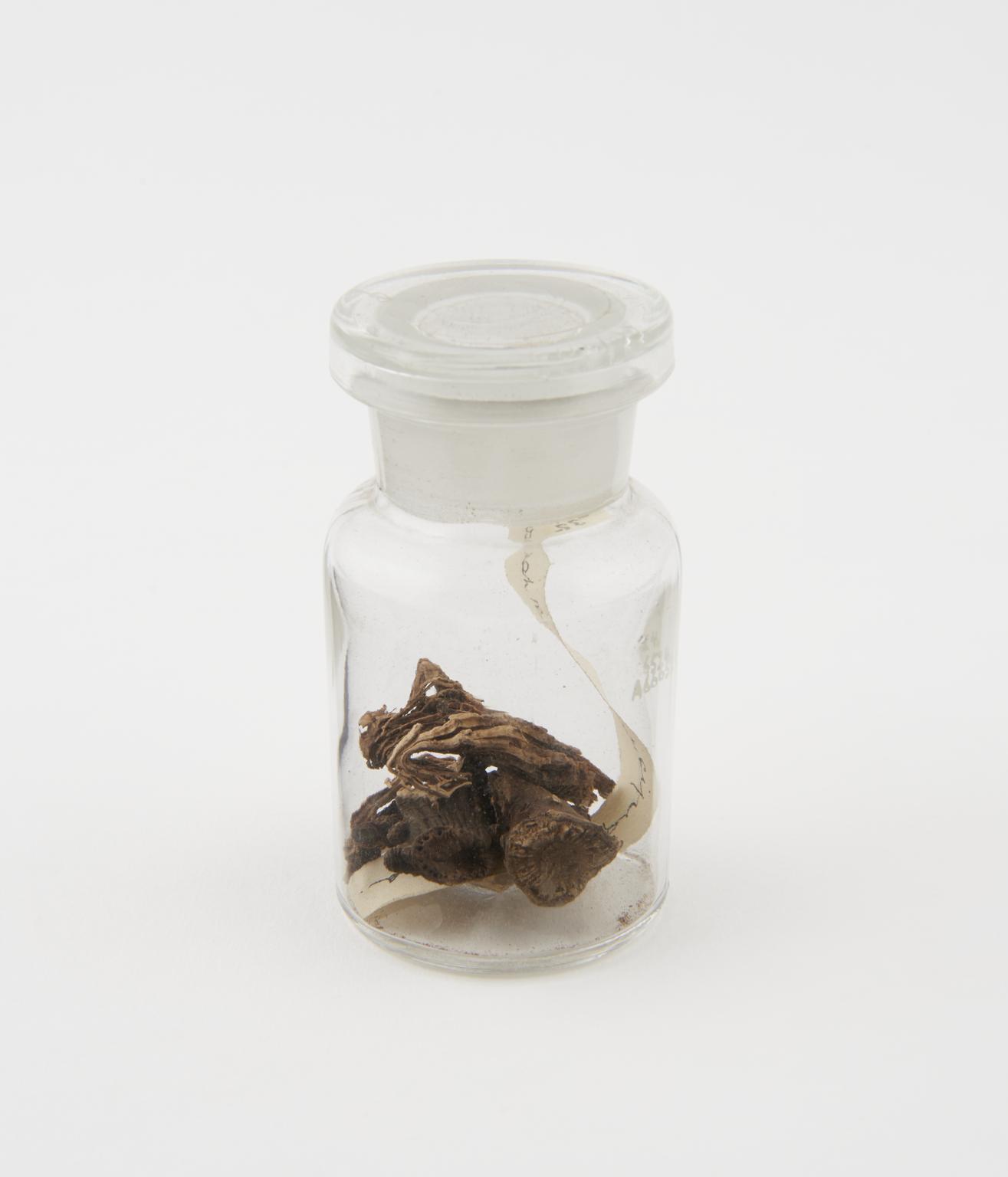
Glass specimen jar and dish containing black snakeroot or cohosh root (cimicifuga racemosa) used by the Penobscot Indigenous people

Made:
1860-1940 in North America
maker:
Unknown
Glass specimen jar and dish containing black snakeroot or cohosh root (cimicifuga racemosa) used by the Penobscot Indigenous people Glass specimen jar and dish containing black snakeroot or cohosh root (cimicifuga racemosa) used by the Penobscot Indigenous people

Creative Commons LicenseThis image is released under a CC BY-NC-SA 4.0 Licence

License this image for commercial use at Science and Society Picture Library

License

Creative Commons LicenseThis image is released under a CC BY-NC-SA 4.0 Licence

License this image for commercial use at Science and Society Picture Library

License

Science Museum Group
© The Board of Trustees of the Science Museum

Science Museum Group
© The Board of Trustees of the Science Museum

Glass specimen jar and dish containing black snakeroot used by the Penobscot Indigenous people in North America

Black snakeroot or black cohosh (Cimicifuga racemosa) is a plant native to North America. It is not known who and how exactly collected these samples, but it is recorded that they were used by the Penobscot. The Penobscot (Pαnawάhpskewi) are an Indigenous people in North America from the Northeastern Woodlands region. Today they are a federally recognized nation in the Unites States and part of the Wabanaki Alliance whose nations historically spoke Algonquian languages.

Black snakeroot has been used in traditional North American Indigenous medicine for various purposes such as relieving menstrual cramps, alleviating menopause symptoms or treating kidney related illnesses. It was also traditionally used in parts of the Northeast to stimulate labour and manage the termination of pregnancies. Today, the root is widely available as a dietary supplement in the form of capsules, liquids or teas. It is not recommended for use by people who have liver problems, or who are pregnant or breastfeeding.
Details

Category:
Ethnography and Folk Medicine
Collection:
Sir Henry Wellcome's Museum Collection
Object Number:
A666524
Materials:
glass, clear, paper and plant extract
Measurements:
depth 14 mm
diameter 49 mm
plate: length 103 mm
plate: width 64 mm
plate: thickness 3 mm
type:
container

Parts

Glass specimen dish containing black snakeroot used by the Penobscot, USA

Glass specimen dish containing black snakeroot or cohosh root (cimicifuga racemosa) used by the Penobscot, USA

Glass specimen dish containing black snakeroot used by the Penobscot, USA

More

Black snakeroot or black cohosh (Cimicifuga racemosa) is a plant native to North America. It is not known who and how exactly collected these samples, but it is recorded that they were used by the Penobscot. The Penobscot (Pαnawάhpskewi) are an Indigenous people in North America from the Northeastern Woodlands region. Today they are a federally recognized nation in the Unites States and part of the Wabanaki Alliance whose nations historically spoke Algonquian languages.

Black snakeroot has been used in traditional North American Indigenous medicine for various purposes such as relieving menstrual cramps, alleviating menopause symptoms or treating kidney related illnesses. It was also traditionally used in parts of the Northeast to stimulate labour and manage the termination of pregnancies. Today, the root is widely available as a dietary supplement in the form of capsules, liquids or teas. It is not recommended for use by people who have liver problems, or who are pregnant or breastfeeding.
Materials:
glass and plant extract
Object Number:
A666524/1
type:
specimen jar and cohosh root

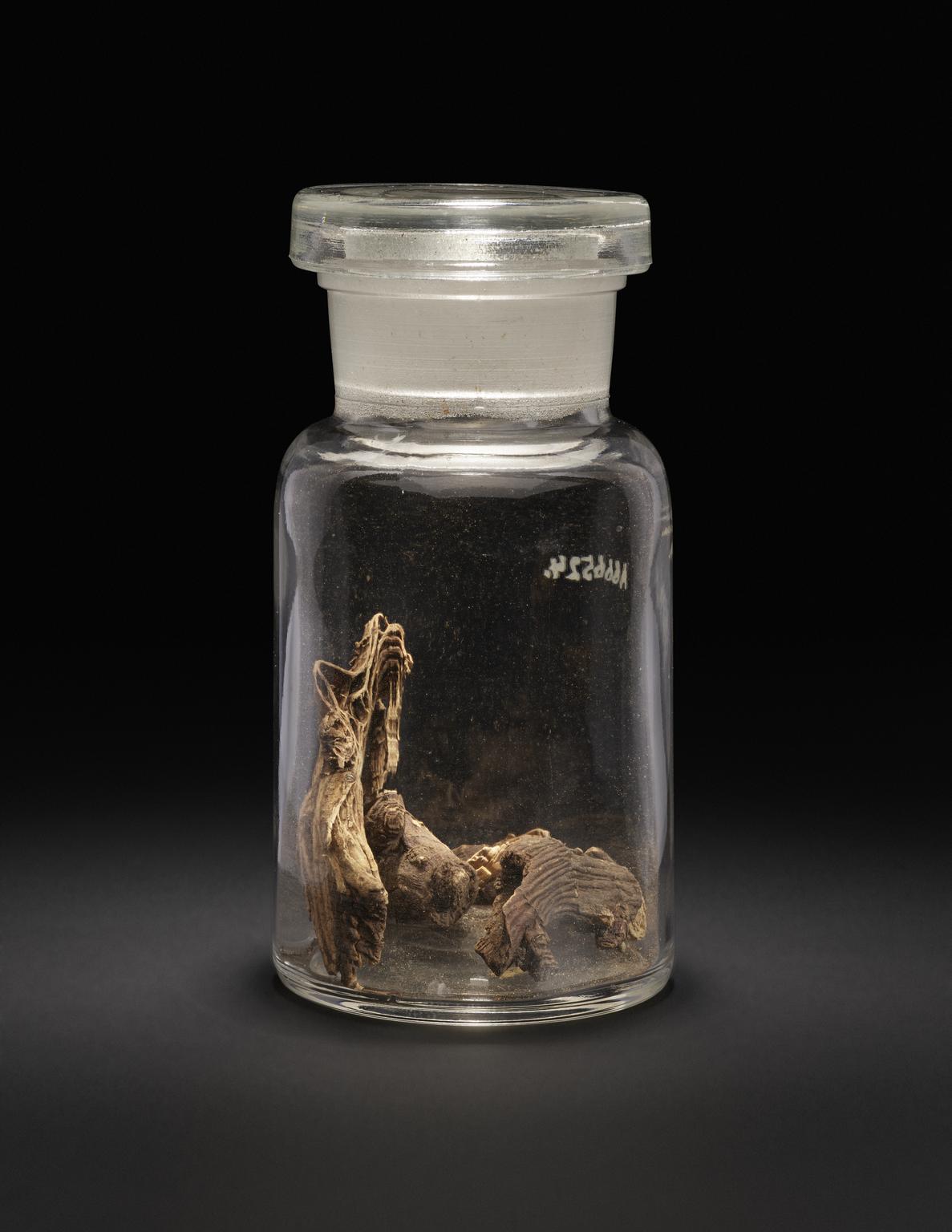
Glass specimen jar containing black snakeroot or cohosh root used by the Penobscot, North America

Glass specimen jar containing black snakeroot or cohosh root (Cimicifuga racemosa) used by the Penobscot, North America

More

Black snakeroot or black cohosh (Cimicifuga racemosa) is a plant native to North America. This glass bottle contains roots of the plant. It is not known who and how exactly collected these samples, but it is recorded that they were used by the Penobscot. The Penobscot (Pαnawάhpskewi) are an Indigenous people in North America from the Northeastern Woodlands region. Today they are a federally recognized nation in the Unites States and part of the Wabanaki Alliance whose nations historically spoke Algonquian languages.

Black snakeroot has been used in traditional North American Indigenous medicine for various purposes such as relieving menstrual cramps, alleviating menopause symptoms or treating kidney related illnesses. It was also traditionally used in parts of the Northeast to stimulate labour and manage the termination of pregnancies. Today, the root is widely available as a dietary supplement in the form of capsules, liquids or teas. It is not recommended for use by people who have liver problems, or who are pregnant or breastfeeding.
Measurements:
overall: 85 mm x 50 mm x 50 mm, 77 mm, .095 kg
Materials:
glass , plant extract and paper (fibre product)
Object Number:
A666524/2
type:
specimen jar and cohosh root
Image ©
The Board of Trustees of the Science Museum