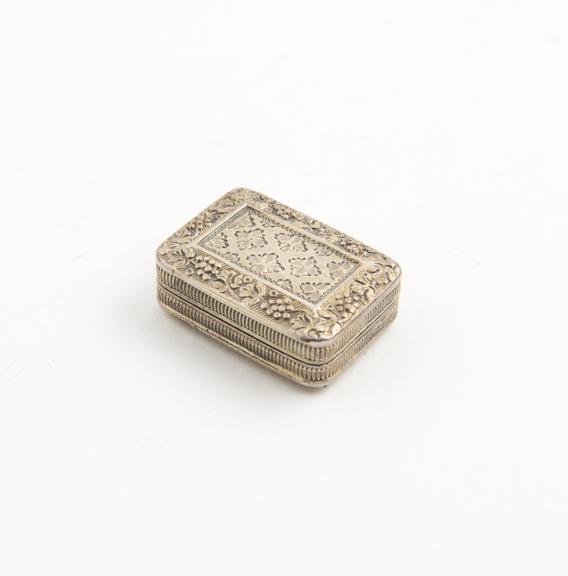
Vinaigrette, silver, gilded inside, perforated inner lid
- Made:
- 1820 in Birmingham
 This image is released under a CC BY-NC-SA 4.0
Licence
This image is released under a CC BY-NC-SA 4.0
Licence
License this image for commercial use at Science and Society Picture Library
License
Science Museum Group
© The Board of Trustees of the Science Museum
Silver vinaigrette, rectangular, with perforated inner lid, gilded inside, stamped L & Co., indicating the maker is probably Ledsom & Vale and hallmarked in Birmingham, 1820
Vinaigrettes were small containers used for holding fragrant substances, often dissolved in vinegar, which were popular amongst wealthier sections of the British population from the late 18th century through the mid-19th century. Many were designed in silver, within which a tiny piece of sponge, soaked in the pungent scent, was contained beneath a grill or perforated cover.
Originally carried by both sexes, though latterly mainly women, they could be kept in a pocket or at the end of a chain and be quickly accessed in the wearer encountered some of the foul smells that would be a familiar part of life during those times – particularly in urban areas. In an era when disease was thought to been carried in the air via foul-smelling ‘miasmas’, vinaigrettes were also seen as having protective properties. Accessed via a hinged lid, the scent might also be inhaled if the wearer was feeling ill or faint – much like smelling salts.
The L & Co. stamp indicates it was most probably made by Ledsom & Vale, silversmiths based in Birmingham from around 1818. The city was the country's main centre of vinaigrette manufacture, accounting for the majority of those made in the UK.
Details
- Category:
- Pharmacy-ware
- Collection:
- Sir Henry Wellcome's Museum Collection
- Object Number:
- A642103
- Measurements:
-
length 28 mm
width 21 mm
height 10 mm
- type:
- vinaigrettes