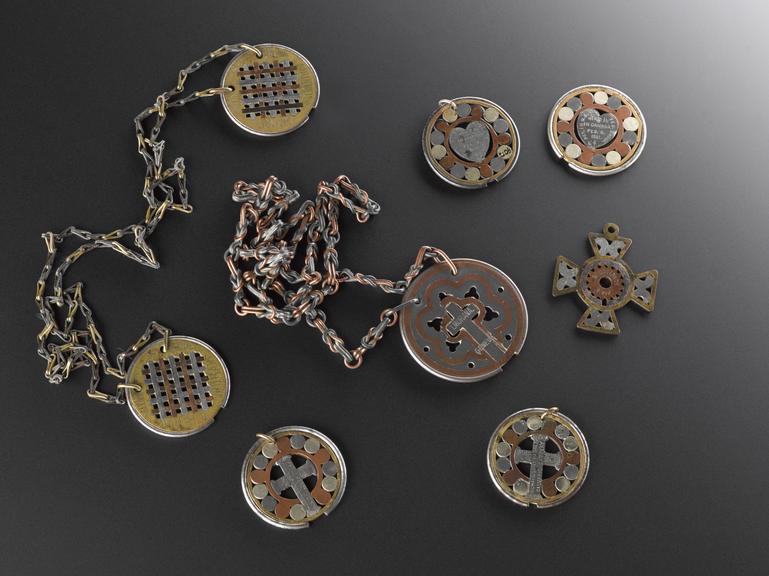
Electrotherapy amulet
- Made:
- 1881-1900 in United States


 This image is released under a CC BY-NC-SA 4.0
Licence
This image is released under a CC BY-NC-SA 4.0
Licence
License this image for commercial use at Science and Society Picture Library
LicenseThis image is released under a CC BY-NC-SA 4.0
Licence
License this image for commercial use at Science and Society Picture Library
LicenseThis image is released under a CC BY-NC-SA 4.0
Licence
License this image for commercial use at Science and Society Picture Library
LicenseThis image is released under a CC BY-NC-SA 4.0
Licence
License this image for commercial use at Science and Society Picture Library
License
Science Museum Group
© The Board of Trustees of the Science Museum
Science Museum Group
© The Board of Trustees of the Science Museum
Science Museum Group
© The Board of Trustees of the Science Museum
Science Museum Group Collection
© The Board of Trustees of the Science Museum
Richardson's galvanic amulet against diseases, copper, brass, steel, zinc and nickel(?), possibly USA, 1881-1900. PAT in US Feb 3 1880. R.D in Canda Feb 3 1881
Worn against the skin and in contact with sweat, amulets made up of a combination of metal alloys were believed to create a weak electrical charge, recharging the body's electrical supply. It was based on an ideal that electricity was responsible for healthy nerves and blood flow. Richardson's galvanic amluet was one of several on the UK and US markets that claimed to treat everything including low spirits, loss of appetite, back-ache, dizziness and flu.
Galvanic was a term used for the production of electricity from a chemical reaction.
Details
- Category:
- Therapeutics
- Collection:
- Sir Henry Wellcome's Museum Collection
- Object Number:
- A610587
- Materials:
- copper, brass, zinc, steel and nickel, ? material
- Measurements:
-
overall: 2 mm 41 mm, .018 kg
- type:
- galvanic amulets
- credit:
- Loan, Wellcome Trust
Related Objects
Ivory lancet case containing three lancets

Injecting gun for insulin syringe
Shagreen lancet case
