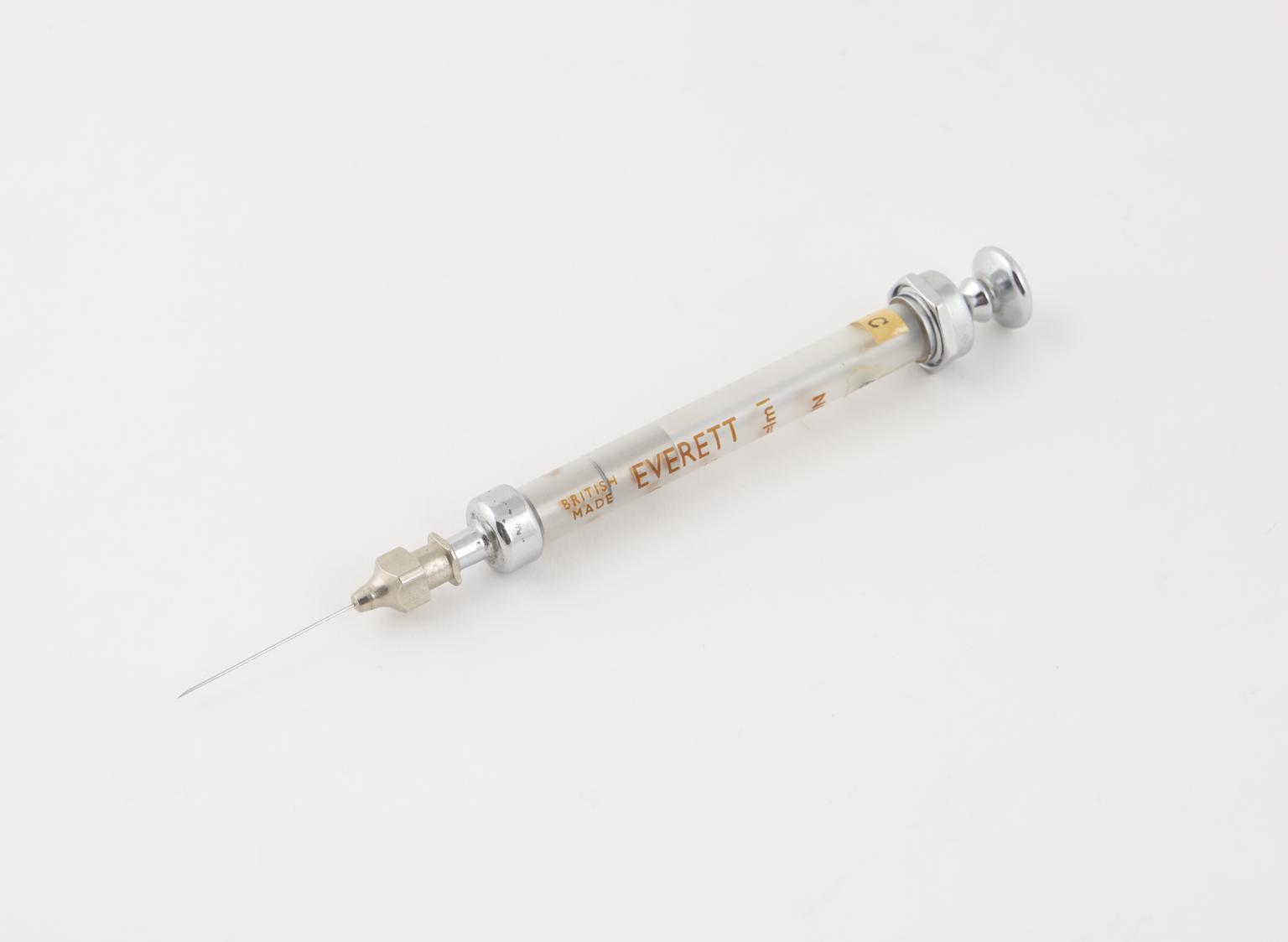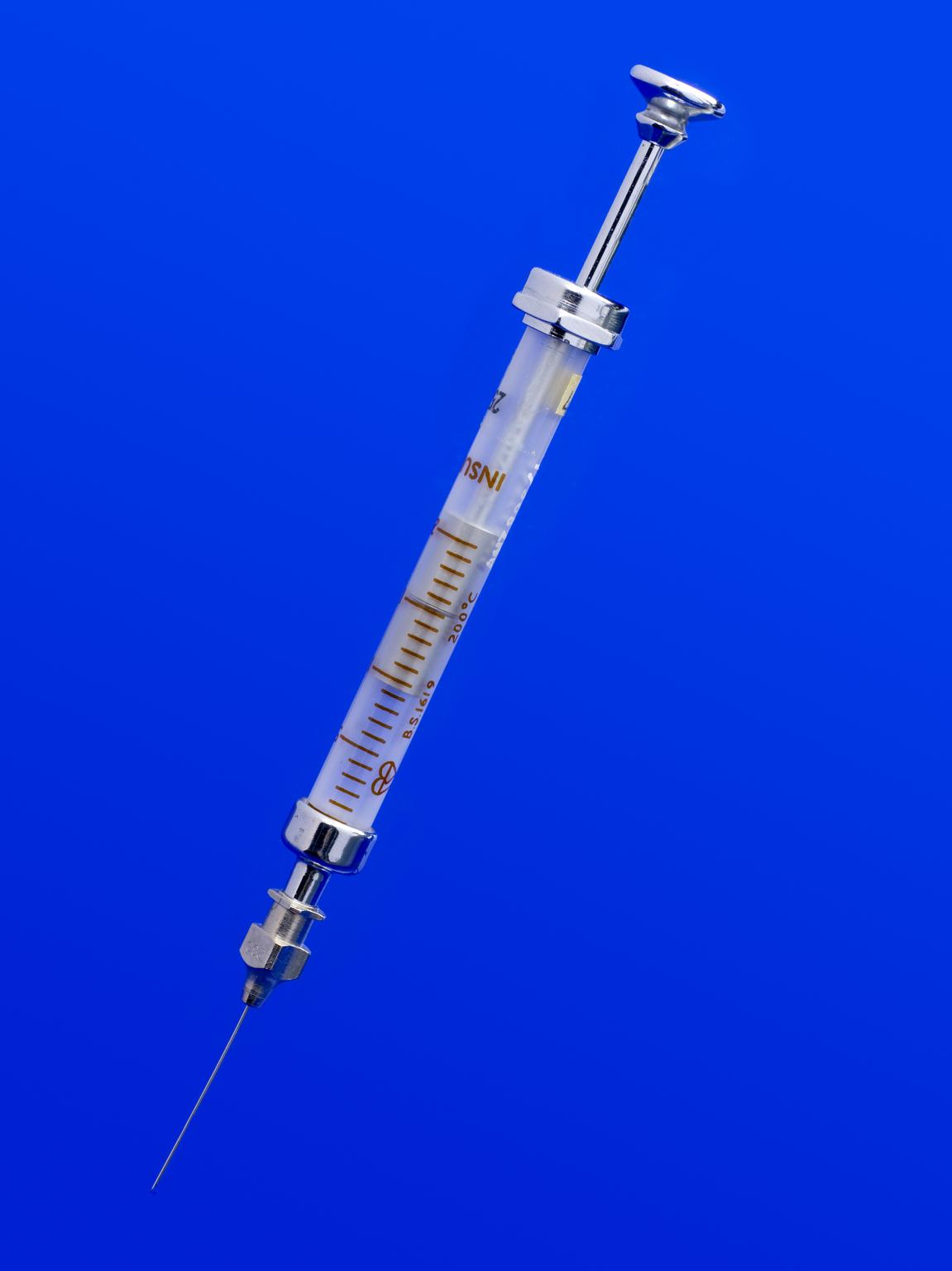

Hypodermic syringe

Hypodermic syringe

Creative Commons LicenseThis image is released under a CC BY-NC-SA 4.0 Licence

License this image for commercial use at Science and Society Picture Library

License

Science Museum Group Collection
© The Board of Trustees of the Science Museum
Hypodermic syringe, 1ml, for insulin, glass and chrome plated metal, boxed, by Everett, England, 1960-1970

Details

Category:
Therapeutics
Collection:
Sir Henry Wellcome's Museum Collection
Object Number:
A617808
Materials:
syringe, glass and syringe, metal (chrome plated)
Measurements:
box: length 30 mm
box: width 139 mm
box: height 26 mm
type:
hypodermic syringes

Parts

Hypodermic syringe for insulin, England, 1960-1970

Hypodermic syringe, 1ml, for insulin, glass and chrome plated metal, by Everett, England, 1960-1970

More

Diabetes is a condition where the pancreas cannot produce insulin, or enough insulin, to break down sugars in the body to pass to the cells to release energy. People with diabetes used metal and glass hypodermic syringes like this one to inject doses of insulin. Today syringes are made from plastic.

Measurements:
overall: 142 mm 14 mm, .02 kg
Materials:
glass , metal (unknown) and chromium plated
Object Number:
A617808/1
type:
hypodermic syringe
Image ©
The Board of Trustees of the Science Museum
Box for hypodermic syringe

Box for hypodermic syringe

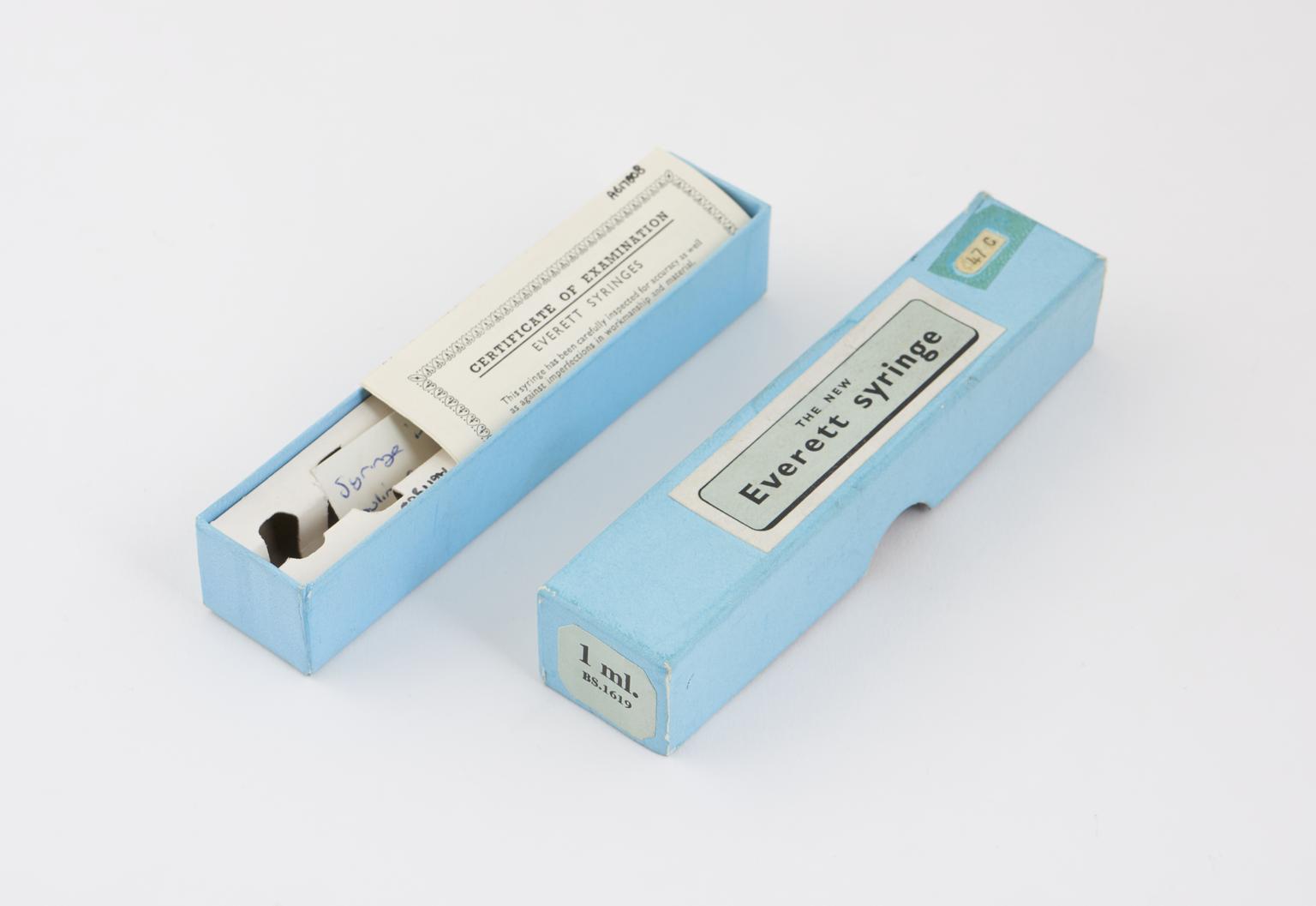
Box for hypodermic syringe, 1ml, for insulin, glass and chrome plated metal, by Everett, England, 1960-1970

Measurements:
box: length 30 mm
box: width 139 mm
box: height 26 mm
Materials:
chromium plated , glass and metal (unknown)
Object Number:
A617808/2
type:
hypodermic syringes
Image ©
The Board of Trustees of the Science Museum