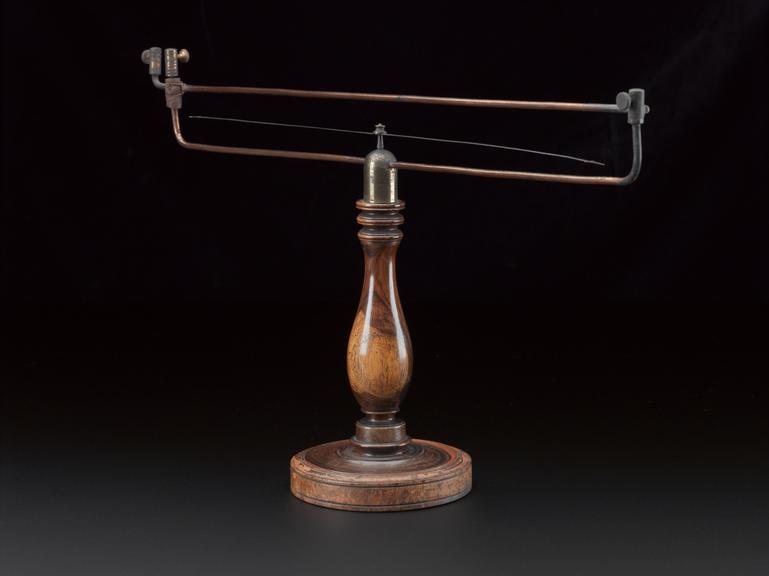
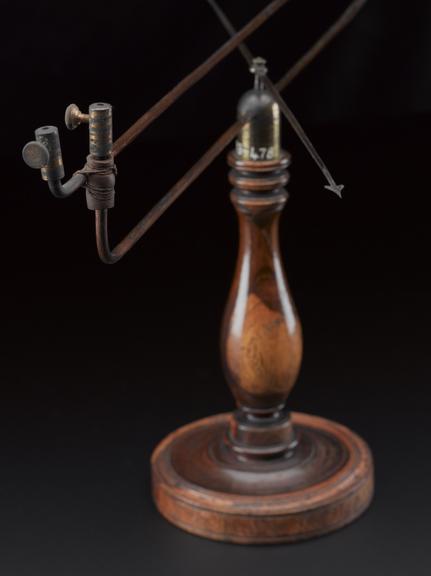
Oersted Compass Needle, 1828
- Made:
- 1828 in London and Charing Cross
- maker:
- Hans Christian Ørsted and Watkins & Hill




 This image is released under a CC BY-NC-SA 4.0
Licence
This image is released under a CC BY-NC-SA 4.0
Licence
License this image for commercial use at Science and Society Picture Library
LicenseThis image is released under a CC BY-NC-SA 4.0
Licence
License this image for commercial use at Science and Society Picture Library
LicenseThis image is released under a CC BY-NC-SA 4.0
Licence
License this image for commercial use at Science and Society Picture Library
LicenseThis image is released under a CC BY-NC-SA 4.0
Licence
License this image for commercial use at Science and Society Picture Library
LicenseThis image is released under a CC BY-NC-SA 4.0
Licence
License this image for commercial use at Science and Society Picture Library
License
Science Museum Group Collection
© The Board of Trustees of the Science Museum
Science Museum Group Collection
© The Board of Trustees of the Science Museum
Science Museum Group Collection
© The Board of Trustees of the Science Museum
Science Museum Group Collection
© The Board of Trustees of the Science Museum
Science Museum Group Collection
© The Board of Trustees of the Science Museum
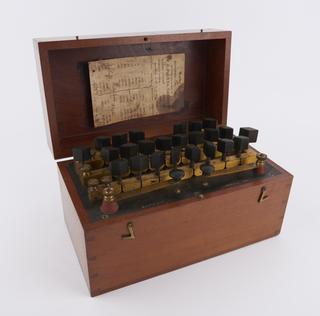
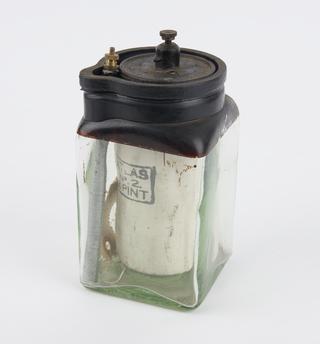
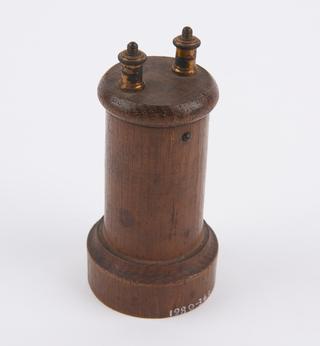
Ørsted's [Oersted] apparatus for showing the effect of an electric current on a magnetic needle, believed to have been supplied for £1-8-0 by Watkins and Hill, Charing Cross, Westminster, 1828.
Hans Christian Oersted was a Danish physicist and chemist who in 1820 discovered the relationship between electricity and magnetism. He found that a magnetised needle moved when brought near a wire in which current was flowing, and that the effect was increased if the wire was formed into a coil. The idea of using this phenomenon as a signalling system soon occurred to several experimenters. This instrument is believed to have been used at lecture demonstrations in London.