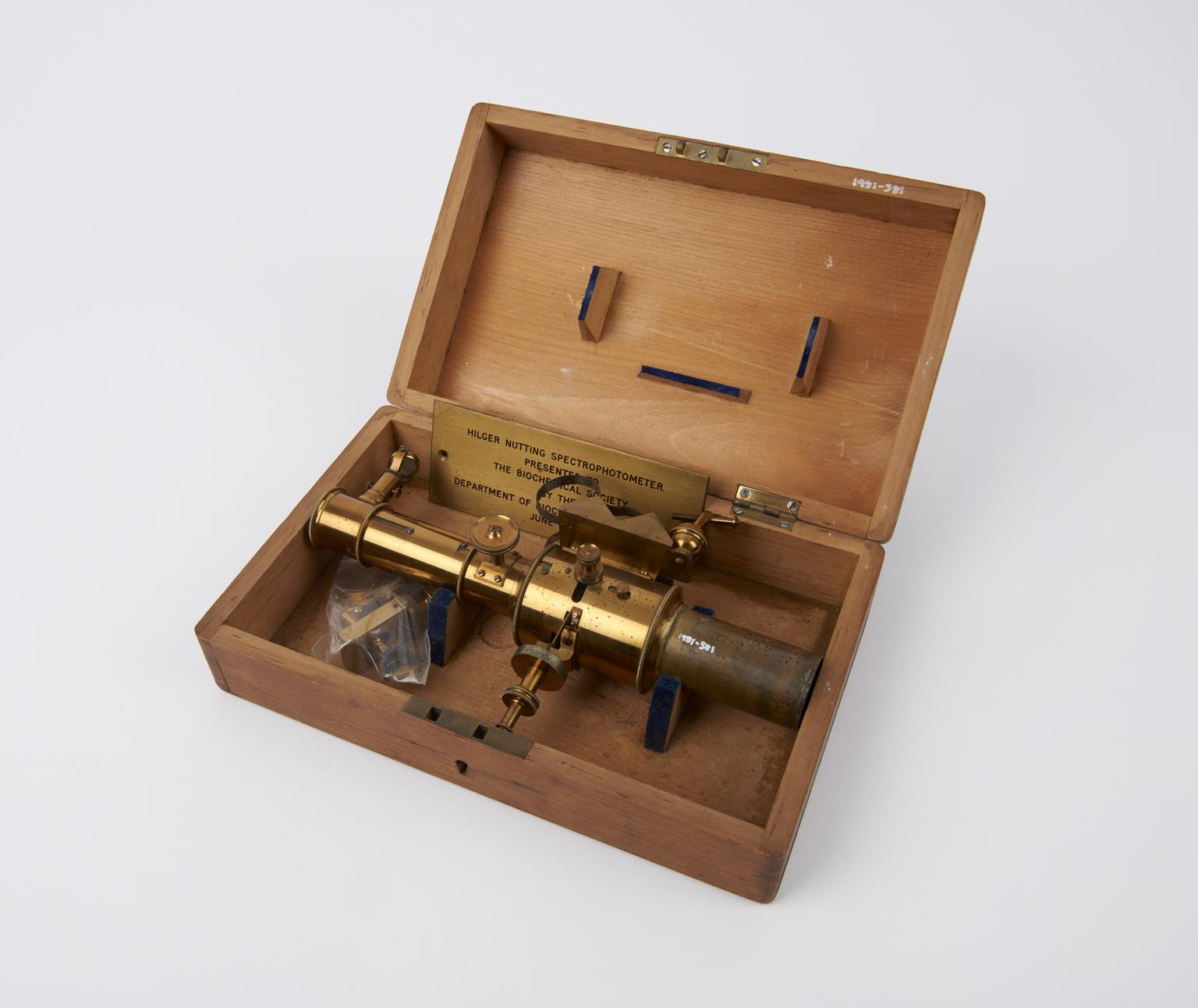
Hilger-Nutting Spectrophotometer used by Richard Alan Morton, Liverpool, 1927

Made:
c.1927 in United Kingdom
maker:
Adam Hilger Limited

Experimental model of a Hilger-Nutting Spectrophotometer, for measuring the absorption of light at different wavelengths in chemical and biological samples, used by British Biochemist Richard Alan Morton, University of Liverpool, 1927. Comprises apparatus box, photometer, spectrometer, 2 quartz and glass cells.

This Hilger-Nutting spectrophotometer was used by British biochemist Richard Alan Morton (1899-1977) and colleagues from 1927, in the department of Biochemistry at the University of Liverpool, where Morton studied and later became Professor of Biochemistry.

The apparatus was designed to measure the absorption of light by a sample at different wavelengths within the visible spectrum, which was useful in identifying and quantifying substances in chemistry and biology. It consists of a light source, light deflectors, photometer, and spectrometer. Glass tubes were used as cells to contain solutions of samples for study. It was made by the scientific instrument maker Adam Hilger LTD, and was used to investigate the absorption spectrum of cobalt chloride.

Morton went on to apply spectroscopic methods to biological problems. He investigated the role of Vitamin D in preventing rickets, and researched Vitamin A in freshwater fish liver oils. During the Second World War, as part of the Accessory Food Factors Committee of MRC, he studied the role of Vitamin A within a volunteer group of conscientious objectors in Sheffield producing the report: Needs of Human Adults for Vitamin A. In 1942 he published the ‘Absorption spectra of Vitamins and Hormones’. In the 1960s he chaired the Committee on Food Additives.

Morton became Chair of the Biochemical Society and eventually donated the equipment to the Society. The Biochemical Society went on to donate it and a collection of scientific instruments to the Science Museum in 1981.

Details

Category:
Biochemistry
Object Number:
1981-381
Materials:
metal (unknown), quartz and glass
type:
spectrophotometer
credit:
The Biochemical Society

Parts

Hilger-Nutting Spectrophotometer used by Richard Alan Morton, Liverpool, 1927

Hilger-Nutting Spectrophotometer used by Richard Alan Morton, Liverpool, 1927

Spectrophotometer in wooden case, main part of an experimental model of a Hilger-Nutting Spectrophotometer, for measuring the absorption of light at different wavelengths in chemical and biological samples, used by British Biochemist Richard Alan Morton, University of Liverpool, 1927.

More

This Hilger-Nutting spectrophotometer was used by British biochemist Richard Alan Morton (1899-1977) and colleagues from 1927, in the department of Biochemistry at the University of Liverpool, where Morton studied and later became Professor of Biochemistry.

The apparatus was designed to measure the absorption of light by a sample at different wavelengths within the visible spectrum, which was useful in identifying and quantifying substances in chemistry and biology. It consists of a light source, light deflectors, photometer, and spectrometer. Glass tubes were used as cells to contain solutions of samples for study. It was made by the scientific instrument maker Adam Hilger LTD, and was used to investigate the absorption spectrum of cobalt chloride.

Morton went on to apply spectroscopic methods to biological problems. He investigated the role of Vitamin D in preventing rickets, and researched Vitamin A in freshwater fish liver oils. During the Second World War, as part of the Accessory Food Factors Committee of MRC, he studied the role of Vitamin A within a volunteer group of conscientious objectors in Sheffield producing the report: Needs of Human Adults for Vitamin A. In 1942 he published the ‘Absorption spectra of Vitamins and Hormones’. In the 1960s he chaired the Committee on Food Additives.

Morton became Chair of the Biochemical Society and eventually donated the equipment to the Society. The Biochemical Society went on to donate it and a collection of scientific instruments to the Science Museum in 1981.

Materials:
metal (unknown) , quartz and glass
Object Number:
1981-381/1
type:
spectrophotometer
Image ©
The Board of Trustees of the Science Museum
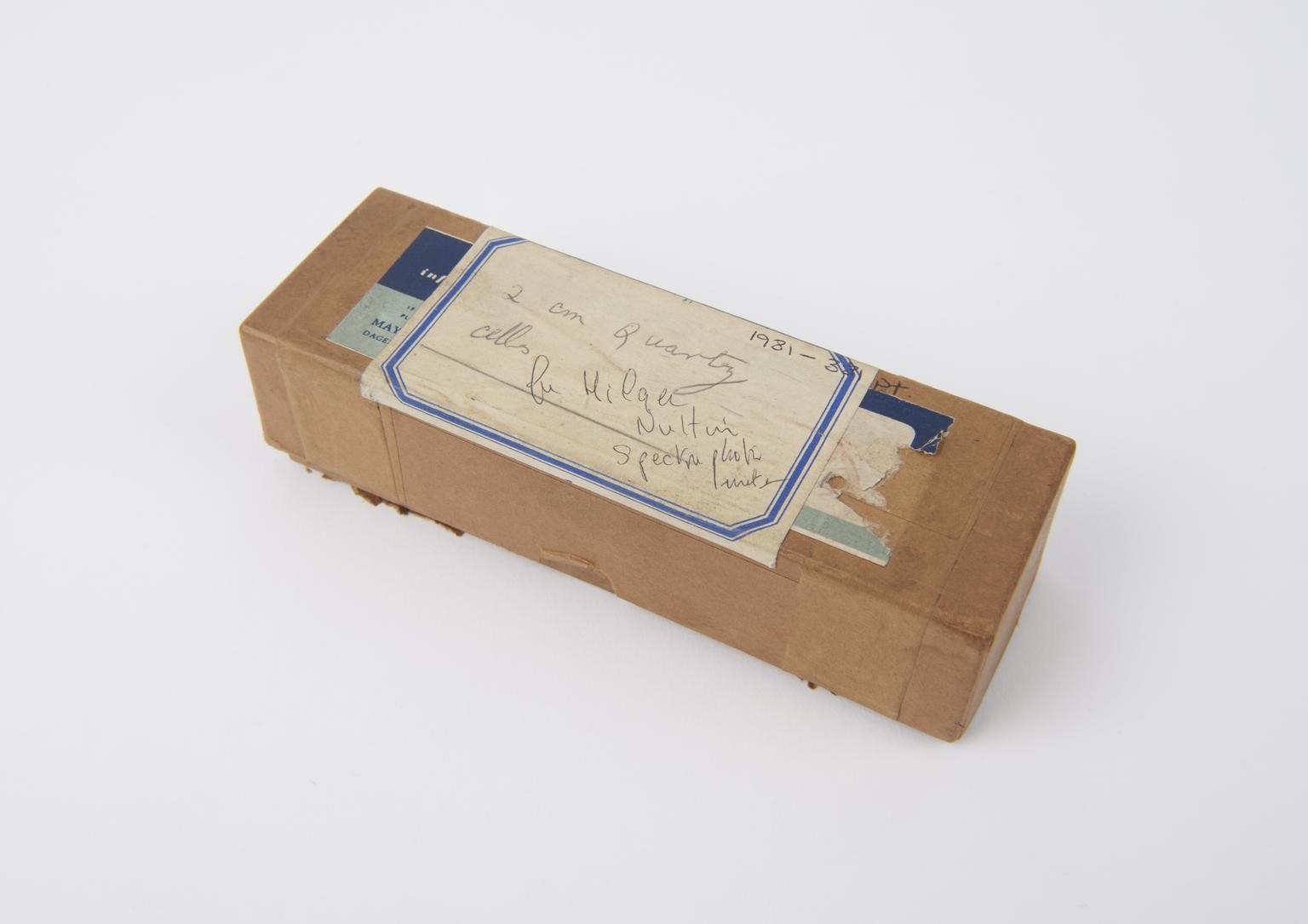
Box containing quartz cells, part of Hilger-Nutting Spectrophotometer, c.1927

Box containing quartz cells, part of Hilger-Nutting Spectrophotometer, c.1927

Box for quartz cells, part of Hilger-Nutting Spectrophotometer for measuring the absorption of light at different wavelengths in chemical and biological samples, used by British Biochemist Richard Alan Morton, University of Liverpool, 1927.

More

This Hilger-Nutting spectrophotometer was used by British biochemist Richard Alan Morton (1899-1977) and colleagues from 1927, in the department of Biochemistry at the University of Liverpool, where Morton studied and later became Professor of Biochemistry.

The apparatus was designed to measure the absorption of light by a sample at different wavelengths within the visible spectrum, which was useful in identifying and quantifying substances in chemistry and biology. It consists of a light source, light deflectors, photometer, and spectrometer. Glass tubes were used as cells to contain solutions of samples for study. It was made by the scientific instrument maker Adam Hilger LTD, and was used to investigate the absorption spectrum of cobalt chloride.

Morton went on to apply spectroscopic methods to biological problems. He investigated the role of Vitamin D in preventing rickets, and researched Vitamin A in freshwater fish liver oils. During the Second World War, as part of the Accessory Food Factors Committee of MRC, he studied the role of Vitamin A within a volunteer group of conscientious objectors in Sheffield producing the report: Needs of Human Adults for Vitamin A. In 1942 he published the ‘Absorption spectra of Vitamins and Hormones’. In the 1960s he chaired the Committee on Food Additives.

Morton became Chair of the Biochemical Society and eventually donated the equipment to the Society. The Biochemical Society went on to donate it and a collection of scientific instruments to the Science Museum in 1981.

Materials:
cardboard
Object Number:
1981-381/2
type:
box
Image ©
The Board of Trustees of the Science Museum
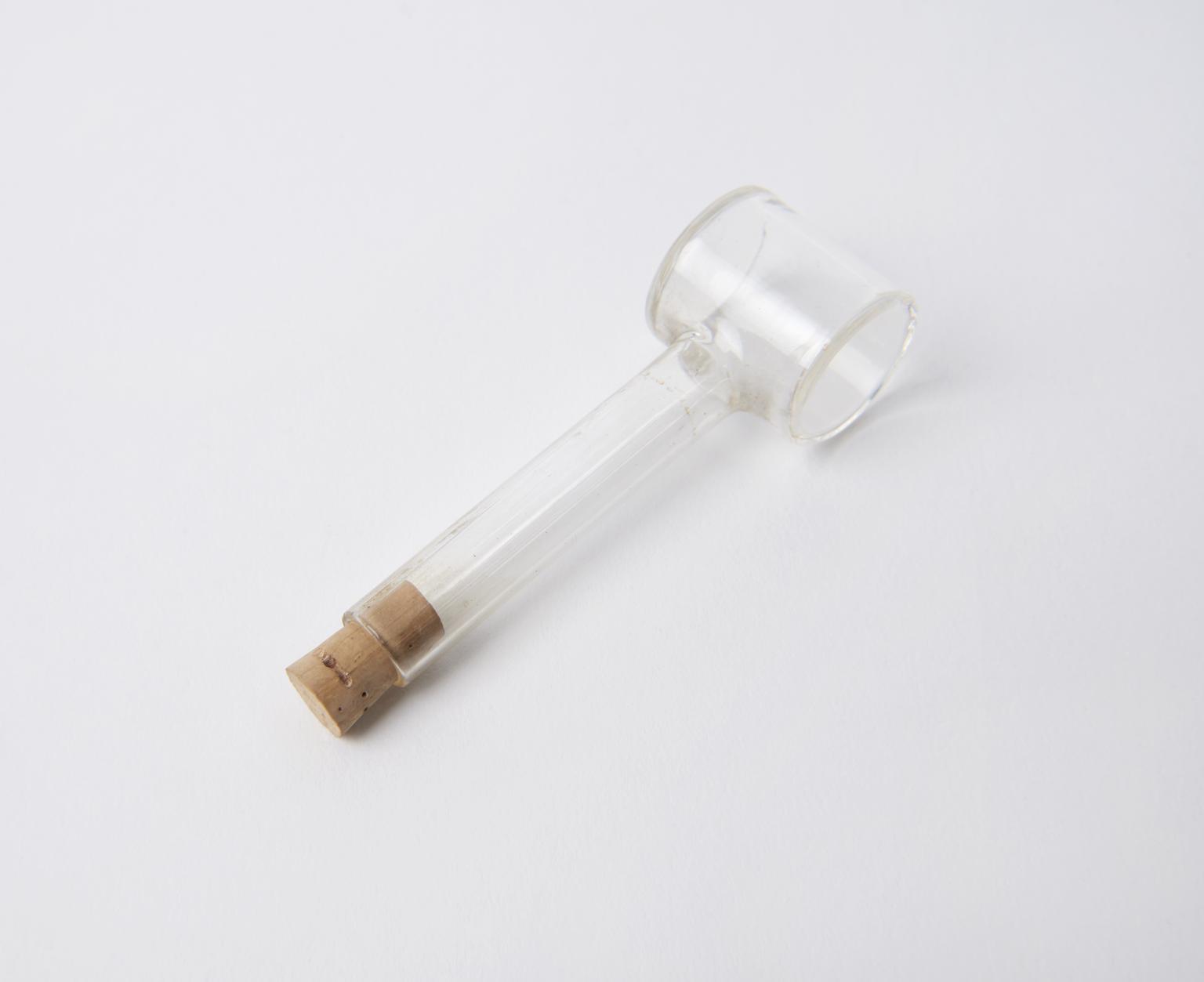
Quartz cell, part of Hilger-Nutting Spectrophotometer, used by R.A. Morton, 1927

Quartz cell, part of Hilger-Nutting Spectrophotometer, used by R.A. Morton, 1927

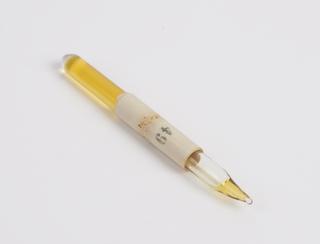
Quartz cell for experimental model of a visible Hilger Nutting Spectrophotometer used in Liverpool by R.A. Morton 1927. Quartz cell consist of a circular top with flat ends, attached to a tube with a cork in the end.

More

This Hilger-Nutting spectrophotometer was used by British biochemist Richard Alan Morton (1899-1977) and colleagues from 1927, in the department of Biochemistry at the University of Liverpool, where Morton studied and later became Professor of Biochemistry.

The apparatus was designed to measure the absorption of light by a sample at different wavelengths within the visible spectrum, which was useful in identifying and quantifying substances in chemistry and biology. It consists of a light source, light deflectors, photometer, and spectrometer. Glass tubes were used as cells to contain solutions of samples for study. It was made by the scientific instrument maker Adam Hilger LTD, and was used to investigate the absorption spectrum of cobalt chloride.

Morton went on to apply spectroscopic methods to biological problems. He investigated the role of Vitamin D in preventing rickets, and researched Vitamin A in freshwater fish liver oils. During the Second World War, as part of the Accessory Food Factors Committee of MRC, he studied the role of Vitamin A within a volunteer group of conscientious objectors in Sheffield producing the report: Needs of Human Adults for Vitamin A. In 1942 he published the ‘Absorption spectra of Vitamins and Hormones’. In the 1960s he chaired the Committee on Food Additives.

Morton became Chair of the Biochemical Society and eventually donated the equipment to the Society. The Biochemical Society went on to donate it and a collection of scientific instruments to the Science Museum in 1981.

Materials:
quartz and glass
Object Number:
1981-381/3
type:
quartz cell
Image ©
The Board of Trustees of the Science Museum
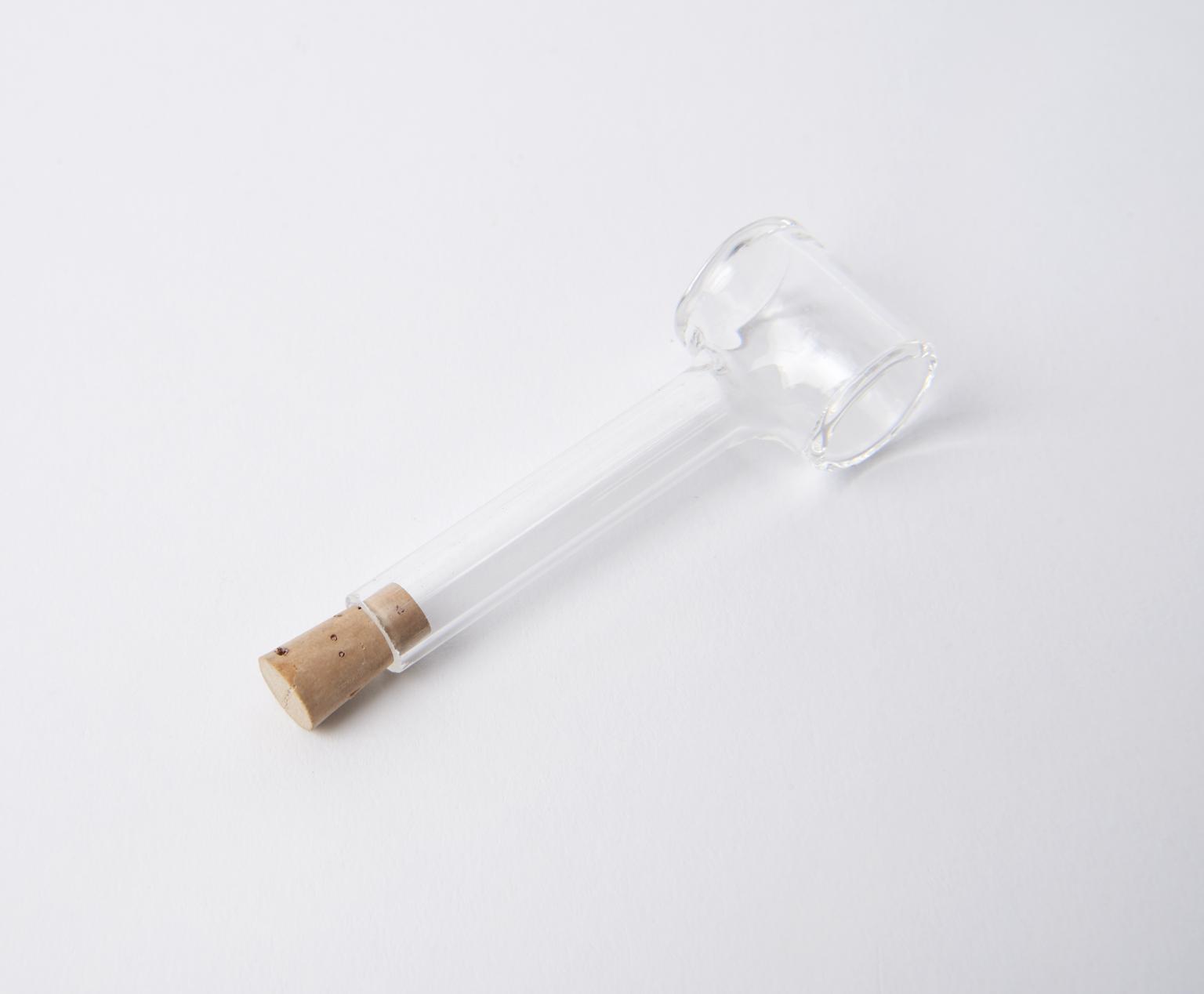
Quartz cell, part of Hilger-Nutting Spectrophotometer, used by R.A. Morton, 1927

Quartz cell, part of Hilger-Nutting Spectrophotometer, used by R.A. Morton, 1927

Quartz cell for experimental model of a visible Hilger Nutting Spectrophotometer used in Liverpool by R.A. Morton 1927. Quartz cell, circular top with flat ends, attached to a tube with a cork in the end. This quartz cell has a slight dip where it connects to the tube.

More

This Hilger-Nutting spectrophotometer was used by British biochemist Richard Alan Morton (1899-1977) and colleagues from 1927, in the department of Biochemistry at the University of Liverpool, where Morton studied and later became Professor of Biochemistry.

The apparatus was designed to measure the absorption of light by a sample at different wavelengths within the visible spectrum, which was useful in identifying and quantifying substances in chemistry and biology. It consists of a light source, light deflectors, photometer, and spectrometer. Glass tubes were used as cells to contain solutions of samples for study. It was made by the scientific instrument maker Adam Hilger LTD, and was used to investigate the absorption spectrum of cobalt chloride.

Morton went on to apply spectroscopic methods to biological problems. He investigated the role of Vitamin D in preventing rickets, and researched Vitamin A in freshwater fish liver oils. During the Second World War, as part of the Accessory Food Factors Committee of MRC, he studied the role of Vitamin A within a volunteer group of conscientious objectors in Sheffield producing the report: Needs of Human Adults for Vitamin A. In 1942 he published the ‘Absorption spectra of Vitamins and Hormones’. In the 1960s he chaired the Committee on Food Additives.

Morton became Chair of the Biochemical Society and eventually donated the equipment to the Society. The Biochemical Society went on to donate it and a collection of scientific instruments to the Science Museum in 1981.

Materials:
quartz and glass
Object Number:
1981-381/4
type:
quartz cell
Image ©
The Board of Trustees of the Science Museum