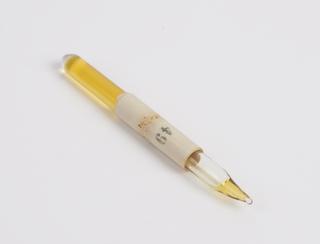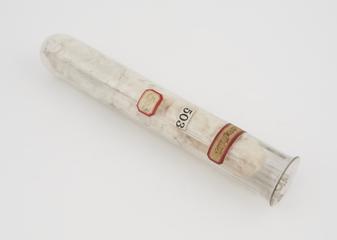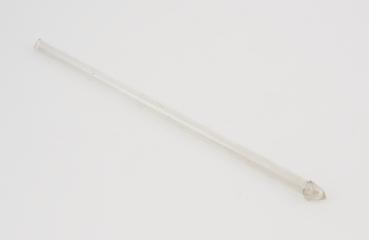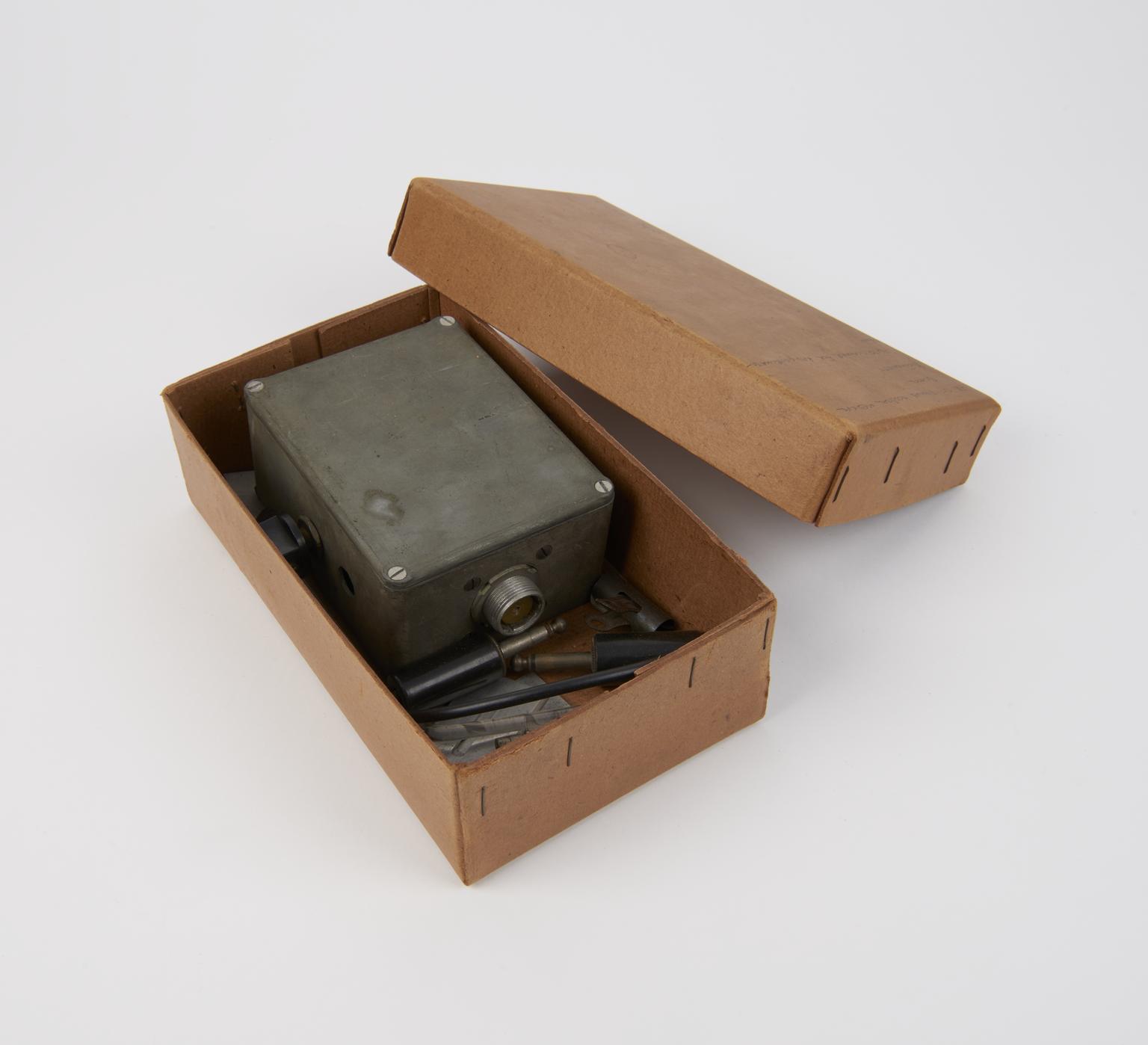
Automatic recording scanner for radio chromatograms developed by Leslie Young and A.R. Morrison, 1958

Made:
1958 in London

Automatic recording scanner for radio chromatograms developed by Leslie Young and A.R. Morrison, 1958. Comprises radio chromotograph scanner, milliameter recorder, part (unidentified).

Radio chromatography is a technique used to separate and analyse components of a mixture, particularly when those components are radioactive or labelled with radioactive isotopes.

Radioactive compounds were detected by passing strip chromatograms through the automatic recording scanner. The chromatograms were scanned automatically and approximately assessed the amount of radioactivity in the sample, with the output graphically recorded by the pen-recording milliammeter.

This apparatus was used in the late 1950s at the Department of Biochemistry in St Thomas's Hospital Medical School, London, by biochemists Professor Leslie Young (1911-1992) and A.R. Morrison (dates unknown). Young spent much of his career studying toxic compounds and their impacts on molecules in the body, and this equipment was used in this research. They described the equipment in the Biochemical Journal in 1959 in the article: An Automatic Recording Scanner for Radiochromatograms.

Details

Category:
Biochemistry
Object Number:
1982-542
type:
radio chromatogram recording scanner
credit:
St. Thomas' Hospital Medical School. Dep

Parts

Part of automatic recording scanner for radio chromatograms, 1958

Part of automatic recording scanner for radio chromatograms, 1958

Part (unidentified) of automatic recording scanner for radio chromatograms, 1958

More

Radio chromatography is a technique used to separate and analyse components of a mixture, particularly when those components are radioactive or labelled with radioactive isotopes.

Radioactive compounds were detected by passing strip chromatograms through the automatic recording scanner. The chromatograms were scanned automatically and approximately assessed the amount of radioactivity in the sample, with the output graphically recorded by the pen-recording milliammeter.

This is part of an apparatus used in the late 1950s at the Department of Biochemistry in St Thomas's Hospital Medical School, London, by biochemists Professor Leslie Young (1911-1992) and A.R. Morrison (dates unknown). Young spent much of his career studying toxic compounds and their impacts on molecules in the body, and this equipment was used in this research. They described the equipment in the Biochemical Journal in 1959 in the article: An Automatic Recording Scanner for Radiochromatograms.

Object Number:
1982-542/1
type:
part and radio chromatogram recording scanner
Image ©
The Board of Trustees of the Science Museum
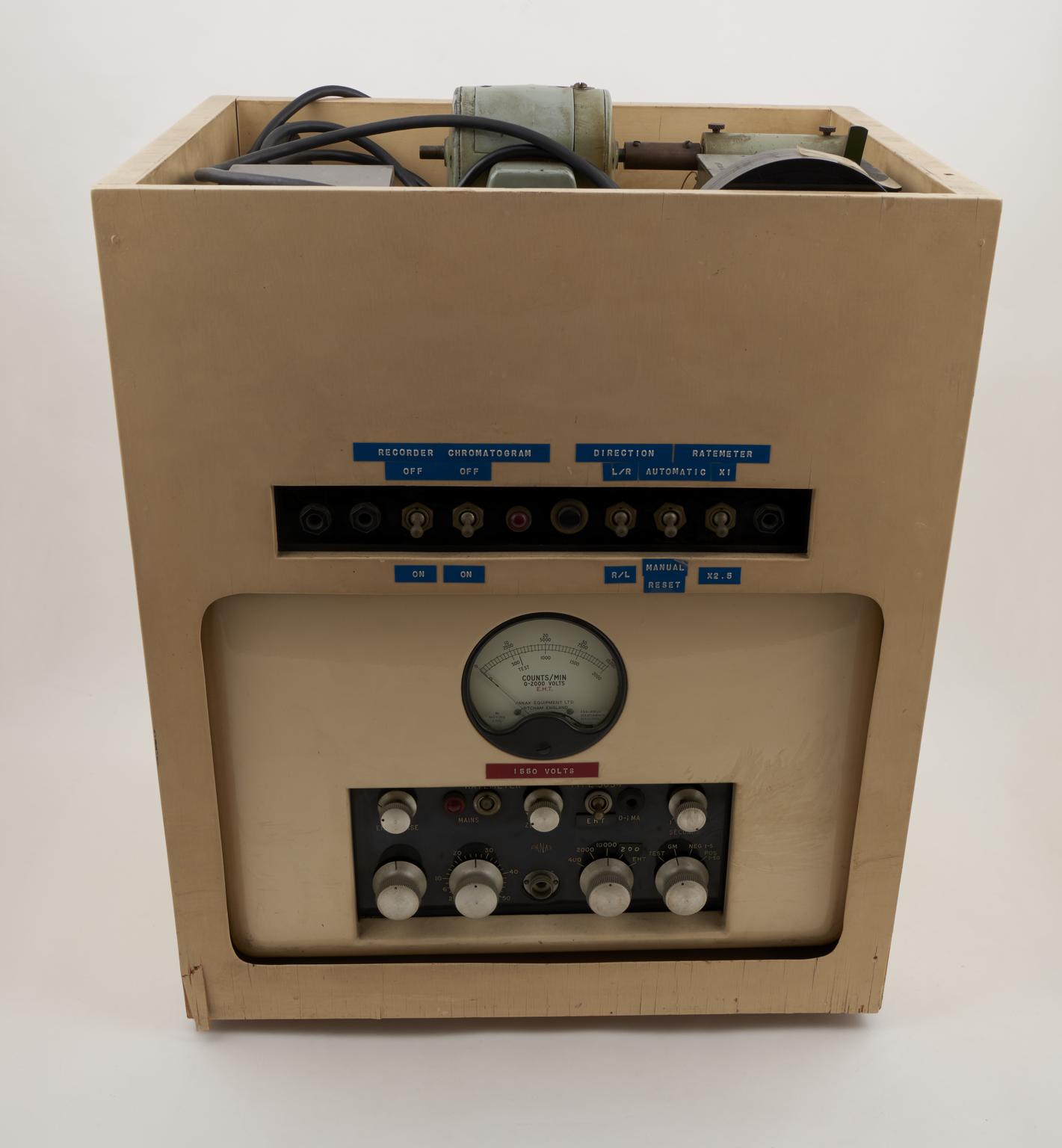
Automatic radio chromatograph scanner, made by Panax, used by L. Young and A.R. Morrison, 1958

Automatic radio chromatograph scanner, made by Panax, used by L. Young and A.R. Morrison, 1958

Automatic radio chromatograph scanner, made by Panax, Mitcham, London, used and modified by L. Young and A.R. Morrison, Dept. Biochemistry, St Thomas' Hospital Medical School, 1958.

More

Radio chromatography is a technique used to separate and analyse components of a mixture, particularly when those components are radioactive or labelled with radioactive isotopes.

Radioactive compounds were detected by passing strip chromatograms through the automatic recording scanner. The chromatograms were scanned automatically and approximately assessed the amount of radioactivity in the sample, with the output graphically recorded by the pen-recording milliammeter.

This part of the apparatus was the automated scanner, used in the late 1950s at the Department of Biochemistry in St Thomas's Hospital Medical School, London, by biochemists Professor Leslie Young (1911-1992) and A.R. Morrison (dates unknown). Young spent much of his career studying toxic compounds and their impacts on molecules in the body, and this equipment was used in this research. They described the equipment in the Biochemical Journal in 1959 in the article: An Automatic Recording Scanner for Radiochromatograms.

Measurements:
overall: 28.4 kg
Object Number:
1982-542/2
type:
part and automatic radio chromatograph scanner
Image ©
The Board of Trustees of the Science Museum
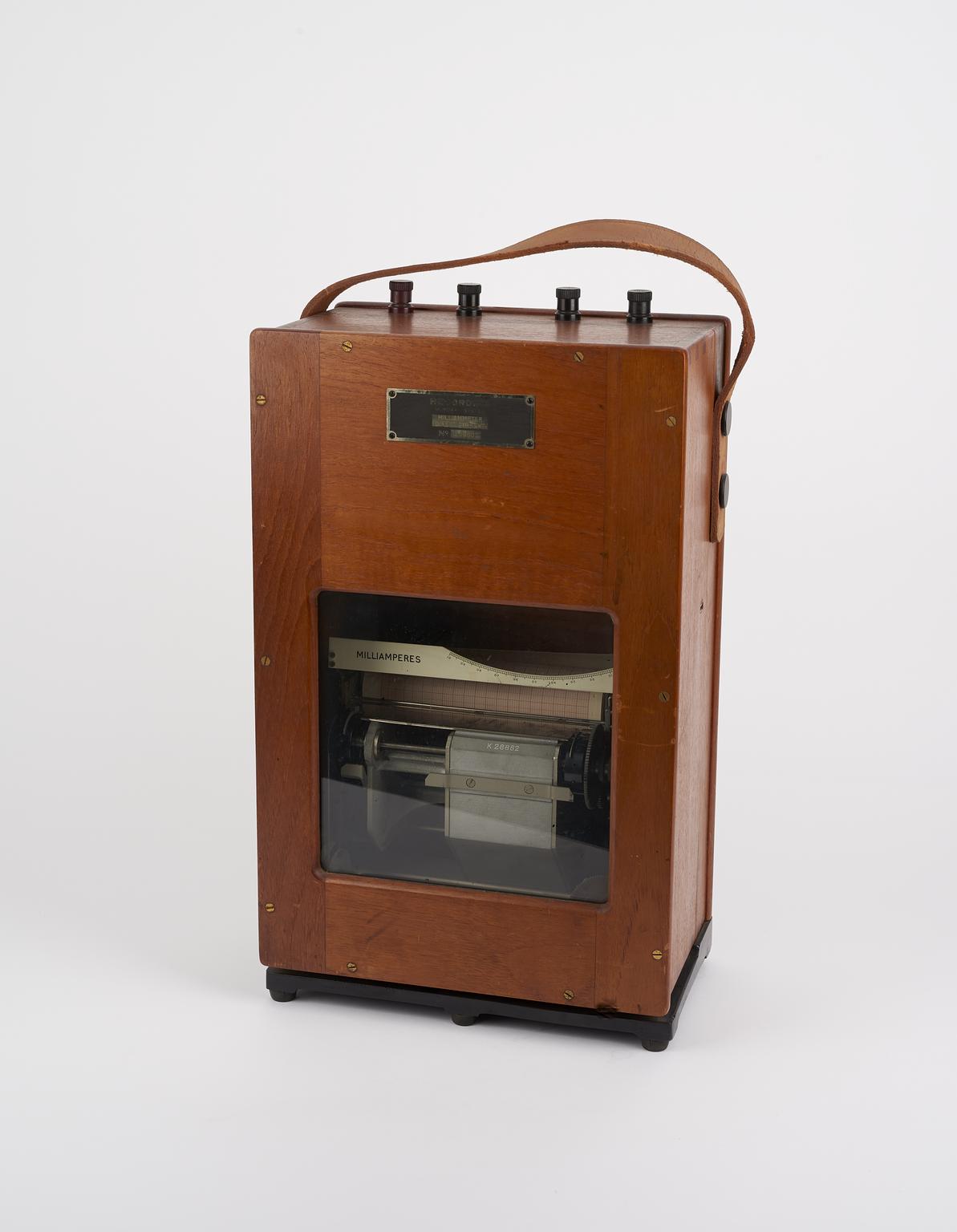
Recording milliammeter, part of automatic recording scanner for radio chromatograms, used by L. Young and A.R. Morrison, 1958

Recording milliammeter, part of automatic recording scanner for radio chromatograms, used by L. Young and A.R. Morrison, 1958

Recording milliammeter, part of automatic recording scanner for radiochromatograms, used by L. Young and A.R. Morrison, 1958

More

Radio chromatography is a technique used to separate and analyse components of a mixture, particularly when those components are radioactive or labelled with radioactive isotopes.

Radioactive compounds were detected by passing strip chromatograms through the automatic recording scanner. The chromatograms were scanned automatically and approximately assessed the amount of radioactivity in the sample, with the output graphically recorded by this pen-recording milliammeter.

This apparatus was used in the late 1950s at the Department of Biochemistry in St Thomas's Hospital Medical School, London, by biochemists Professor Leslie Young (1911-1992) and A.R. Morrison (dates unknown). Young spent much of his career studying toxic compounds and their impacts on molecules in the body, and this equipment was used in this research. They described the equipment in the Biochemical Journal in 1959 in the article: An Automatic Recording Scanner for Radiochromatograms.

Measurements:
overall: 12.75 kg
Object Number:
1982-542/3
type:
recording milliammeter
Image ©
The Board of Trustees of the Science Museum
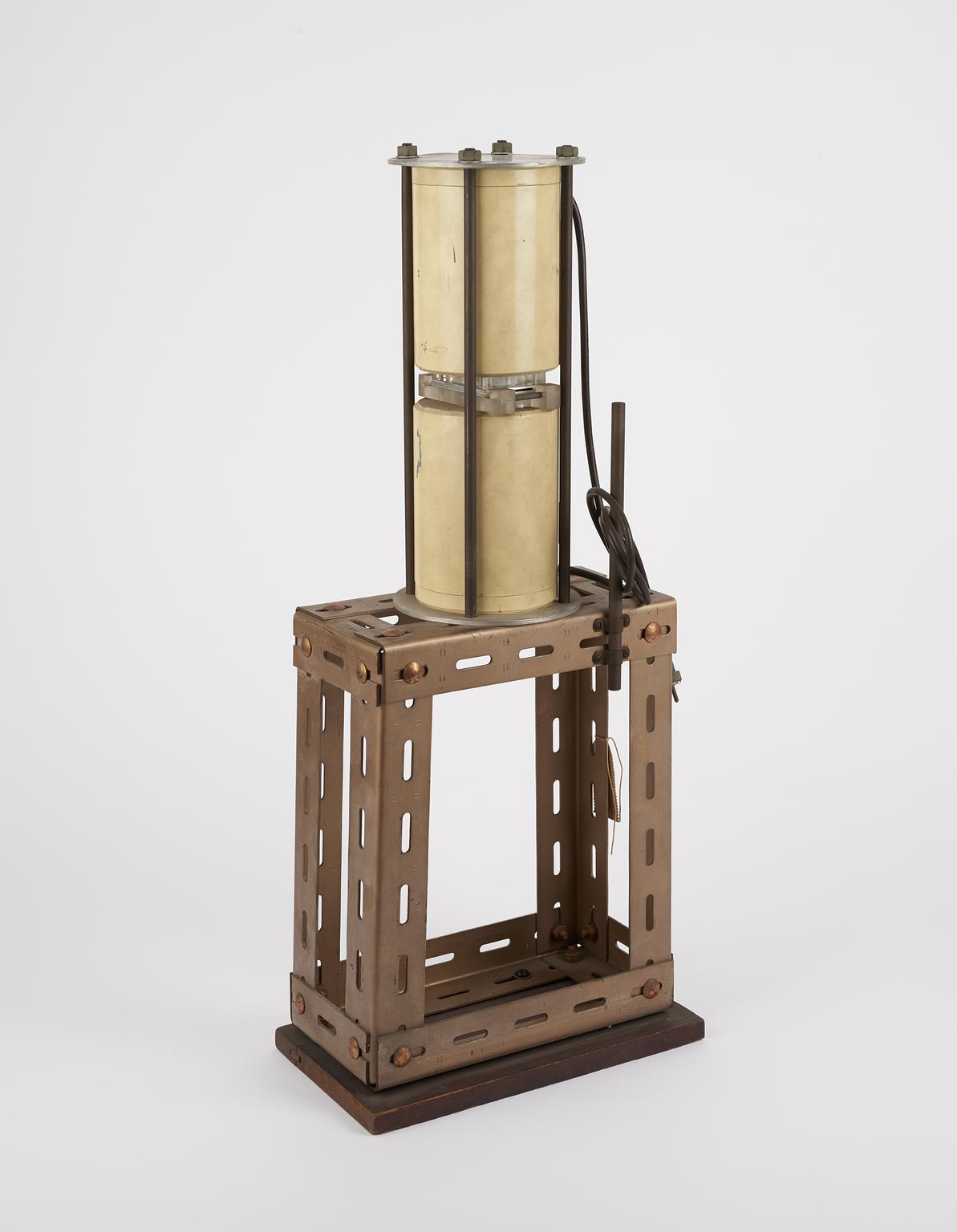
A pair of Geiger-Muller tubes, used to detect radioactivity rate, part of automatic recording scanner for radio chromatograms developed by Leslie Young and A.R. Morrison, 1958.

A pair of Geiger-Muller tubes, used to detect radioactivity rate, part of automatic recording scanner for radio chromatograms developed by Leslie Young and A.R. Morrison, 1958.

A pair of Geiger-Muller tubes, used to detect radioactivity rate, part of automatic recording scanner for radio chromatograms, developed by Leslie Young and A.R. Morrison, 1958.

More

Radio chromatography is a technique used to separate and analyse components of a mixture, particularly when those components are radioactive or labelled with radioactive isotopes.

Radioactive compounds were detected by passing strip chromatograms through the automatic recording scanner. The chromatograms were scanned automatically and approximately assessed the amount of radioactivity in the sample, they were passed trhough the Geiger-Muller tube pairing used to detect the radioactivity rate, with the output graphically recorded by the pen-recording milliammeter.

This apparatus was used in the late 1950s at the Department of Biochemistry in St Thomas's Hospital Medical School, London, by biochemists Professor Leslie Young (1911-1992) and A.R. Morrison (dates unknown). Young spent much of his career studying toxic compounds and their impacts on molecules in the body, and this equipment was used in this research. They described the equipment in the Biochemical Journal in 1959 in the article: An Automatic Recording Scanner for Radiochromatograms.

Measurements:
overall: 28.1 kg
Object Number:
1982-542/4
type:
part and geiger-muller tube
Image ©
The Board of Trustees of the Science Museum