Thorns

Made:
1921

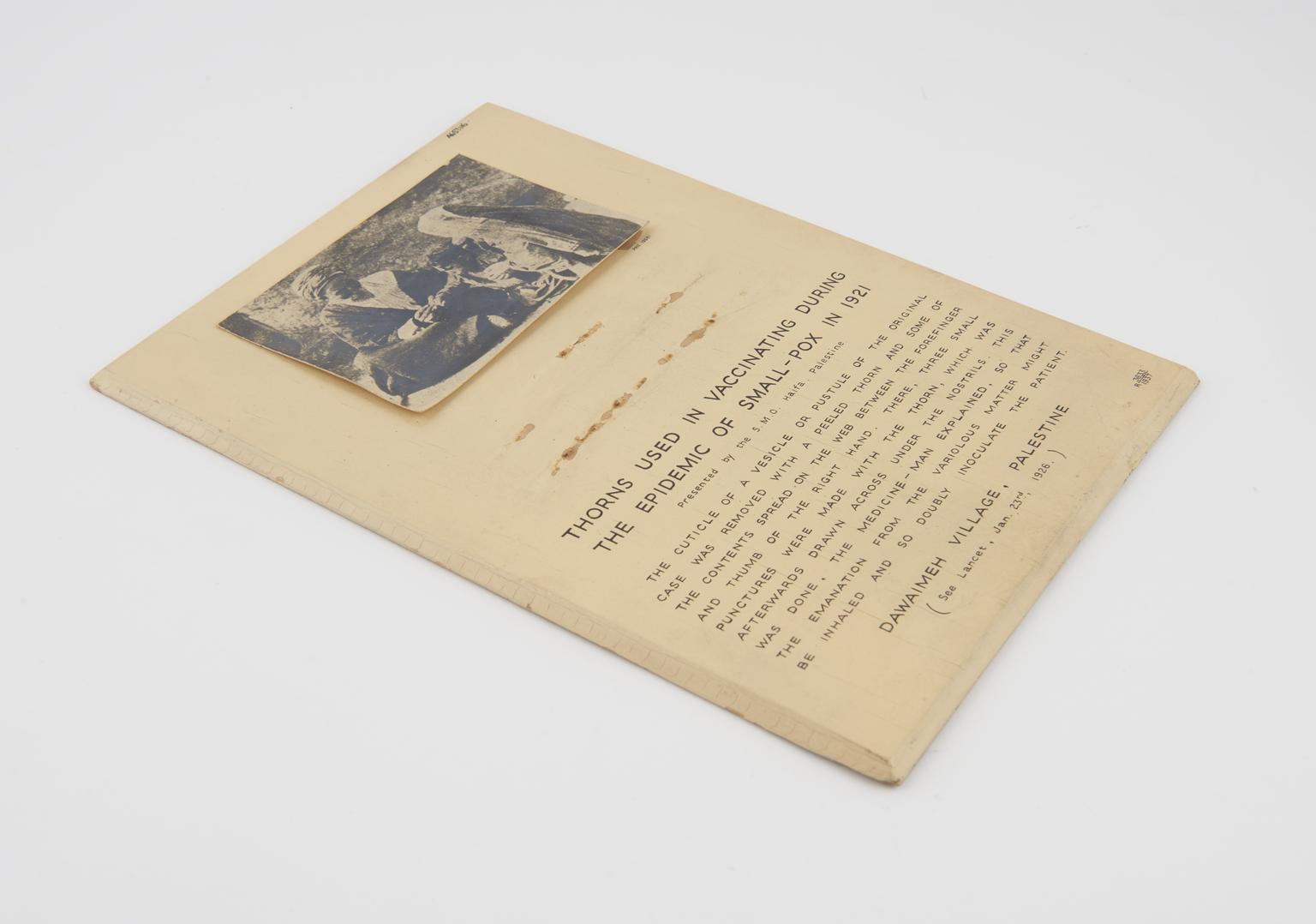
Two thorns, originally mounted and framed with photograph and information about their use in the technique known as variolation (inoculation) during a smallpox epidemic in Dawaimeh (aka Al-Dawayima), Palestine, 1921

By the 1920s, smallpox vaccination had existed for well over a century but these this thorn was used to protect individuals against the disease using a far older technique. Known as variolation, or inoculation, it was also intended to immunise people against smallpox but by deliberately infecting them with material from a smallpox patient with a milder version of the disease.

During a smallpox outbreak in Palestine in 1921, a local healer known as Shaheen carried out the procedure on villagers. A thorn was used to remove one of the scabs on the numerous skin pustules that were characteristic of the disease to access the pus beneath. This was then spread across the web of skin between the thumb and forefinger of the right hand of the person to be variolated. For good measure, the hand was then sniffed by the patient as the local healers believed the ‘vapours’ would further inoculate the patient. This full procedure was said to be common practice among the local population at the time.

Unfortunately, reports in the aftermath of the outbreak suggest that in this case the use of variolation resulted in a significant number of smallpox infections. It has been described as the last significant smallpox epidemic resulting from variolation documented during the 20th century. Shaheen, the healer, was briefly imprisoned in the aftermath.

Details

Category:
Public Health & Hygiene
Collection:
Sir Henry Wellcome's Museum Collection
Object Number:
A657116
Materials:
thorn, mount, cardboard and mount, glass
Measurements:
mount: length 226 mm
mount: width 158 mm
type:
thorn
credit:
Senior Medical Officer

Parts

Thorn, originally mounted and framed with photograph and information about their use in the technique known as variolation (inoculation) during a smallpox epidemic in Dawaimeh (aka Al-Dawayima), Palestine, 1921

Thorn. Originally mounted and framed with photograph and information about their use in smallpox epidemic in Dawaimeh

Thorn, originally mounted and framed with photograph and information about their use in the technique known as variolation (inoculation) during a smallpox epidemic in Dawaimeh (aka Al-Dawayima), Palestine, 1921

More

By the 1920s, smallpox vaccination had existed for well over a century but these this thorn was used to protect individuals against the disease using a far older technique. Known as variolation, or inoculation, it was also intended to immunise people against smallpox but by deliberately infecting them with material from a smallpox patient with a milder version of the disease.

During a smallpox outbreak in Palestine in 1921, a local healer known as Shaheen carried out the procedure on villagers. A thorn was used to remove one of the scabs on the numerous skin pustules that were characteristic of the disease to access the pus beneath. This was then spread across the web of skin between the thumb and forefinger of the right hand of the person to be variolated. For good measure, the hand was then sniffed by the patient as the local healers believed the ‘vapours’ would further inoculate the patient. This full procedure was said to be common practice among the local population at the time.

Unfortunately, reports in the aftermath of the outbreak suggest that in this case the use of variolation resulted in a significant number of smallpox infections. It has been described as the last significant smallpox epidemic resulting from variolation documented during the 20th century. Shaheen, the healer, was briefly imprisoned in the aftermath.

Measurements:
overall: 3 mm x 110 mm x 5 mm,
Materials:
wood ( , thornunidentified) and thorn
Object Number:
A657116/1
type:
thorn
Thorn, originally mounted and framed with photograph and information about their use in the technique known as variolation (inoculation) during a smallpox epidemic in Dawaimeh (aka Al-Dawayima), Palestine, 1921

Thorn. Originally mounted and framed with photograph and information about their use in smallpox epidemic in Dawaimeh

Thorn, originally mounted and framed with photograph and information about their use in the technique known as variolation (inoculation) during a smallpox epidemic in Dawaimeh (aka Al-Dawayima), Palestine, 1921

More

By the 1920s, smallpox vaccination had existed for well over a century but these this thorn was used to protect individuals against the disease using a far older technique. Known as variolation, or inoculation, it was also intended to immunise people against smallpox but by deliberately infecting them with material from a smallpox patient with a milder version of the disease.

During a smallpox outbreak in Palestine in 1921, a local healer known as Shaheen carried out the procedure on villagers. A thorn was used to remove one of the scabs on the numerous skin pustules that were characteristic of the disease to access the pus beneath. This was then spread across the web of skin between the thumb and forefinger of the right hand of the person to be variolated. For good measure, the hand was then sniffed by the patient as the local healers believed the ‘vapours’ would further inoculate the patient. This full procedure was said to be common practice among the local population at the time.

Unfortunately, reports in the aftermath of the outbreak suggest that in this case the use of variolation resulted in a significant number of smallpox infections. It has been described as the last significant smallpox epidemic resulting from variolation documented during the 20th century. Shaheen, the healer, was briefly imprisoned in the aftermath.

Measurements:
overall: 3 mm x 92 mm x 5 mm,
Materials:
thorn
Object Number:
A657116/2
type:
thorn
Thorns

Thorns

Wooden mount painted cream, showing a black and white photograph of a local healer, known as Shaheen, variolating (inoculating) a child against smallpox. Originally with two thorns glued to it, now detached. The text contains further information about their use in smallpox epidemic in Dawaimeh (aka Al-Dawayima), Palestine, 1921

More

By the 1920s, smallpox vaccination had existed for well over a century but these this thorn was used to protect individuals against the disease using a far older technique. Known as variolation, or inoculation, it was also intended to immunise people against smallpox but by deliberately infecting them with material from a smallpox patient with a milder version of the disease.

During a smallpox outbreak in Palestine in 1921, a local healer known as Shaheen carried out the procedure on villagers. A thorn was used to remove one of the scabs on the numerous skin pustules that were characteristic of the disease to access the pus beneath. This was then spread across the web of skin between the thumb and forefinger of the right hand of the person to be variolated. For good measure, the hand was then sniffed by the patient as the local healers believed the ‘vapours’ would further inoculate the patient. This full procedure was said to be common practice among the local population at the time.

Unfortunately, reports in the aftermath of the outbreak suggest that in this case the use of variolation resulted in a significant number of smallpox infections. It has been described as the last significant smallpox epidemic resulting from variolation documented during the 20th century. Shaheen, the healer, was briefly imprisoned in the aftermath.

Measurements:
overall: 5 mm x 66 mm x 230 mm,
Materials:
wood (unidentified) , paper (fibre product) and paint
Object Number:
A657116/3
type:
mount
Image ©
The Board of Trustees of the Science Museum