Tenderometer for Measuring Peas, 1933-1943
- Made:
- 1933-1943
- maker:
- Universal Canning Company
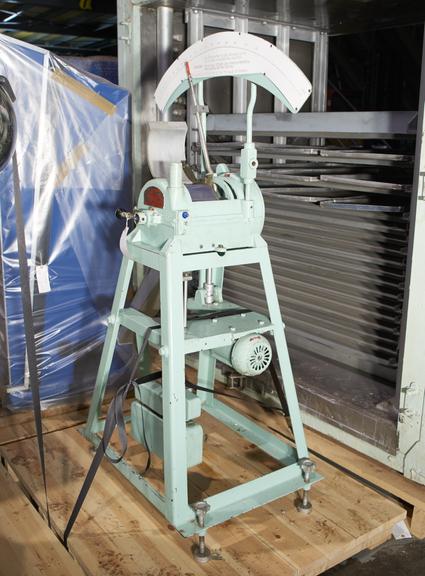
Tenderometer, for measuring peas, used at Birdseye Walls Ltd., by Universal Canning Company, 1933-1943
How do you test the quality of a pea? It’s important to make sure that they aren’t too hard or too soft. However, just pressing a pea between your fingers is a very subjective measurement. This machine is a tenderometer and it turns that subjective test into an objective and repeatable test. It measures the amount of force required to press a standard sized sample of peas through specific sized grid. It was first introduced in the late 1930s.
This machine was used by Birds Eye in the UK. In the early 1900s, Clarence Birdseye was living and working with indigenous Inuit people in northern Canada. He saw that, when the Inuit froze fish quickly on very, very cold days, it maintained its texture and taste much better when cooked compared to fish which took longer to freeze on warmer days. Birdseye went on to develop the first commercial flash freezers, which transformed frozen food, making it high quality and desirable. The name Birdseye has become synonymous with frozen food. Frozen peas were first sold in the UK in the 1940s and in 2021 it was reported that each person in Britain eats an average of 9,000 peas a year.
Details
- Category:
- Nutrition & Food Technology
- Object Number:
- 1990-87
- Measurements:
-
overall: 1580 mm x 1080 mm x 580 mm, 170 kg
- type:
- measuring devices
- credit:
- Birds Eye Walls Limited
Related Objects
'Omega' milking unit
Box of microtome blades

Box of microtome blades
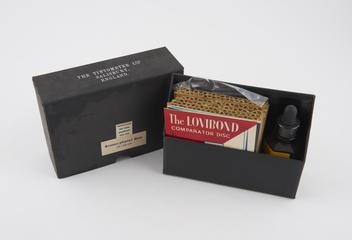
Boxed set comprising of standardised glass disc and bottle of Bromo-Phenol-Blue indicator