
Amputation set in case

Amputation set in case Amputation set in case Amputation set in case Amputation set in case Amputation set in case Amputation set in case Amputation set in case Amputation set in case Amputation set in case Amputation set in case Amputation set in case

Creative Commons LicenseThis image is released under a CC BY-NC-SA 4.0 Licence

License this image for commercial use at Science and Society Picture Library

License

Creative Commons LicenseThis image is released under a CC BY-NC-SA 4.0 Licence

License this image for commercial use at Science and Society Picture Library

License

Creative Commons LicenseThis image is released under a CC BY-NC-SA 4.0 Licence

License this image for commercial use at Science and Society Picture Library

License

Creative Commons LicenseThis image is released under a CC BY-NC-SA 4.0 Licence

License this image for commercial use at Science and Society Picture Library

License

Creative Commons LicenseThis image is released under a CC BY-NC-SA 4.0 Licence

License this image for commercial use at Science and Society Picture Library

License

Creative Commons LicenseThis image is released under a CC BY-NC-SA 4.0 Licence

License this image for commercial use at Science and Society Picture Library

License

Creative Commons LicenseThis image is released under a CC BY-NC-SA 4.0 Licence

License this image for commercial use at Science and Society Picture Library

License

Creative Commons LicenseThis image is released under a CC BY-NC-SA 4.0 Licence

License this image for commercial use at Science and Society Picture Library

License

Creative Commons LicenseThis image is released under a CC BY-NC-SA 4.0 Licence

License this image for commercial use at Science and Society Picture Library

License

Creative Commons LicenseThis image is released under a CC BY-NC-SA 4.0 Licence

License this image for commercial use at Science and Society Picture Library

License

Creative Commons LicenseThis image is released under a CC BY-NC-SA 4.0 Licence

License this image for commercial use at Science and Society Picture Library

License

Science Museum Group
© The Board of Trustees of the Science Museum
Science Museum Group
© The Board of Trustees of the Science Museum
Science Museum Group
© The Board of Trustees of the Science Museum
Science Museum Group
© The Board of Trustees of the Science Museum
Science Museum Group
© The Board of Trustees of the Science Museum

Science Museum Group
© The Board of Trustees of the Science Museum

Science Museum Group
© The Board of Trustees of the Science Museum
Science Museum Group
© The Board of Trustees of the Science Museum
Science Museum Group
© The Board of Trustees of the Science Museum

Science Museum Group
© The Board of Trustees of the Science Museum

Science Museum Group
© The Board of Trustees of the Science Museum
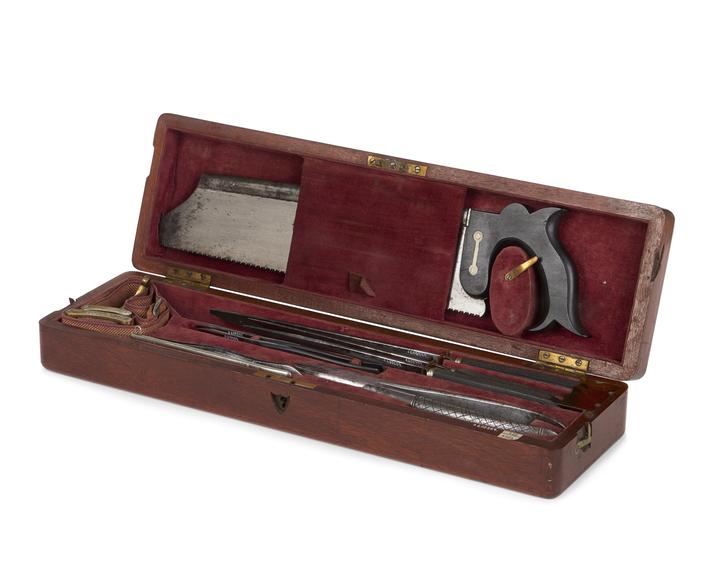
Amputation set, cased, by T. Chapman, Scotland, 1801-1900

Each instrument inside this kit is needed to carry out an amputation of an arm or leg. This includes saws, forceps, scalpels and knives to cut through bone, tissue and skin. There are also ways of slowing down or preventing blood loss by using a tourniquet or artery forceps.

Details

Category:
Surgery
Collection:
Sir Henry Wellcome's Museum Collection
Object Number:
A600559
Materials:
case, wood, case, brass and case, velvet, lined
Measurements:
overall: 64 mm x 412 mm x 123 mm, 1.96 kg
type:
amputation sets
credit:
Loan, Wellcome Trust

Parts

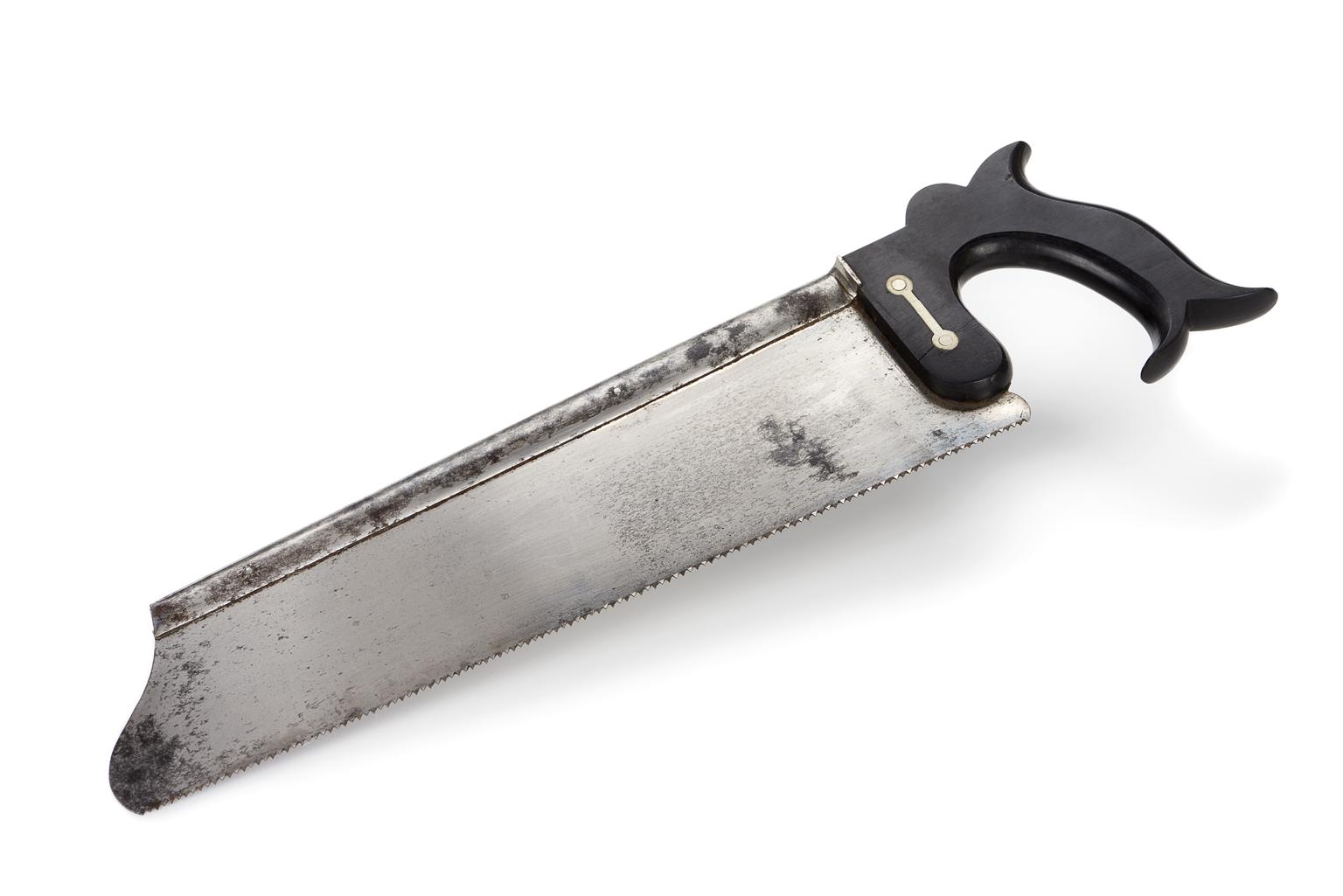
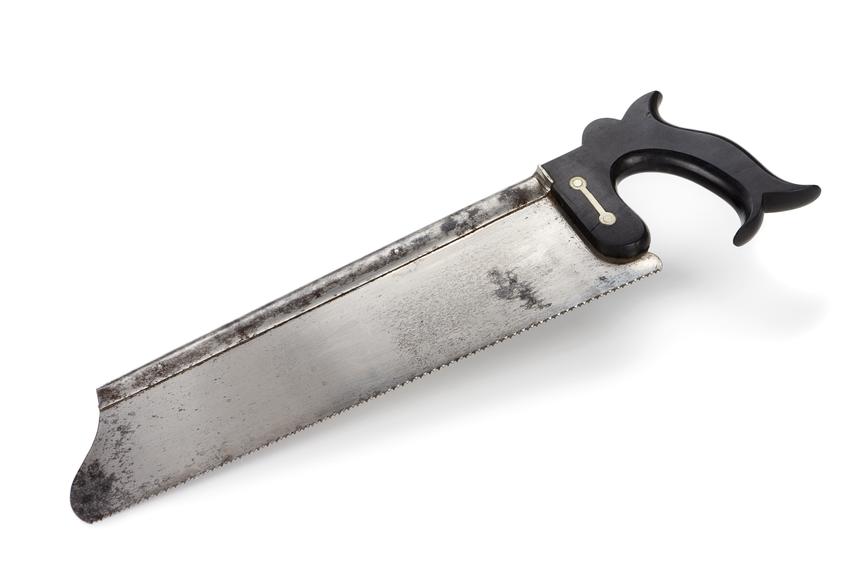
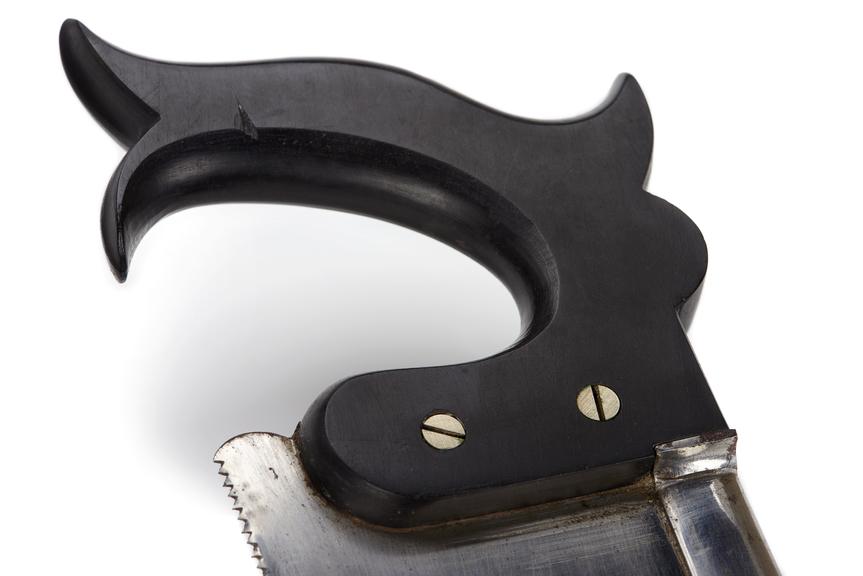
Amputation saw

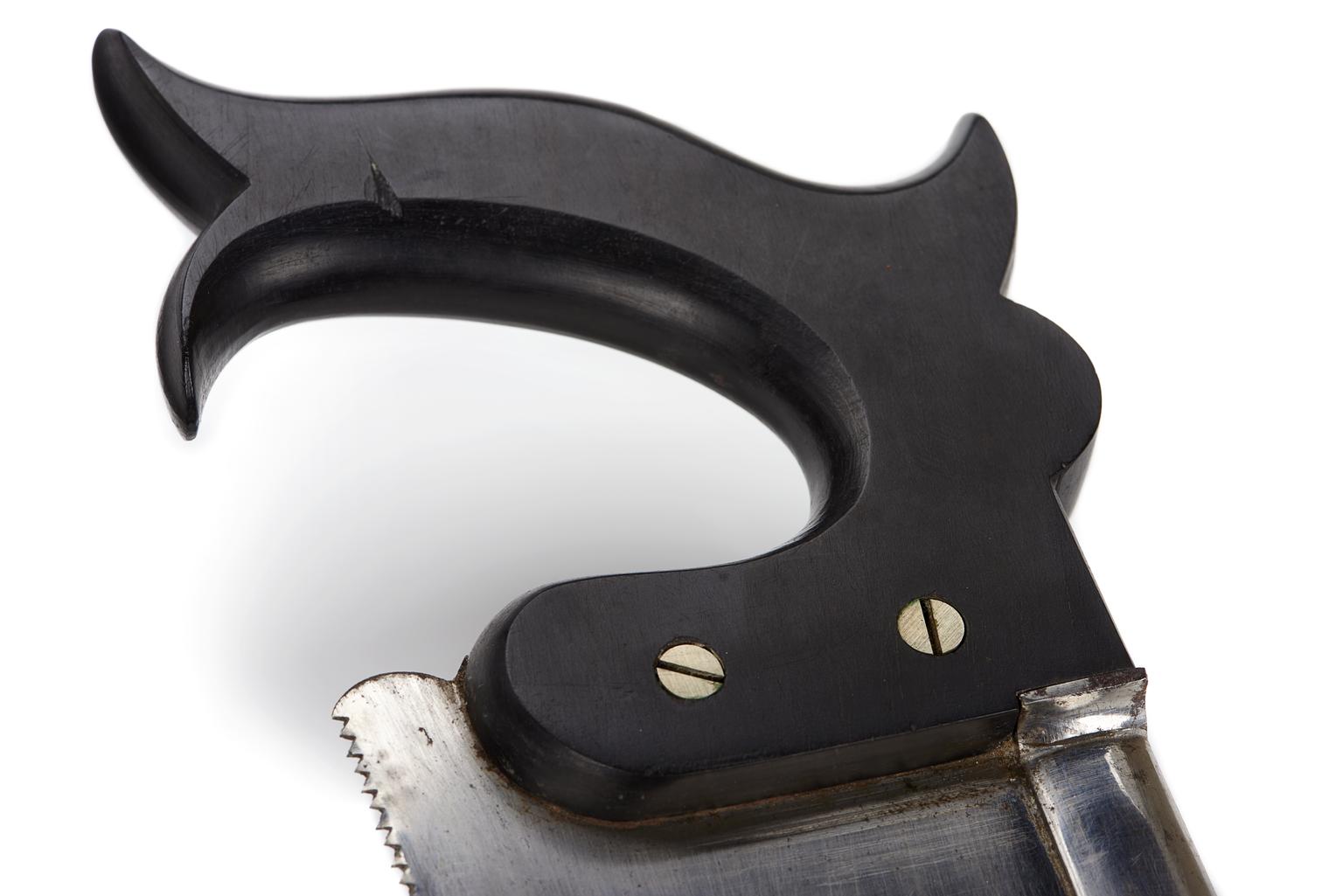
Amputation saw with wooden handle

More

Amputation saws are used to cut through bones of the arms or legs. As this example has wooden handles, they could not be easily sterilised between uses. It is likely that this pre-date ideas of aseptic surgery - to prevent infection during operations.

Measurements:
length 366 mm
height 90 mm
Materials:
steel and wood
Object Number:
A600559 Pt1
type:
amputation saws
Image ©
The Board of Trustees of the Science Museum
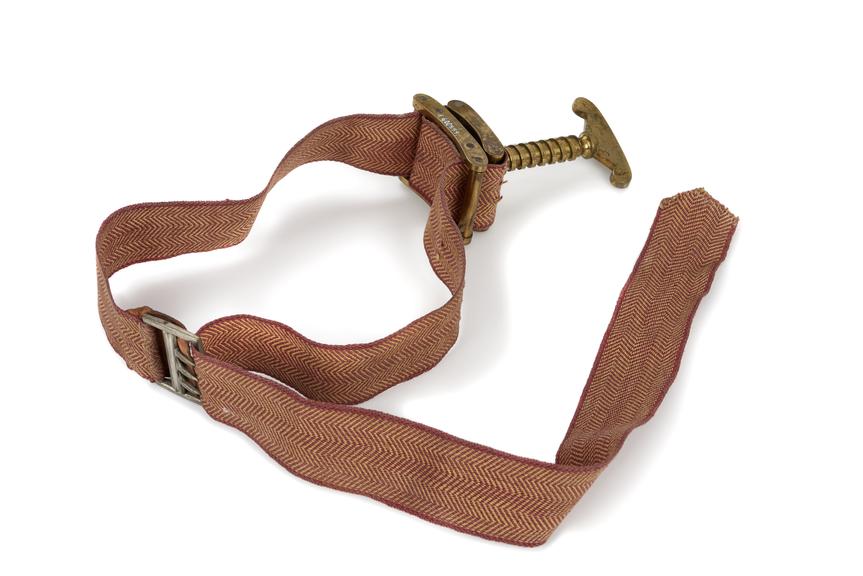
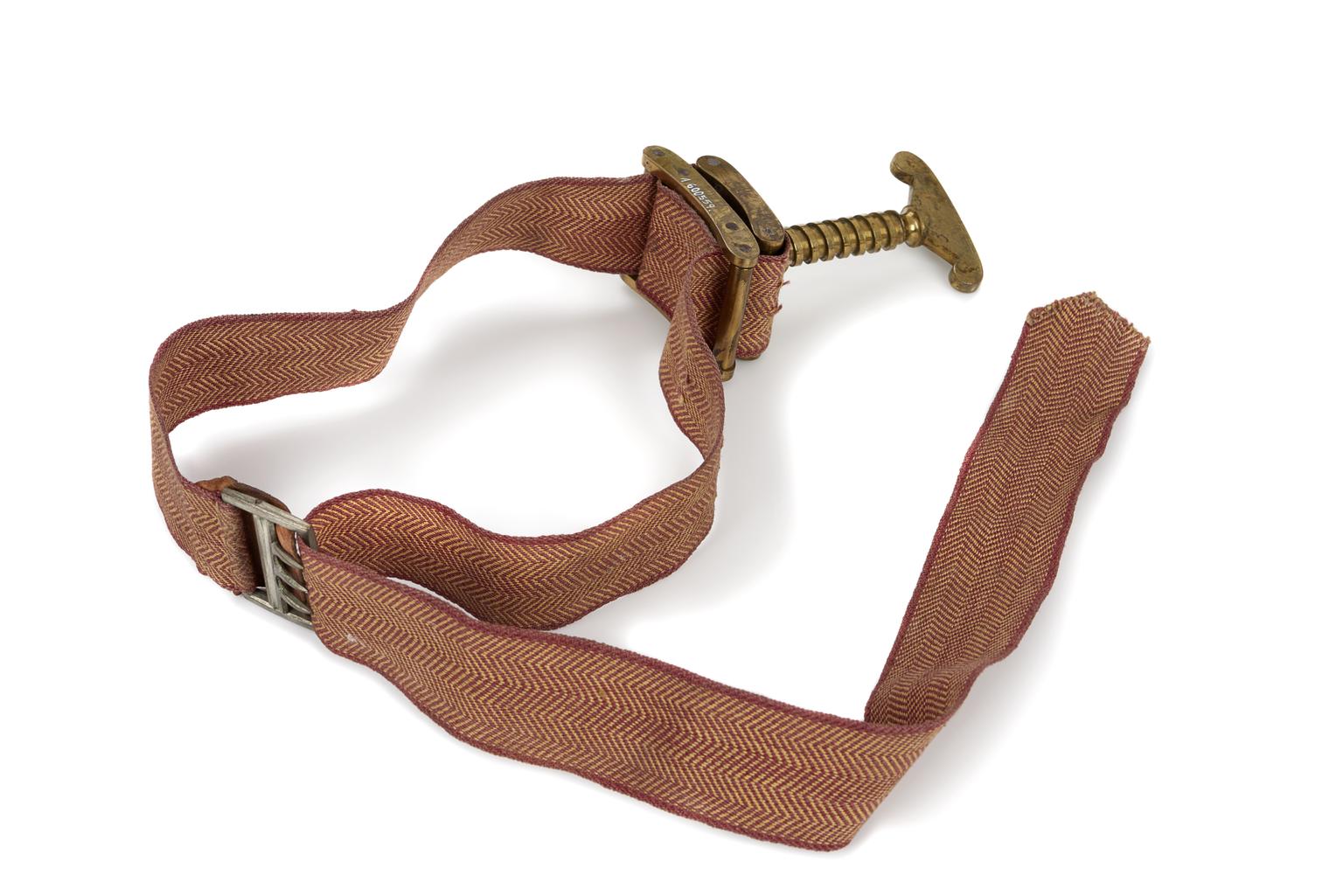
Tourniquet from amputation set

Petit type screw tourniquet, by T Chapman, Edinburgh, Scotland, probably 1801-1900

More

Tourniquets are used to control bleeding or the arms of legs by applying pressure. Tourniquets were also used using amputations.

John-Louis Petit (1674-1760), a Parisian surgeon, was the first of many to introduce improvements to the tourniquet, which was invented by Ambroise Paré in the 1500s. In 1718, Petit attached a circular bandage to a screw and a leather pad to allow pressure to be focussed on a specific point. It had the advantage of not requiring an assistant to apply constant pressure to the bleeding and became the most commonly used tourniquet throughout the 1800s due to its simple but effective design.

Measurements:
folded: length 97 mm
folded: width 56 mm
Materials:
brass and cloth
Object Number:
A600559 Pt2
type:
tourniquets
Image ©
The Board of Trustees of the Science Museum
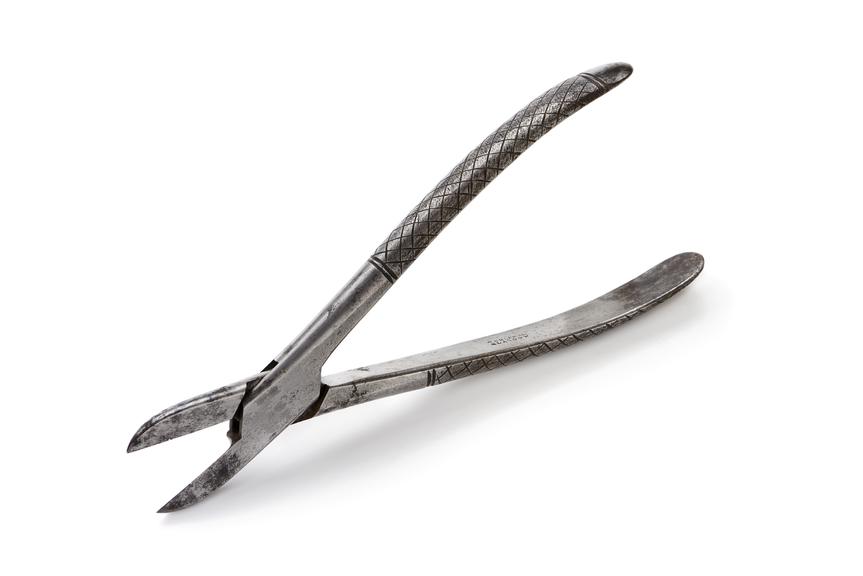
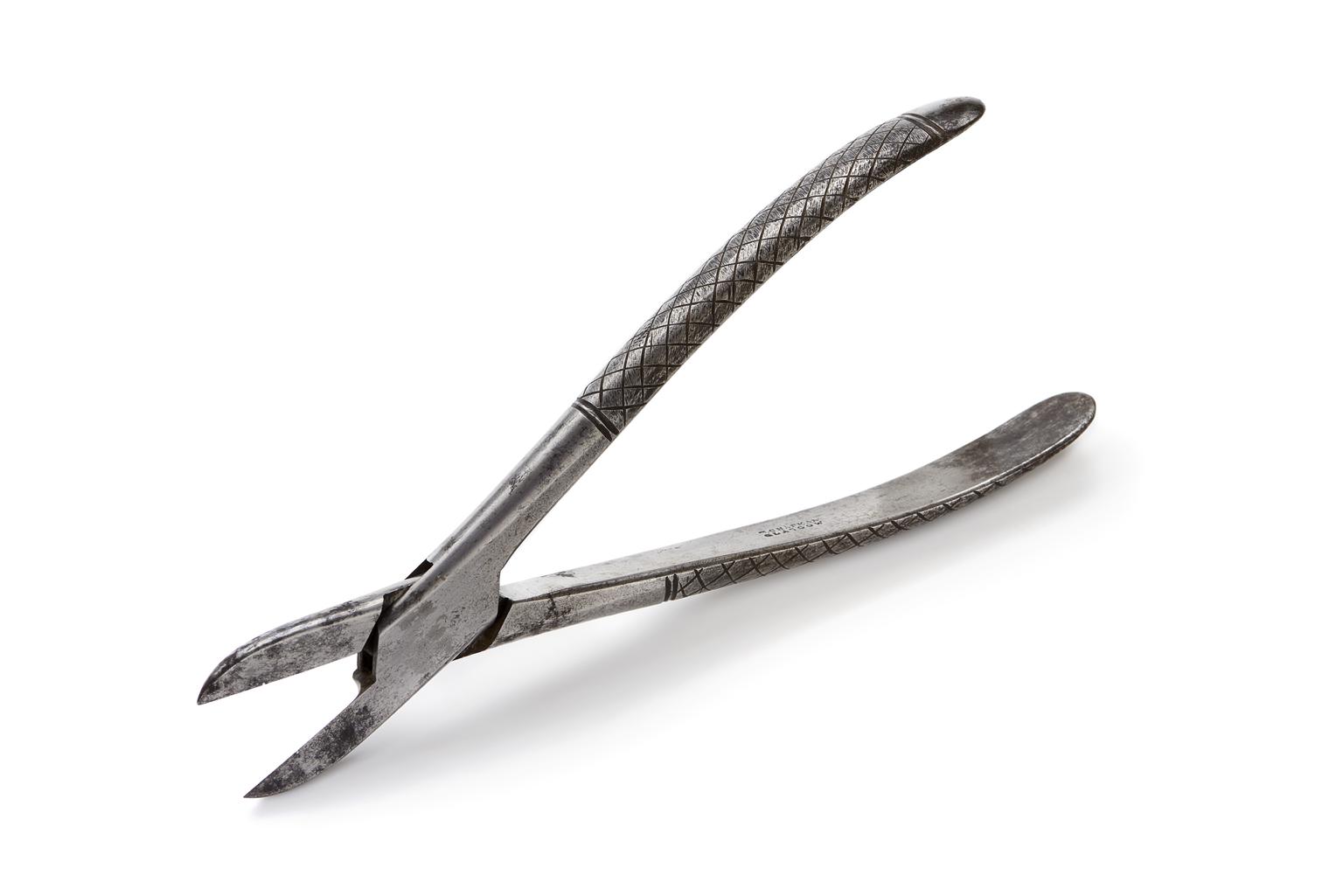
Bone cutting forceps

Bone cutting forceps from amputation set, by T Chapham, Edinburgh, Scotland, probably 1801-1900

More

As an alternative to a saw, bone cutting forceps are used to divide bone during an operation.

Measurements:
length 210 mm
width 31 mm
Materials:
steel
Object Number:
A600559 Pt3
type:
bone cutting forceps
Image ©
The Board of Trustees of the Science Museum

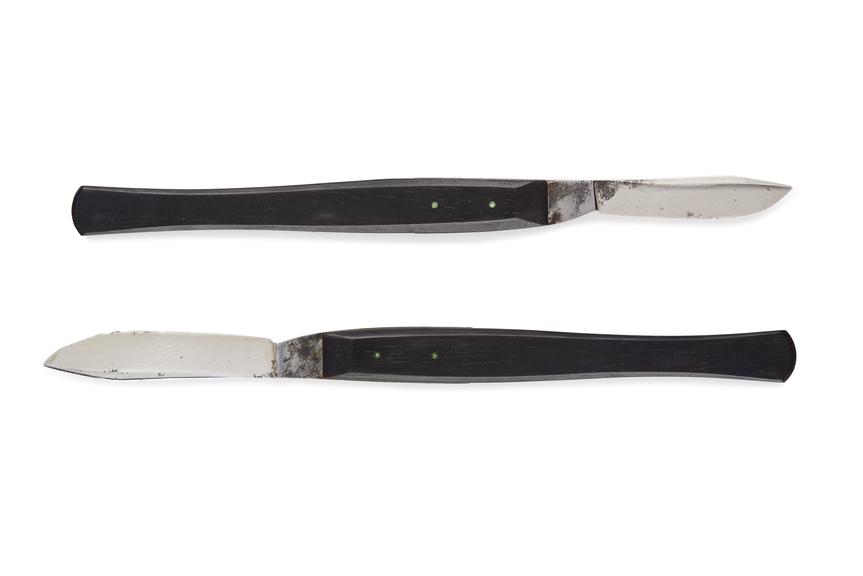
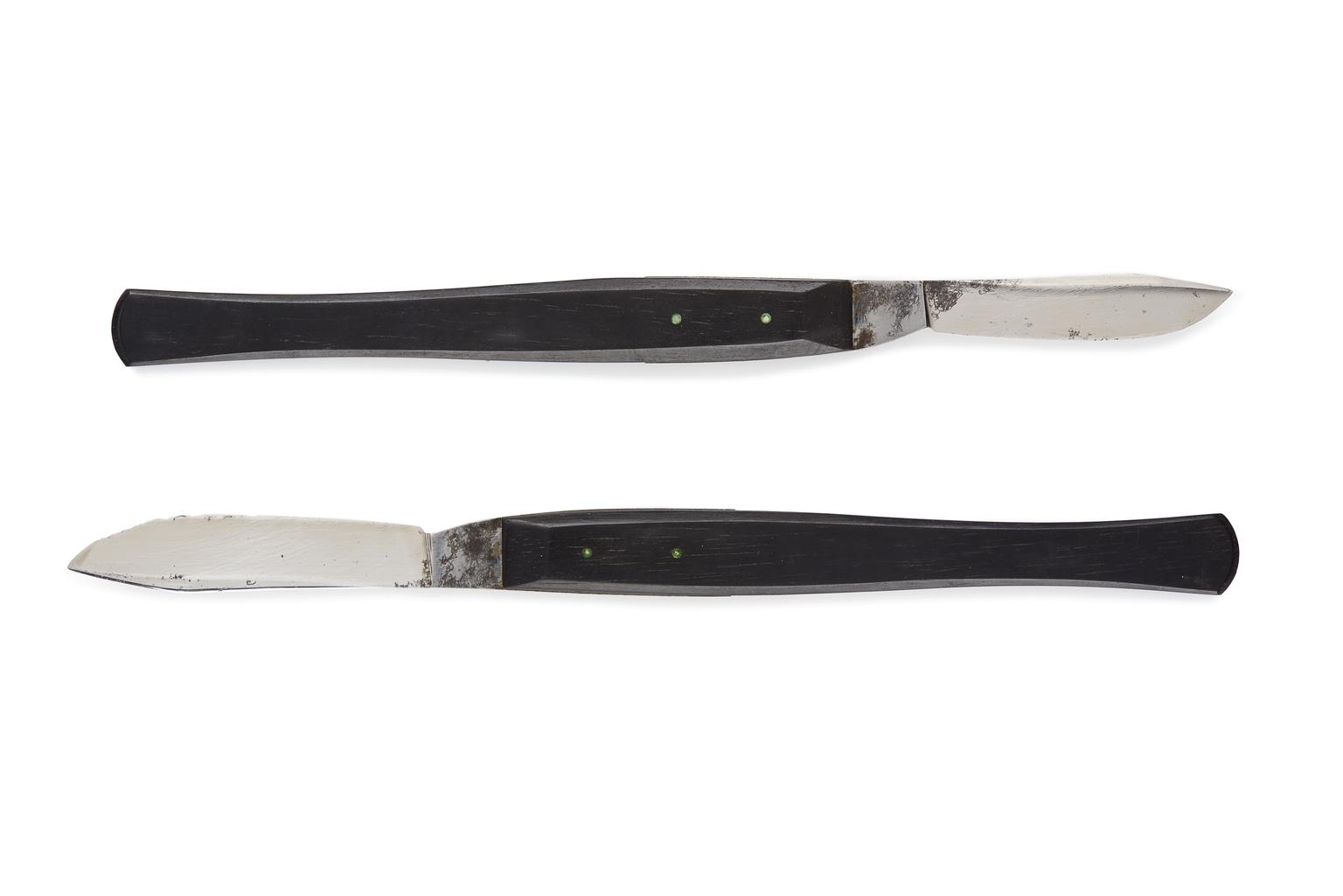
Scalpels from amputation set

Two scalpels with wooden handles, from amputation set, by T Chapman, Edinburgh, Scotland, probably 1801-1900

More

Scalpels with sharp blades are used to make incisions during surgical procedures. As these examples have wooden handles, they could not be easily sterilised between uses. It is likely that these pre-date ideas of aseptic surgery - to prevent infection during operations.

Measurements:
length 158 mm
width 12 mm
Materials:
steel and wood
Object Number:
A600559 Pt4
type:
scalpels
Image ©
The Board of Trustees of the Science Museum

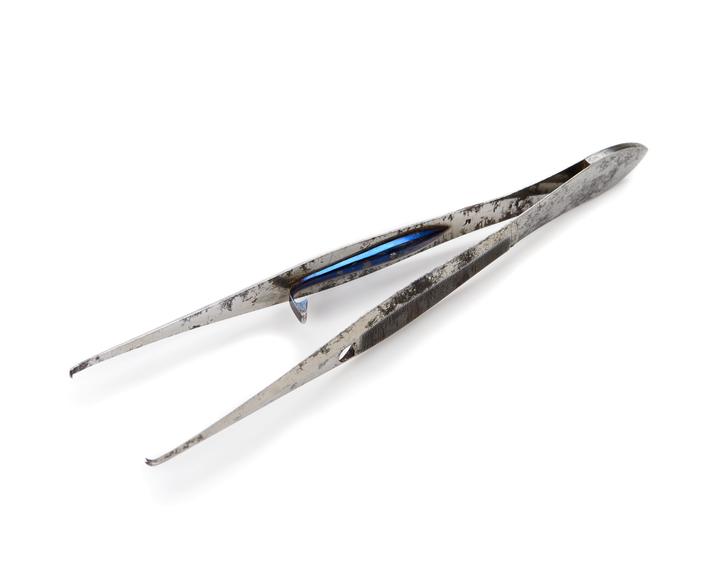
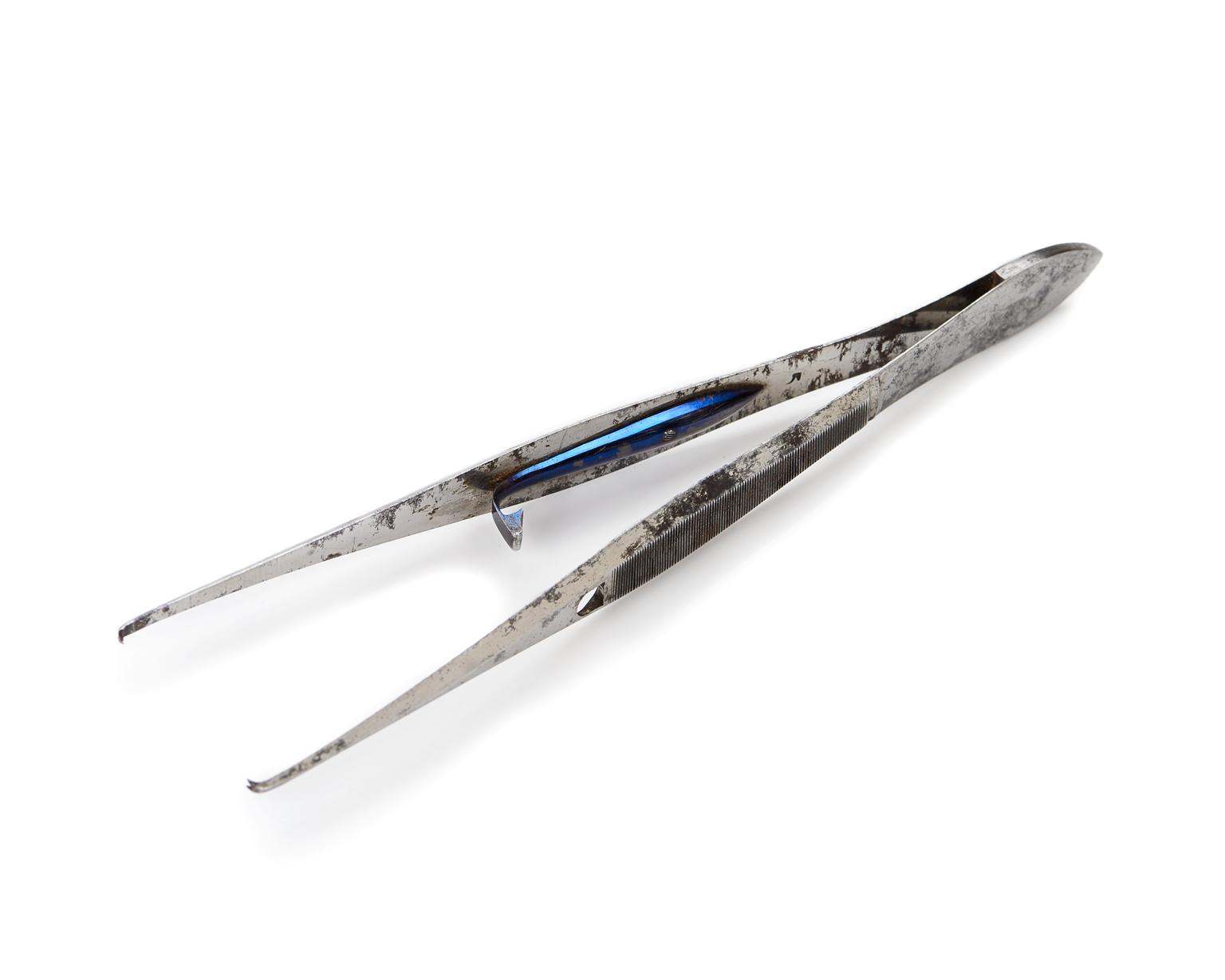
Artery forceps

, by T Chapman, Edinburgh, Scotland, probably 1801-1900Artery forceps from amputation set.

More

Artery forceps are used to control bleeding from blood vessels by clamping down on the artery.

Measurements:
length 126 mm
width 10 mm
Materials:
steel
Object Number:
A600559 Pt5
type:
artery forceps
Image ©
The Board of Trustees of the Science Museum

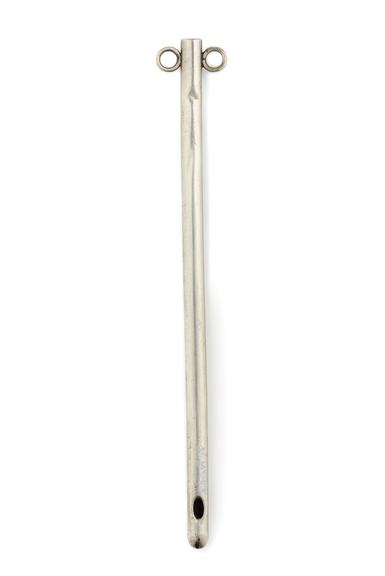
Cannula

Metal cannula, from amputation set, by T Chapman, Edinburgh, Scotland, probably 1801-1900

More

A cannula is a thin tube inserted into the body. They create a route for fluid delivery or removal.

Measurements:
length 132 mm
width 18 mm
Materials:
metal
Object Number:
A600559 Pt6
type:
cannulas
Image ©
The Board of Trustees of the Science Museum

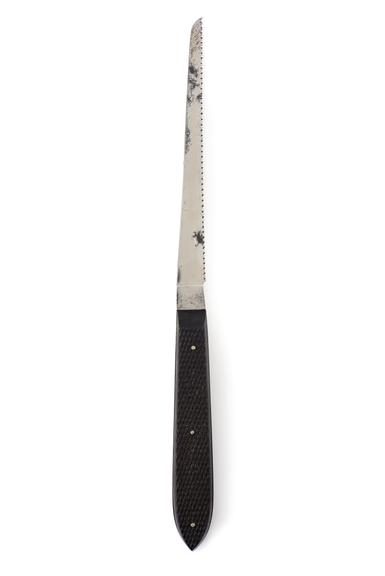
Finger saw with wooden handle

Finger saw with wooden handle, from amputation set, by T Chapman, Edinburgh, Scotland, probably 1801-1900

More

Finger saws are used for amputations of fingers. As these examples have wooden handles, they could not be easily sterilised between uses. It is likely that these pre-date ideas of aseptic surgery - to prevent infection during operations.

Measurements:
length 220 mm
width 17 mm
Materials:
steel and wood
Object Number:
A600559 Pt7
type:
amputation saws
Image ©
The Board of Trustees of the Science Museum

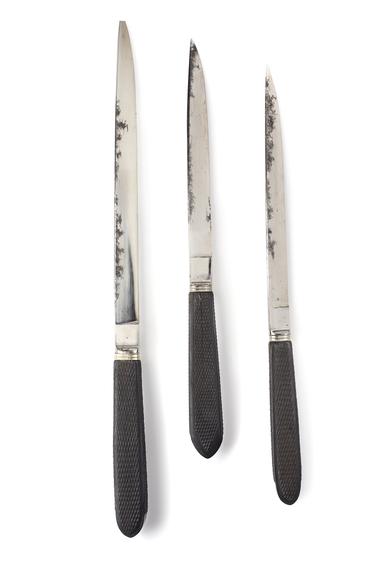
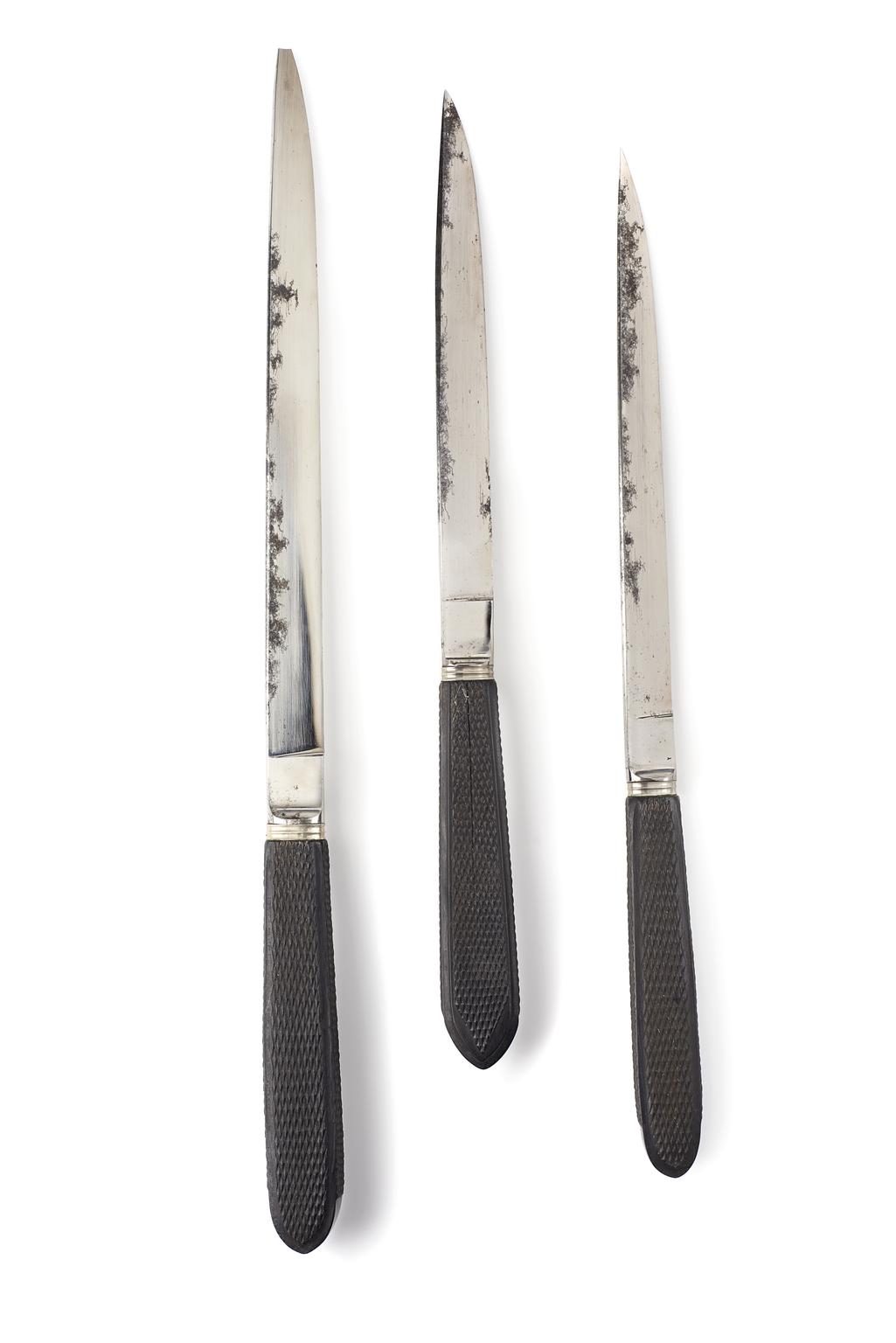
Three amputation knives

Three amputation knives with wooden handles, by T Chapman, Edinburgh, Scotland, probably 1801-190

More

Amputation knives are used for cutting the tissue and muscle around a limb to reveal the bones. The textured handles were designed to help with grip. As these examples have wooden handles, they could not be easily sterilised between uses. It is likely that these pre-date ideas of aseptic surgery - to prevent infection during operations.

Measurements:
length 318 mm
width 19 mm
Materials:
steel and wood
Object Number:
A600559 Pt8
type:
amputation knives
Image ©
The Board of Trustees of the Science Museum

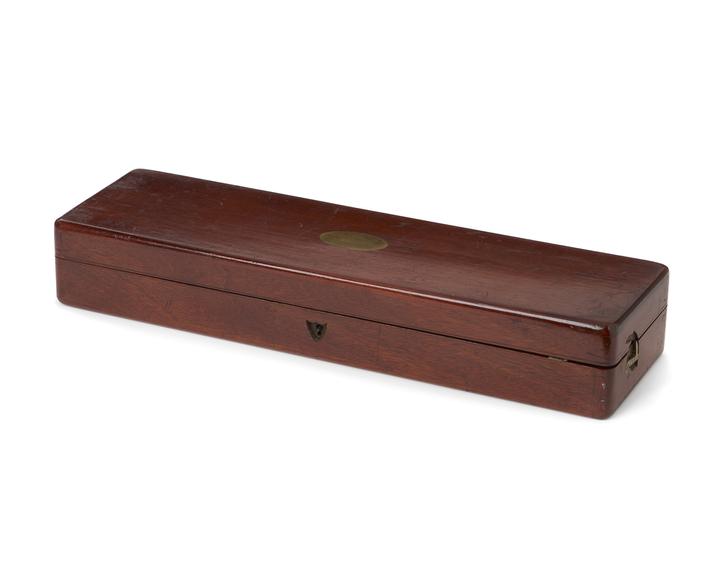
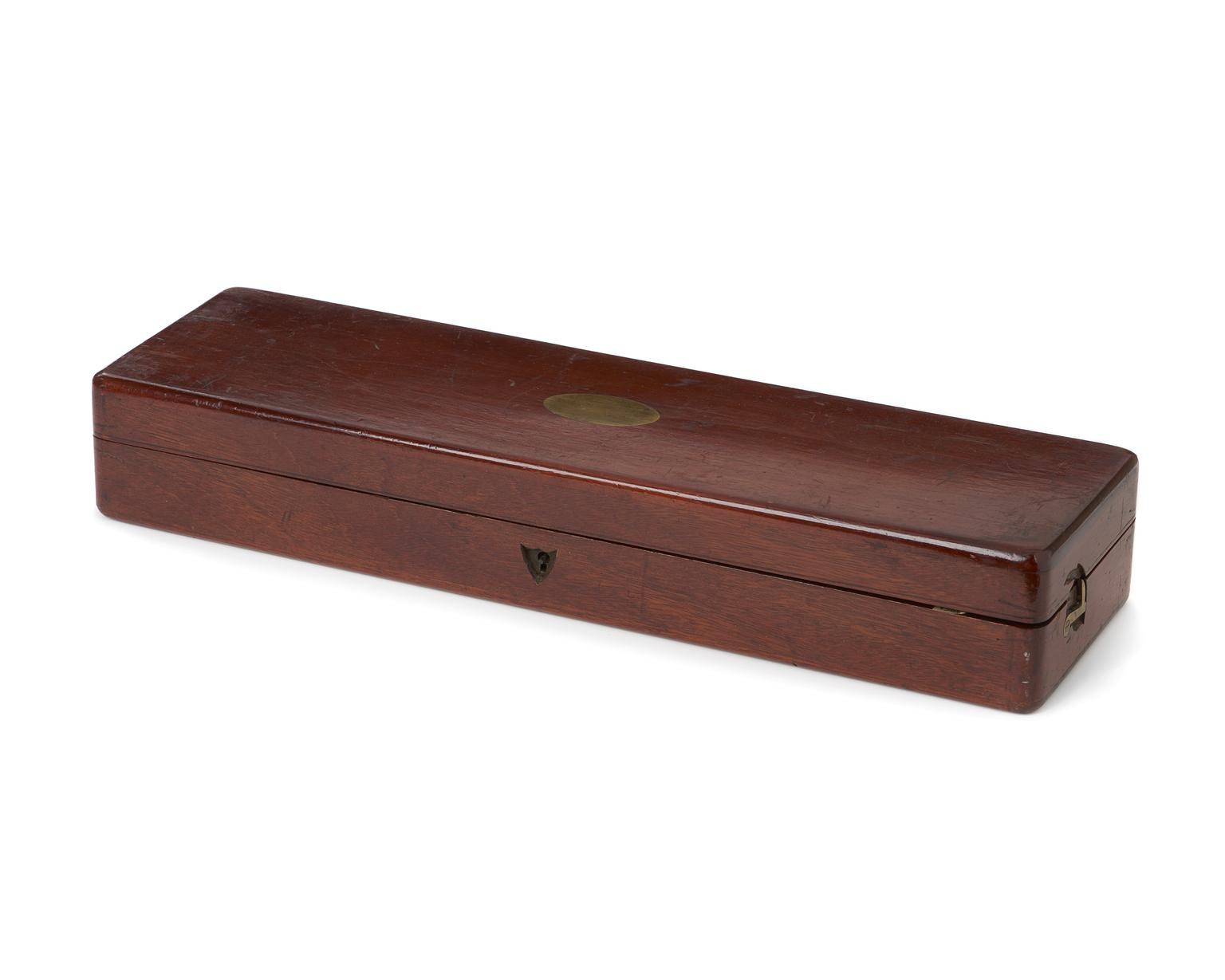
Case for amputation set

Case for amputation set, by T. Chapman, Scotland, probably 1801-1900

More

Each instrument inside this kit is needed to carry out an amputation of an arm or leg. This includes saws, forceps, scalpels and knives to cut through bone, tissue and skin. There are also ways of slowing down or preventing blood loss by using a tourniquet or artery forceps.

Measurements:
case: length 412 mm
case: width 123 mm
case: height 64 mm
Materials:
case, wood , case, brass and case, velvet, lined
Object Number:
A600559/9
type:
amputation sets
Image ©
The Board of Trustees of the Science Museum