





Strip of film; a man and child through a park
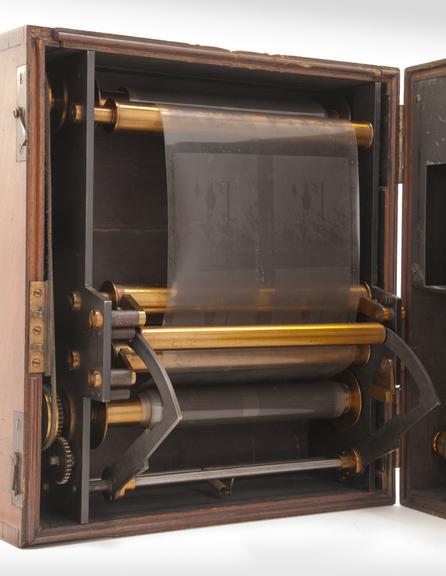
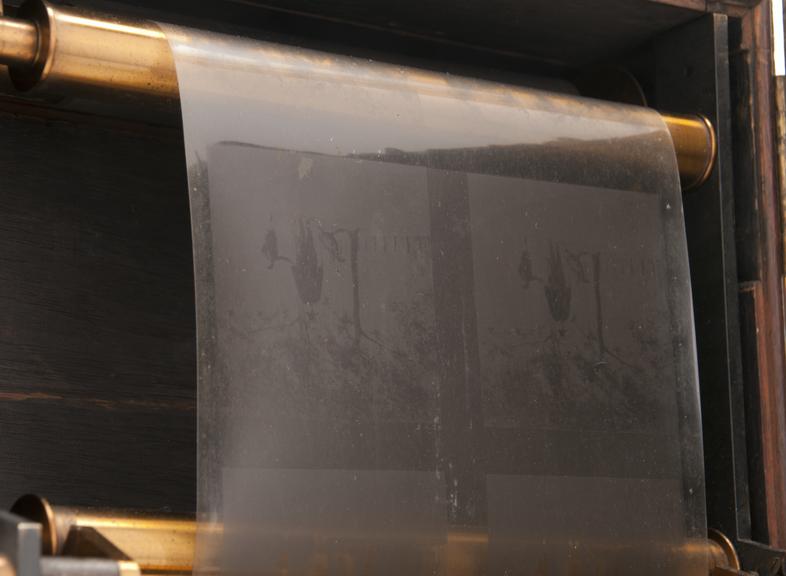
Strip of film showing a man walking with a child through a park, taken with William Friese-Greene's Stereo Cine Camera manufactured by A Lege & Co (1950-174).


 This image is released under a CC BY-NC-SA 4.0
Licence
This image is released under a CC BY-NC-SA 4.0
Licence
License this image for commercial use at Science and Society Picture Library
LicenseThis image is released under a CC BY-NC-SA 4.0
Licence
License this image for commercial use at Science and Society Picture Library
LicenseThis image is released under a CC BY-NC-SA 4.0
Licence
License this image for commercial use at Science and Society Picture Library
LicenseThis image is released under a CC BY-NC-SA 4.0
Licence
License this image for commercial use at Science and Society Picture Library
LicenseThis image is released under a CC BY-NC-SA 4.0
Licence
License this image for commercial use at Science and Society Picture Library
LicenseThis image is released under a CC BY-NC-SA 4.0
Licence
License this image for commercial use at Science and Society Picture Library
LicenseThis image is released under a CC BY-NC-SA 4.0
Licence
License this image for commercial use at Science and Society Picture Library
LicenseThis image is released under a CC BY-NC-SA 4.0
Licence
License this image for commercial use at Science and Society Picture Library
LicenseThis image is released under a CC BY-NC-SA 4.0
Licence
License this image for commercial use at Science and Society Picture Library
LicenseThis image is released under a CC BY-NC-SA 4.0
Licence
License this image for commercial use at Science and Society Picture Library
LicenseThis image is released under a CC BY-NC-SA 4.0
Licence
License this image for commercial use at Science and Society Picture Library
LicenseThis image is released under a CC BY-NC-SA 4.0
Licence
License this image for commercial use at Science and Society Picture Library
LicenseThis image is released under a CC BY-NC-SA 4.0
Licence
License this image for commercial use at Science and Society Picture Library
LicenseThis image is released under a CC BY-NC-SA 4.0
Licence
License this image for commercial use at Science and Society Picture Library
LicenseThis image is released under a CC BY-NC-SA 4.0
Licence
License this image for commercial use at Science and Society Picture Library
LicenseThis image is released under a CC BY-NC-SA 4.0
Licence
License this image for commercial use at Science and Society Picture Library
LicenseThis image is released under a CC BY-NC-SA 4.0
Licence
License this image for commercial use at Science and Society Picture Library
License
Science Museum Group
© The Board of Trustees of the Science Museum
Science Museum Group
© The Board of Trustees of the Science Museum
Science Museum Group
© The Board of Trustees of the Science Museum
Science Museum Group
© The Board of Trustees of the Science Museum
Science Museum Group
© The Board of Trustees of the Science Museum
Science Museum Group
© The Board of Trustees of the Science Museum
Science Museum Group
© The Board of Trustees of the Science Museum
Science Museum Group
© The Board of Trustees of the Science Museum
Science Museum Group
© The Board of Trustees of the Science Museum
Science Museum Group
© The Board of Trustees of the Science Museum
Science Museum Group
© The Board of Trustees of the Science Museum
Science Museum Group
© The Board of Trustees of the Science Museum
Science Museum Group
© The Board of Trustees of the Science Museum
Science Museum Group
© The Board of Trustees of the Science Museum
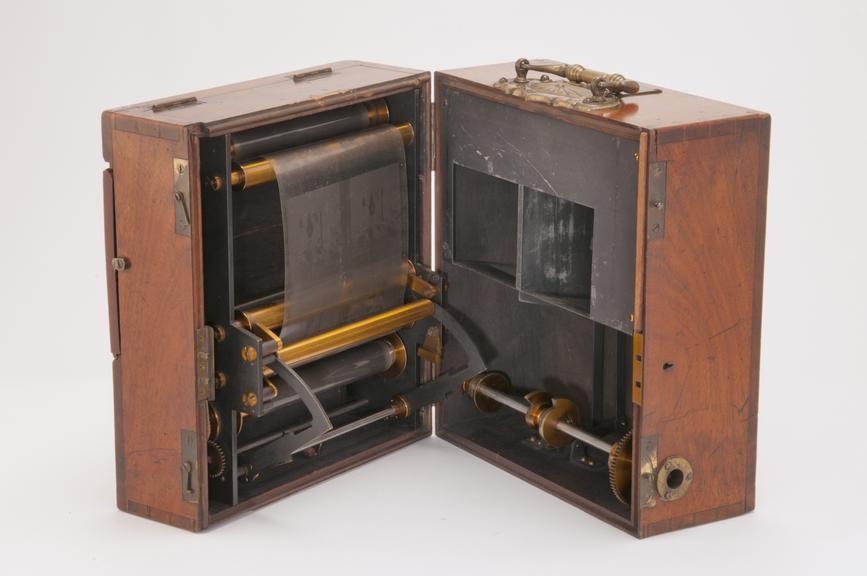
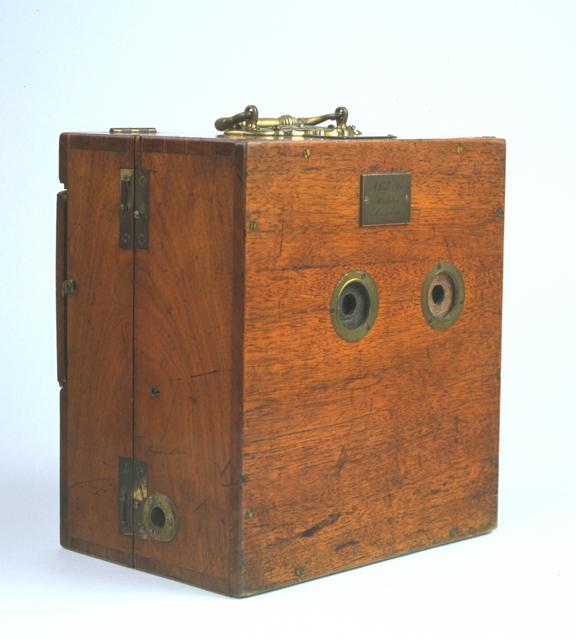
William Friese-Greene's Stereo Cine Camera
Science Museum Group Collection
© The Board of Trustees of the Science Museum
William Friese-Greene's Stereo Cine Camera, 1890
Science Museum Group Collection
© The Board of Trustees of the Science Museum
William Friese-Greene's Stereo Cine Camera, about 1890
Science Museum Group Collection
© The Board of Trustees of the Science Museum
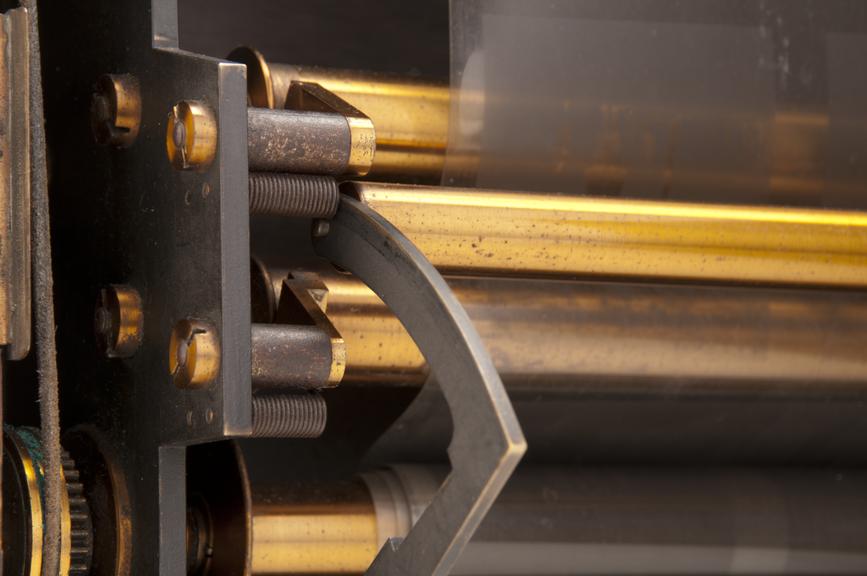
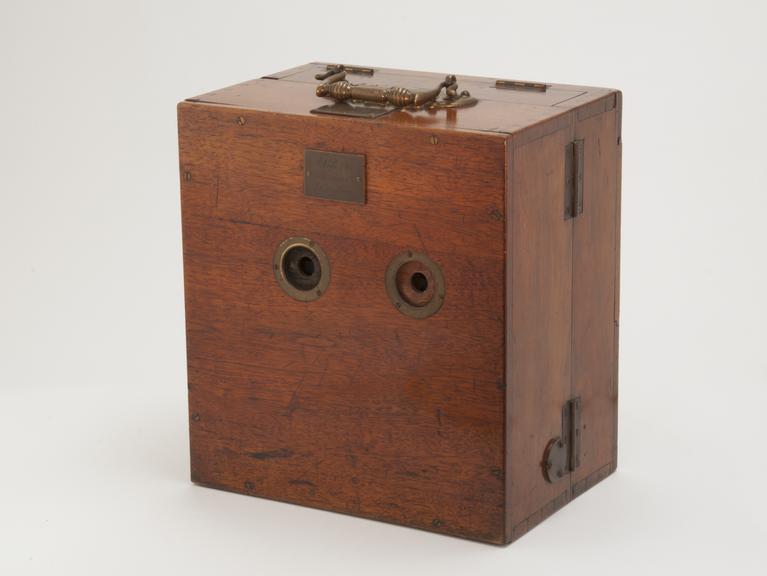
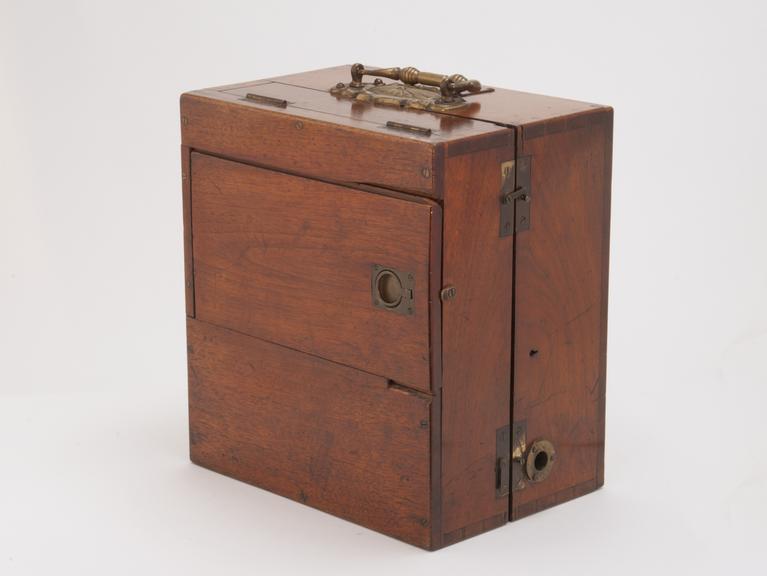
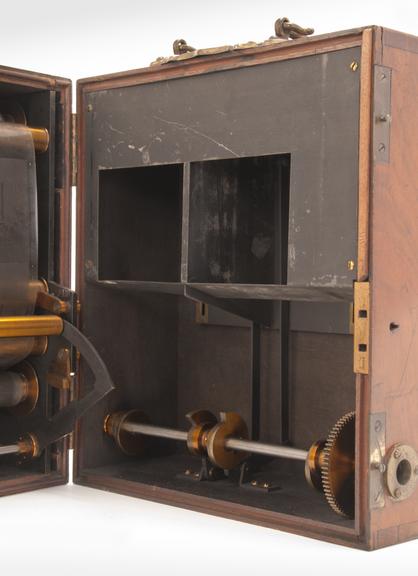
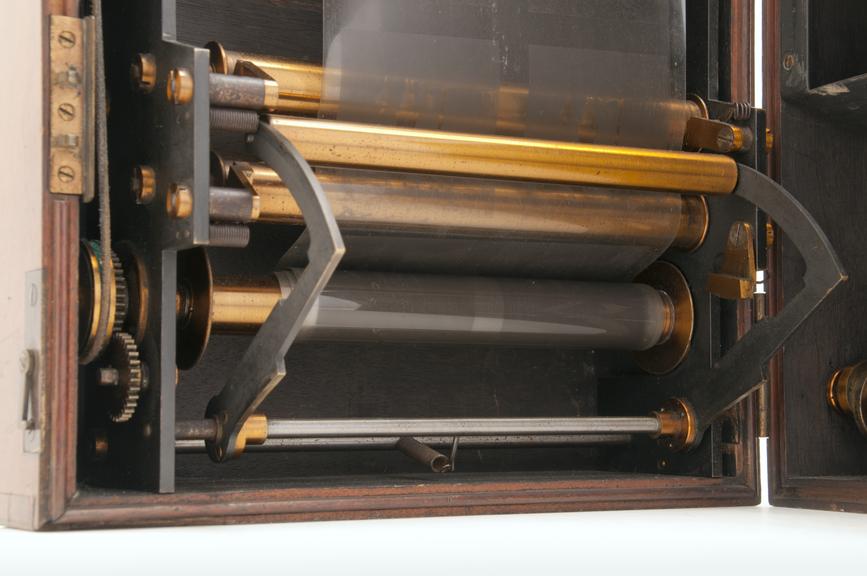
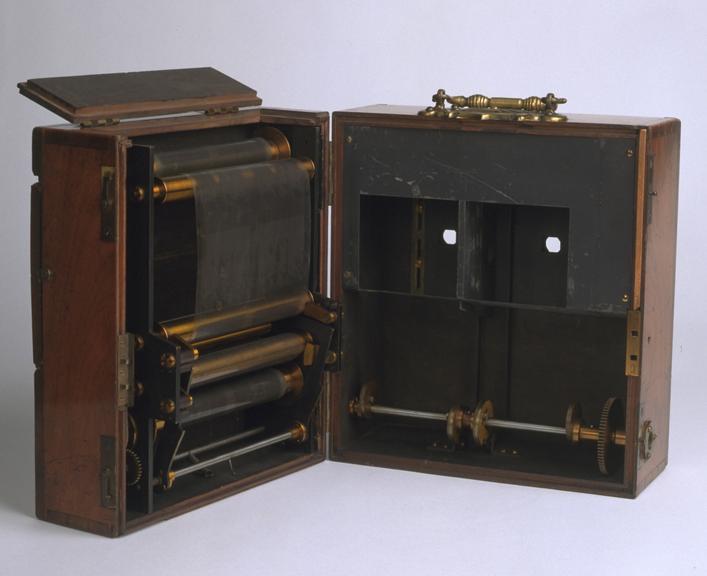
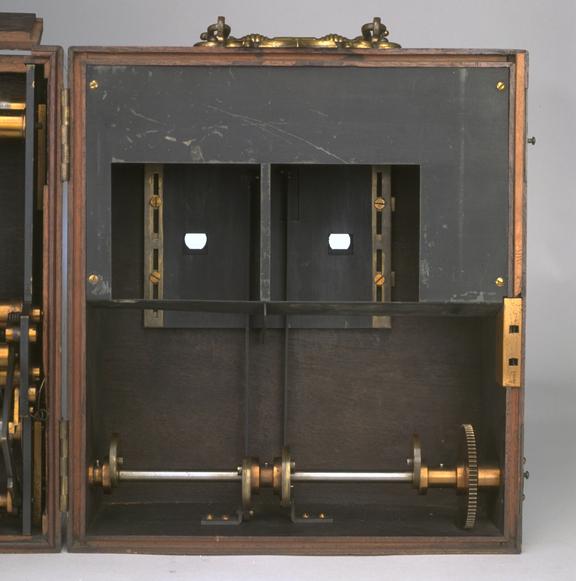
William Friese-Greene's Stereo Cine Camera, manufactured by A Lege & Co, London c. 1890. With brass plate on front, etched 'A Lege & Co / Makers / London'.
This camera (shown without lenses) was patented by Friese-Greene (1855-1921) in 1893, but is based on a similar design by Frederick Varley, patented in 1890. It has many of the characteristics of the successful moving picture cameras of 1896, but was unable to take photographs at sufficient speed to produce a true moving picture effect.
In 1889 Friese Greene and civil engineer Mortimer Evans designed a sequence camera using 'a roll of any convenient length of sensitised paper or the like', capable of taking four or five pictures a second. Brian Coe has suggested that these were to be printed up as lantern slides for the double-lantern projector. There is no record of a successful film projection at this time; the claimed demonstration at the Chester Photographic Convention in 1890 was a failure. That same year Friese Greene used a stereoscopic sequence camera made by Frederick Varley, but once again there is no record of successful projection.
Strip of film showing a man walking with a child through a park, taken with William Friese-Greene's Stereo Cine Camera manufactured by A Lege & Co (1950-174).