Cordial tincture
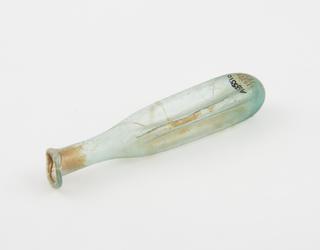
Cordial tincture, empty bottle
- Measurements:
-
length 70 mm
width 49 mm
height 146 mm
- Materials:
- whole, glass, cut
- Object Number:
- A119982 Pt1
- type:
- cordial tincture

 This image is released under a CC BY-NC-SA 4.0
Licence
This image is released under a CC BY-NC-SA 4.0
Licence
License this image for commercial use at Science and Society Picture Library
License
Science Museum Group
© The Board of Trustees of the Science Museum
Medicine chest and contents, c.1789, said to belong to the Duke of York by Fogelgerg and Chawner, English
Cordial tincture, empty bottle
Castor oil, empty bottle
Cinnamon water, empty bottle
Spatual, listed as "elastic knife"
Spatula, heavy
Spatula, ivory handle listed as "elastic knife"
Pill slab
Brass key
Steel key
Spirit of sal volatile, in bottle
Peppermint in bottle
Bottle, unlabelled, brown stains inside
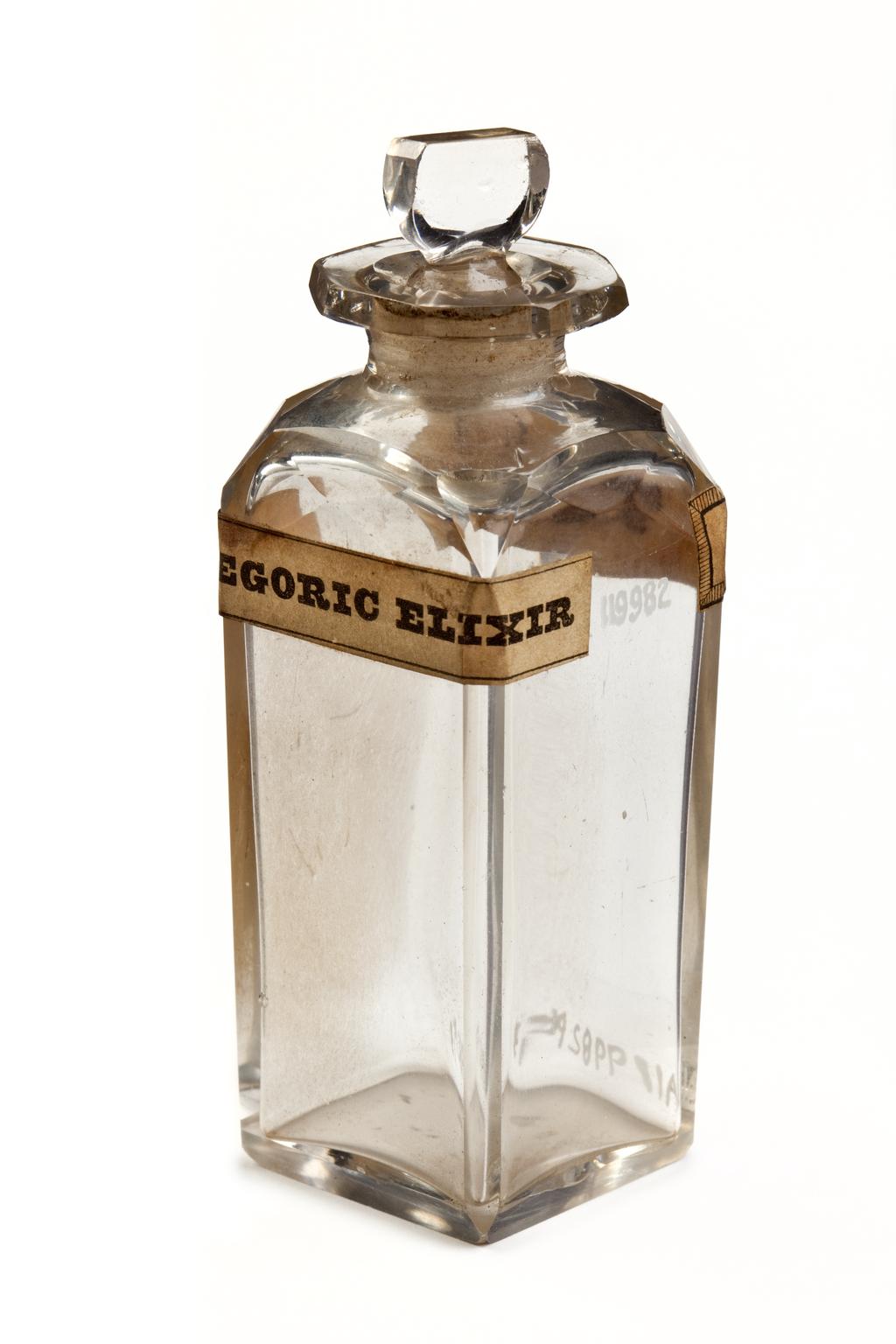
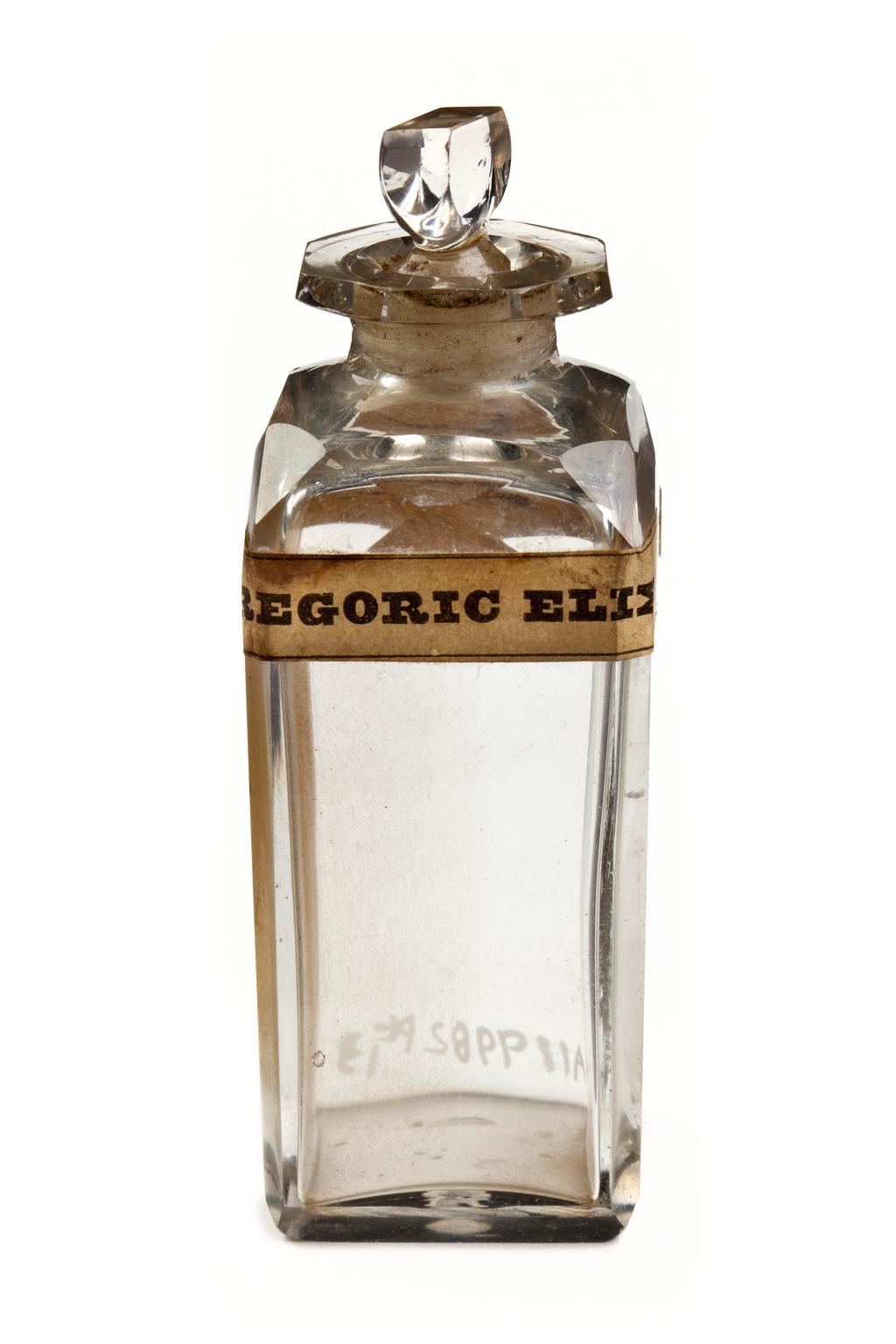
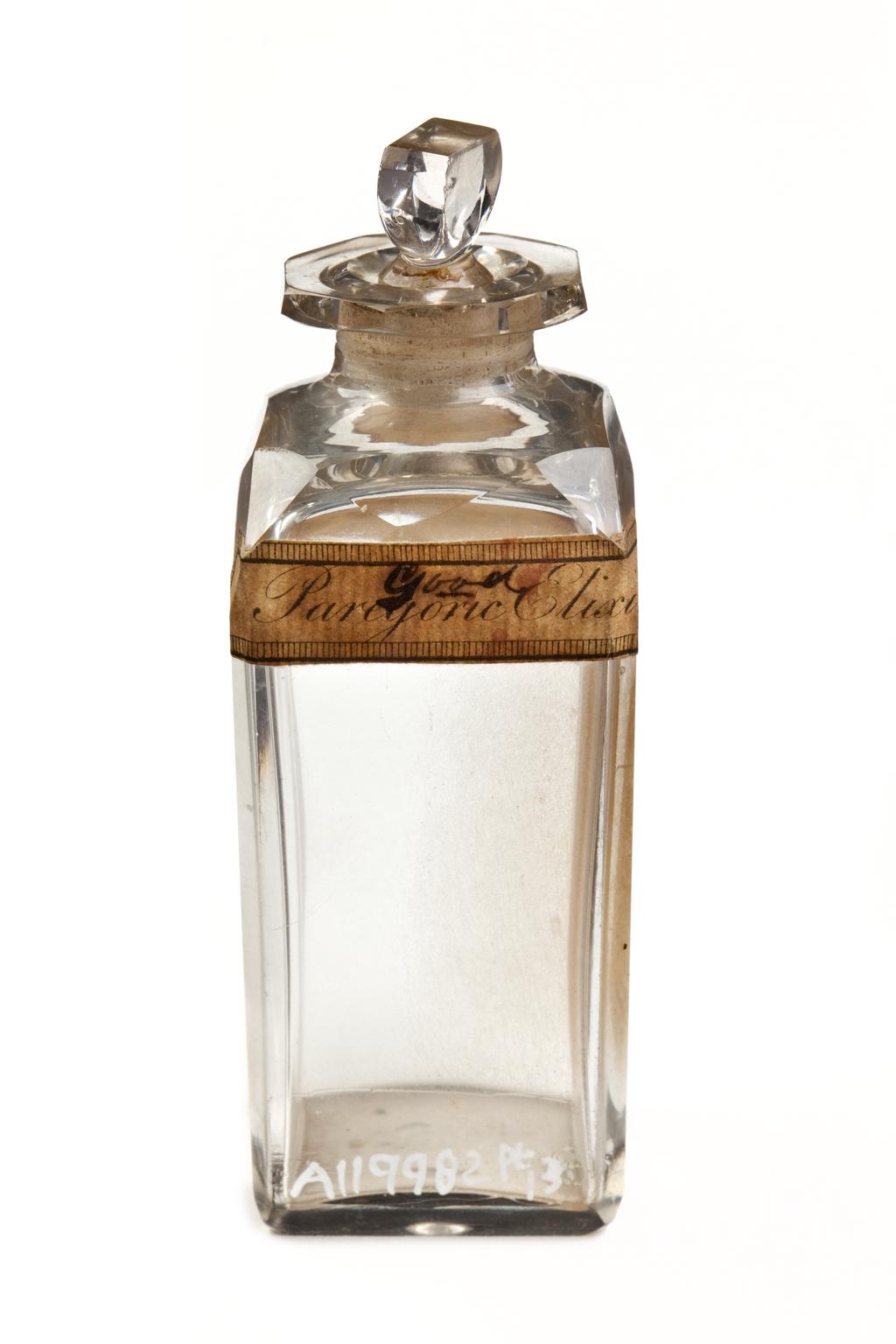
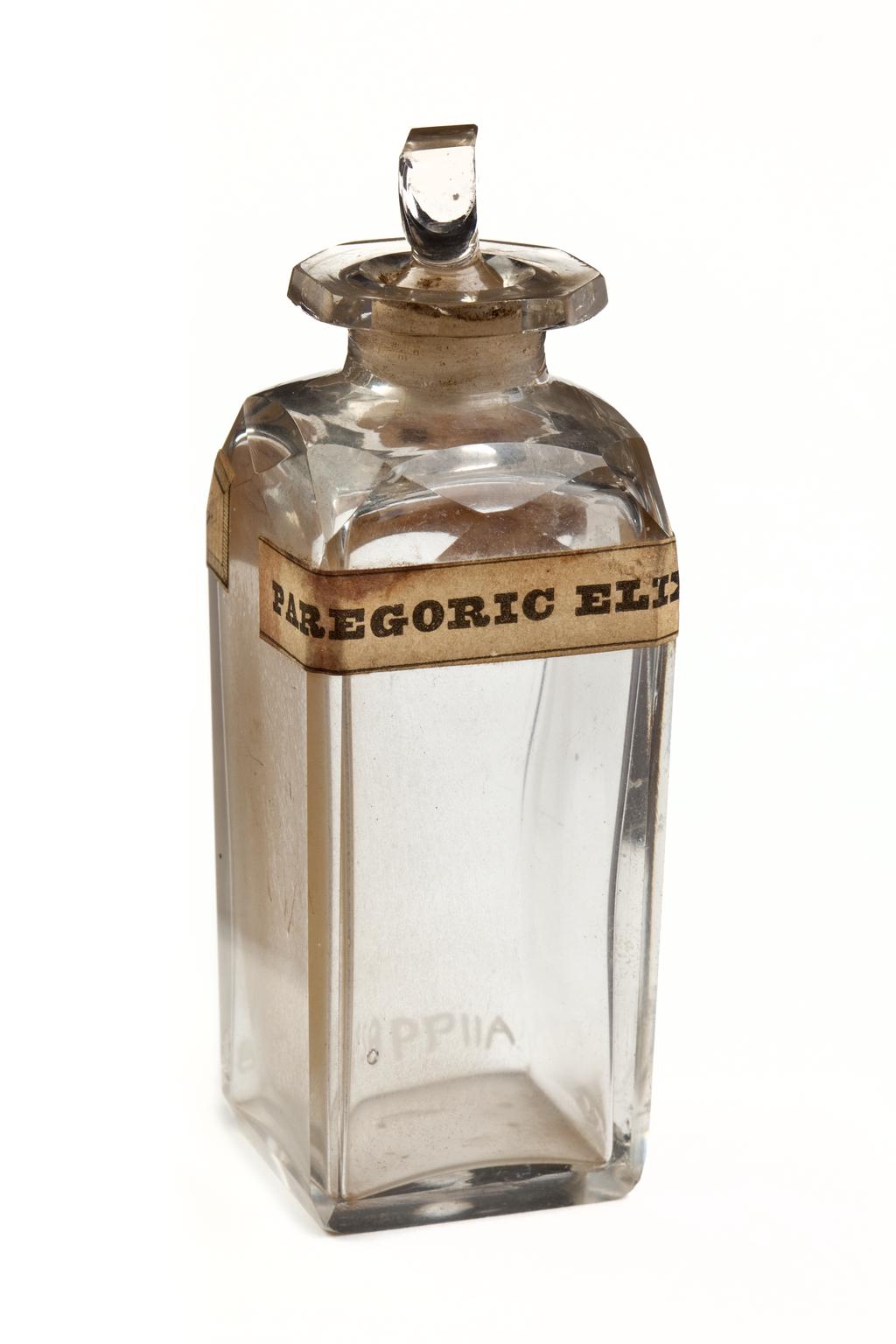
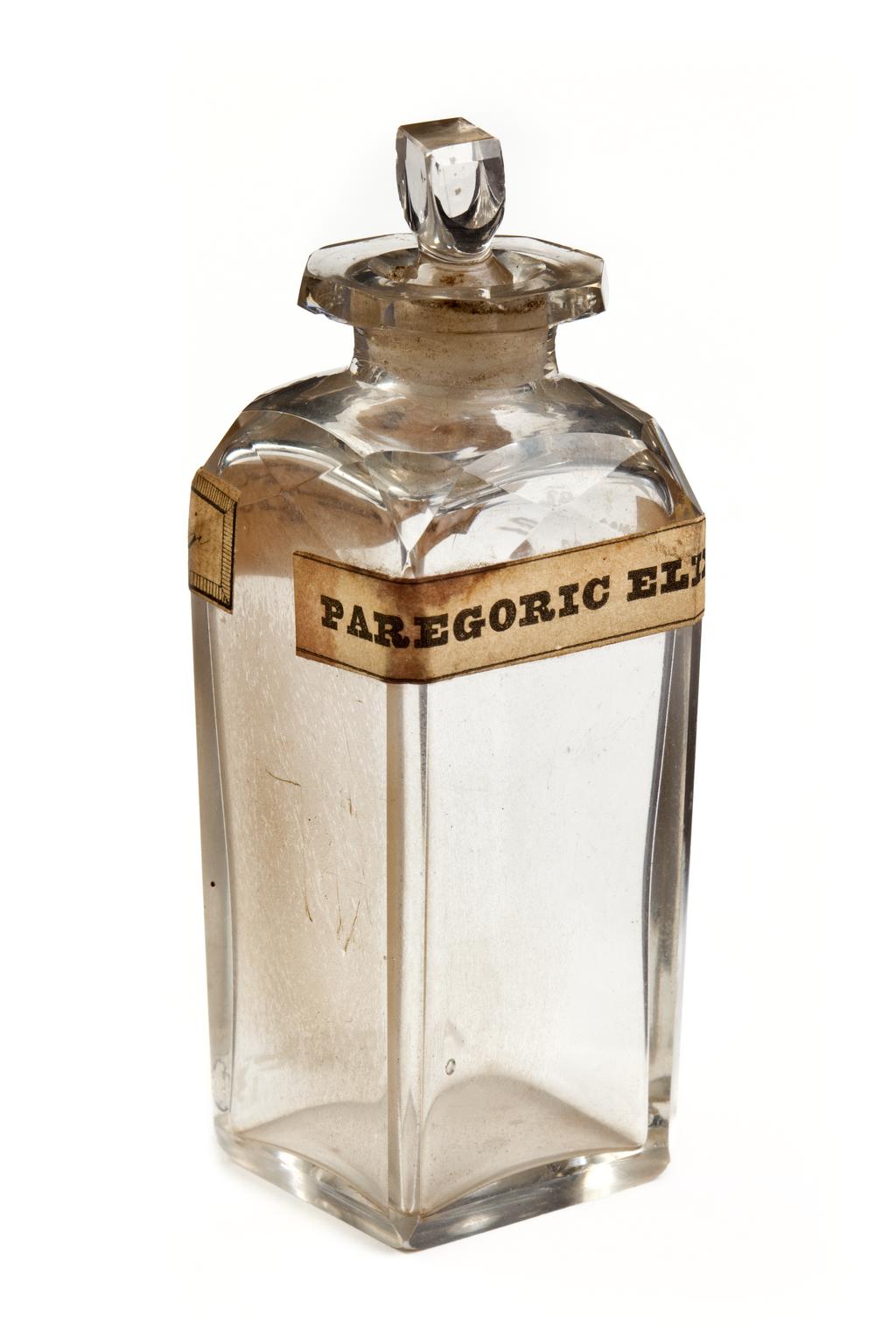
Glass bottle with glass stopper for paregoric elixir, empty. 97 mm x 31 mm x 31 mm, 116g. Handwritten note on back label reads, 'Good'. Folgelbert Chawner, English, 1786-1795.
This bottle contained a popular remedy called paregoric elixir, made from camphor, opium and benzoic acid in a solution of alcohol. It was used to treat coughs, as a pain relief, and to prevent diarrhoea. It was even rubbed on babies’ gums to lessen the pain of teething.
Workers in mills, mines and factories spent long hours in enclosed spaces where the air was thick with harmful textile or coal dust. Breathing in these tiny fibres caused lung problems such as asthma or coughs. With most employers not providing medical help or pay when off with illness, people turned to inexpensive remedies like this, to treat themselves and return to work.
Paregoric elixir could be bought in variously sized individual bottles from a chemist's store. However, this example is just one part of a well-stocked, elaborately crafted medicine chest. Only the wealthiest families would have owned a medicine chest such as this one, with veneered wood and many drawers and components, to hold their household medicines.
Since the Dangerous Drugs Act 1920, preparations of the addictive substance opium require a prescription in the United Kingdom. Earlier laws including the Pharmacy Act 1868 regulated who could dispense opium preparations.
Wooden drawer for opium (one of four), now empty. 38 mm x 120mm x 110mm. Fogelbert Chawner, English, c. 1789.
Manna in compartment of drawer
Rhubarb in compartment of drawer
Gum arabic in compartment of drawer
Dr. Warner's pills, in compartment of drawer
Camphor in compartment of drawer
Sal nitri in compartment of drawer
Drawer, handle off, containing handle and key
Two empty drawers
Rule, 6 inch, folding
Funnel, silver gilt
Strainer, gauze partly missing
Measure, double-ended
Scales, hand-held
Weights, 2 and 1/2 drams
Weights, scruple, 1/2, 1, 2
White marble mortar
Pestle, white marble with wooden handle
Ginger, not listed on lid of chest, bottle
Bottle, brown grainy mess inside
Bottle, golden liquid inside
Milk of sulphur, in broken jar
Turkey, powder jar
Magnesium carbonate, not as listed on lid of chest, in jar
Sodium carbonate, not listed on lid of chest, in jar
Medicine chest case (without contents see other parts), c.1789, said to belong to the Duke of York by Fogelgerg and Chawner, English