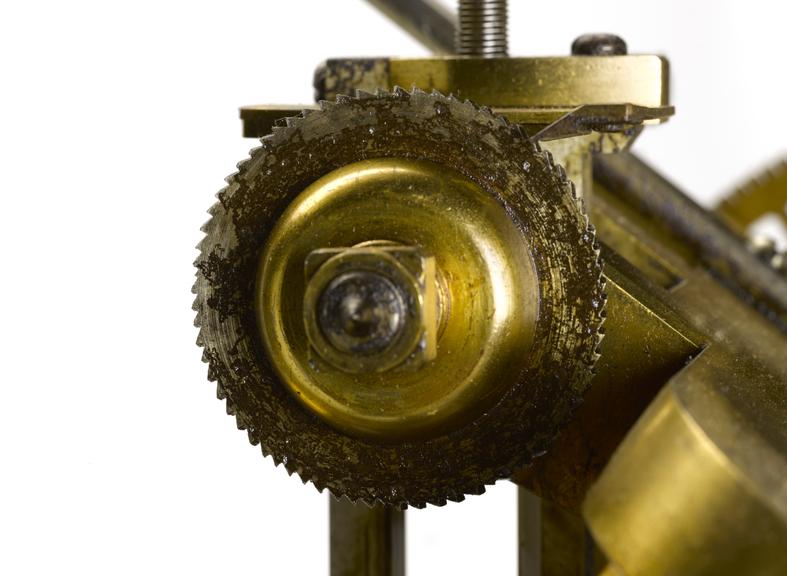
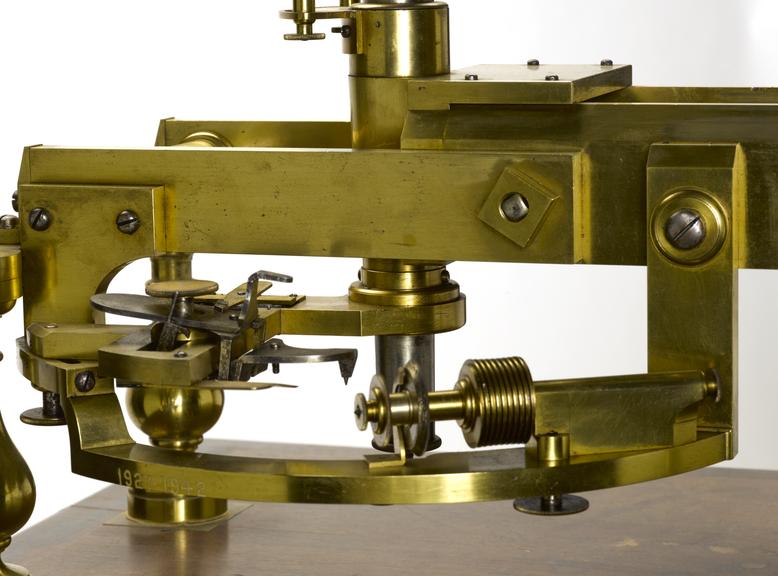
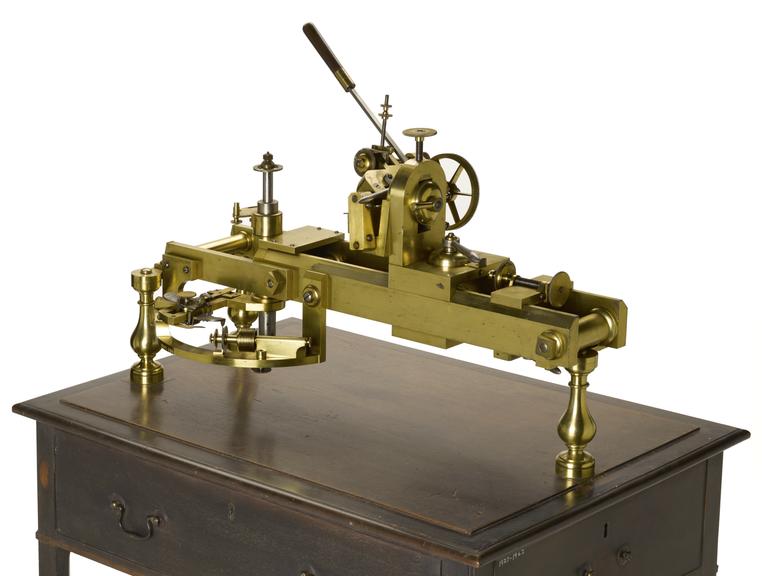

Wheel cutting engine, 1770-1785.

Made:
1770-1785 in London
designer:
Henry Hindley
Wheel cutting engine, 1770-1785. Wheel cutting engine, 1770-1785. Wheel cutting engine, 1770-1785. Wheel cutting engine, 1770-1785. Wheel cutting engine, 1770-1785. Wheel cutting engine, 1770-1785.

Creative Commons LicenseThis image is released under a CC BY-NC-SA 4.0 Licence

License this image for commercial use at Science and Society Picture Library

License

Creative Commons LicenseThis image is released under a CC BY-NC-SA 4.0 Licence

License this image for commercial use at Science and Society Picture Library

License

Creative Commons LicenseThis image is released under a CC BY-NC-SA 4.0 Licence

License this image for commercial use at Science and Society Picture Library

License

Creative Commons LicenseThis image is released under a CC BY-NC-SA 4.0 Licence

License this image for commercial use at Science and Society Picture Library

License

Creative Commons LicenseThis image is released under a CC BY-NC-SA 4.0 Licence

License this image for commercial use at Science and Society Picture Library

License

Creative Commons LicenseThis image is released under a CC BY-NC-SA 4.0 Licence

License this image for commercial use at Science and Society Picture Library

License

King's College London
© The Board of Trustees of the Science Museum

King's College London
© The Board of Trustees of the Science Museum

King's College London
© The Board of Trustees of the Science Museum

King's College London
© The Board of Trustees of the Science Museum

King's College London
© The Board of Trustees of the Science Museum

King's College London
© The Board of Trustees of the Science Museum

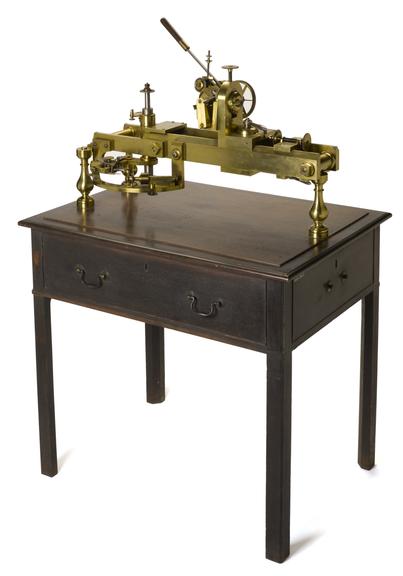
Wheel cutting engine on a table stand with a drawer and a box (not original, post 1875) of brass fittings and a brass extension arm

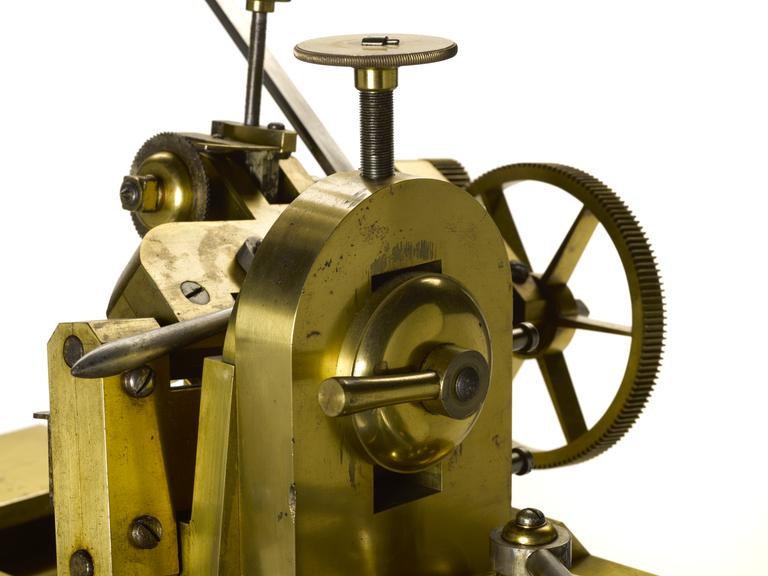
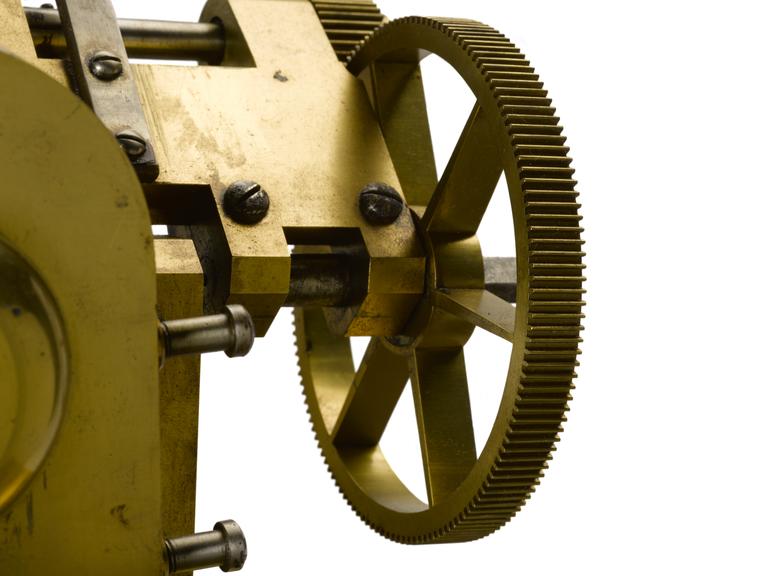
Wheel cutting engine on table with drawer, 1770-1785. This wheel cutting engine is thought to have been made by John Smith in the 1770s while he worked at King George III's Observatory at Richmond upon Thames. The engine was used to cut the teeth of wheels or pinions, and could have been used to divide the scales of instruments.

Details

Category:
King George III
Object Number:
1927-1942
Materials:
brass (copper, zinc alloy), wood (unidentified) and glass
Measurements:
engine, approx: depth 300 mm
engine: length 740 mm
glass case: length 750 mm
glass case: height 530 mm
table: height 715 mm
table: width 840 mm
box: height 490 mm
type:
wheel-cutting engines
rights:
Unlinked Name
credit:
King’s College London

Parts

Wheel cutting engine on a table stand with a drawer of brass fittings and a brass extension arm.

Wheel cutting engine

Wheel cutting engine on a table stand with a drawer of brass fittings and a brass extension arm.

Measurements:
engine, approx: depth 300 mm
engine: length 740 mm
glass case: length 750 mm
glass case: height 530 mm
table: height 715 mm
table: width 840 mm
box: height 490 mm
Object Number:
1927-1942 Pt1
type:
engine
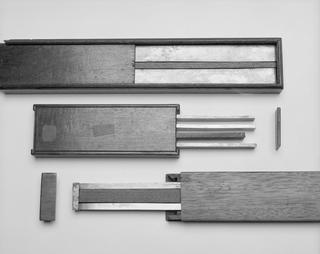
Box and components associated with wheel-cutting engine. Box unlikely to be original to the wheel-cutting engine.

Box and components for wheel cutting engine

Box and components associated with wheel-cutting engine. Box unlikely to be original to the wheel-cutting engine.

Measurements:
engine, approx: depth 300 mm
engine: length 740 mm
glass case: length 750 mm
glass case: height 530 mm
table: height 715 mm
table: width 840 mm
box: height 490 mm
Object Number:
1927-1942 Pt2
type:
case