



 This image is released under a
 Lawson 'Bicyclette', 1879
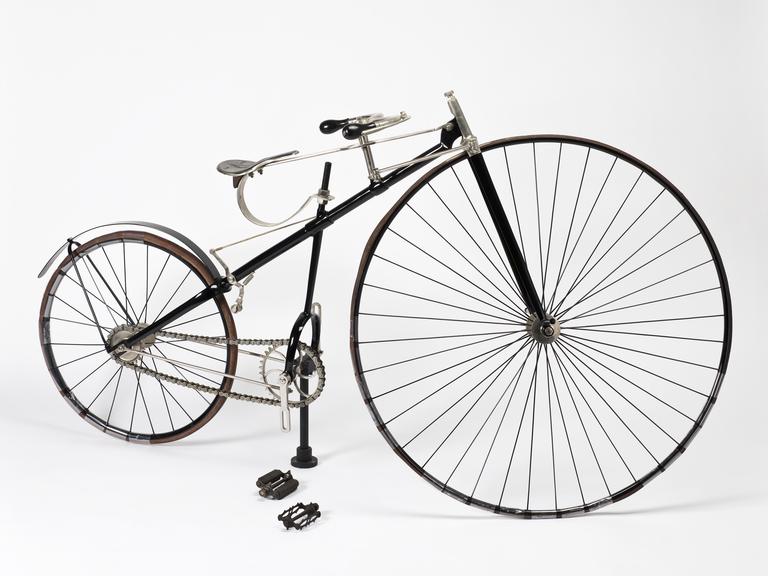
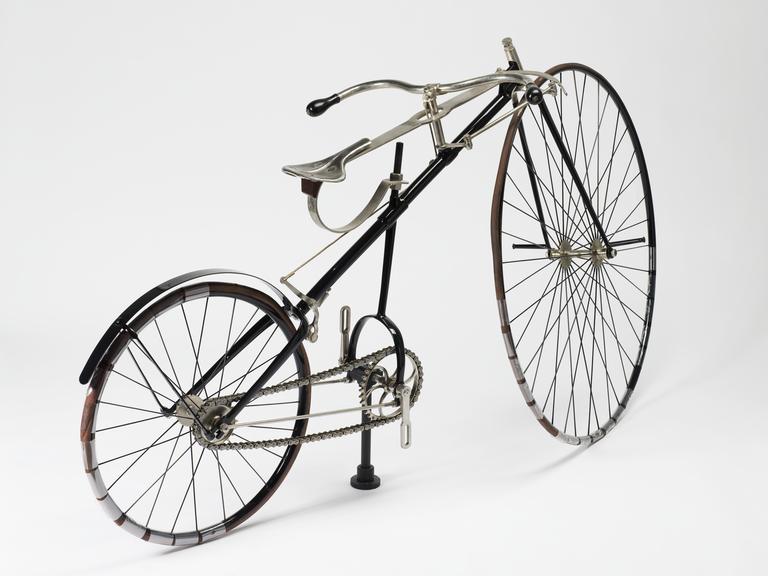
This Lawson 'Bicyclette' was built in 1879 by the Motor Traction Company in Brighton.
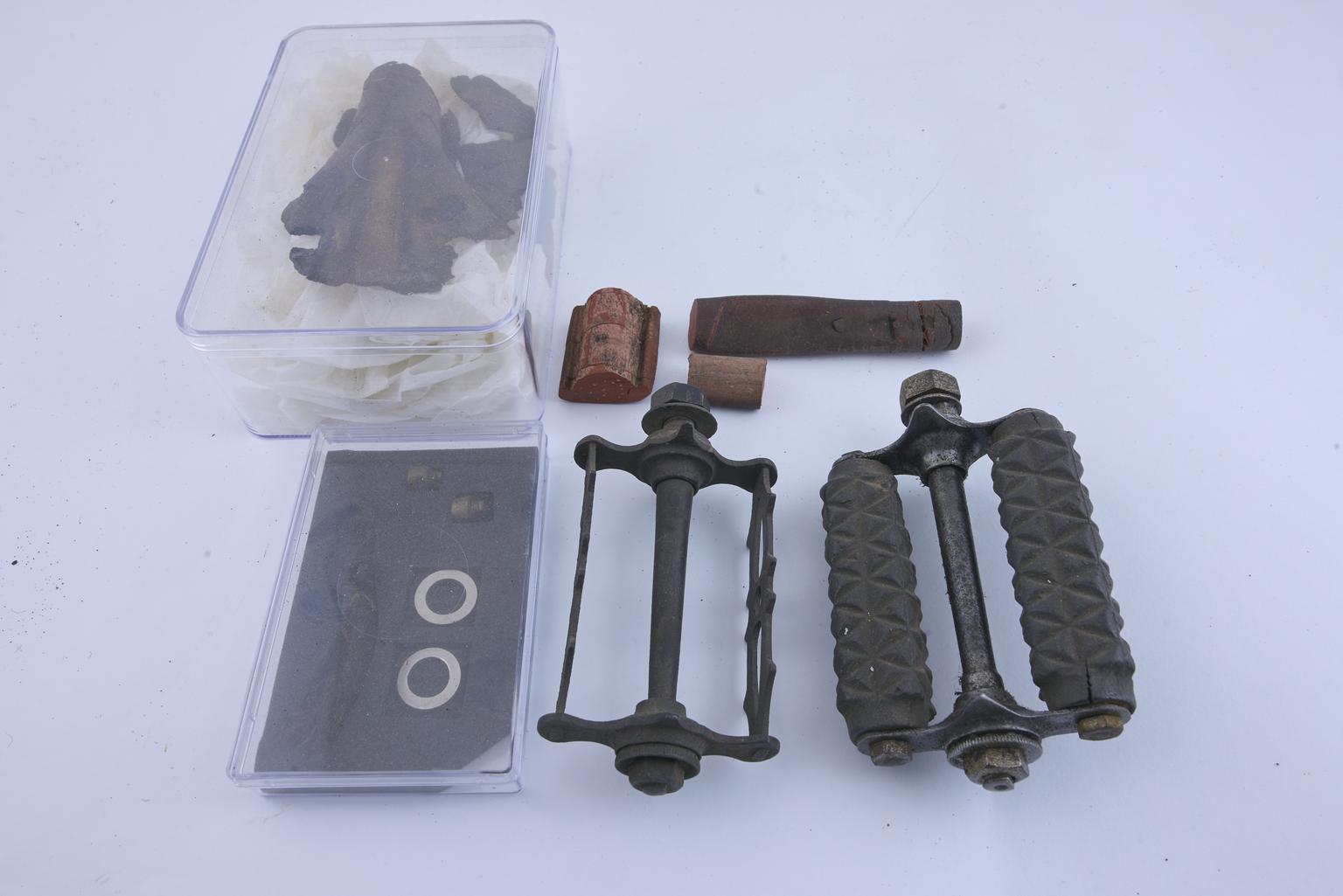
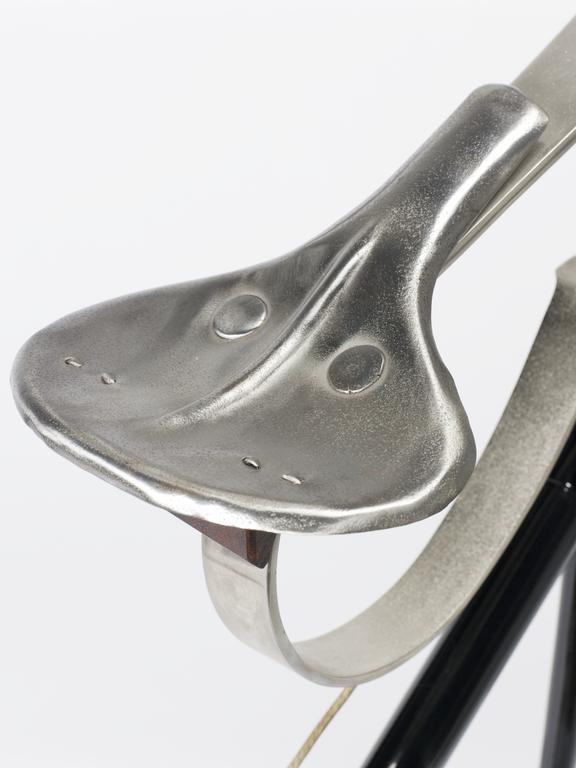
The bicycle frame consists of a single horizontal tube extending diagonally from the rear wheel axle up to the top of the larger front wheel forks. A vertical tube extends down the middle of the frame connecting the cee-spring saddle to the lower single-speed crank bracket. Beside the rubber pedals are footrests for use while coasting.
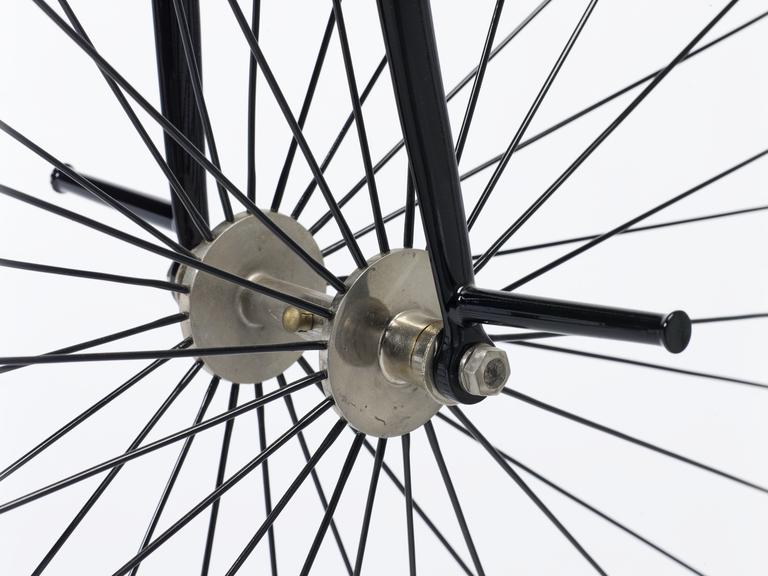
The handlebars are connected to the front fork by a horizontal link. A roller chain drive connects the lower crank to the rear wheel. Both the smaller rear wheel and larger front wheel have radial spokes and solid rubber tyres.
More
This is an example of a commercially sold iteration of Harry Lawson's 1874 chain-driven bicycle, which was one of the world's first production bicycles to use rear-wheel chain drive. Lawson patented this improved commercial version in 1879. His designs were a major step in the evolution of the safety bicycle.
Examples of experimental rear-wheel chain drive were developed in the UK during the 1870s, but Lawson’s simple design of using a small pitch chain to connect the pedals to the rear wheel would become the basis for all modern bicycles, and later motorcycles.
This innovation played a major role in the popular shift away from penny farthings and so-called 'high seaters' which had so far dominated the 19th century. By the 20th century safety bicycles had become the standard.
Whilst none of his designs earned him any commercial success, Mr Lawson was honoured at a dinner in Queen's Hotel Coventry for his contributions to the development of modern bicycle design.
- Measurements:
-
overall: 1110 x 2000 x (handlebars) 675 mm
front wheel (diameter): 1020 mm
rear wheel (diameter): 640 mm
- Materials:
- metal (unknown) , rubber (unidentified) and paint
- Object Number:
- 1901-5/1
- type:
- bicycles