Red painted steel ‘flag’ and two keys

Red painted steel ‘flag’ and two keys, for Gruner Taximeter, or fare indicator. This Gruner Taximeter was built between 1895 and 1909 by an unknown maker in an unknown place, based on the original 1895 design patented by Herr A. Gruner.

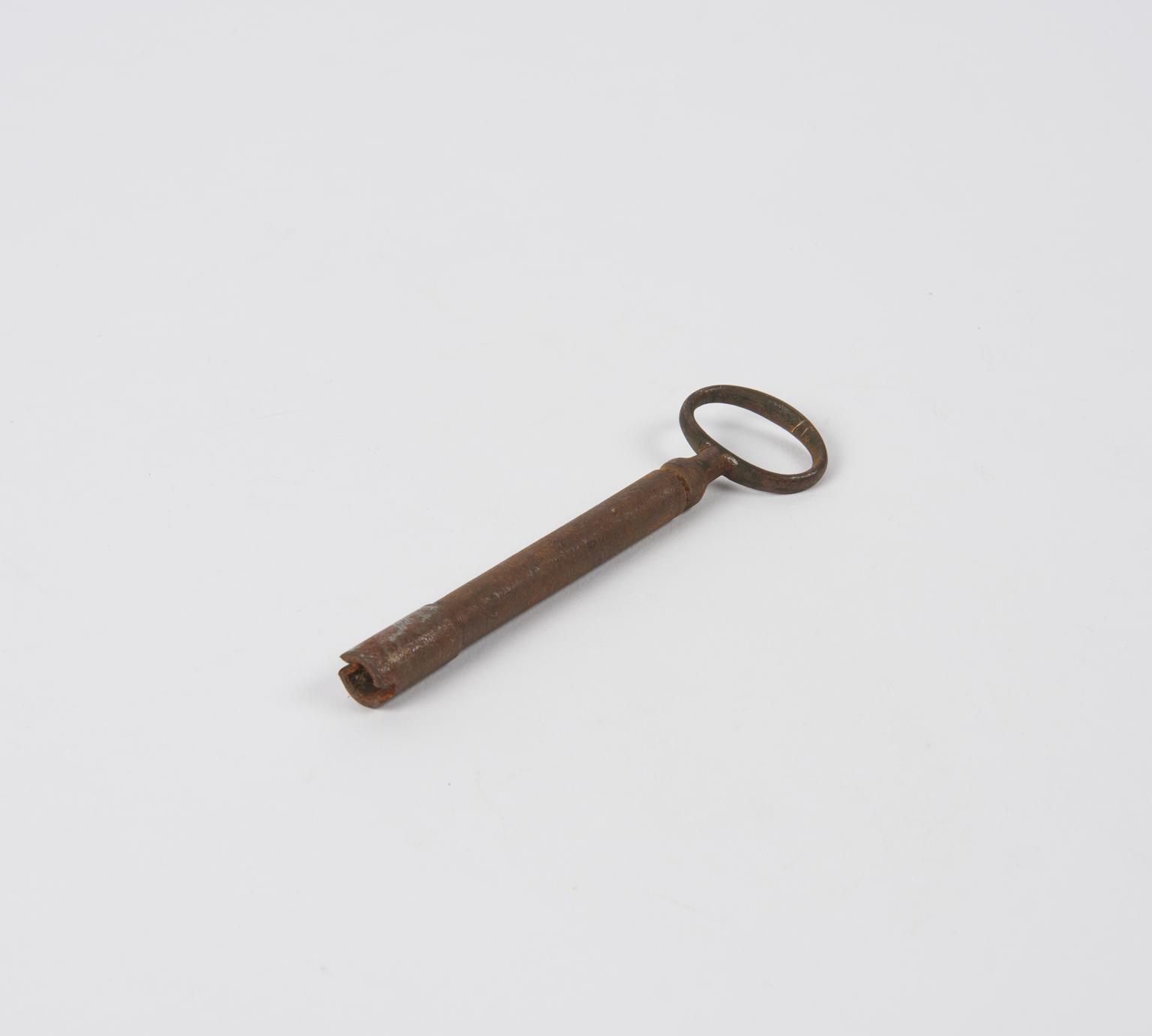
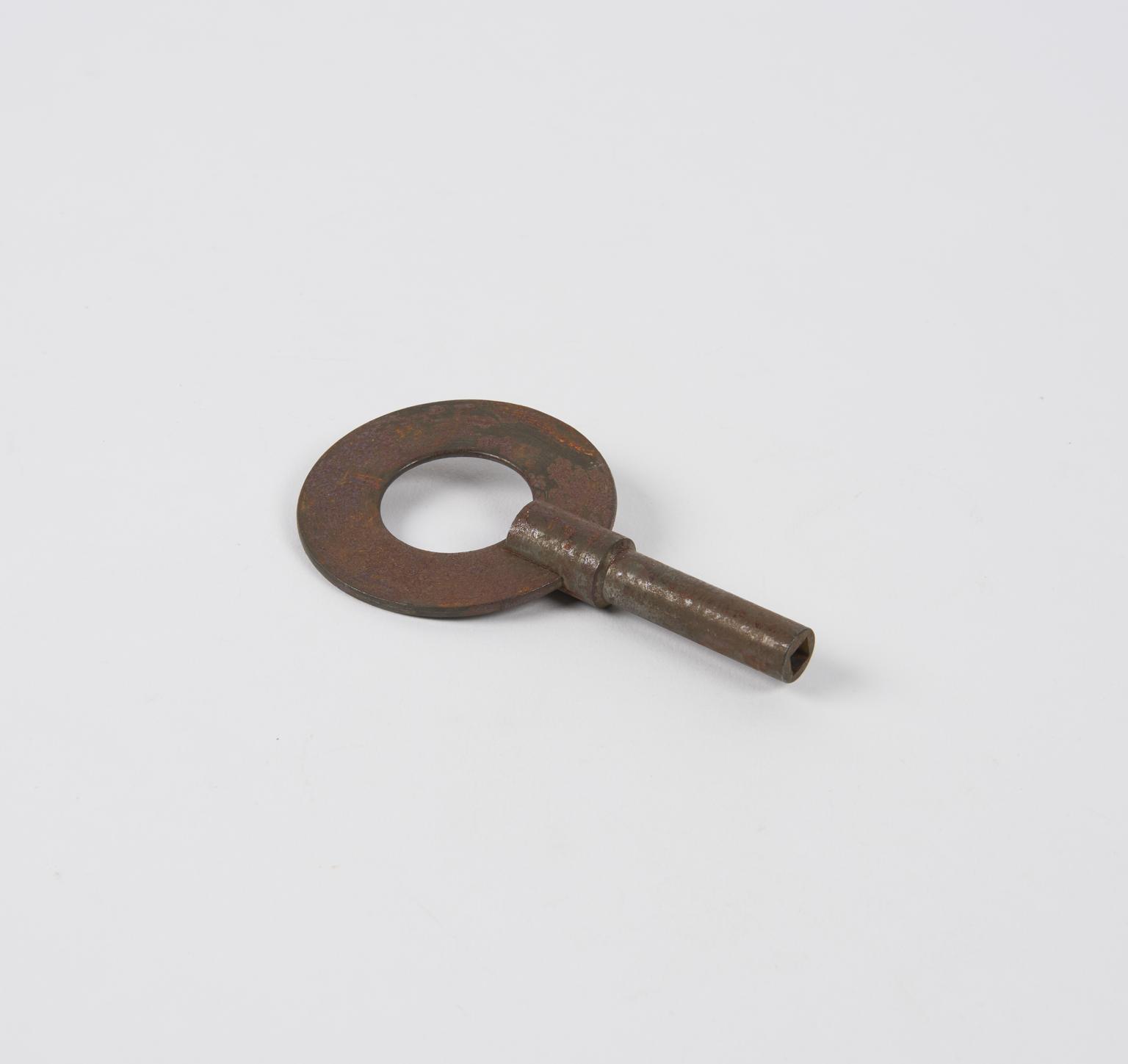
This fare indicator comes with a red painted steel ‘flag’ and has two keys which are used to activate the machine. The flag, when positioned vertically, is used to show when the fare is on

20th century motor taxis are the descendants of private and public coaches such as Hackney and Hansom cabs, which were popularized during the late 19th century. During the 1890s various attempts were made to develop a reliable and accurate means to measure taxi fares.

In 1895 Herr A. Gruner of Magdeburg, Germany developed what many consider to be the first reliable mechanical taximeter, which he patented that year in the UK as Patent No.18045 ‘Improvements in Fare-indicators for Cabs and other Hackney-coaches’.

This machine was capable of indicating fare, both for distance travelled and time waited, and also show the number of journeys made, the total distance covered, and the total of the fares earned. Gruner’s taximeter could also record five different rates for different circumstances such as night journeys or fare for groups.

Whilst this machine was fully enclosed and sealed, with the purpose of making tampering impossible, Gruner’s taximeter was still capable of being altered by taxi drivers.

Inflated taxi fares became a frequent and highly publicized problem involving Scotland Yard and the National Physical Laboratory. It was only in 1908 that the first taximeter was designed was patented which met the security and reliability standards established by the UK government.
Details

Category:
Road Transport
Object Number:
1909-95 Pt2
type:
instrument component and taximeter
credit:
Beck, W.H.

Parts

Red painted steel ‘flag’, for Gruner Taximeter, or fare indicator, unsigned, 1895

Red painted steel ‘flag’

Red painted steel ‘flag’, for Gruner Taximeter, or fare indicator, unsigned, 1895

This Gruner Taximeter was built between 1895 and 1909 by an unknown maker in an unknown place, based on the original 1895 design patented by Herr A. Gruner.

This fare indicator (see Pt1) comes with a red painted steel ‘flag’ and has two keys which are used to activate the machine. The flag, when positioned vertically, is used to show when the fare is on

More

20th century motor taxis are the descendants of private and public coaches such as Hackney and Hansom cabs, which were popularized during the late 19th century. During the 1890s various attempts were made to develop a reliable and accurate means to measure taxi fares.

In 1895 Herr A. Gruner of Magdeburg, Germany developed what many consider to be the first reliable mechanical taximeter, which he patented that year in the UK as Patent No.18045 ‘Improvements in Fare-indicators for Cabs and other Hackney-coaches’.

This machine was capable of indicating fare, both for distance travelled and time waited, and also show the number of journeys made, the total distance covered, and the total of the fares earned. Gruner’s taximeter could also record five different rates for different circumstances such as night journeys or fare for groups.

Whilst this machine was fully enclosed and sealed, with the purpose of making tampering impossible, Gruner’s taximeter was still capable of being altered by taxi drivers.

Inflated taxi fares became a frequent and highly publicized problem involving Scotland Yard and the National Physical Laboratory. It was only in 1908 that the first taximeter was designed was patented which met the security and reliability standards established by the UK government.

Materials:
steel (metal)
Object Number:
1909-95/2/1
type:
instrument component
Key, one of two

Key, one of two

Key, one of two, for Gruner Taximeter, or fare indicator, unsigned, 1895

This Gruner Taximeter was built between 1895 and 1909 by an unknown maker in an unknown place, based on the original 1895 design patented by Herr A. Gruner.

This fare indicator (see Pt1) comes with a red painted steel ‘flag’ and has two keys which are used to activate the machine. The flag, when positioned vertically, is used to show when the fare is on

More

20th century motor taxis are the descendants of private and public coaches such as Hackney and Hansom cabs, which were popularized during the late 19th century. During the 1890s various attempts were made to develop a reliable and accurate means to measure taxi fares.

In 1895 Herr A. Gruner of Magdeburg, Germany developed what many consider to be the first reliable mechanical taximeter, which he patented that year in the UK as Patent No.18045 ‘Improvements in Fare-indicators for Cabs and other Hackney-coaches’.

This machine was capable of indicating fare, both for distance travelled and time waited, and also show the number of journeys made, the total distance covered, and the total of the fares earned. Gruner’s taximeter could also record five different rates for different circumstances such as night journeys or fare for groups.

Whilst this machine was fully enclosed and sealed, with the purpose of making tampering impossible, Gruner’s taximeter was still capable of being altered by taxi drivers.

Inflated taxi fares became a frequent and highly publicized problem involving Scotland Yard and the National Physical Laboratory. It was only in 1908 that the first taximeter was designed was patented which met the security and reliability standards established by the UK government.

Materials:
metal (unknown)
Object Number:
1909-95/2/2
type:
key - hardware
Image ©
The Board of Trustees of the Science Museum
Key, one of two

Key, one of two

Key, one of two, for Gruner Taximeter, or fare indicator, unsigned, 1895

This Gruner Taximeter was built between 1895 and 1909 by an unknown maker in an unknown place, based on the original 1895 design patented by Herr A. Gruner.

This fare indicator (see Pt1) comes with a red painted steel ‘flag’ and has two keys which are used to activate the machine. The flag, when positioned vertically, is used to show when the fare is on

More

20th century motor taxis are the descendants of private and public coaches such as Hackney and Hansom cabs, which were popularized during the late 19th century. During the 1890s various attempts were made to develop a reliable and accurate means to measure taxi fares.

In 1895 Herr A. Gruner of Magdeburg, Germany developed what many consider to be the first reliable mechanical taximeter, which he patented that year in the UK as Patent No.18045 ‘Improvements in Fare-indicators for Cabs and other Hackney-coaches’.

This machine was capable of indicating fare, both for distance travelled and time waited, and also show the number of journeys made, the total distance covered, and the total of the fares earned. Gruner’s taximeter could also record five different rates for different circumstances such as night journeys or fare for groups.

Whilst this machine was fully enclosed and sealed, with the purpose of making tampering impossible, Gruner’s taximeter was still capable of being altered by taxi drivers.

Inflated taxi fares became a frequent and highly publicized problem involving Scotland Yard and the National Physical Laboratory. It was only in 1908 that the first taximeter was designed was patented which met the security and reliability standards established by the UK government.

Materials:
metal (ferrous)
Object Number:
1909-95/2/3
type:
key - hardware
Image ©
The Board of Trustees of the Science Museum