
X-ray installation

X-ray installation X-ray installation

Creative Commons LicenseThis image is released under a CC BY-NC-SA 4.0 Licence

License this image for commercial use at Science and Society Picture Library

License

Creative Commons LicenseThis image is released under a CC BY-NC-SA 4.0 Licence

License this image for commercial use at Science and Society Picture Library

License

Science Museum Group Collection
© The Board of Trustees of the Science Museum
Science Museum Group Collection
© The Board of Trustees of the Science Museum

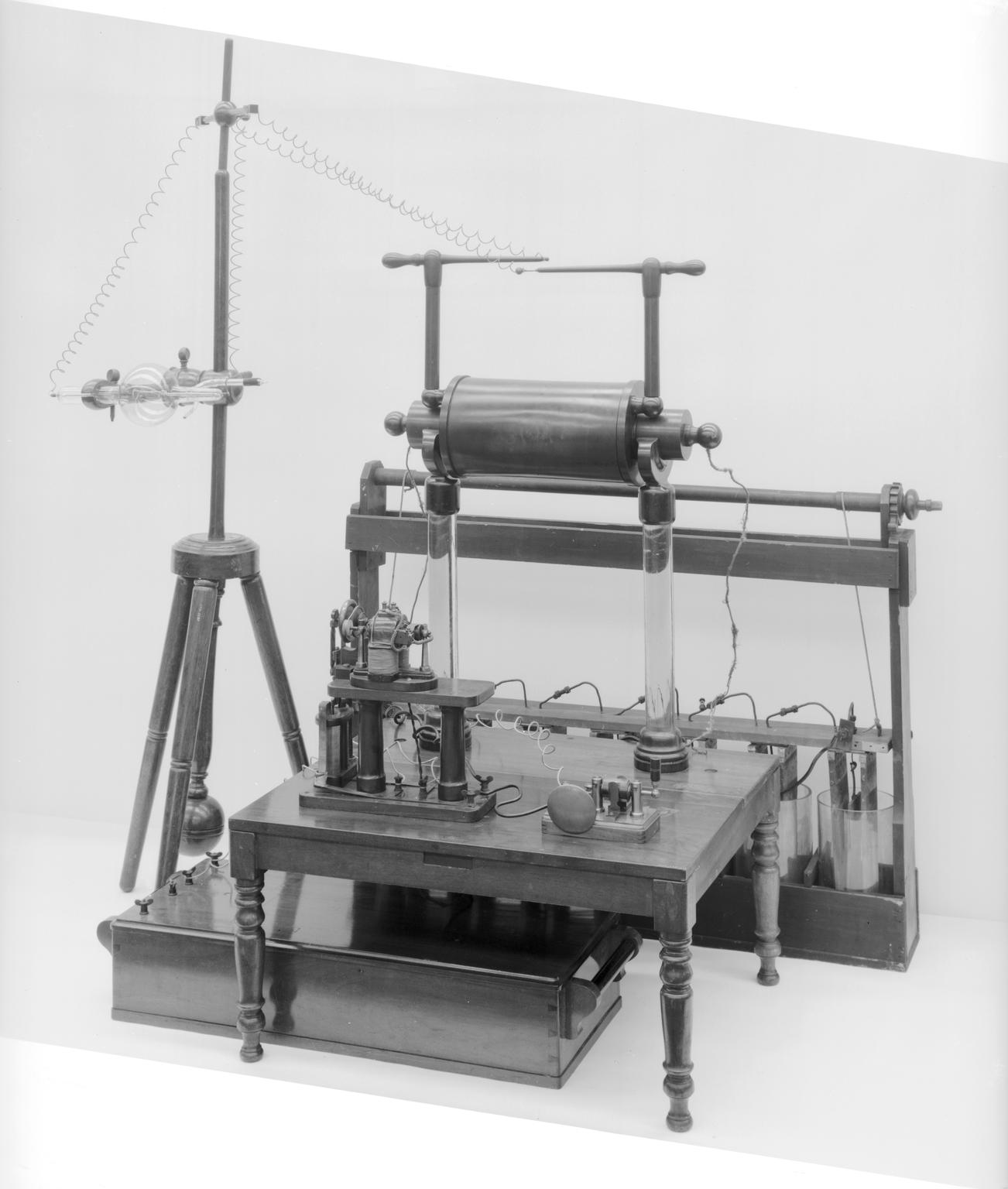
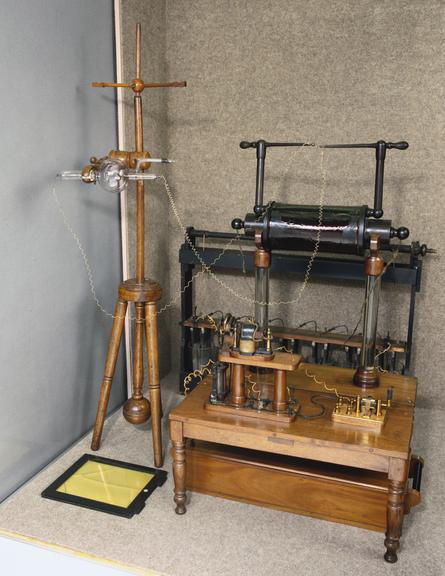
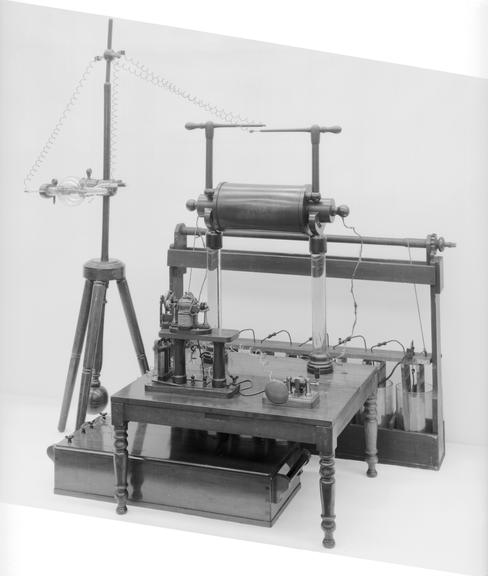
X-ray installation, by Russell John Reynolds, London, England, 1896-97. Consists of:- 13-inch spark coil mounted on glass pillars, with mercury dipper break (motor control) and commutator, all mounted on wooden stand; condenser mounted in mahogany case; three-legged wooden tube stand; chromic acid battery; two x-ray tubes and three fluorescent screens. Known as the Russell-Reynolds x-ray machine.

Russell John Reynolds (1880-1964) was an internationally renowned radiographer and specialist in the field of cineradiography or moving image X-ray films. While still at school, he – with the assistance of his GP father John Reynolds – constructed a fully functioning X-ray machine just months after German scientist Wilhelm Röntgen first described the ‘new type of ray’ in late 1895.

Keen amateurs in Britain were quick to replicate Röntgen’s spectacular experiments using a combination of shop bought and home-made equipment. Fifteen-year-old Russell was particularly well-placed, being the son of a medical doctor and family friend of physicist William Crookes, inventor of the Crookes tube (the early electrical discharge tube used to produce the first X-rays).

John and Russell constructed one of the core components of their machine, the spark induction coil, themselves using readily available materials. The 1900-vintage X-ray tube currently shown with the setup, of Russell Reynolds' own design, was added by him in 1950 to the original machine which he had donated to the Science Museum in 1938.

Details

Category:
X-rays
Object Number:
1938-645
Materials:
glass, metal (unknown), mercury, wood (unidentified) and mahogany (wood)
Measurements:
length 680 mm
width 680 mm
height 450 mm
type:
x-rays and x-ray tubes
credit:
Mr R.J. Reynolds

Parts

X-ray installation by Russell John Reynolds

X-ray installation by Russell John Reynolds, London, England, 1896-97. Consists of:- 13-inch spark coil mounted on glass pillars, with mercury dipper break (motor control) and commutator, all mounted on wooden stand; condenser mounted in mahogany case; three-legged wooden tube stand; chromic acid battery.

More

Russell John Reynolds (1880-1964) was an internationally renowned radiographer and specialist in the field of cineradiography or moving image X-ray films. While still at school, he – with the assistance of his GP father John Reynolds – constructed a fully functioning X-ray machine just months after German scientist Wilhelm Röntgen first described the ‘new type of ray’ in late 1895.

Keen amateurs in Britain were quick to replicate Röntgen’s spectacular experiments using a combination of shop bought and home-made equipment. Fifteen-year-old Russell was particularly well-placed, being the son of a medical doctor and family friend of physicist William Crookes, inventor of the Crookes tube (the early electrical discharge tube used to produce the first X-rays).

John and Russell constructed one of the core components of their machine, the spark induction coil, themselves using readily available materials. The 1900-vintage X-ray tube currently shown with the setup, of Russell Reynolds' own design, was added by him in 1950 to the original machine which he had donated to the Science Museum in 1938.

Measurements:
3 legged stand (est): 1620 mm x 385 mm x 540 mm,
Mahogany case and table (est): 1250 mm x 580 mm x 960 mm,
Black stand with glass pillars (est): 785 mm x 150 mm x 1070 mm,
overall (est): 1620 mm x 1070 mm x 1500 mm, 81.5 kg
Materials:
mahogany (wood) , glass , wood (unidentified) and mercury
Object Number:
1938-645/1
type:
x-ray installation
Image ©
The Board of Trustees of the Science Museum
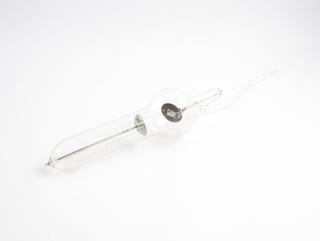
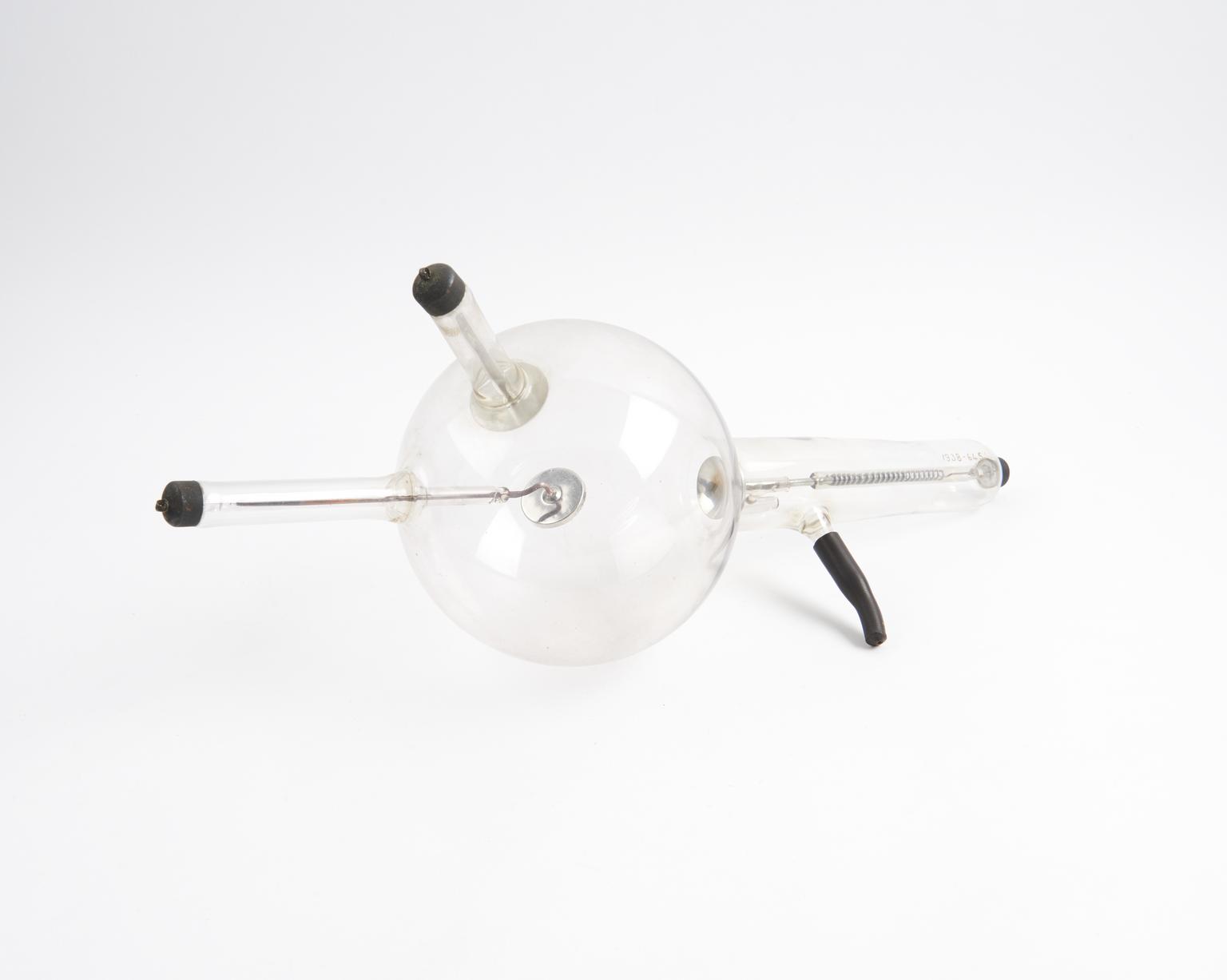
Watson 'Penetrator' gas x-ray tube with insulated anti-cathode and ring anode through which the cathode rays pass

Watson 'Penetrator' gas x-ray tube with insulated anti-cathode and ring anode through which the cathode rays pass

Watson 'Penetrator' gas x-ray tube with insulated anti-cathode and ring anode through which the cathode rays pass, 1896-1897.

More

Russell John Reynolds (1880-1964) was an internationally renowned radiographer and specialist in the field of cineradiography or moving image X-ray films. While still at school, he – with the assistance of his GP father John Reynolds – constructed a fully functioning X-ray machine just months after German scientist Wilhelm Röntgen first described the ‘new type of ray’ in late 1895.

Keen amateurs in Britain were quick to replicate Röntgen’s spectacular experiments using a combination of shop bought and home-made equipment. Fifteen-year-old Russell was particularly well-placed, being the son of a medical doctor and family friend of physicist William Crookes, inventor of the Crookes tube (the early electrical discharge tube used to produce the first X-rays).

John and Russell constructed one of the core components of their machine, the spark induction coil, themselves using readily available materials.

Measurements:
overall: 7 kg
Object Number:
1938-645/2
type:
x-rays and x-ray tubes
Fluorescent screen from x-ray installation

Fluorescent screen from x-ray installation

One of three fluorescent screens for use with x-ray installation, c. 1896-1897.

More

Russell John Reynolds (1880-1964) was an internationally renowned radiographer and specialist in the field of cineradiography or moving image X-ray films. While still at school, he – with the assistance of his GP father John Reynolds – constructed a fully functioning X-ray machine just months after German scientist Wilhelm Röntgen first described the ‘new type of ray’ in late 1895.

Keen amateurs in Britain were quick to replicate Röntgen’s spectacular experiments using a combination of shop bought and home-made equipment. Fifteen-year-old Russell was particularly well-placed, being the son of a medical doctor and family friend of physicist William Crookes, inventor of the Crookes tube (the early electrical discharge tube used to produce the first X-rays).

John and Russell constructed one of the core components of their machine, the spark induction coil, themselves using readily available materials.

Measurements:
overall: 1.24 kg
Object Number:
1938-645/3
type:
x-rays
Fluorescent screen from x-ray installation

Fluorescent screen from x-ray installation

One of three fluorescent screens for use with x-ray installation, c. 1896-1897.

More

Russell John Reynolds (1880-1964) was an internationally renowned radiographer and specialist in the field of cineradiography or moving image X-ray films. While still at school, he – with the assistance of his GP father John Reynolds – constructed a fully functioning X-ray machine just months after German scientist Wilhelm Röntgen first described the ‘new type of ray’ in late 1895.

Keen amateurs in Britain were quick to replicate Röntgen’s spectacular experiments using a combination of shop bought and home-made equipment. Fifteen-year-old Russell was particularly well-placed, being the son of a medical doctor and family friend of physicist William Crookes, inventor of the Crookes tube (the early electrical discharge tube used to produce the first X-rays).

John and Russell constructed one of the core components of their machine, the spark induction coil, themselves using readily available materials.

Object Number:
1938-645/4
type:
x-rays
Fluorescent screen from x-ray installation

Fluorescent screen from x-ray installation

One of three fluorescent screens for use with x-ray installation, c. 1896-1897.

More

Russell John Reynolds (1880-1964) was an internationally renowned radiographer and specialist in the field of cineradiography or moving image X-ray films. While still at school, he – with the assistance of his GP father John Reynolds – constructed a fully functioning X-ray machine just months after German scientist Wilhelm Röntgen first described the ‘new type of ray’ in late 1895.

Keen amateurs in Britain were quick to replicate Röntgen’s spectacular experiments using a combination of shop bought and home-made equipment. Fifteen-year-old Russell was particularly well-placed, being the son of a medical doctor and family friend of physicist William Crookes, inventor of the Crookes tube (the early electrical discharge tube used to produce the first X-rays).

John and Russell constructed one of the core components of their machine, the spark induction coil, themselves using readily available materials.

Object Number:
1938-645/5
type:
x-rays
Gas x-ray tube with cathode adjustable along a screwed rod

Gas x-ray tube with cathode adjustable along a screwed rod

Gas x-ray tube with cathode adjustable along a screwed rod, c. 1896-1897.

More

Russell John Reynolds (1880-1964) was an internationally renowned radiographer and specialist in the field of cineradiography or moving image X-ray films. While still at school, he – with the assistance of his GP father John Reynolds – constructed a fully functioning X-ray machine just months after German scientist Wilhelm Röntgen first described the ‘new type of ray’ in late 1895.

Keen amateurs in Britain were quick to replicate Röntgen’s spectacular experiments using a combination of shop bought and home-made equipment. Fifteen-year-old Russell was particularly well-placed, being the son of a medical doctor and family friend of physicist William Crookes, inventor of the Crookes tube (the early electrical discharge tube used to produce the first X-rays).

John and Russell constructed one of the core components of their machine, the spark induction coil, themselves using readily available materials.

Measurements:
overall (tube): 167 mm x 390 mm x 125 mm, 0.19 kg
overall (rod): 5 mm x 132 mm 74 mm, 0.101 kg
Materials:
aluminium (metal) , copper (alloy) and glass
Object Number:
1938-645/6
type:
x-rays and x-ray tubes
Image ©
The Board of Trustees of the Science Museum
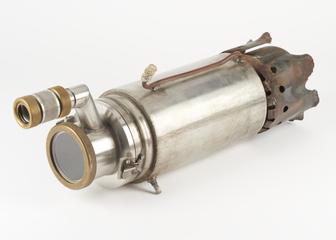
Plate glass negatives and prints relating to x-ray installation

Plate glass negatives and prints relating to x-ray installation

Plate glass negatives and prints relating to x-ray installation

More

Russell John Reynolds (1880-1964) was an internationally renowned radiographer and specialist in the field of cineradiography or moving image X-ray films. While still at school, he – with the assistance of his GP father John Reynolds – constructed a fully functioning X-ray machine just months after German scientist Wilhelm Röntgen first described the ‘new type of ray’ in late 1895.

Keen amateurs in Britain were quick to replicate Röntgen’s spectacular experiments using a combination of shop bought and home-made equipment. Fifteen-year-old Russell was particularly well-placed, being the son of a medical doctor and family friend of physicist William Crookes, inventor of the Crookes tube (the early electrical discharge tube used to produce the first X-rays).

John and Russell constructed one of the core components of their machine, the spark induction coil, themselves using readily available materials.

Object Number:
1938-645/7
type:
photographic negatives
Image ©
The Board of Trustees of the Science Museum