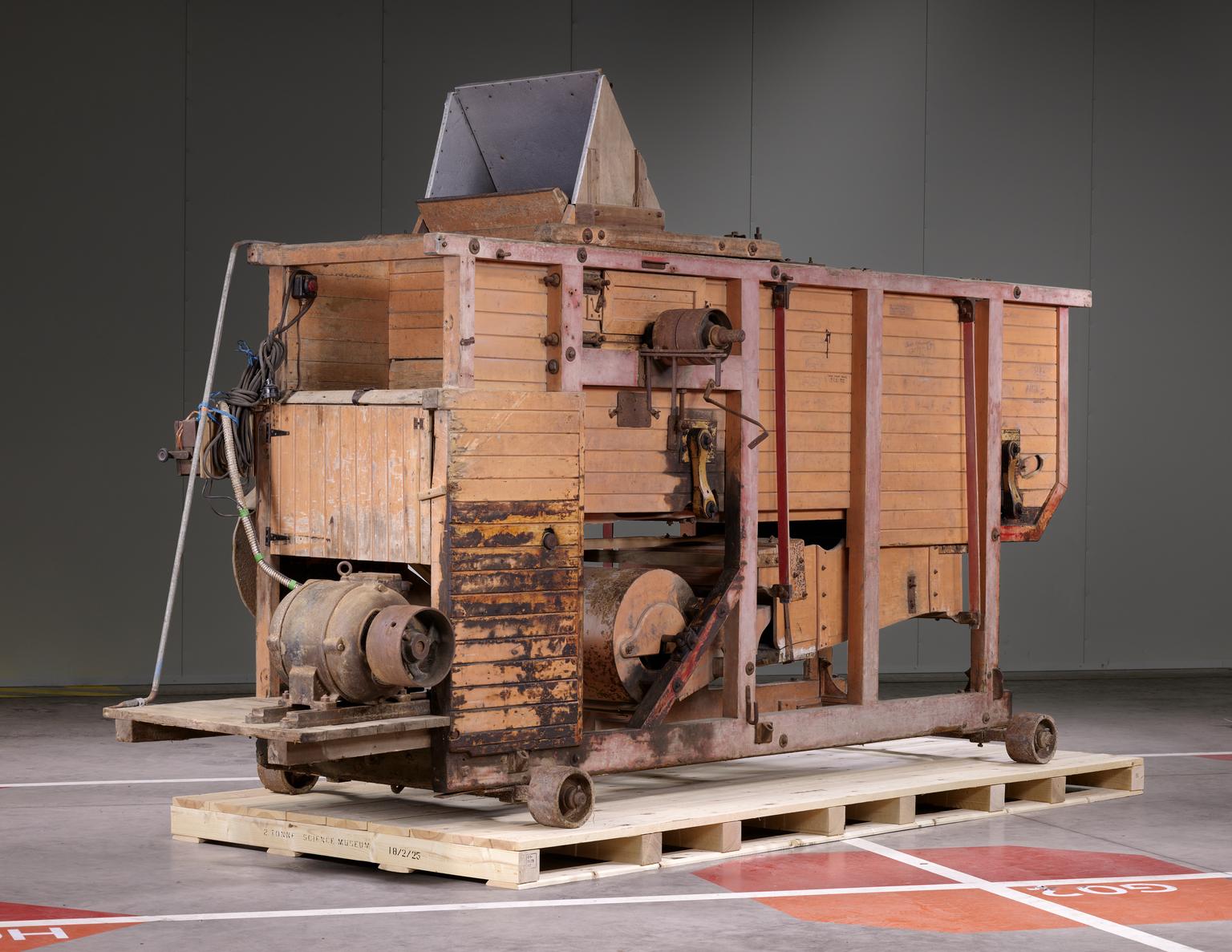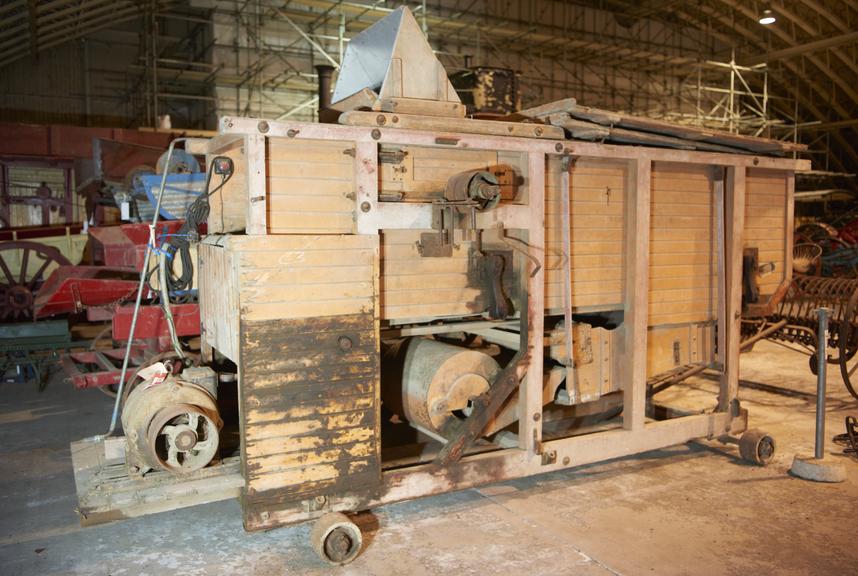

Threshing Machine built by R.G. Garvie and Son

Threshing Machine built by R.G. Garvie and Son

License this image for commercial use at Science and Society Picture Library

License

Science Museum Group
© The Board of Trustees of the Science Museum

Threshing machine built by R.G. Garvie and Son, Aberdeen, c. 1929

Threshing machines were very widely used to separate grain for milling into flour from the straw to which it is attached while growing. They supplemented and replaced the labour-intensive and laborious process of threshing by hand. The first threshing machine was developed by Scottish engineer Andrew Meikle in c.1786, and Scottish companies remained prominent in their development and manufacture into the twentieth century. R.G. Garvie & Sons, who built this machine, continued to make them until after 1970, though they have been largely replaced by combine harvesters which incorporate all four harvesting operations, including threshing, into a single process. This particular machine is covered by graffiti presumably written by those who worked with it, giving an intriguing glimpse in to the farming workforce who toiled alongside the machine.

Details

Category:
Agricultural Engineering
Object Number:
1985-192
Materials:
wood (unidentified), iron, steel (metal) and paint
Measurements:
overall: 2620 mm x 1440 mm x 4550 mm,
type:
threshing machine
credit:
Welsh Plant Breeding Station

Parts

Threshing Machine built by R.G. Garvie and Son

Threshing Machine built by R.G. Garvie and Son

Threshing machine built by R.G. Garvie and Son, Aberdeen, c. 1929

More

Threshing machines were very widely used to separate grain for milling into flour from the straw to which it is attached while growing. They supplemented and replaced the labour-intensive and laborious process of threshing by hand. The first threshing machine was developed by Scottish engineer Andrew Meikle in c.1786, and Scottish companies remained prominent in their development and manufacture into the twentieth century. R.G. Garvie & Sons, who built this machine, continued to make them until after 1970, though they have been largely replaced by combine harvesters which incorporate all four harvesting operations, including threshing, into a single process. This particular machine is covered by graffiti presumably written by those who worked with it, giving an intriguing glimpse in to the farming workforce who toiled alongside the machine.

Measurements:
overall: 2620 mm x 1440 mm x 4550 mm,
Object Number:
1985-192/1
type:
threshing machine
Image ©
The Board of Trustees of the Science Museum
Components from Threshing Machine built by R.G. Garvie and Son

Components from Threshing Machine built by R.G. Garvie and Son

Two roof panels and one metal rod from threshing machine built by R.G. Garvie and Son, Aberdeen, c. 1929

Measurements:
overall: 240 mm x 2010 mm x 1400 mm,
Materials:
wood (unidentified) and metal (unknown)
Object Number:
1985-192/2
type:
roof panel