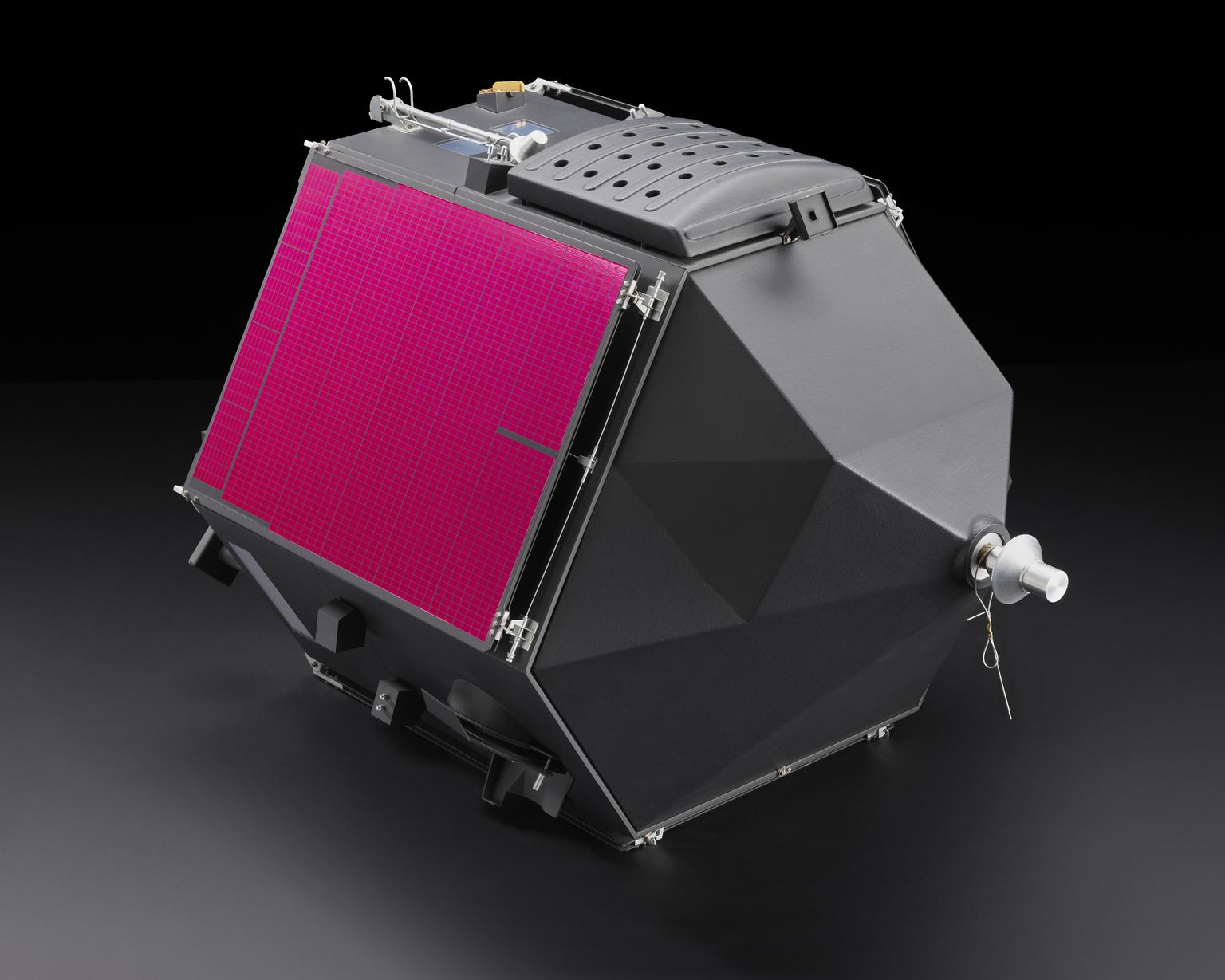
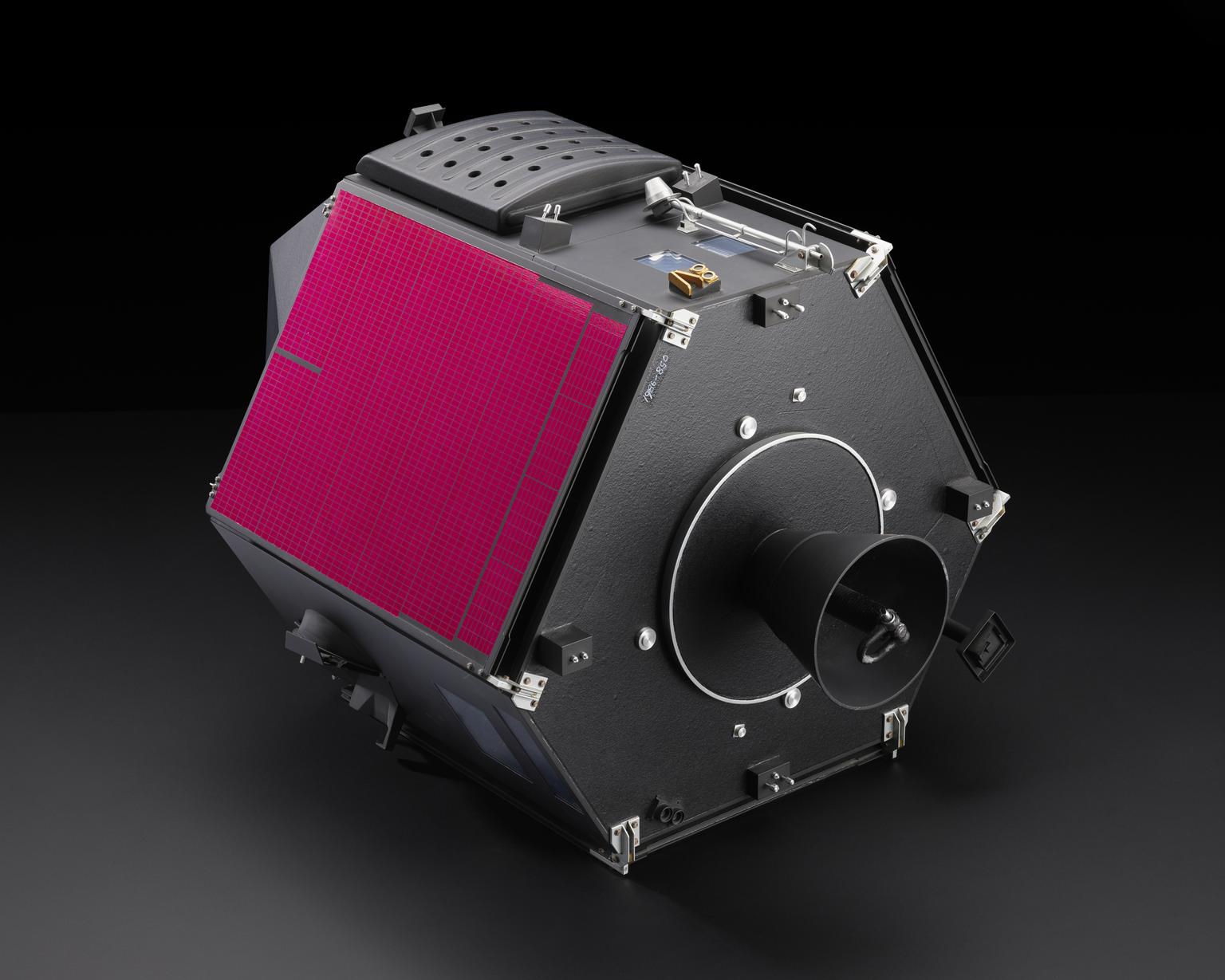
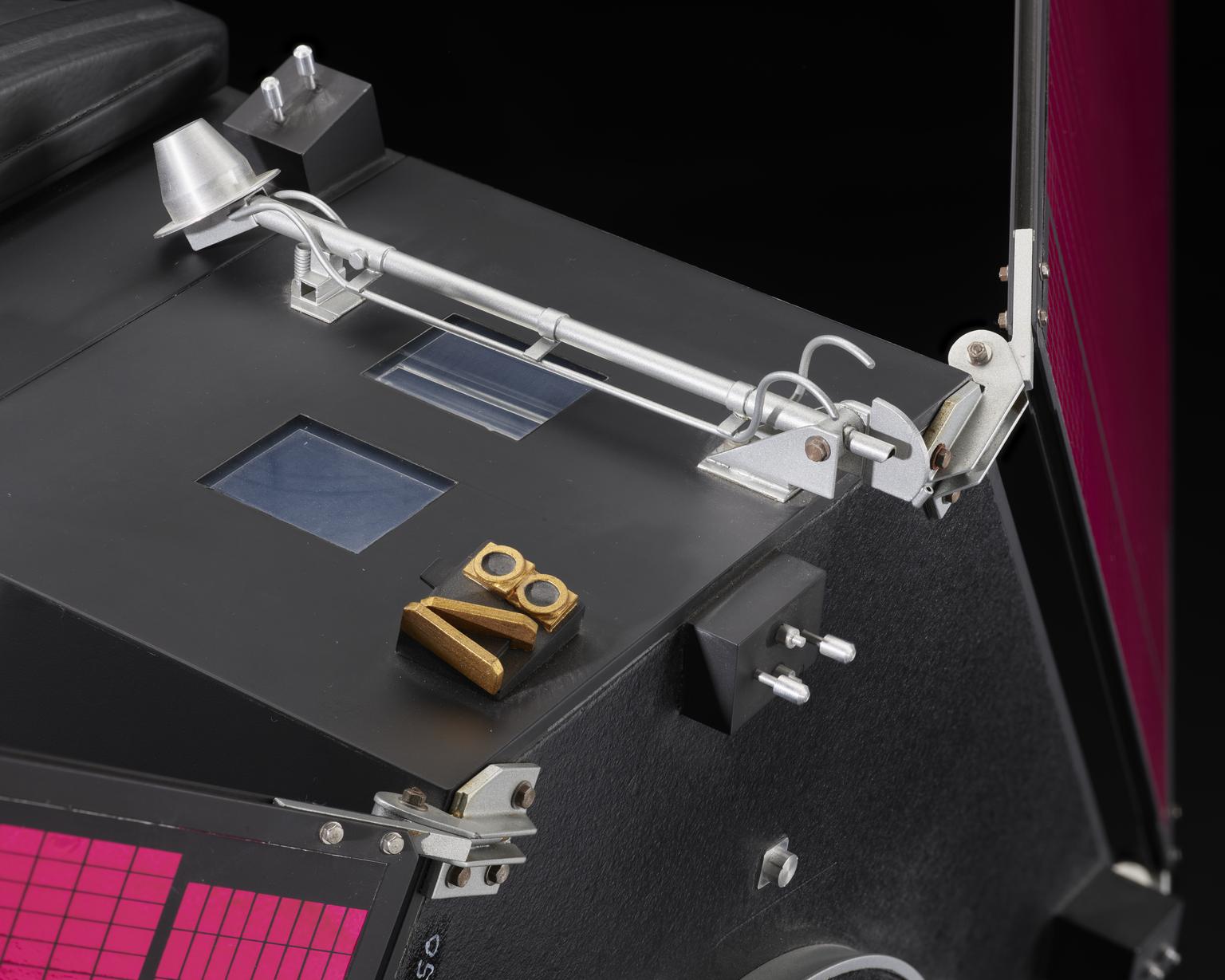
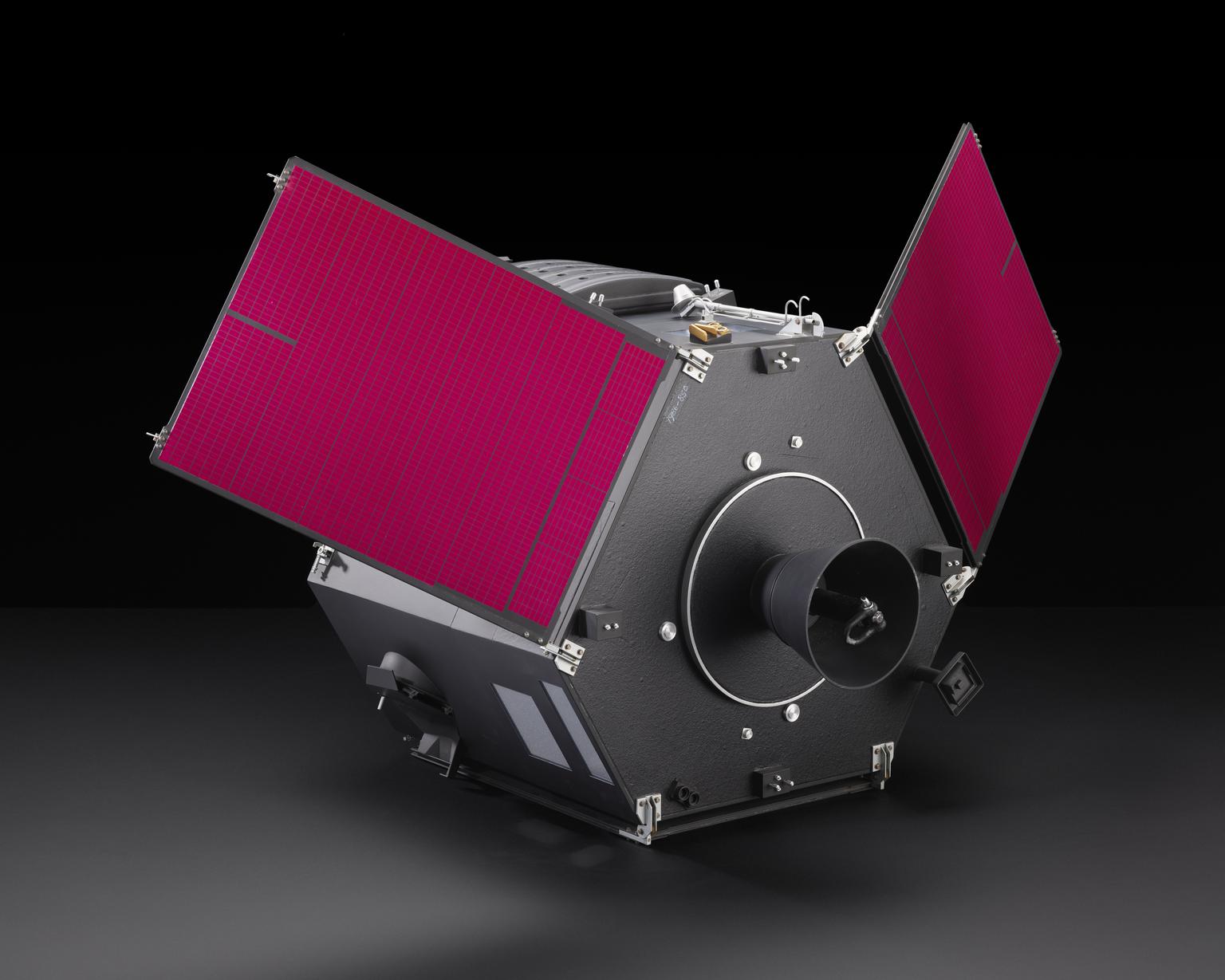
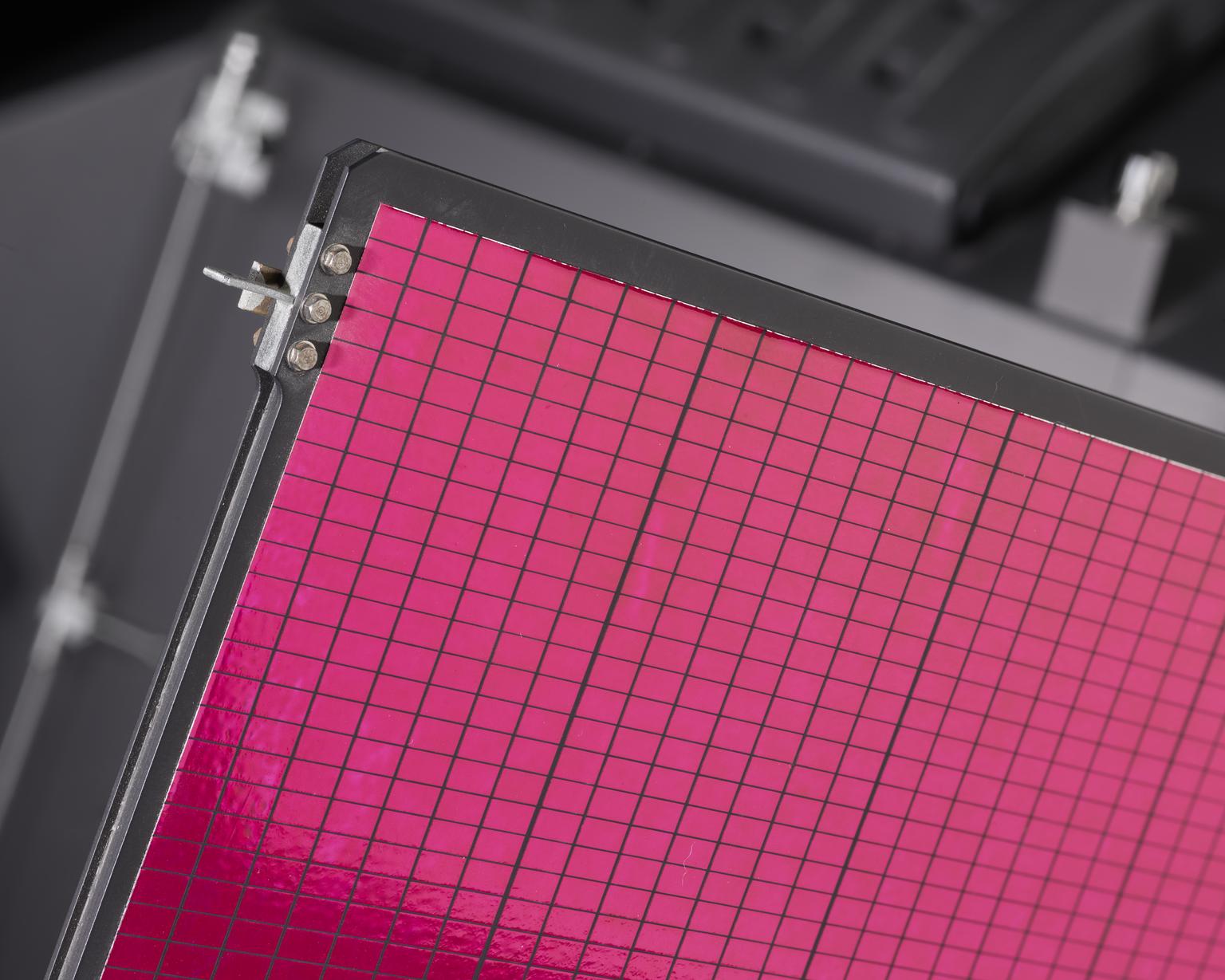
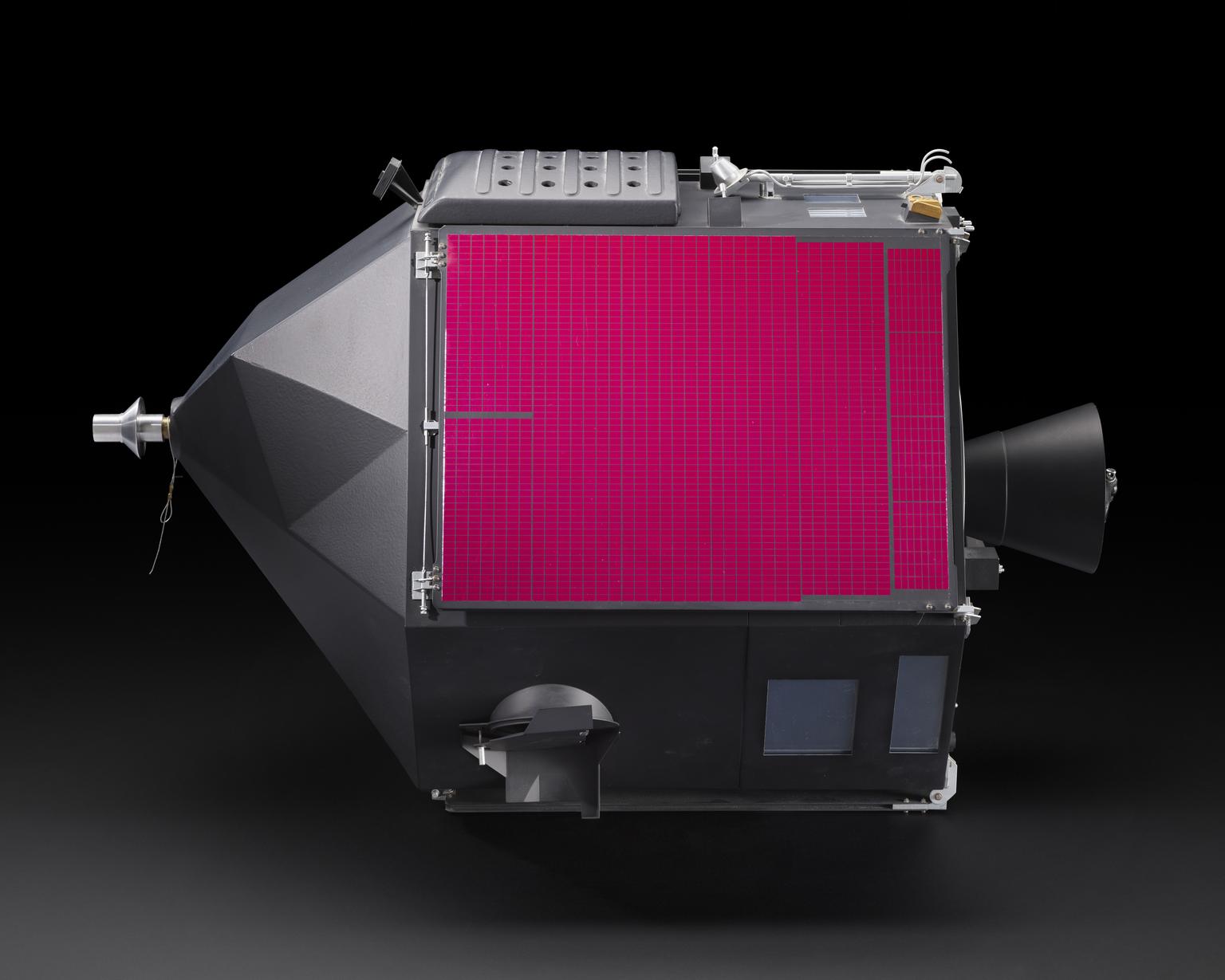
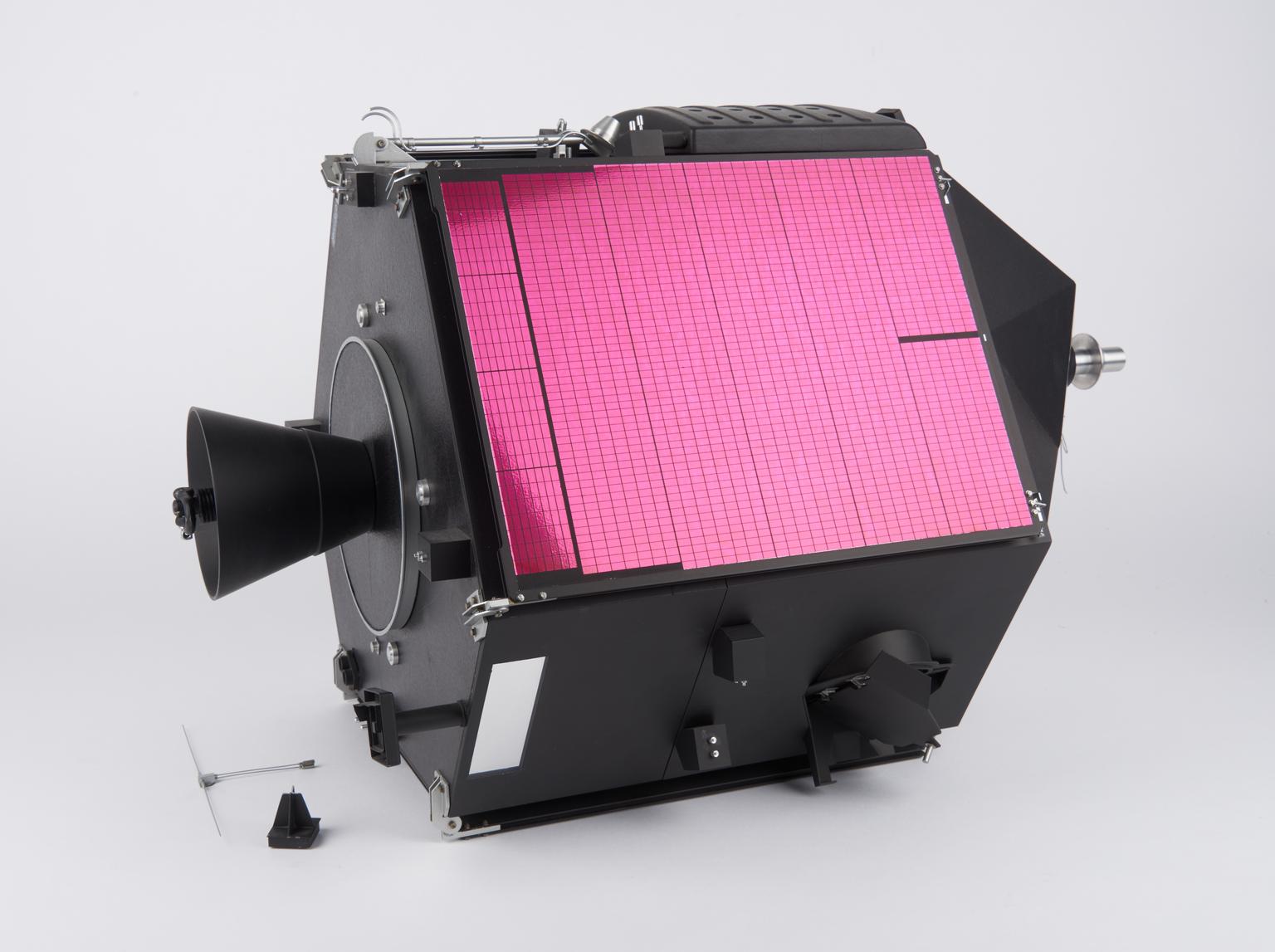
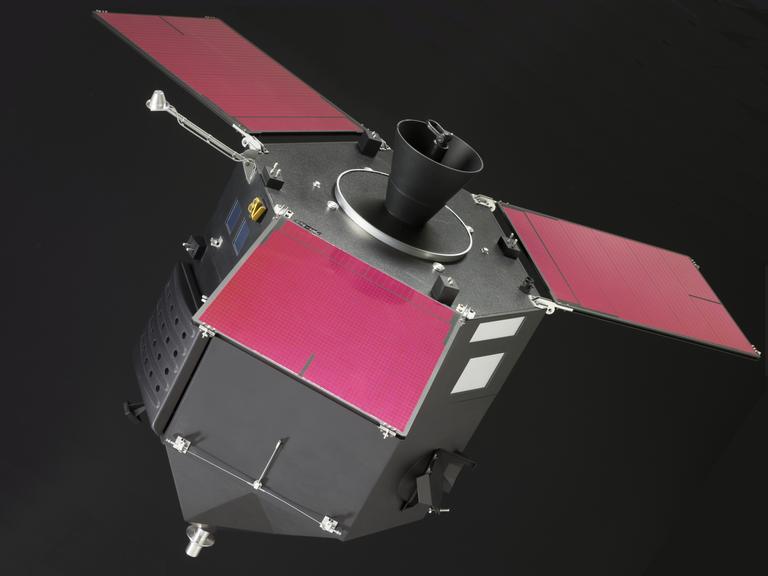
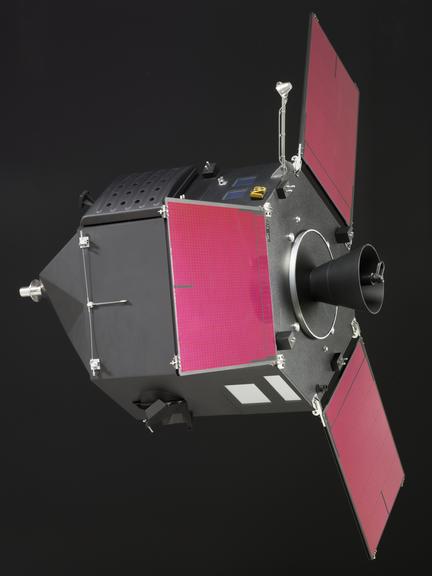
Scale model of Hipparcos astronomy satellite spacecraft, 1:6, made by ESA (European Space Agency) in 1985. Hipparcos launched in August 1989 on an Ariane 4 rocket from Kourou, French Guiana.
Hipparcos was the first space mission designed to map stars. It measured the positions, distances and motion of over 2½ million stars to new degrees of precision. At the time, it was the most accurate mapping of the stars ever completed. The satellite turned slowly on its axis, completing one revolution in just over two hours. It repeatedly scanned the sky at different angles, measuring distances and angles between widely spearated stars and recording their brightness. Hipparcos visited each star selected for study about 100 times over its four years of operation.
The satellite’s name acknowledges the Greek astronomer Hipparchus, who systematically mapped over a thousand stars with the naked eye around 150 BC. In 2013 the Gaia satellite launched, building on Hipparcos legacy. Gaia operated from 2013-2025, and mapped over one billion stars. As of 2026, it is the most precise 3D map of Milky Way ever created.


 This image is released under a