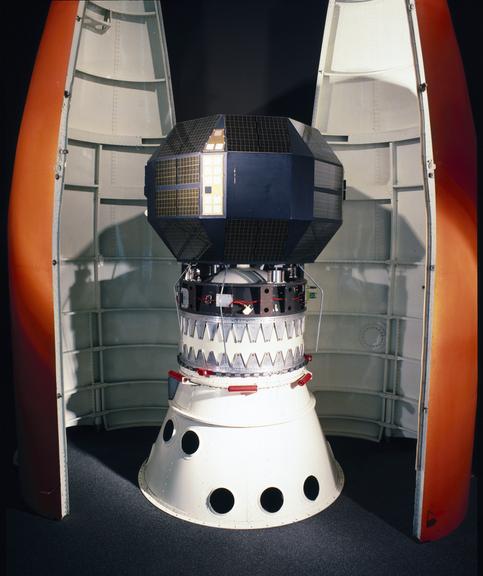
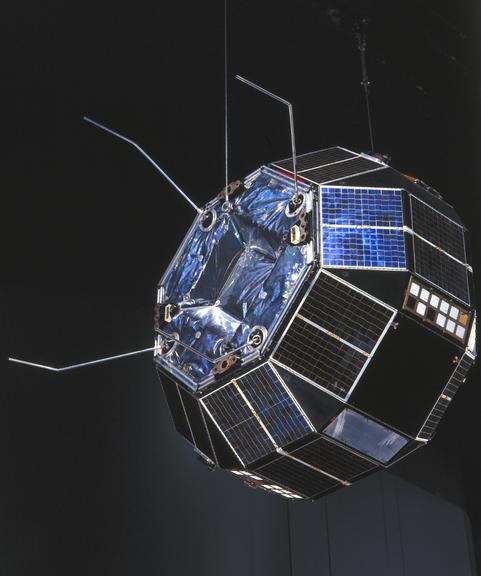

X3 British satellite 'Prospero'

X3 British satellite 'Prospero' X3 British satellite 'Prospero' X3 British satellite 'Prospero'

Creative Commons LicenseThis image is released under a CC BY-NC-SA 4.0 Licence

License this image for commercial use at Science and Society Picture Library

License

Creative Commons LicenseThis image is released under a CC BY-NC-SA 4.0 Licence

License this image for commercial use at Science and Society Picture Library

License

Creative Commons LicenseThis image is released under a CC BY-NC-SA 4.0 Licence

License this image for commercial use at Science and Society Picture Library

License

Science Museum Group Collection
© The Board of Trustees of the Science Museum
Science Museum Group Collection
© The Board of Trustees of the Science Museum
Science Museum Group Collection
© The Board of Trustees of the Science Museum

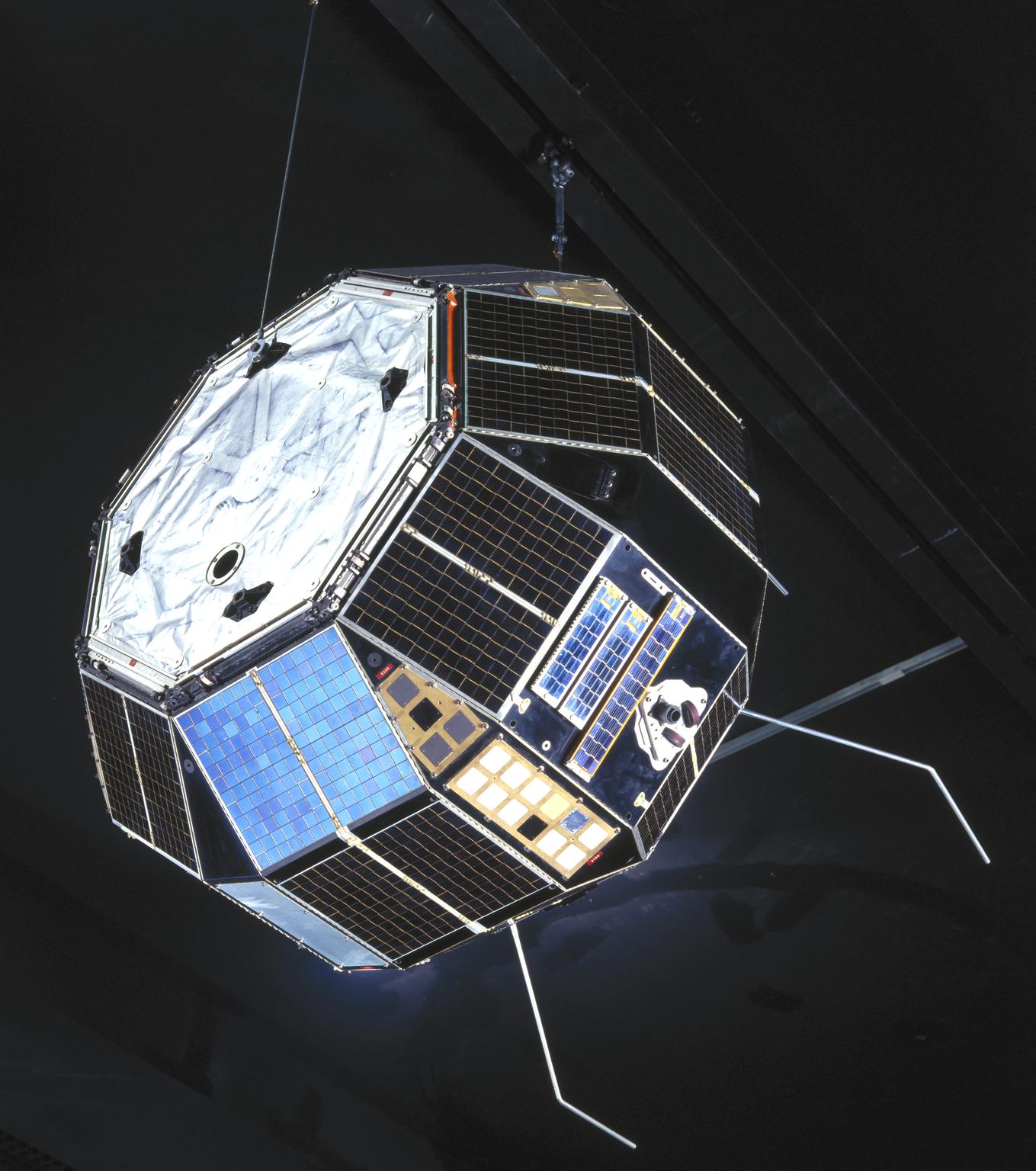
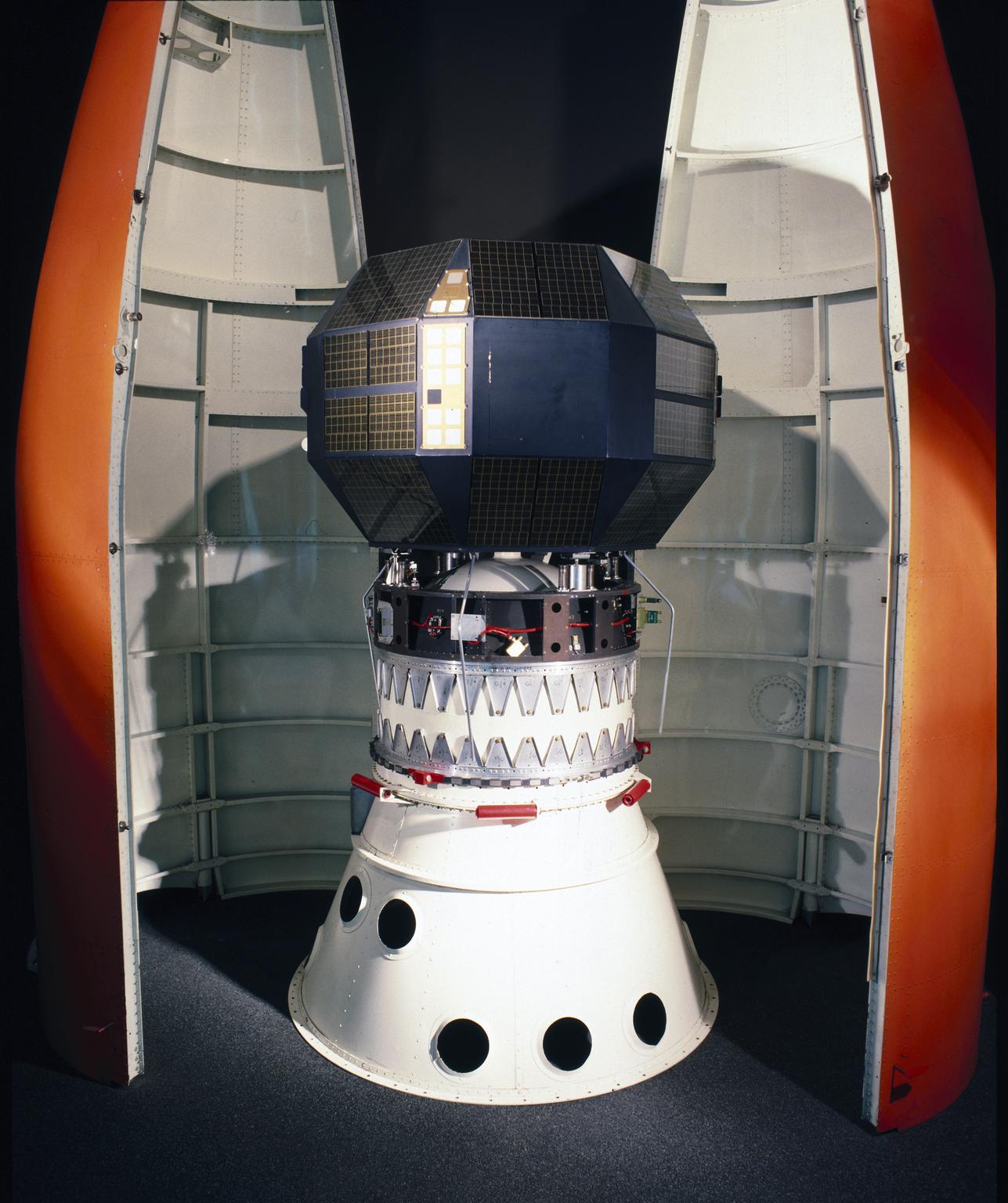
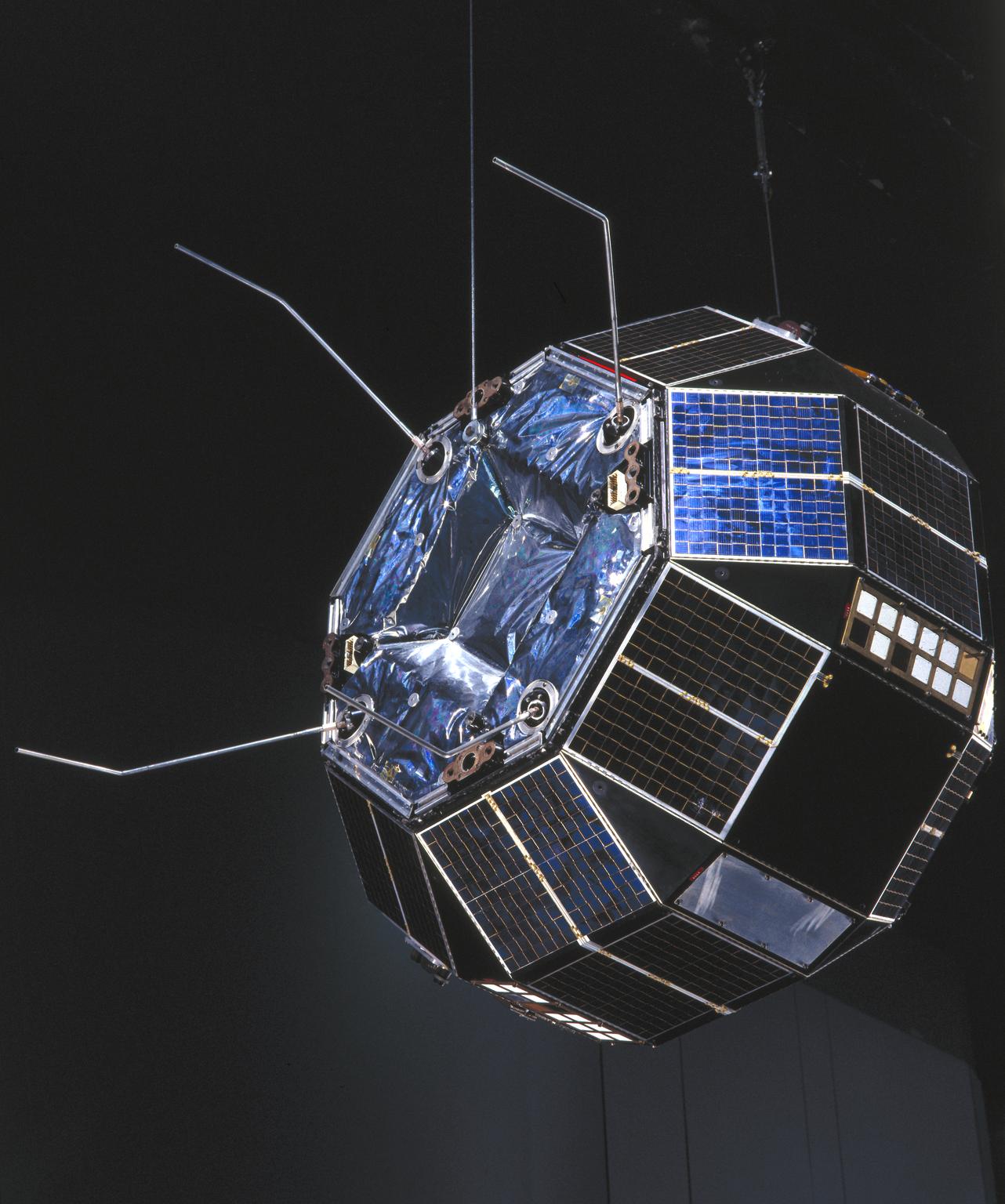
X3 'Prospero' satellite, flight spare, with associated handling equipment, designed and made by British Aircraft Corporation, Bristol, England, 1971.

Prospero was the first British satellite to be successfully launched from a British rocket, Black Arrow, taking off from Woomera, Australia in October 1971. Also known as X3, it was used to test equipment for future satellites and to measure the frequency of micrometeroids. Prospero is still in orbit around Earth and will not deorbit until the 2070s, 100 years after its launch.

The Black Arrow programme launched four times, twice succesfully including Prospero in 1971, making the UK the sixth nation to launch its own spacecraft. The Black Arrow programme had been initiated to test new satellite technologies in space itself rather than in the laboratory. This would support UK industry in bidding for satellite contracts to be launched by the intended Europa rocket of the European Launcher Development Organisation. The Black Arrow programme never received the level of funding required to ensure swift development. By the time it was launching successfully UK government priorities had shifted in favour of purchasing launches on other nations' rockets and the programme was cancelled in July 1971. The UK became the only country to have developed and then abandoned a successful satellite-launching rocket.

Details

Category:
Space Technology
Object Number:
1973-538
type:
satellites and space satellites
credit:
Department of Trade & Industry

Parts

X3 satellite 'Prospero'

X3 'Prospero' satellite, flight spare, designed and made by British Aircraft Corporation, Bristol, England, 1971.

More

Prospero was the first British satellite to be successfully launched from a British rocket, Black Arrow, taking off from Woomera, Australia in October 1971. Also known as X3, it was used to test equipment for future satellites and to measure the frequency of micrometeroids. Prospero is still in orbit around Earth and will not deorbit until the 2070s, 100 years after its launch.

The Black Arrow programme launched four times, twice succesfully including Prospero in 1971, making the UK the sixth nation to launch its own spacecraft. The Black Arrow programme had been initiated to test new satellite technologies in space itself rather than in the laboratory. This would support UK industry in bidding for satellite contracts to be launched by the intended Europa rocket of the European Launcher Development Organisation. The Black Arrow programme never received the level of funding required to ensure swift development. By the time it was launching successfully UK government priorities had shifted in favour of purchasing launches on other nations' rockets and the programme was cancelled in July 1971. The UK became the only country to have developed and then abandoned a successful satellite-launching rocket.

Measurements:
overall (est.): 1220 mm x 1105 mm x 1160 mm,
Materials:
metal (unknown) , plastic (unidentified) and elecronic components
Object Number:
1973-538 Pt1
type:
unmanned spacecraft
Image ©
The Board of Trustees of the Science Museum
Aerial antenna piece from the X3 'Prospero' satellite, flight spare, designed and made by British Aircraft Corporation, Bristol, England, 1971. A paper label with '1' written on it is attached to the aerial antenna.

X3 satellite 'Prospero' aerial antenna '1'

Aerial antenna piece from the X3 'Prospero' satellite, flight spare, designed and made by British Aircraft Corporation, Bristol, England, 1971. A paper label with '1' written on it is attached to the aerial antenna.

Measurements:
overall: 500 mm x 100 mm,
Materials:
metal (unknown)
Object Number:
1973-538 Pt1/1
type:
unmanned spacecraft
Part of:
1973-538 Pt1
Aerial antenna piece from the X3 'Prospero' satellite, flight spare, designed and made by British Aircraft Corporation, Bristol, England, 1971. A paper label with '4' written on it is attached to the aerial antenna.

X3 satellite 'Prospero' aerial antenna '4'

Aerial antenna piece from the X3 'Prospero' satellite, flight spare, designed and made by British Aircraft Corporation, Bristol, England, 1971. A paper label with '4' written on it is attached to the aerial antenna.

Measurements:
overall: 500 mm x 100 mm,
Materials:
metal (unknown)
Object Number:
1973-538 Pt1/2
type:
unmanned spacecraft
Part of:
1973-538 Pt1
X3 'Prospero' satellite, flight spare, designed and made by British Aircraft Corporation, Bristol, England, 1971.

X3 satellite 'Prospero'

X3 'Prospero' satellite, flight spare, designed and made by British Aircraft Corporation, Bristol, England, 1971.

More

Prospero was the first British satellite to be successfully launched from a British rocket, Black Arrow, taking off from Woomera, Australia in October 1971. Also known as X3, it was used to test equipment for future satellites and to measure the frequency of micrometeroids. Prospero is still in orbit around Earth and will not deorbit until the 2070s, 100 years after its launch.

The Black Arrow programme launched four times, twice succesfully including Prospero in 1971, making the UK the sixth nation to launch its own spacecraft. The Black Arrow programme had been initiated to test new satellite technologies in space itself rather than in the laboratory. This would support UK industry in bidding for satellite contracts to be launched by the intended Europa rocket of the European Launcher Development Organisation. The Black Arrow programme never received the level of funding required to ensure swift development. By the time it was launching successfully UK government priorities had shifted in favour of purchasing launches on other nations' rockets and the programme was cancelled in July 1971. The UK became the only country to have developed and then abandoned a successful satellite-launching rocket.

Measurements:
overall (est.): 1220 mm x 1105 mm x 1160 mm,
Materials:
metal (unknown) , plastic (unidentified) and elecronic components
Object Number:
1973-538 Pt1/3
type:
unmanned spacecraft
Part of:
1973-538 Pt1
Handling equipment for X3 'Prospero' satellite plus satellite covers (7 parts)

Handling equipment for X3 'Prospero' satellite plus satellite covers (7 parts)

Handling equipment for X3 Prospero satellite plus satellite covers (7 parts), designed and made by British Aircraft Corporation, Bristol, England, 1971

Object Number:
1973-538 Pt2
type:
handling equipment
Image ©
The Board of Trustees of the Science Museum