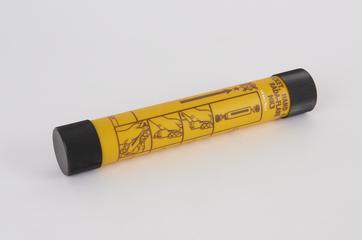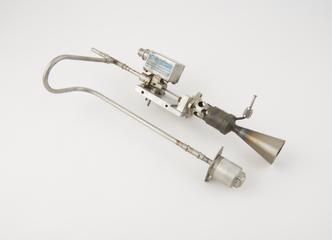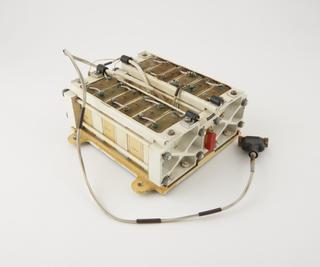
Scale model of proposed lunar lander using Direct Ascent method, 1:48
- maker:
- Science Museum, Workshops


 This image is released under a CC BY-NC-SA 4.0
Licence
This image is released under a CC BY-NC-SA 4.0
Licence
License this image for commercial use at Science and Society Picture Library
LicenseThis image is released under a CC BY-NC-SA 4.0
Licence
License this image for commercial use at Science and Society Picture Library
LicenseThis image is released under a CC BY-NC-SA 4.0
Licence
License this image for commercial use at Science and Society Picture Library
LicenseThis image is released under a CC BY-NC-SA 4.0
Licence
License this image for commercial use at Science and Society Picture Library
LicenseThis image is released under a CC BY-NC-SA 4.0
Licence
License this image for commercial use at Science and Society Picture Library
License
Science Museum Group
© The Board of Trustees of the Science Museum
Science Museum Group
© The Board of Trustees of the Science Museum
Science Museum Group
© The Board of Trustees of the Science Museum
Science Museum Group
© The Board of Trustees of the Science Museum
Science Museum Group
© The Board of Trustees of the Science Museum
This is a 1:48 scale model of a proposed lunar lander using the Direct Ascent method of reaching the moon.
In May 1961, US President John F Kennedy directed NASA to land a man on the Moon by the end of the decade. A special spacecraft would be needed to land astronauts on the Moon and - critically - get them back off again. The first option NASA looked at was a direct flight from the Earth to the Moon, launching and landing a large spacecraft on the Moon and using that same spacecraft to return to Earth. The second option was to assemble that large spacecraft in space before sending it to the Moon and returning to Earth. The third option was to use a small lunar lander that would rendezvous with the main spacecraft in orbit around the Moon and then return to Earth.
The first option - the Direct Ascent (DA) method - involved landing a large, fully fueled spacecraft onto the lunar surface. Launching this spacecraft would require an enormous rocket, one that had nearly twice the capacity of the Saturn V rocket. Most engineers discounted this method because it was too ambitious for President Kennedy's end-of-the-decade timeframe. The second option, assembling the large spacecraft in Earth's orbit, was also not ideal. While it did not require a very large rocket, it did require multiple launches of the as-yet untested Saturn V and multiple orbital rendezvous - also not tried before.
The team finally settled on the Lunar Orbit Rendezvous (LOR) method. This was not without risk, however, as it required the lunar lander to rendezvous with the lunar orbiting spacecraft 240,000 miles away from Earth with no hope of rescue if things went wrong.
Details
- Category:
- Space Technology
- Object Number:
- 1977-763
- Measurements:
-
overall: 425 mm x 220 mm x 220 mm,
- type:
- model