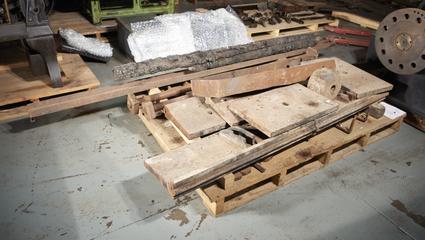
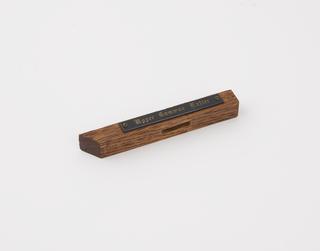
Two iron columns with gas fittings and cast-iron fittings from the Cruciform building, 1793.

Made:
1793 in London
maker:
William Strutt

Two iron columns with gas fittings and cast-iron fittings with cotters and tie-bar from William Strutt's Cruciform building at Berby Mill, Milford, 1793.

William Strutt, a civil engineer, architect and entrepreneur in cotton, is well known for being an early pioneer and promoter of fire-resistant building design. William Strutt was inspired to improve the safety of buildings after seeing his father's old mill burn down. He applied these ideas to his own buildings. This material are examples of how he redesigned cotton mills, avoiding the use of timber and other flammable materials, instead using cast ironwork, bricks, and ceramics.

This material comes from William Strutt's first attempt at designing a fire-proof building at his Belper estate, known as the Cruciform due to its cross-shaped layout. Constructed in 1793, it has often been described as the first true attempt to design an intentionally fireproof (or at least as fire-resistant as possible) multi-storey building design. By extension most modern building design can track its 'DNA' back to this late 18th century construction, and the novel and revolutionary engineering philosophy its founded upon.

William Strutt's would continue to improve his buidlign designs over the next 30 years, contructing increasingly impressive fireproof buildings on his Belper estate, and his ideas later serving as the foundation of the massive Victorian dockyards, rail stations, and factories which can still be found across the UK today.

Of Strutt's original mill sites, only the North Mill in Belper remains, and is now a World Heritage Site.
Details

Category:
Building Construction
Object Number:
1964-166
Materials:
cast iron
Measurements:
overall (5 of 5): 770 mm x 310 mm x 20 mm,
overall (3 and 4 of 5 - each): 2640 mm x 155 mm x 155 mm,
overall (1 and 2 of 5 - each): 2790 mm x 335 mm x 195 mm,
type:
columns
credit:
English Sewing Cotton Co. Ltd.

Parts

Cast iron column with gas fittings

Cast iron column with gas fittings

Cast iron column with gas fittings. From William Strutt's Cruciform building at Berby Mill, Milford, 1793.

Measurements:
overall (as stored): 200 mm x 2710 mm x 330 mm,
Materials:
cast iron and lead (metal)
Object Number:
1964-166/1
type:
column
Cast iron column with cast-iron fittings

Cast iron column with cast-iron fittings

Cast iron column with cast-iron fittings. From William Strutt's Cruciform building at Berby Mill, Milford, 1793.

Measurements:
overall (as stored): 180 mm x 2650 mm x 180 mm,
Materials:
cast iron
Object Number:
1964-166/2
type:
columns
Cast iron column with gas fittings

Cast iron column with gas fittings

Cast iron column with gas fittings.

Measurements:
overall (as stored): 200 mm x 2710 mm x 330 mm,
Materials:
cast iron and lead (metal)
Object Number:
1964-166/3
type:
columns
Cast iron column with cast-iron fittings

Cast iron column with cast-iron fittings

Cast iron column with cast-iron fittings.

Measurements:
overall (as stored): 180 mm x 2650 mm x 180 mm,
Materials:
cast iron
Object Number:
1964-166/4
type:
columns
Gas fitting from the Cruciform building

Gas fitting from the Cruciform building

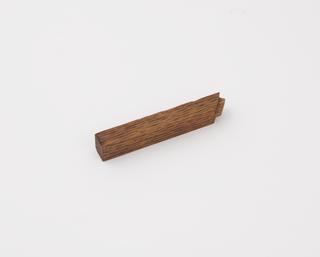
Gas fitting consisting of cast iron skewback and cylindrical spigot with iron cotters from William Strutt's Cruciform building at Berby Mill, Milford, 1793.

More

William Strutt, a civil engineer, architect and entrepreneur in cotton, is well known for being an early pioneer and promoter of fire-resistant building design. William Strutt was inspired to improve the safety of buildings after seeing his father's old mill burn down. He applied these ideas to his own buildings. This material are examples of how he redesigned cotton mills, avoiding the use of timber and other flammable materials. Instead using cast ironwork, bricks, and ceramics.

This material comes from William Strutt's first attempt at designing a fire-proof building at his Belper estate, known as the Cruciform due to its cross-shaped layout. Constructed in 1793, it has often been described as the first true attempt to design an intentionally fireproof (or at least as fire-resistant as possible) multi-storey building design. By extension most modern building design can track its 'DNA' back to this late 18th century construction, and the novel and revolutionary engineering philosophy its founded upon.

William Strutt's would continue to improve his buidlign designs over the next 30 years, contructing increasingly impressive fireproof buildings on his Belper estate, and his ideas later serving as the foundation of the massive Victorian dockyards, rail stations, and factories which can still be found across the UK today.

Of Strutt's original mill sites, only the North Mill in Belper remains, and is now a World Heritage Site.
Measurements:
overall: 520 mm x 460 mm x 230 mm,
Materials:
cast iron and iron
Object Number:
1964-166/6
type:
gas fitting
Gas fitting from the Cruciform building

Gas fitting from the Cruciform building

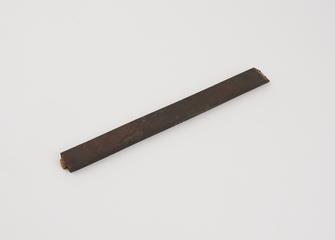
Gas fitting consisting of cast iron skewback and cylindrical spigot with iron cotters from William Strutt's Cruciform building at Berby Mill, Milford, 1793.

More

William Strutt, a civil engineer, architect and entrepreneur in cotton, is well known for being an early pioneer and promoter of fire-resistant building design. William Strutt was inspired to improve the safety of buildings after seeing his father's old mill burn down. He applied these ideas to his own buildings. This material are examples of how he redesigned cotton mills, avoiding the use of timber and other flammable materials. Instead using cast ironwork, bricks, and ceramics.

This material comes from William Strutt's first attempt at designing a fire-proof building at his Belper estate, known as the Cruciform due to its cross-shaped layout. Constructed in 1793, it has often been described as the first true attempt to design an intentionally fireproof (or at least as fire-resistant as possible) multi-storey building design. By extension most modern building design can track its 'DNA' back to this late 18th century construction, and the novel and revolutionary engineering philosophy its founded upon.

William Strutt's would continue to improve his buidlign designs over the next 30 years, contructing increasingly impressive fireproof buildings on his Belper estate, and his ideas later serving as the foundation of the massive Victorian dockyards, rail stations, and factories which can still be found across the UK today.

Of Strutt's original mill sites, only the North Mill in Belper remains, and is now a World Heritage Site.
Measurements:
overall: 530 mm x 700 mm x 230 mm,
Materials:
cast iron and iron
Object Number:
1964-166/7
type:
gas fitting
Tie bar from the Cruciform building

Tie bar from the Cruciform building

Tie bar from William Strutt's Cruciform building at Berby Mill, Milford, 1793.

More

William Strutt, a civil engineer, architect and entrepreneur in cotton, is well known for being an early pioneer and promoter of fire-resistant building design. William Strutt was inspired to improve the safety of buildings after seeing his father's old mill burn down. He applied these ideas to his own buildings. This material are examples of how he redesigned cotton mills, avoiding the use of timber and other flammable materials. Instead using cast ironwork, bricks, and ceramics.

This material comes from William Strutt's first attempt at designing a fire-proof building at his Belper estate, known as the Cruciform due to its cross-shaped layout. Constructed in 1793, it has often been described as the first true attempt to design an intentionally fireproof (or at least as fire-resistant as possible) multi-storey building design. By extension most modern building design can track its 'DNA' back to this late 18th century construction, and the novel and revolutionary engineering philosophy its founded upon.

William Strutt's would continue to improve his buidlign designs over the next 30 years, contructing increasingly impressive fireproof buildings on his Belper estate, and his ideas later serving as the foundation of the massive Victorian dockyards, rail stations, and factories which can still be found across the UK today.

Of Strutt's original mill sites, only the North Mill in Belper remains, and is now a World Heritage Site.
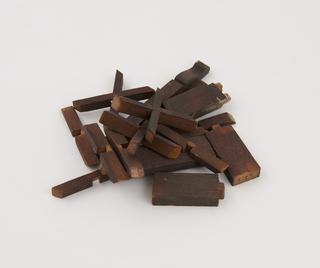
Measurements:
overall: 20 mm x 3690 mm x 50 mm,
Object Number:
1964-166/8
type:
tie rods
Wooden beam from the Cruciform building

Wooden beam from the Cruciform building

Wooden beam from William Strutt's Cruciform building at Berby Mill, Milford, 1793.

More

William Strutt, a civil engineer, architect and entrepreneur in cotton, is well known for being an early pioneer and promoter of fire-resistant building design. William Strutt was inspired to improve the safety of buildings after seeing his father's old mill burn down. He applied these ideas to his own buildings. This material are examples of how he redesigned cotton mills, avoiding the use of timber and other flammable materials. Instead using cast ironwork, bricks, and ceramics.

This material comes from William Strutt's first attempt at designing a fire-proof building at his Belper estate, known as the Cruciform due to its cross-shaped layout. Constructed in 1793, it has often been described as the first true attempt to design an intentionally fireproof (or at least as fire-resistant as possible) multi-storey building design. By extension most modern building design can track its 'DNA' back to this late 18th century construction, and the novel and revolutionary engineering philosophy its founded upon.

William Strutt's would continue to improve his buidlign designs over the next 30 years, contructing increasingly impressive fireproof buildings on his Belper estate, and his ideas later serving as the foundation of the massive Victorian dockyards, rail stations, and factories which can still be found across the UK today.

Of Strutt's original mill sites, only the North Mill in Belper remains, and is now a World Heritage Site.
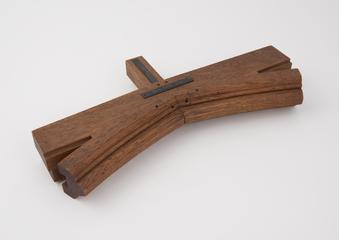
Measurements:
overall: 330 mm x 1340 mm x 30 mm,
Materials:
wood (unidentified)
Object Number:
1964-166/9
type:
beams (structural elements)
Wooden beam from the Cruciform building

Wooden beam from the Cruciform building

Wooden beam from William Strutt's Cruciform building at Berby Mill, Milford, 1793.

More

William Strutt, a civil engineer, architect and entrepreneur in cotton, is well known for being an early pioneer and promoter of fire-resistant building design. William Strutt was inspired to improve the safety of buildings after seeing his father's old mill burn down. He applied these ideas to his own buildings. This material are examples of how he redesigned cotton mills, avoiding the use of timber and other flammable materials. Instead using cast ironwork, bricks, and ceramics.

This material comes from William Strutt's first attempt at designing a fire-proof building at his Belper estate, known as the Cruciform due to its cross-shaped layout. Constructed in 1793, it has often been described as the first true attempt to design an intentionally fireproof (or at least as fire-resistant as possible) multi-storey building design. By extension most modern building design can track its 'DNA' back to this late 18th century construction, and the novel and revolutionary engineering philosophy its founded upon.

William Strutt's would continue to improve his buidlign designs over the next 30 years, contructing increasingly impressive fireproof buildings on his Belper estate, and his ideas later serving as the foundation of the massive Victorian dockyards, rail stations, and factories which can still be found across the UK today.

Of Strutt's original mill sites, only the North Mill in Belper remains, and is now a World Heritage Site.

Measurements:
overall: 330 mm x 1845 mm x 350 mm,
Materials:
wood (unidentified)
Object Number:
1964-166/10
type:
beams (structural elements)
Wooden fittings from the Cruciform building

Wooden fittings from the Cruciform building

Four wooden fittings held together with cord from William Strutt's Cruciform building at Berby Mill, Milford, 1793.

More

William Strutt, a civil engineer, architect and entrepreneur in cotton, is well known for being an early pioneer and promoter of fire-resistant building design. William Strutt was inspired to improve the safety of buildings after seeing his father's old mill burn down. He applied these ideas to his own buildings. This material are examples of how he redesigned cotton mills, avoiding the use of timber and other flammable materials. Instead using cast ironwork, bricks, and ceramics.

This material comes from William Strutt's first attempt at designing a fire-proof building at his Belper estate, known as the Cruciform due to its cross-shaped layout. Constructed in 1793, it has often been described as the first true attempt to design an intentionally fireproof (or at least as fire-resistant as possible) multi-storey building design. By extension most modern building design can track its 'DNA' back to this late 18th century construction, and the novel and revolutionary engineering philosophy its founded upon.

William Strutt's would continue to improve his buidlign designs over the next 30 years, contructing increasingly impressive fireproof buildings on his Belper estate, and his ideas later serving as the foundation of the massive Victorian dockyards, rail stations, and factories which can still be found across the UK today.

Of Strutt's original mill sites, only the North Mill in Belper remains, and is now a World Heritage Site.

Measurements:
overall: 270 mm x 720 mm x 500 mm,
Materials:
wood (unidentified)
Object Number:
1964-166/11
type:
hardware
Cast-iron component previously attached to iron column from the Cruciform building, 1793.

Cast-iron component previously attached to iron column from the Cruciform building, 1793.

Cast-iron component with ridge down the centre and three oval holes, two on one side and one on the other, from William Strutt's Cruciform building at Berby Mill, Milford, 1793.

More

William Strutt, a civil engineer, architect and entrepreneur in cotton, is well known for being an early pioneer and promoter of fire-resistant building design. William Strutt was inspired to improve the safety of buildings after seeing his father's old mill burn down. He applied these ideas to his own buildings. This material are examples of how he redesigned cotton mills, avoiding the use of timber and other flammable materials, instead using cast ironwork, bricks, and ceramics.

This material comes from William Strutt's first attempt at designing a fire-proof building at his Belper estate, known as the Cruciform due to its cross-shaped layout. Constructed in 1793, it has often been described as the first true attempt to design an intentionally fireproof (or at least as fire-resistant as possible) multi-storey building design. By extension most modern building design can track its 'DNA' back to this late 18th century construction, and the novel and revolutionary engineering philosophy its founded upon.

William Strutt's would continue to improve his buidlign designs over the next 30 years, contructing increasingly impressive fireproof buildings on his Belper estate, and his ideas later serving as the foundation of the massive Victorian dockyards, rail stations, and factories which can still be found across the UK today.

Of Strutt's original mill sites, only the North Mill in Belper remains, and is now a World Heritage Site.

Measurements:
overall: 400 mm x 300 mm x 150 mm,
Materials:
cast iron
Object Number:
1964-166/12
type:
component - object