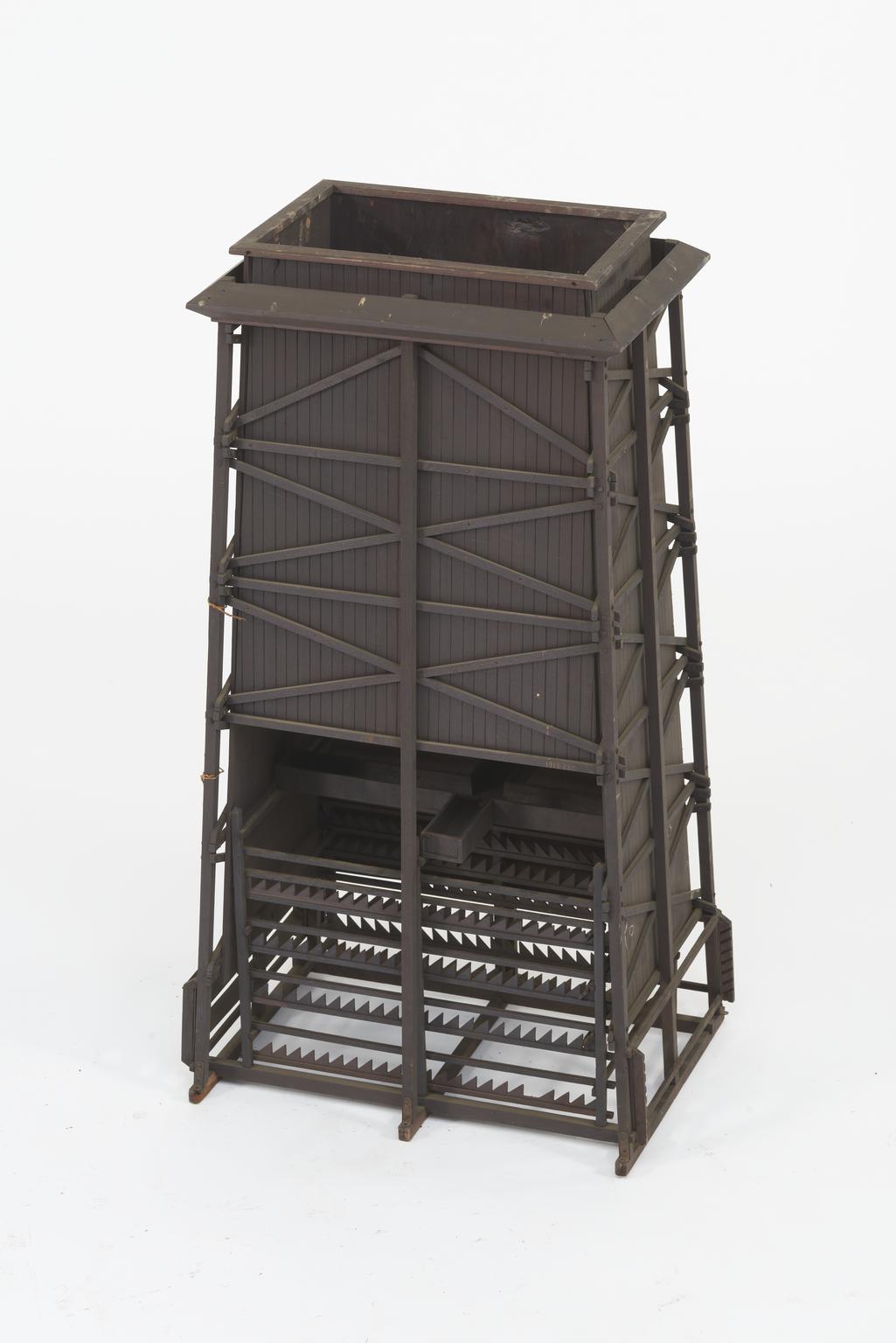
Model of improved "Hudson's" Natural Draught Chimney Type Water Cooling Tower (Brown's patent)
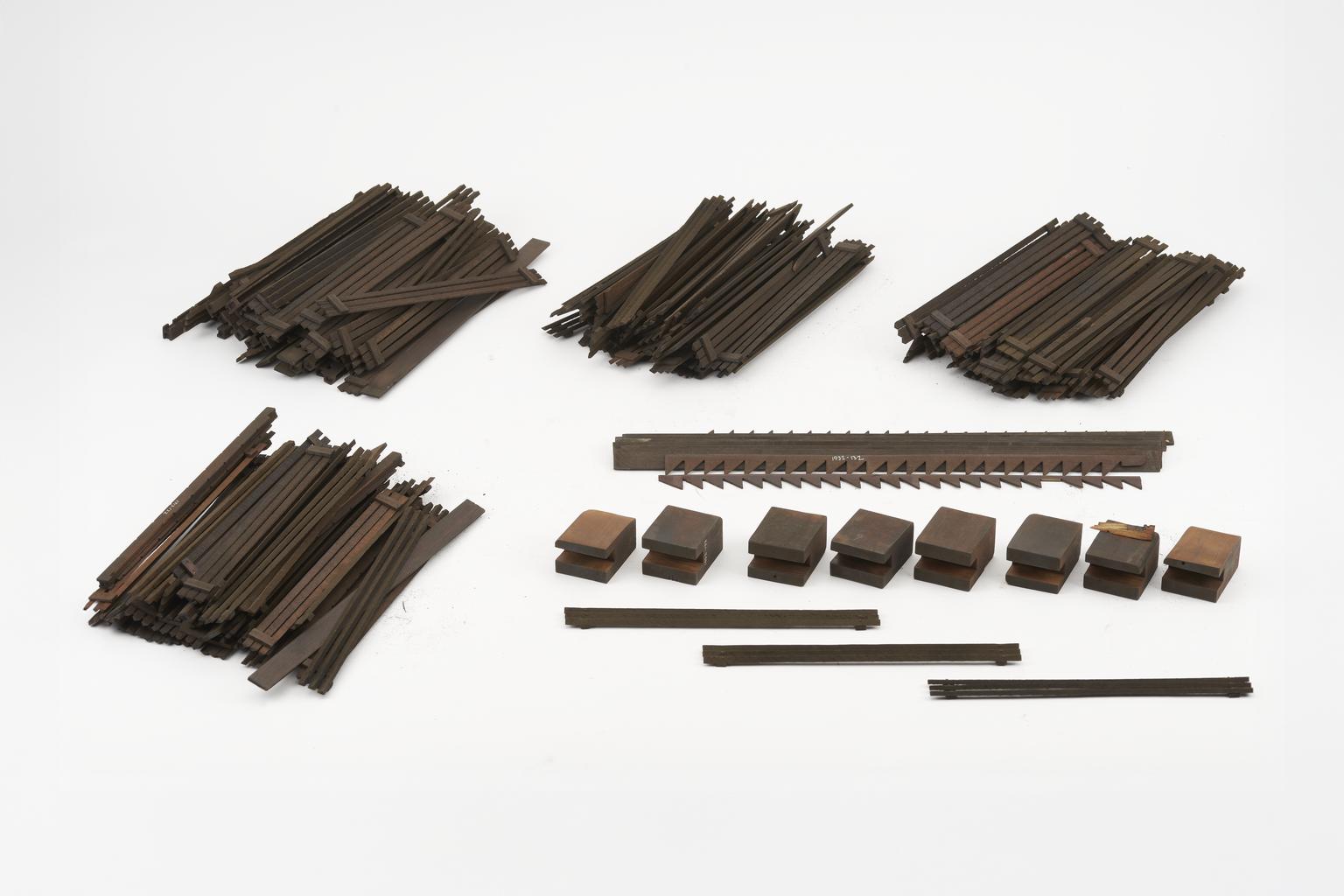
Where the supply of water for the condensation of steam or for manufacturing processes is inadequate or costly, considerable economy can be realised by cooling water artificially. To some extent this has been achieved in the past by discharging hot water into reservoirs where the water cools by surface evaporation and convection. The operation can be effected speedily and in a very small area by the use of cooling towers such as that shown. The tower is of the natural draught chimney type and is in the form of a truncated pyramid framed of timber cross-braced and close boarded inside with the exception of the lowest part, where the air is admitted through slats or louvres. In the filling for the interior, which is of the form patented by Mr. J. H. Brown in 1905, particular attention has been paid to the following points: unim- peded upward circulation of air, continuous subdivision of the descending stream of water, and spreading of the water as a film over a large surface. This is achieved by the use of wooden arris rails nailed to short battens in groups of three to constitute a hurdle; copper is used for all fastenings. The hurdles drop into seats on beams bolted to an internal framework in such a position that one side of every rail is vertical, and that the rails are arranged stepwise. The hurdles of one tier are arranged to the reverse hand of that of the one above. The hurdles do not require to be nailed down and can be removed readily when necessary. The water is distributed by a cross-launder to a net-work of troughs over which it flows on to the hurdles. Notches in the rails check the tendency of the water to form into streams, and cause instead trickling from one hurdle to the next one below. Steam passes off at the top of the tower, and water, cooled to several degrees below that of the surrounding atmosphere, collects in the reservoir below. These towers were made in convenient units up to about 40,000 gallons per hour capacity.