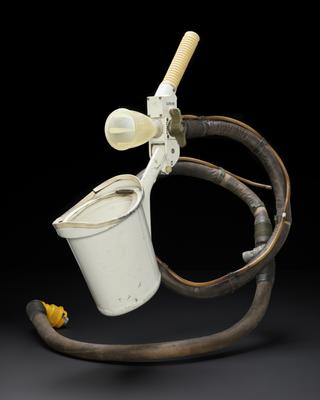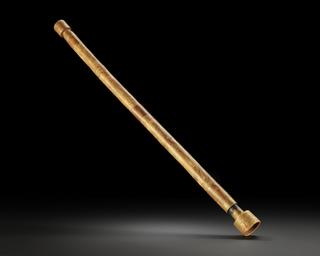
1999 eclipse viewer
- supplier:
- Eclipse 99 Limited


 This image is released under a CC BY-NC-SA 4.0
Licence
License this image for commercial use at Science and Society Picture Library
LicenseThis image is released under a CC BY-NC-SA 4.0
Licence
License this image for commercial use at Science and Society Picture Library
LicenseThis image is released under a CC BY-NC-SA 4.0
Licence
License this image for commercial use at Science and Society Picture Library
LicenseThis image is released under a CC BY-NC-SA 4.0
Licence
License this image for commercial use at Science and Society Picture Library
LicenseThis image is released under a CC BY-NC-SA 4.0
Licence
License this image for commercial use at Science and Society Picture Library
LicenseThis image is released under a CC BY-NC-SA 4.0
Licence
License this image for commercial use at Science and Society Picture Library
License
Science Museum Group
© The Board of Trustees of the Science Museum
Science Museum Group
© The Board of Trustees of the Science Museum
Science Museum Group Collection
© The Board of Trustees of the Science Museum
Science Museum Group Collection
© The Board of Trustees of the Science Museum
Science Museum Group Collection
© The Board of Trustees of the Science Museum
Science Museum Group
© The Board of Trustees of the Science Museum
Mylar eclipse viewer supplied with the book, ‘The RGO Guide to the 1999 Total Eclipse of the Sun’, by Steve Bell.
A solar eclipse happens when the Moon passes between the Earth and the Sun, obscuring the Sun from view.
Solar eclipses can be partial or total, depending on how much of the Sun is obscured.
On the morning of the 11th of August 1999, a total eclipse was visible from the south-west area of mainland UK, as well as other parts of the world. It was the first total eclipse observable in the UK since 1927. To mark this occasion, the Royal Greenwich Observatory released a special book which included a pair of cardboard glasses with mylar lenses so people could watch it safely.
This mylar eclipse viewer was supplied with the book, ‘The RGO Guide to the 1999 Total Eclipse of the Sun’, by Steve Bell.
Eclipse glasses work by filtering UV, infrared and visible light. They are usually made of mylar, a type of polyester film historically used in film photography.
Details
- Category:
- Astronomy
- Object Number:
- 1999-1176
- Materials:
- card and plastic (unidentified)
- Measurements:
-
overall (open): 50 x 150 x 130 mm
overall (laid flat): 50 mm x 405 mm 0.008 kg
- type:
- ecipse viewer
- credit:
- Mr K L Johnson