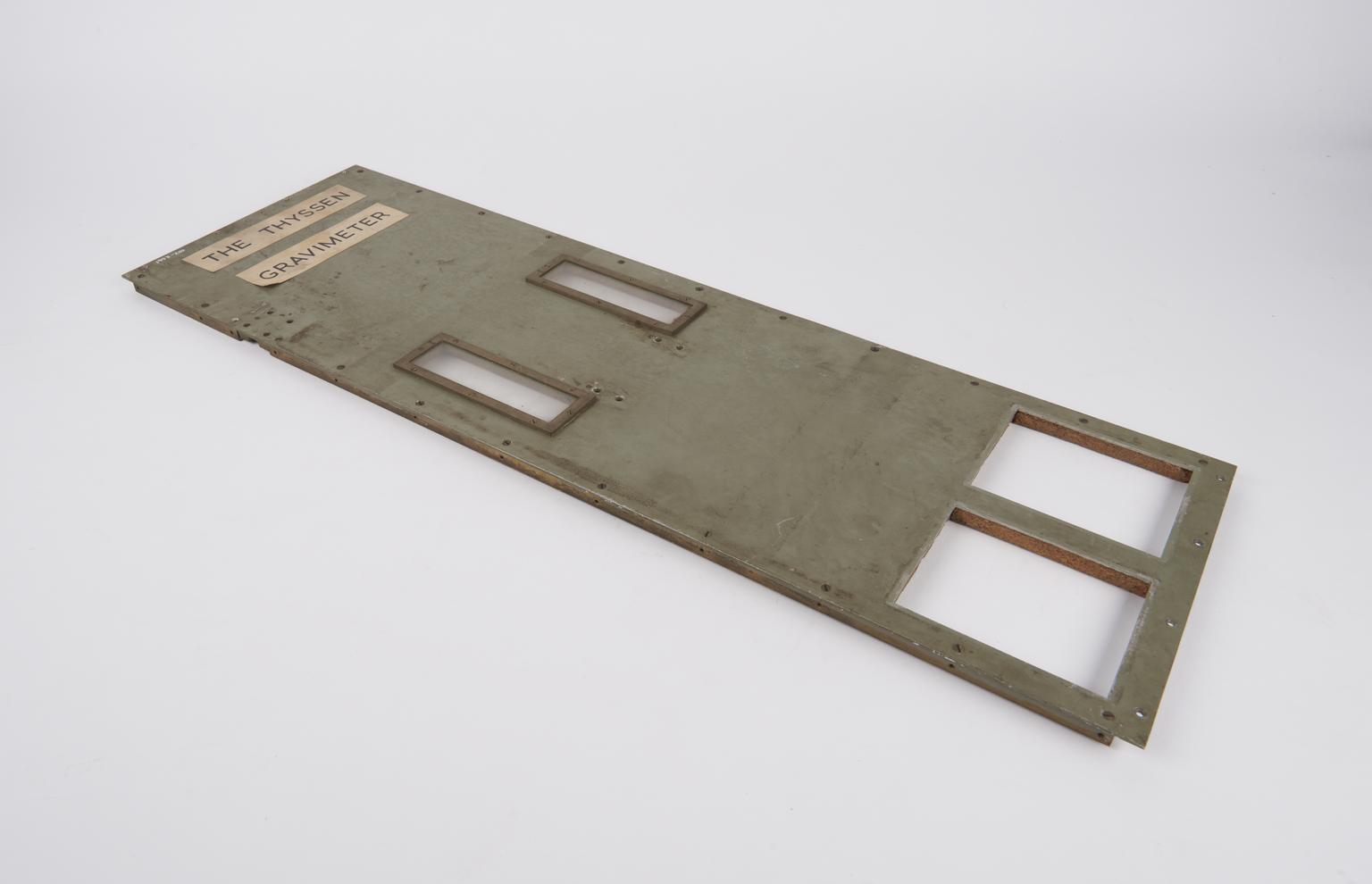
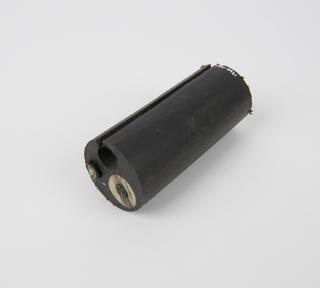
Thyssen-type Gravity Meter, 1939
This Thyssen gravity meter was built in 1939 by Seismos GmbH (later Prakla Seismos), a German company which built scientific instruments.
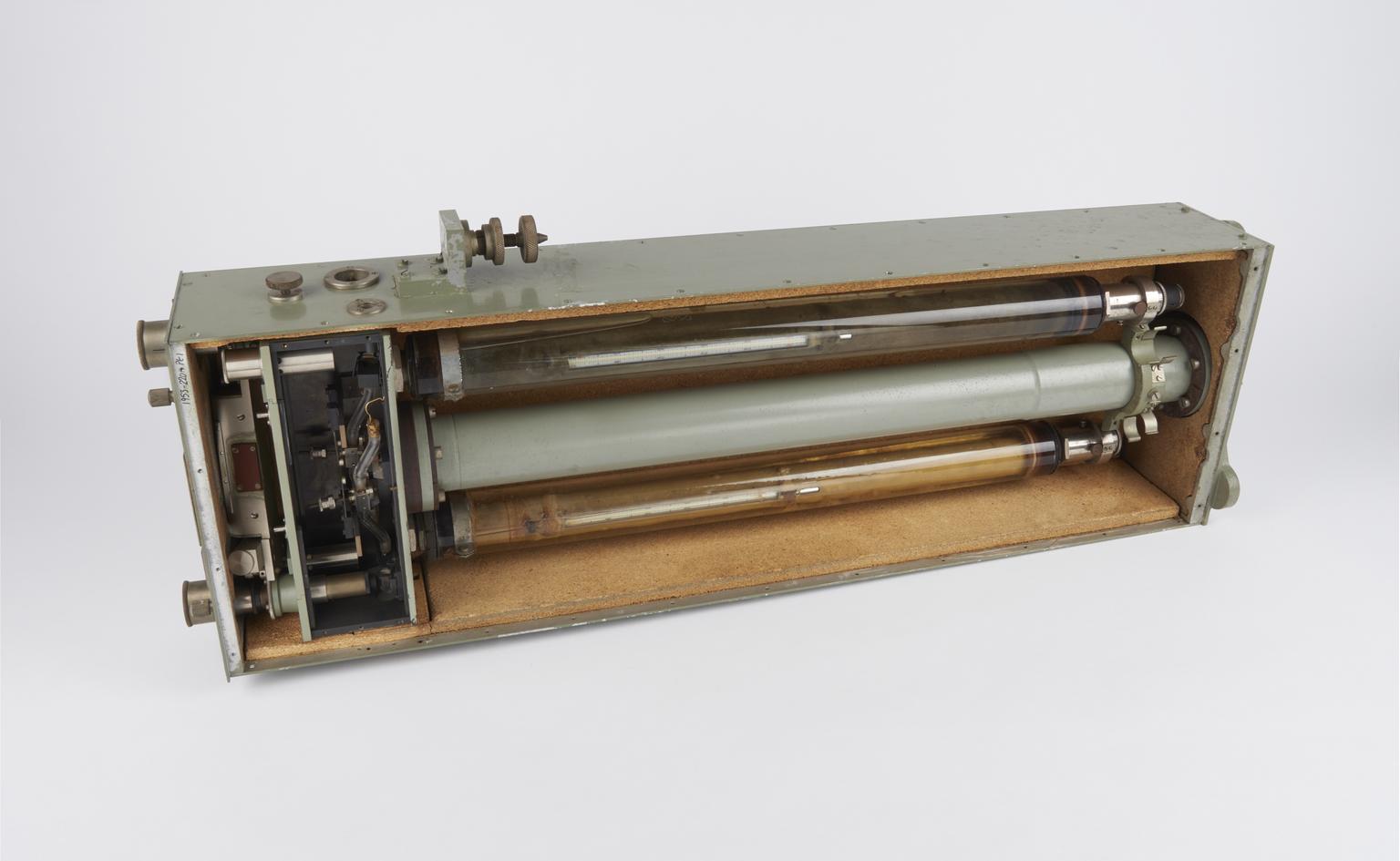
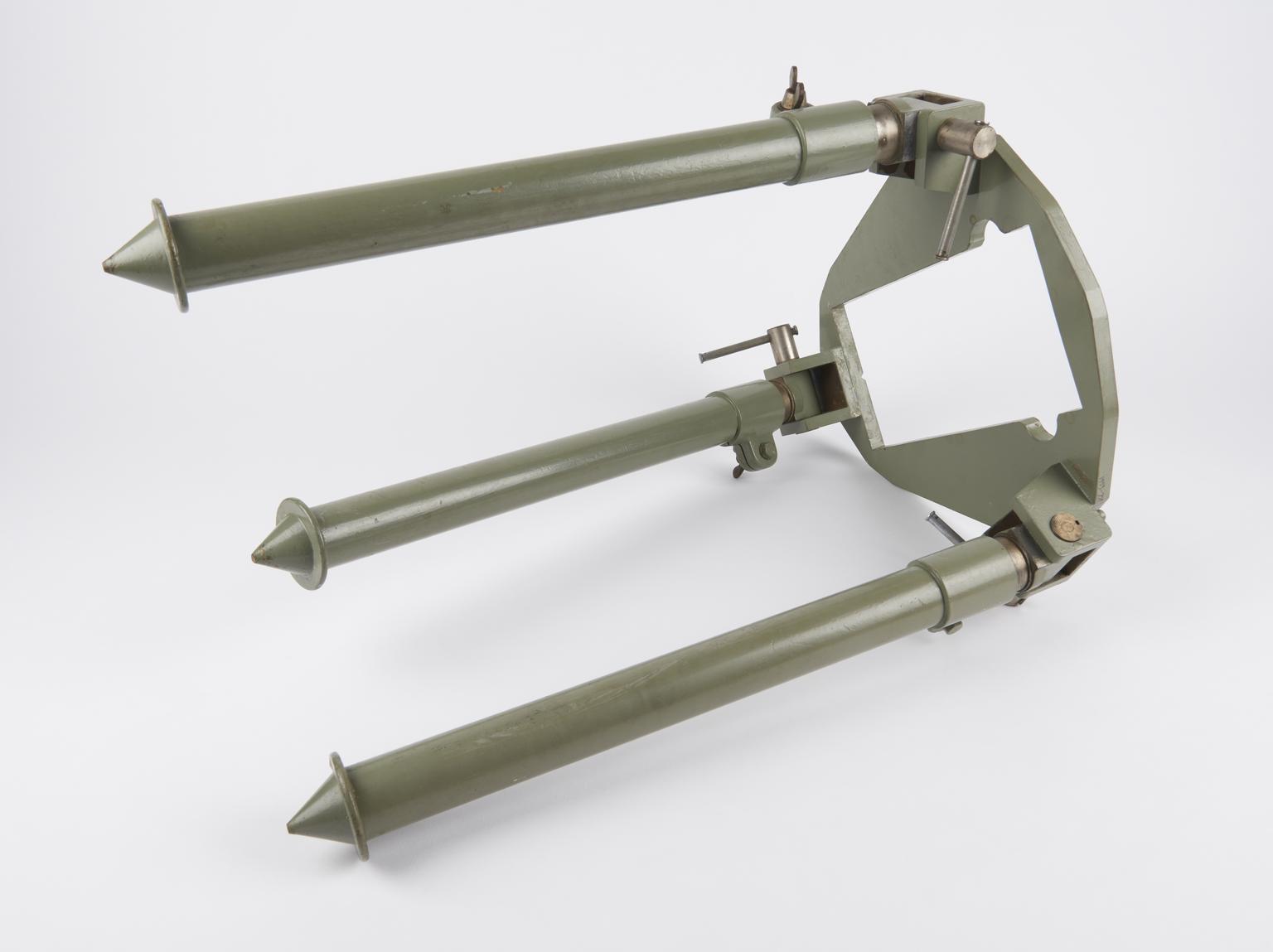
The instrument is stood upright on a adjustable tripod frame. The instrument has two tubed thermometers attached to the inside of the casing, with the spring balance and beam device placed near the top of the casing.
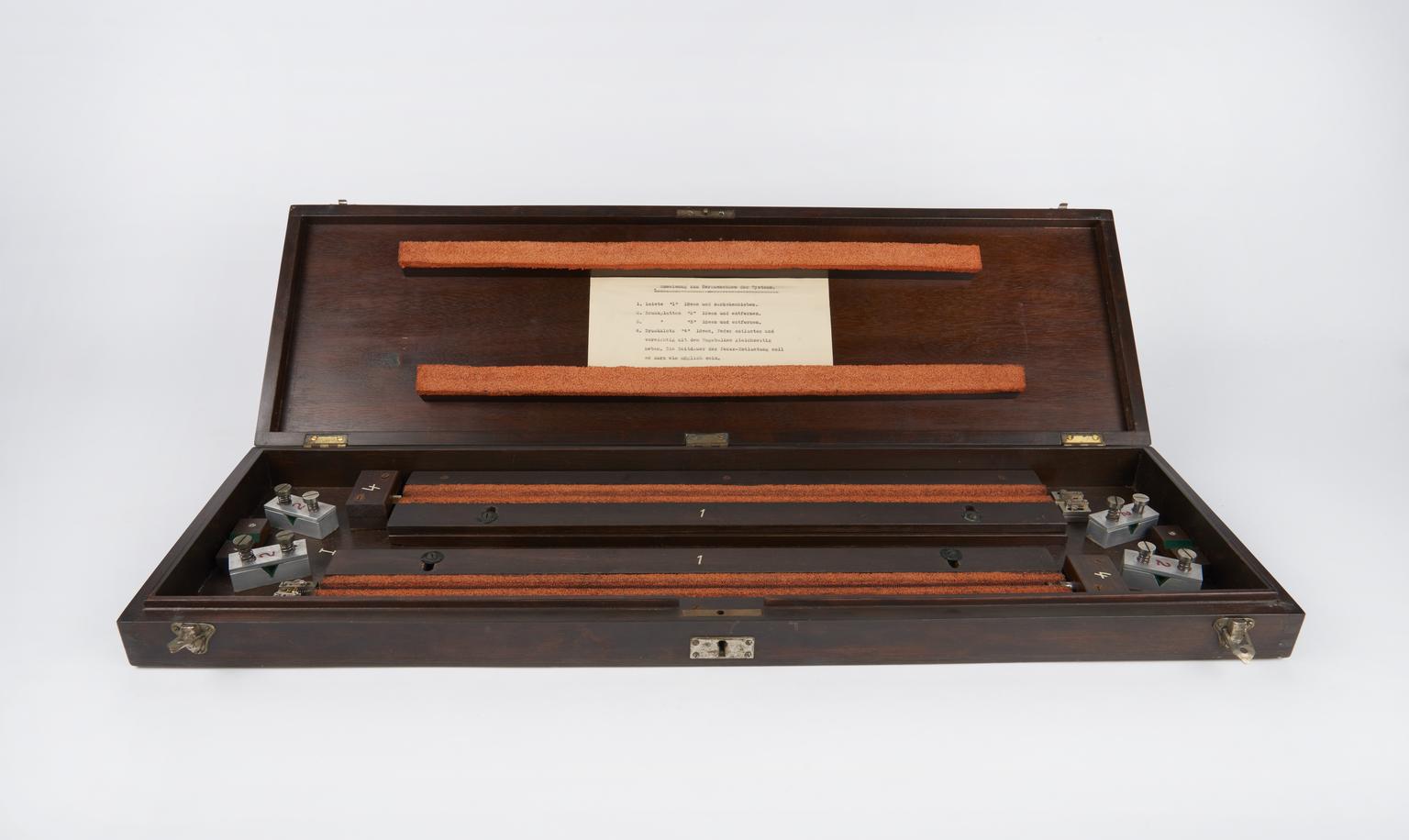
Accompanying the meter itself are two wooden boxes, the smaller of which contains tools used for the maintenance of the meter, including: screwdrivers, clamps, tweezers and spare parts. A separate wooden box contains spare springs, which are kept taught in the casing.
More
A gravity meter, or gravimeter, is an instrument designed to measure and record variations in the earth’s gravitational field in specific locations. These instruments can be broadly divided into two types, stable/static and unstable/astatic. The key difference is that a stable gravity meter will reset itself once it has made a measurement of gravity, whilst an unstable gravity meter will not reset or return to a neutral position.
The benefit of unstable meters is that they exaggerate the changes in gravity making them easier to measure with high precision. The downside to unstable meters is that they are, by design, very sensitive to other factors such as additional sources of gravity, movement, and even heat.
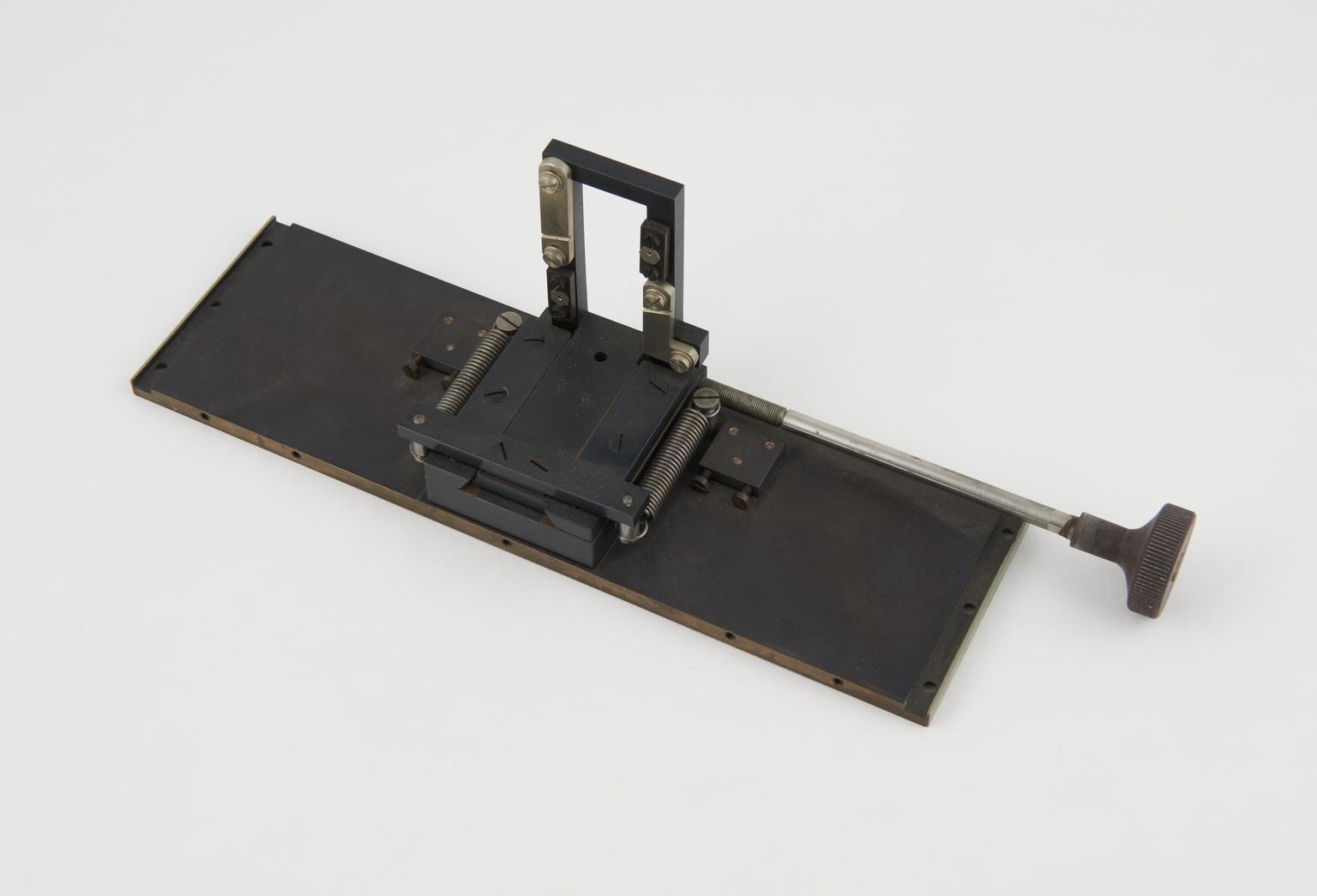
This Thyssen gravity meter is a relatively early design of unstable gravity meter, which uses a quartz beam placed on a knife-edge with a 20-gram platinum balance weight placed on the end of one arm, and spring balance one the other. A small 1-gram balance is placed on a slider, and as the operator slides the smaller balance along the beam, and the platinum weight on the other end of the beam will move based on the strength of the specific gravity of the area being recorded.
These measurements (called deflections) are often very slight and need to be observed via a microscope and can also be used to extrapolate the density and structure of the earth’s crust. This made gravity meter such as this one very useful as a means of prospecting for mineral, oil and ore deposits. Thyssen gravity meters are especially sensitive to changes in temperature which would affect the spring balance, and therefore the instrument also has a thermometer in a lagged tube.
- Measurements:
-
overall: 755 mm x 390 mm x 415 mm, 24.5kg
- Materials:
- aluminium alloy , glass , steel (metal) , brass (copper, zinc alloy) , mercury , cork , nickel plated and liquid (water?)
- Object Number:
- 1953-220 Pt1
- type:
- gravimeter