Case for brass quadrant with stand.
Wooden case for 18-inch brass quadrant, made by John Bird, London, in 1771.
- Measurements:
-
overall: 190 x 800 x 670 mm
- Materials:
- pine
- Object Number:
- 1937-600 Pt1
- type:
- instrument case


 This image is released under a CC BY-NC-SA 4.0
Licence
This image is released under a CC BY-NC-SA 4.0
Licence
License this image for commercial use at Science and Society Picture Library
LicenseThis image is released under a CC BY-NC-SA 4.0
Licence
License this image for commercial use at Science and Society Picture Library
LicenseThis image is released under a CC BY-NC-SA 4.0
Licence
License this image for commercial use at Science and Society Picture Library
LicenseThis image is released under a CC BY-NC-SA 4.0
Licence
License this image for commercial use at Science and Society Picture Library
LicenseThis image is released under a CC BY-NC-SA 4.0
Licence
License this image for commercial use at Science and Society Picture Library
LicenseThis image is released under a CC BY-NC-SA 4.0
Licence
License this image for commercial use at Science and Society Picture Library
LicenseThis image is released under a CC BY-NC-SA 4.0
Licence
License this image for commercial use at Science and Society Picture Library
LicenseThis image is released under a CC BY-NC-SA 4.0
Licence
License this image for commercial use at Science and Society Picture Library
License
Science Museum Group Collection
© The Board of Trustees of the Science Museum
Science Museum Group Collection
© The Board of Trustees of the Science Museum
Science Museum Group Collection
© The Board of Trustees of the Science Museum
Science Museum Group Collection
© The Board of Trustees of the Science Museum
Science Museum Group Collection
© The Board of Trustees of the Science Museum
Science Museum Group Collection
© The Board of Trustees of the Science Museum
Science Museum Group Collection
© The Board of Trustees of the Science Museum
Science Museum Group Collection
© The Board of Trustees of the Science Museum
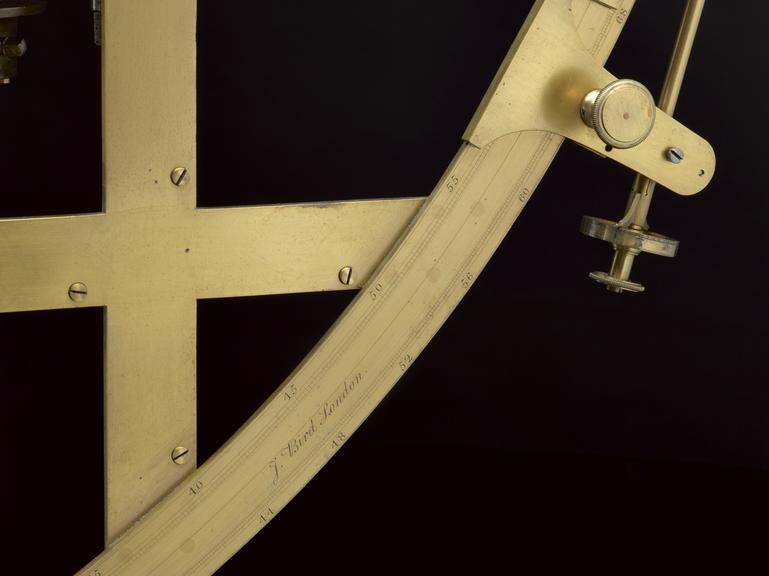
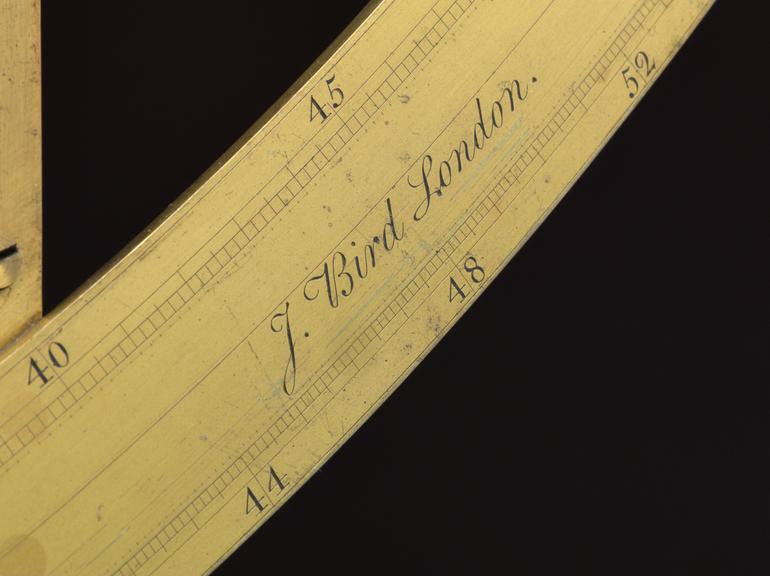
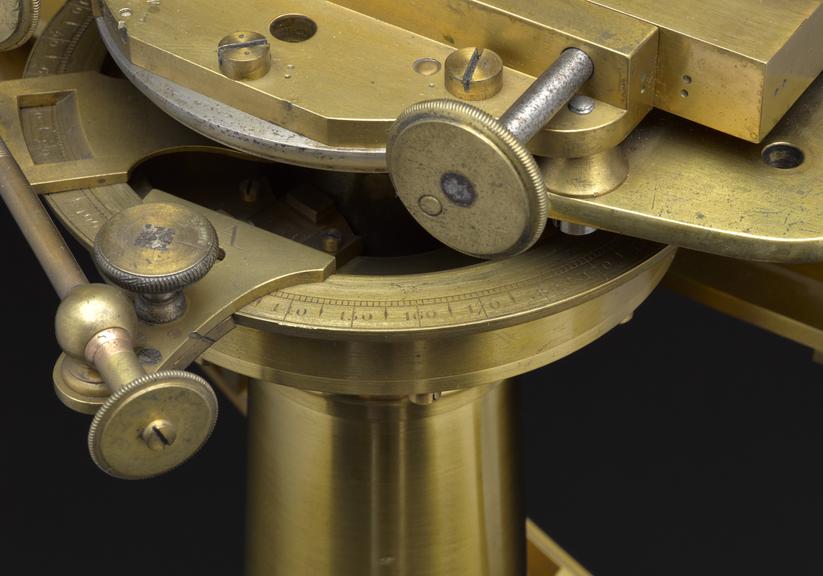
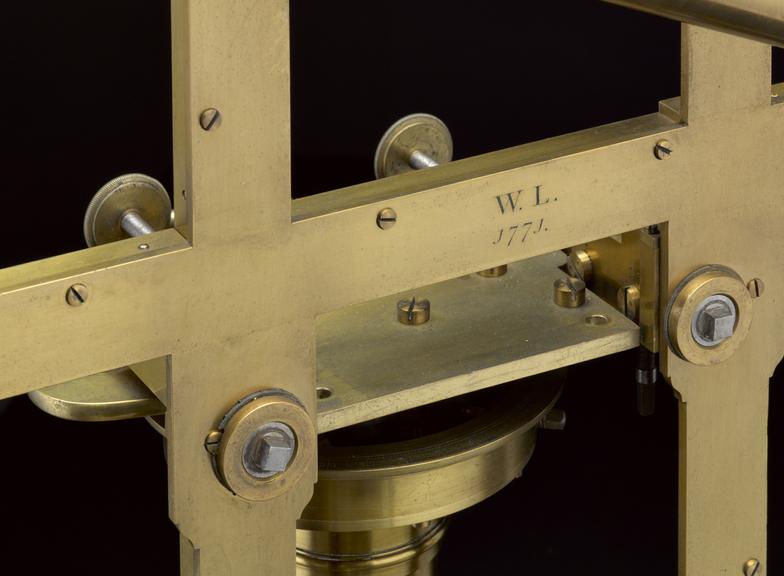
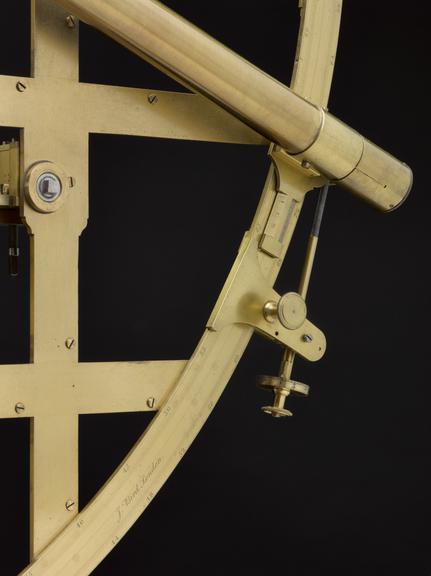
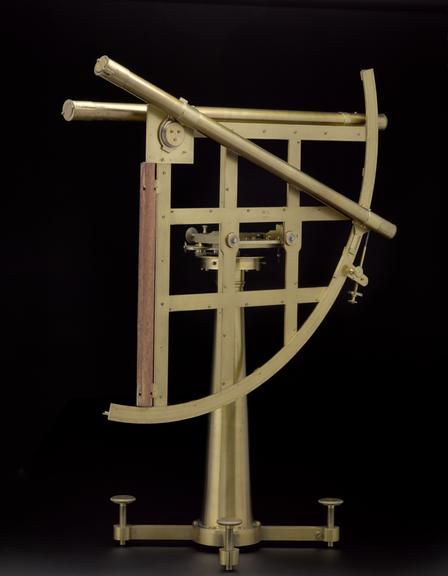
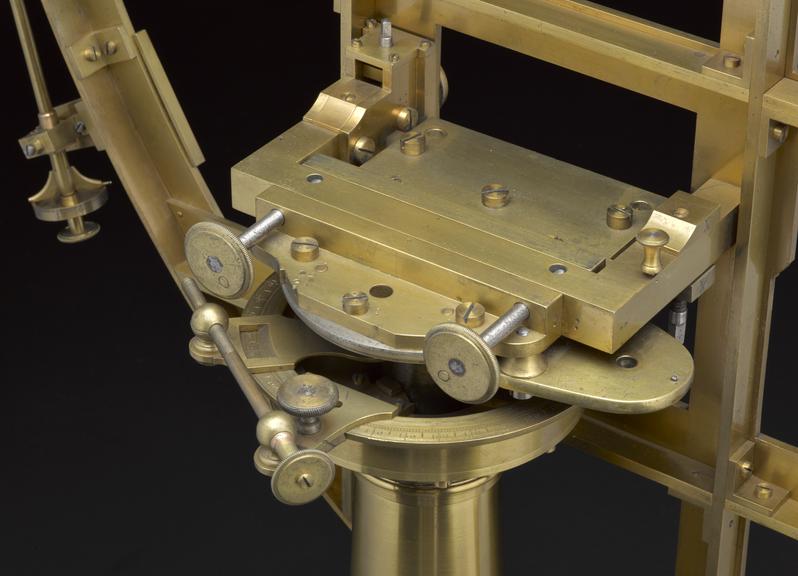
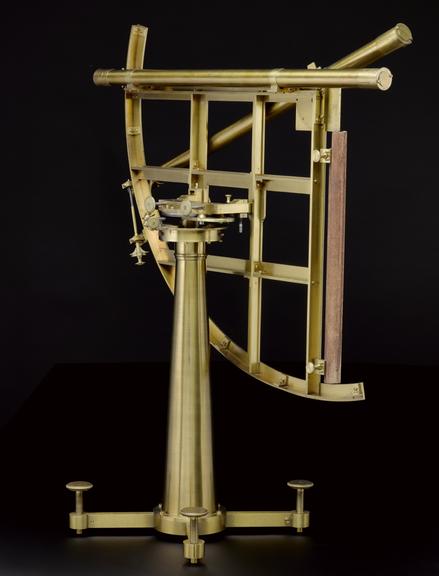
Brass quadrant with 0-90° scale of 18-inch radius with second scale of 0- 96° divisions with stand, two optical sights and wooden case. Signed by the maker "J. Bird, London" and dated 1771; also engraved with the initials "W.L." of its original owner, the Reverend William Ludlam, mathematician and Fellow of St John's College, Cambridge.
Astronomical quadrants were used primarily to determine the altitude of a celestial body above the horizon. By combining these angle measurements with astronomical tables and calculations, observers could determine the positions of celestial bodies and calculate their latitude.
This quadrant takes its name from its shape: a quarter-circle, marked with a scale spanning 90°. It features two sighting tubes to let the observer align the instrument with a celestial body and read its altitude from the graduated scale.
It was made by John Bird (1709–1776), a British mathematical instrument maker with a particular interest in astronomy. He was known throughout Europe for the high quality and accuracy of his instruments. This particular example belonged to the Reverend William Ludlam, a mathematician and Fellow of St John's College, Cambridge. His initials, ‘W.L.’, are engraved on the instrument together with the maker’s signature.
Wooden case for 18-inch brass quadrant, made by John Bird, London, in 1771.
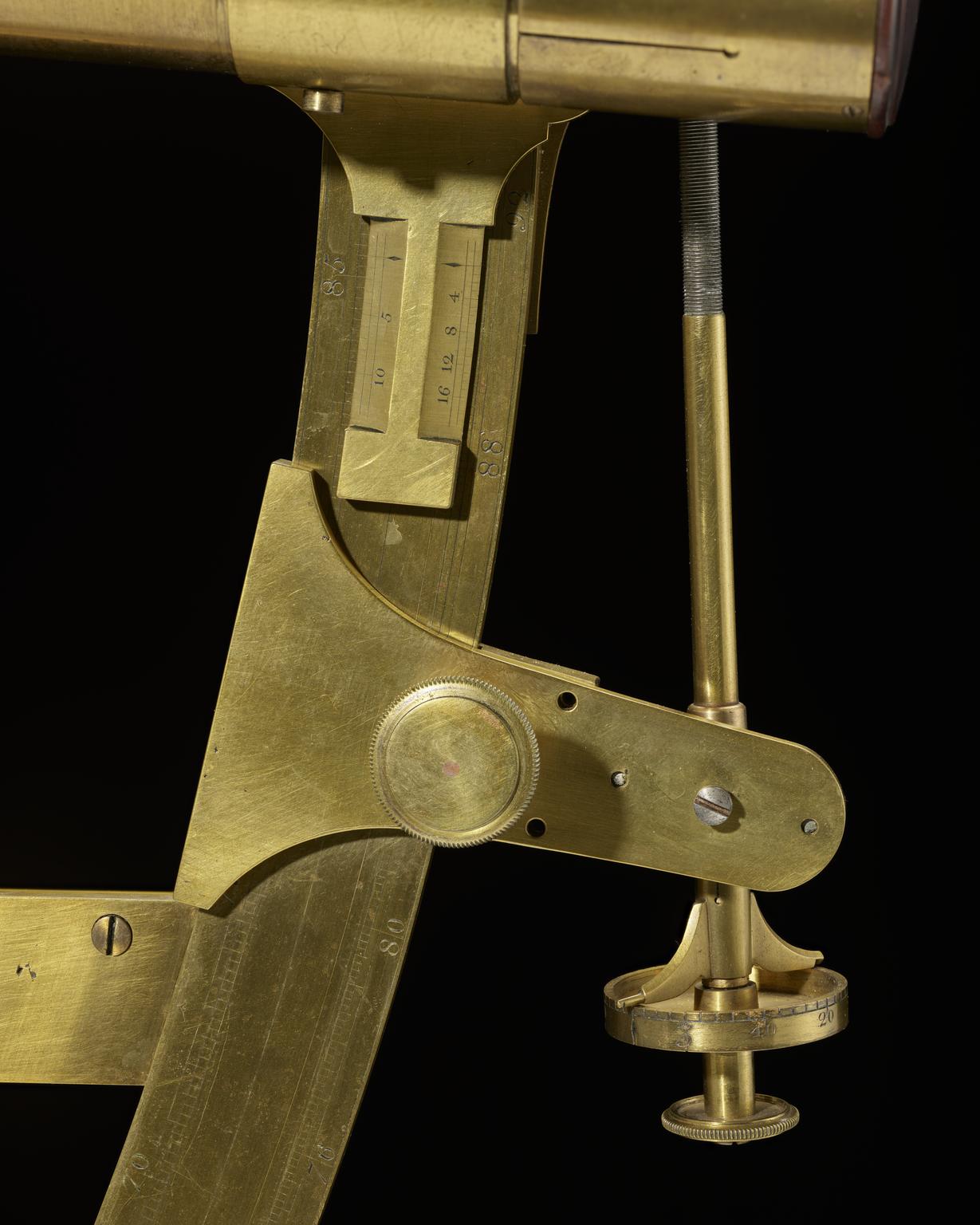
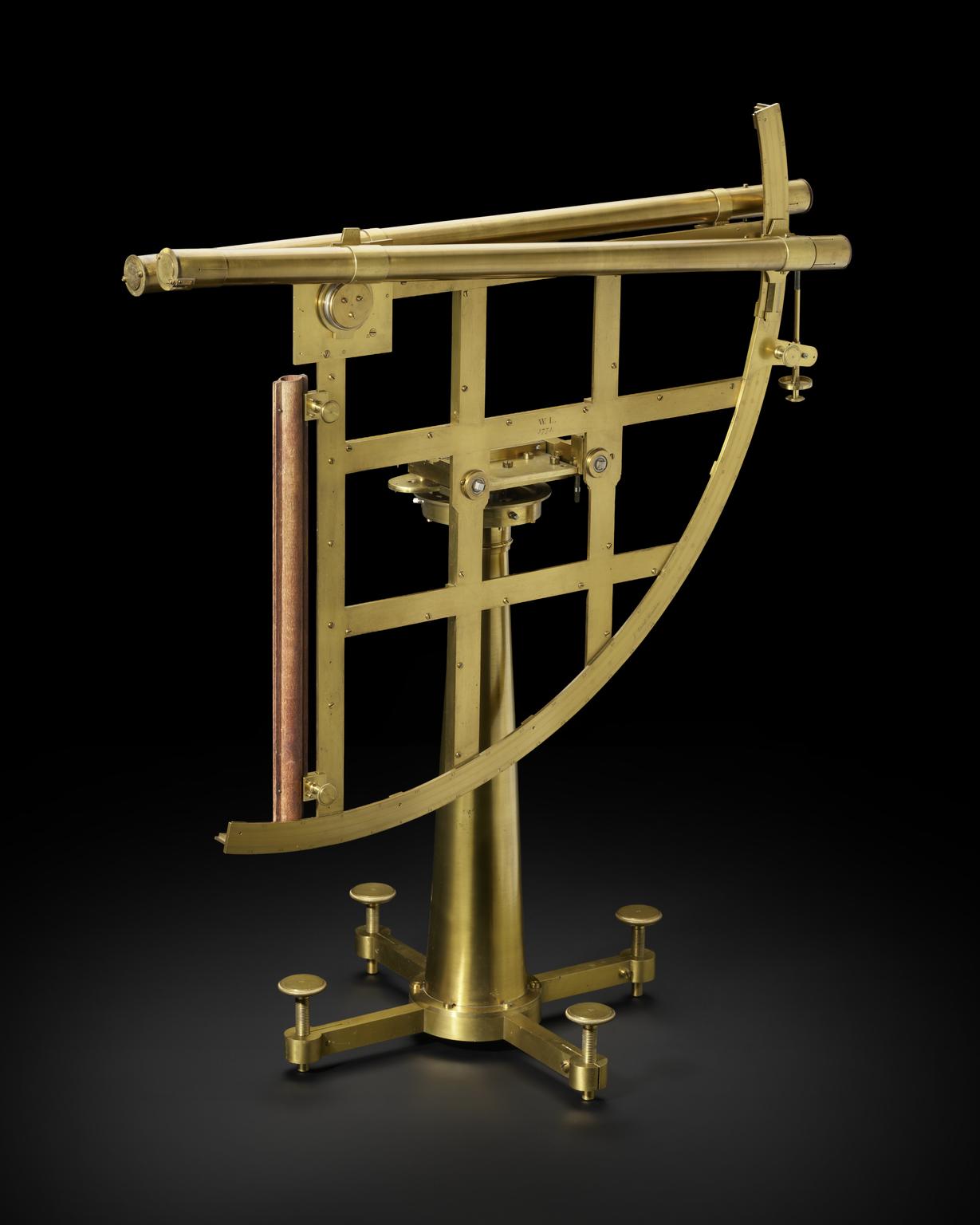
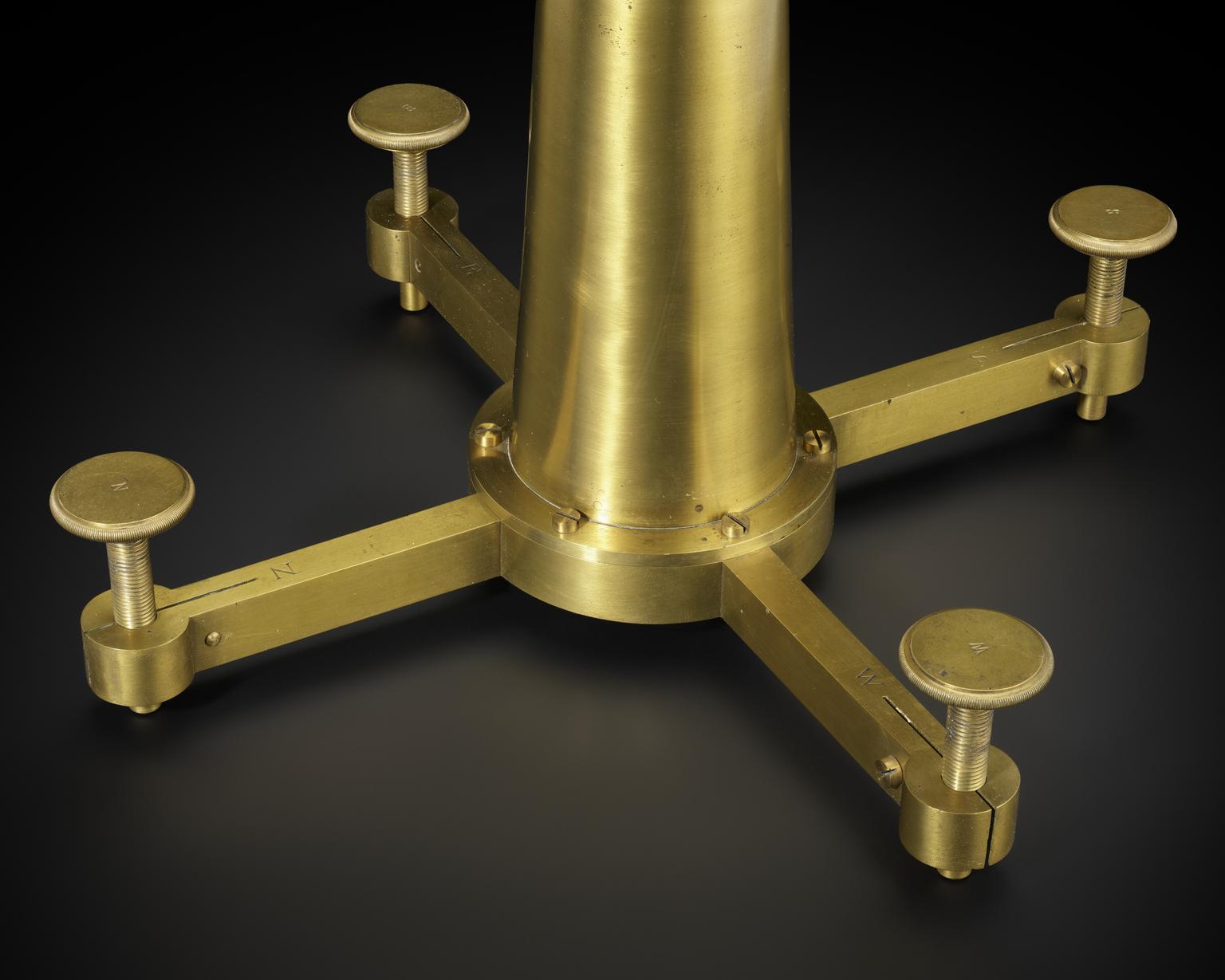
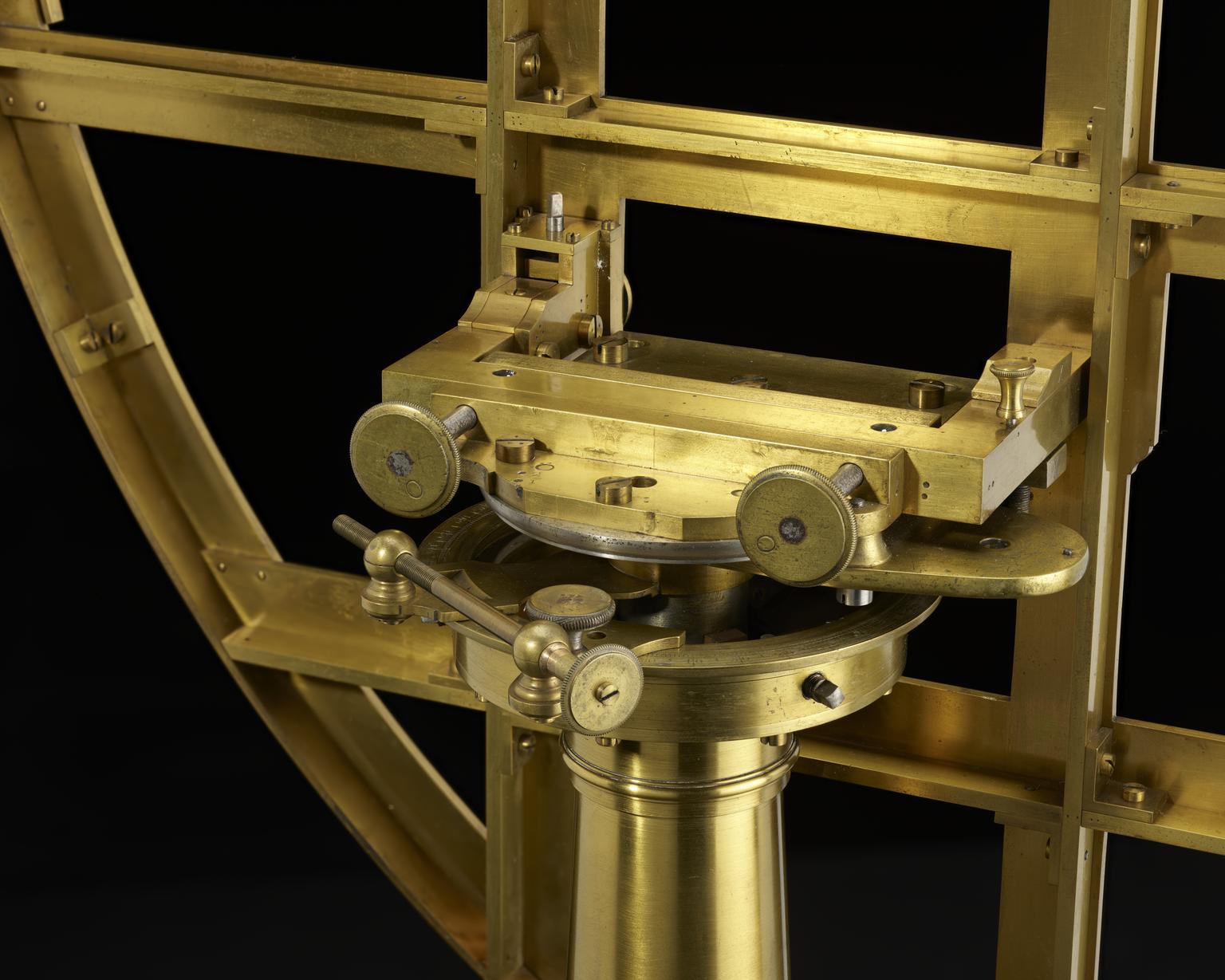
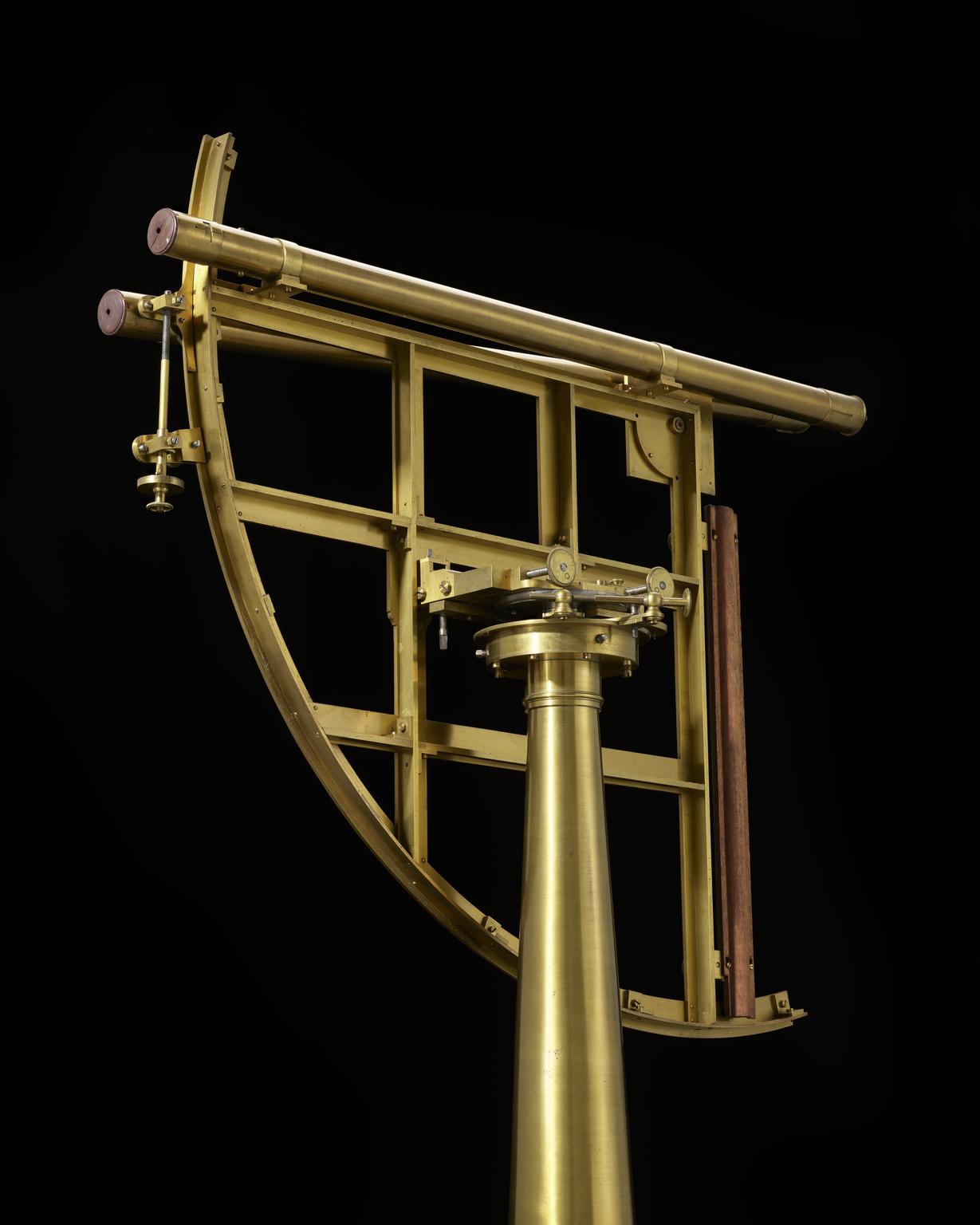
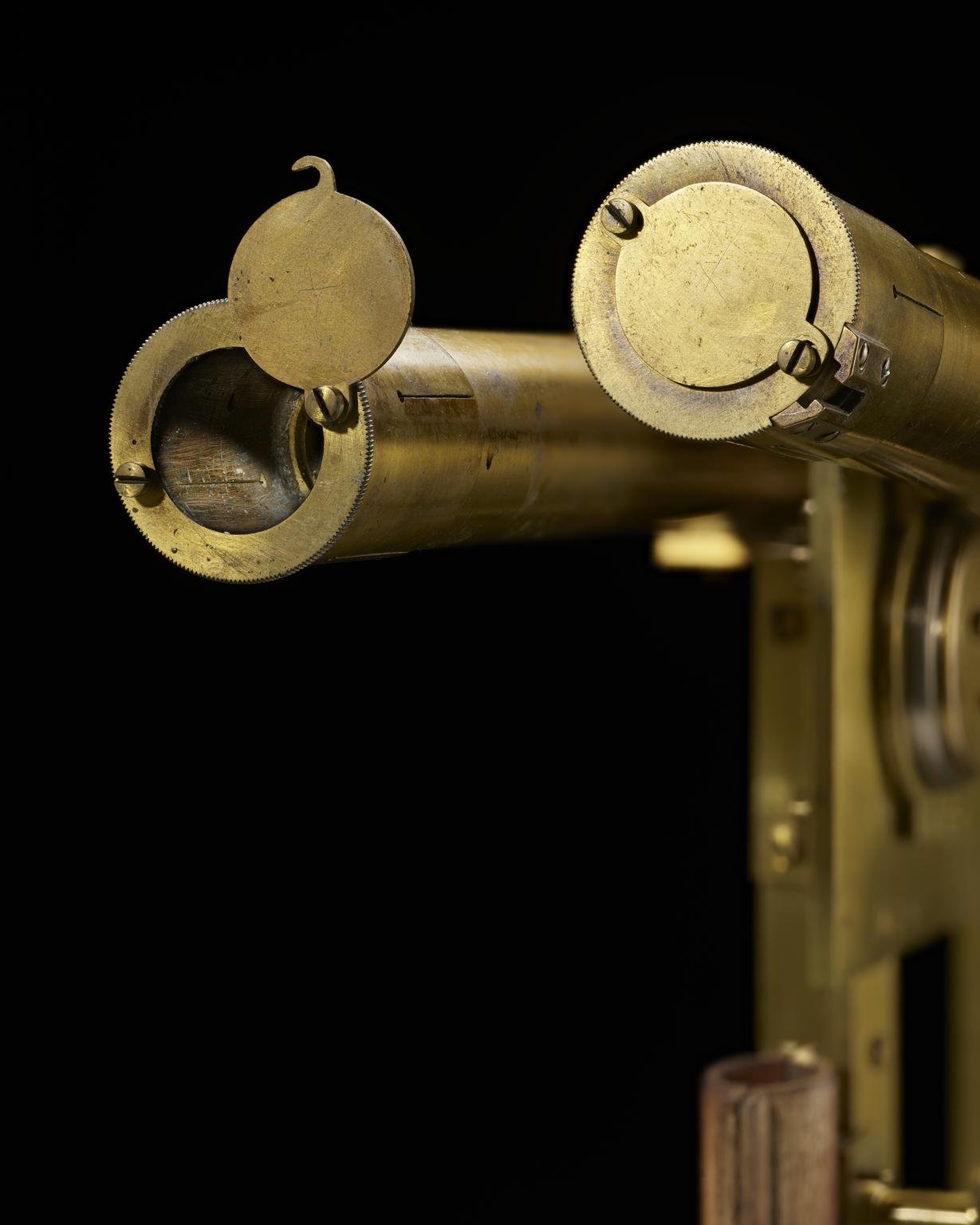
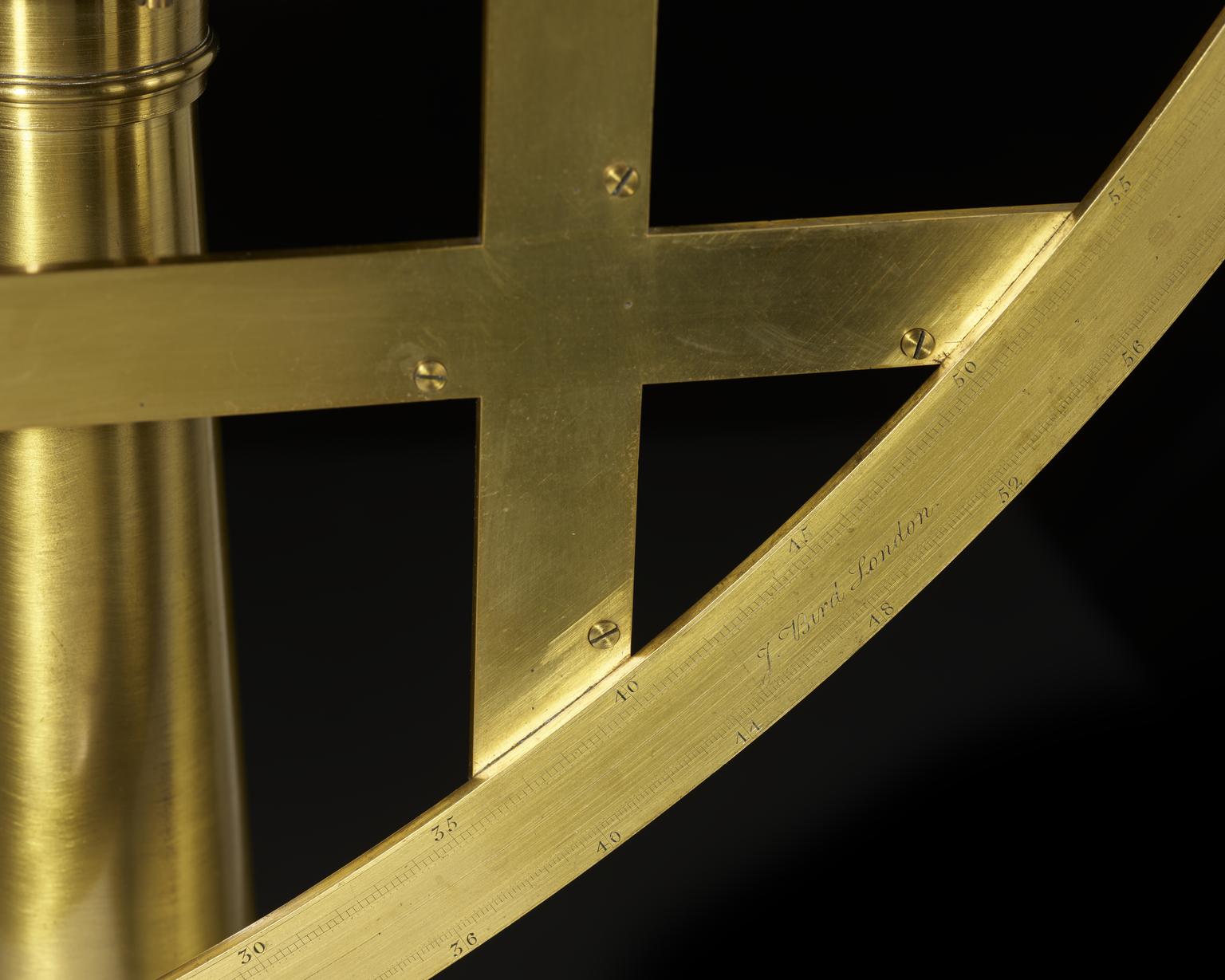
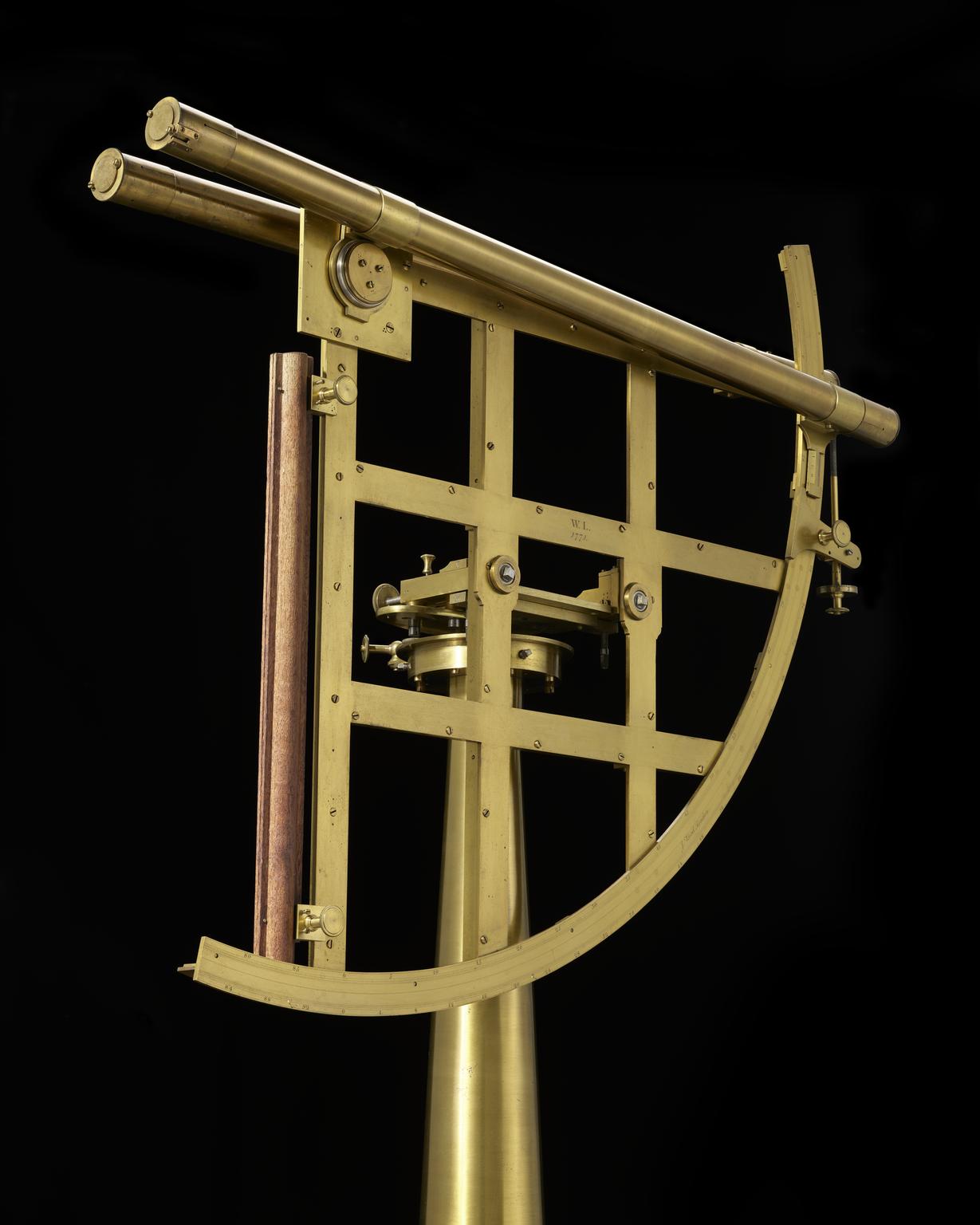
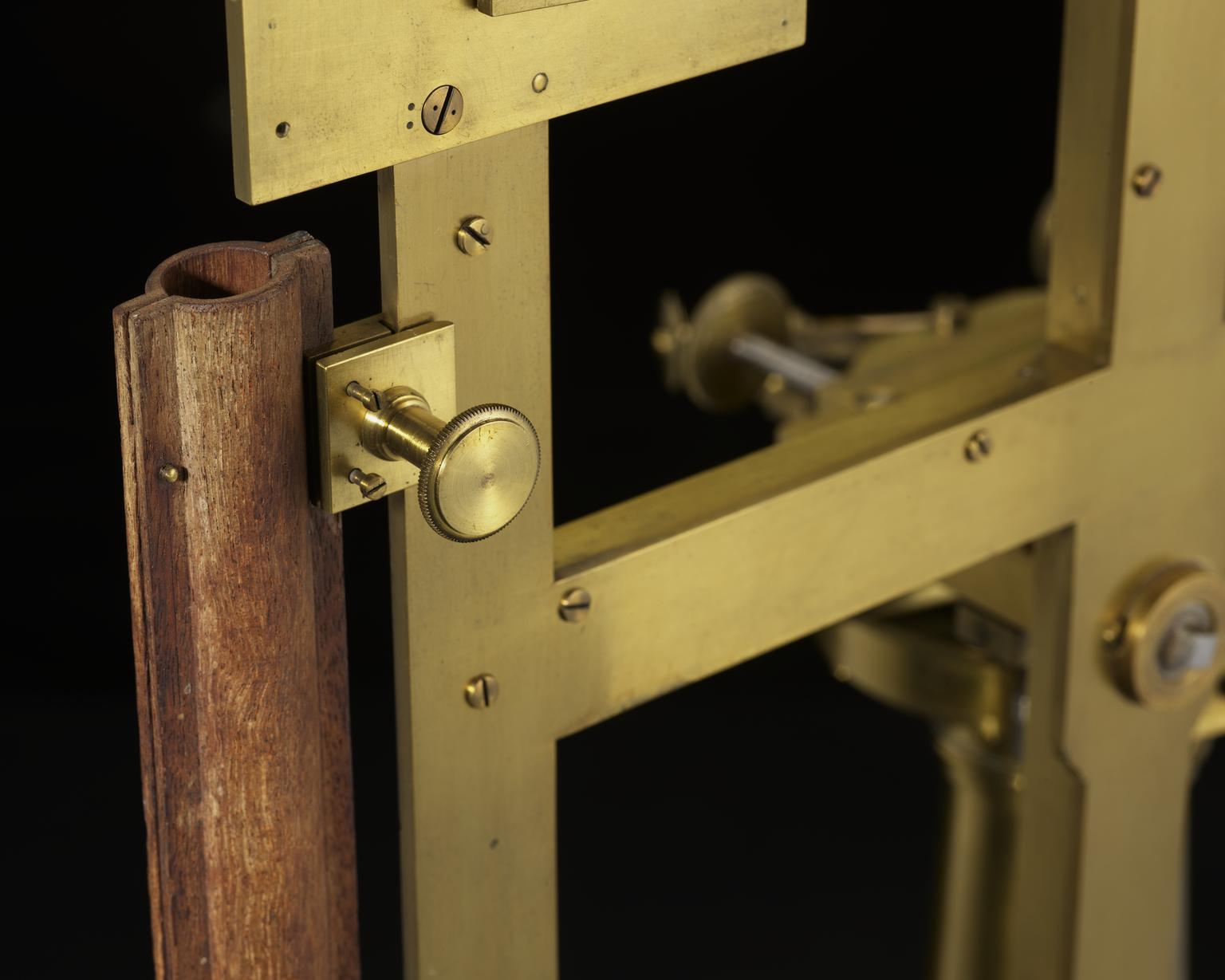
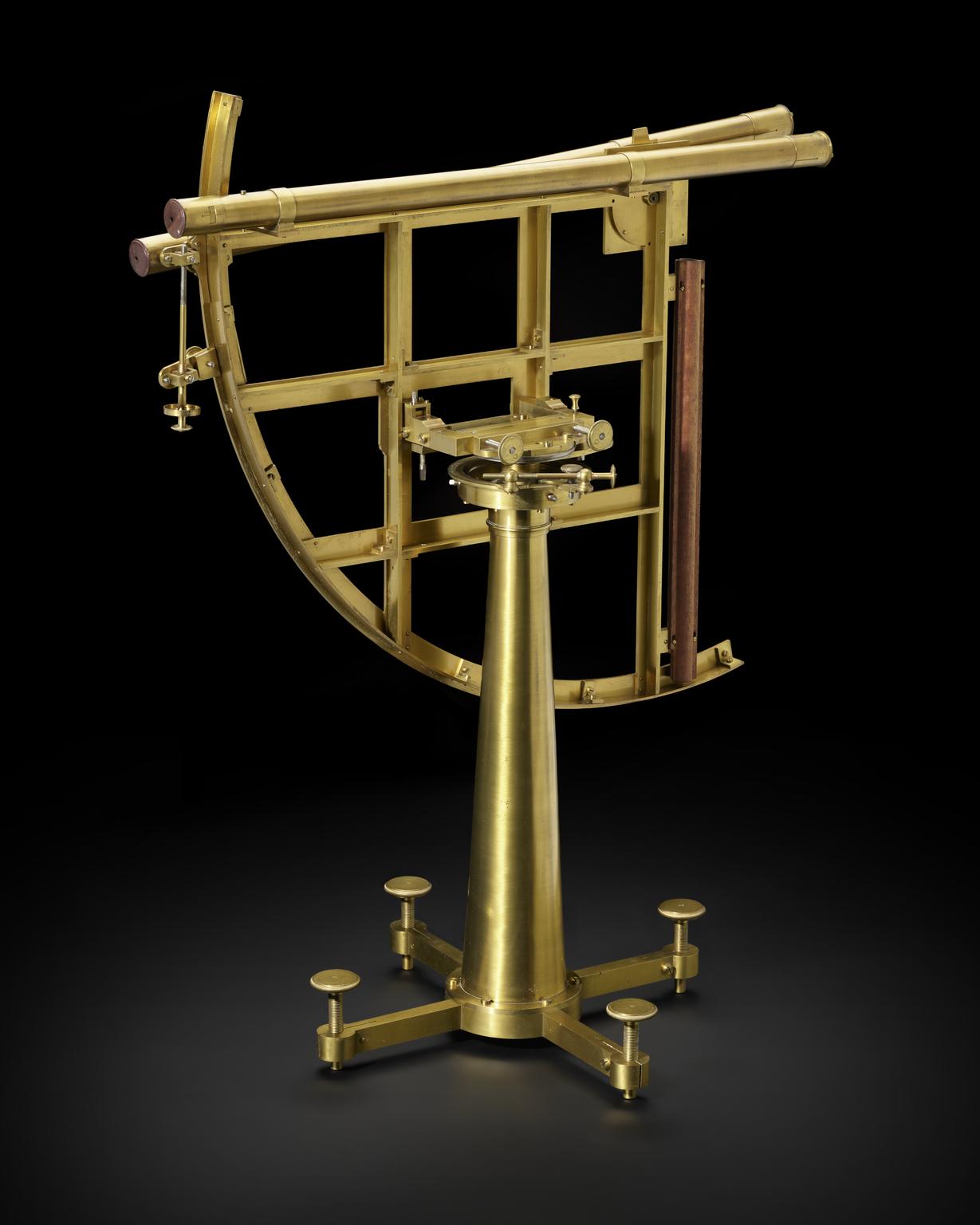
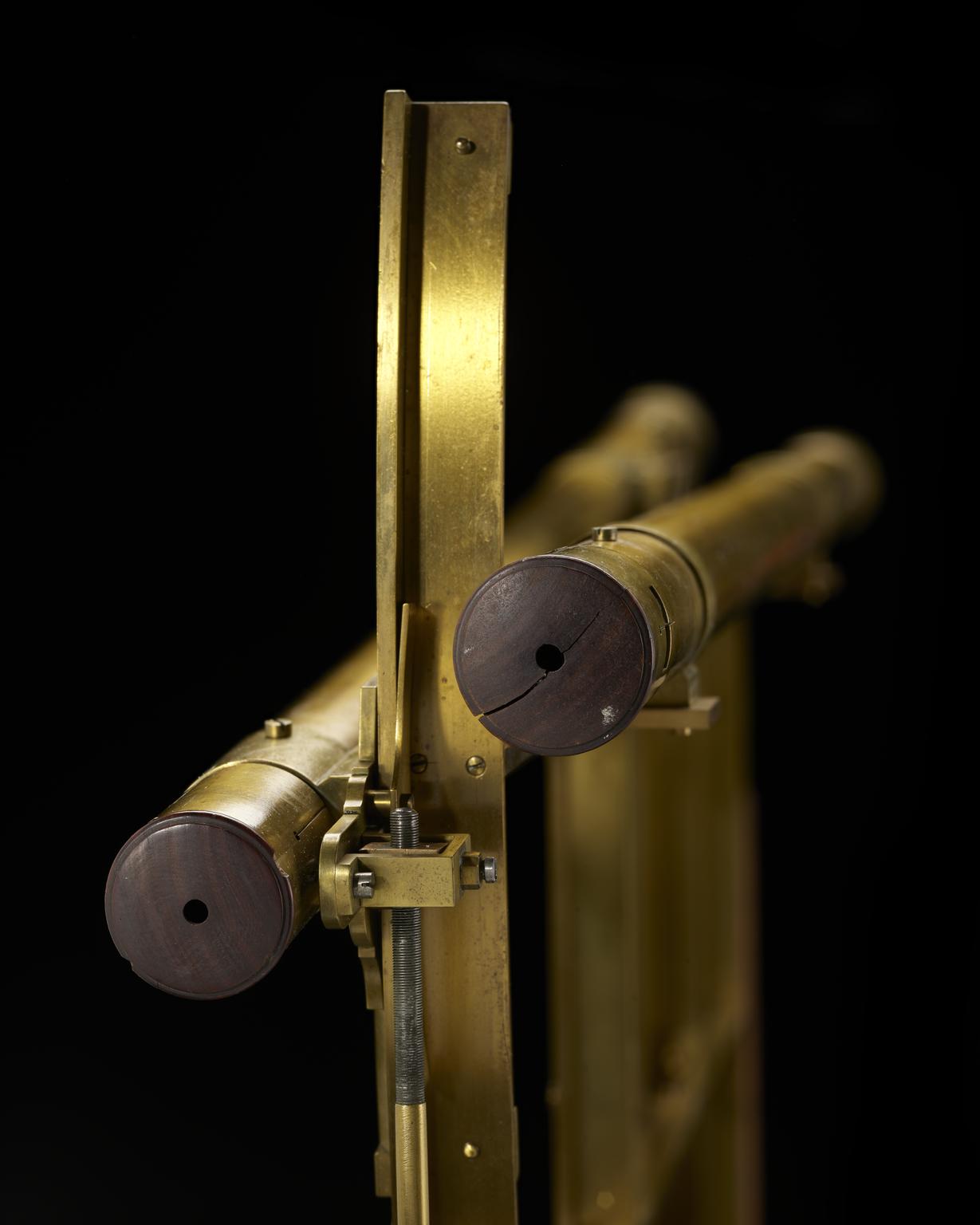
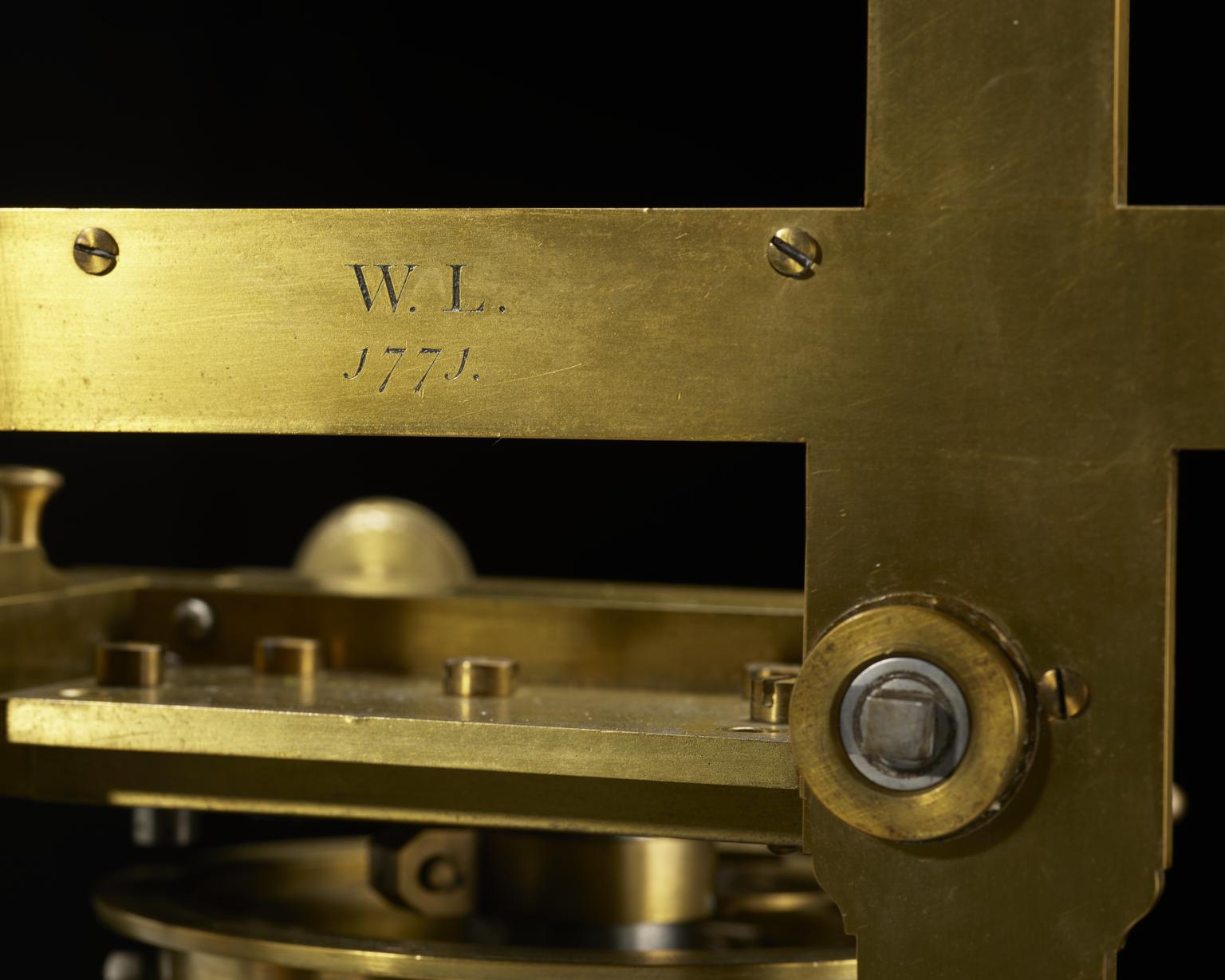
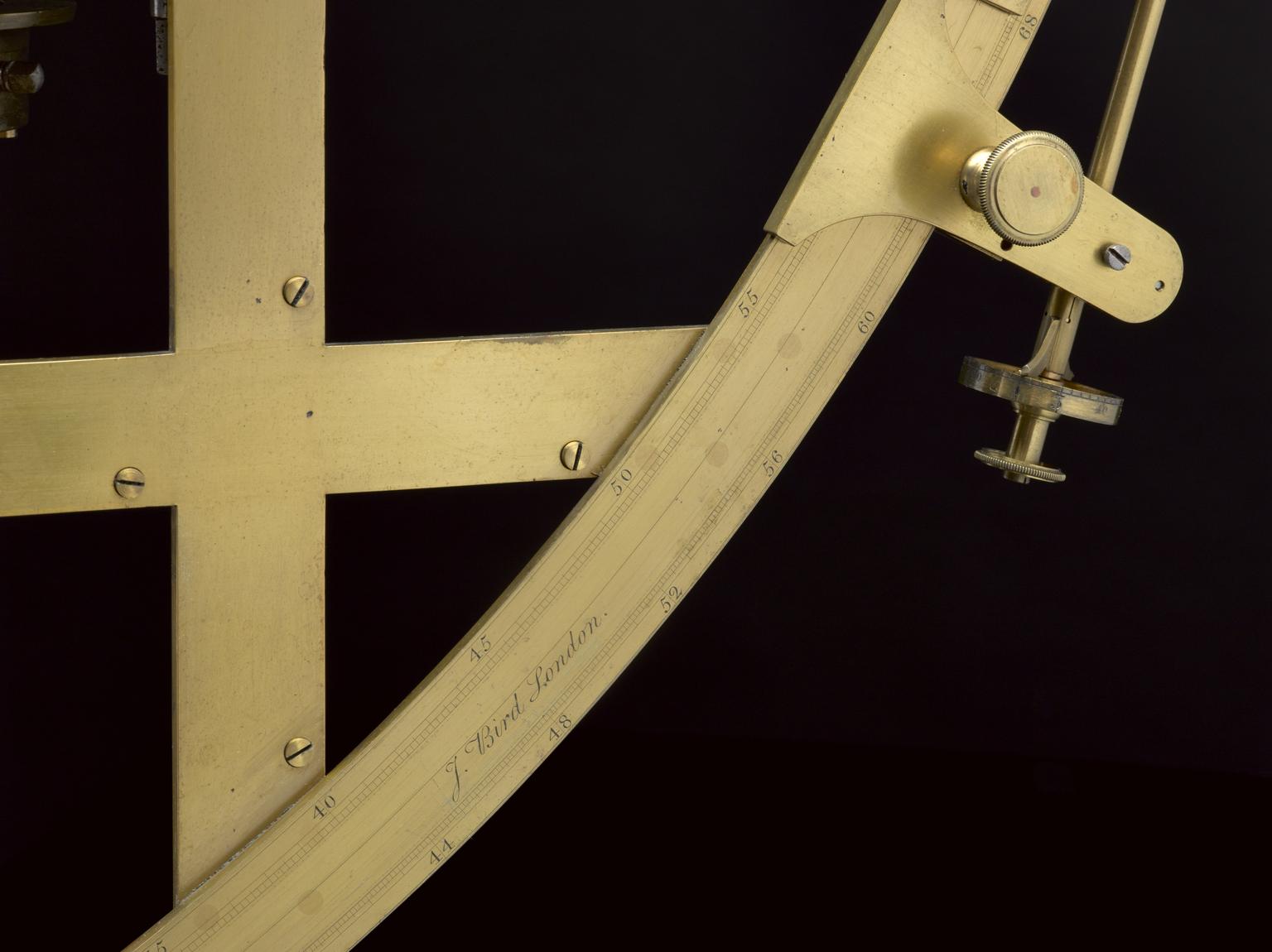
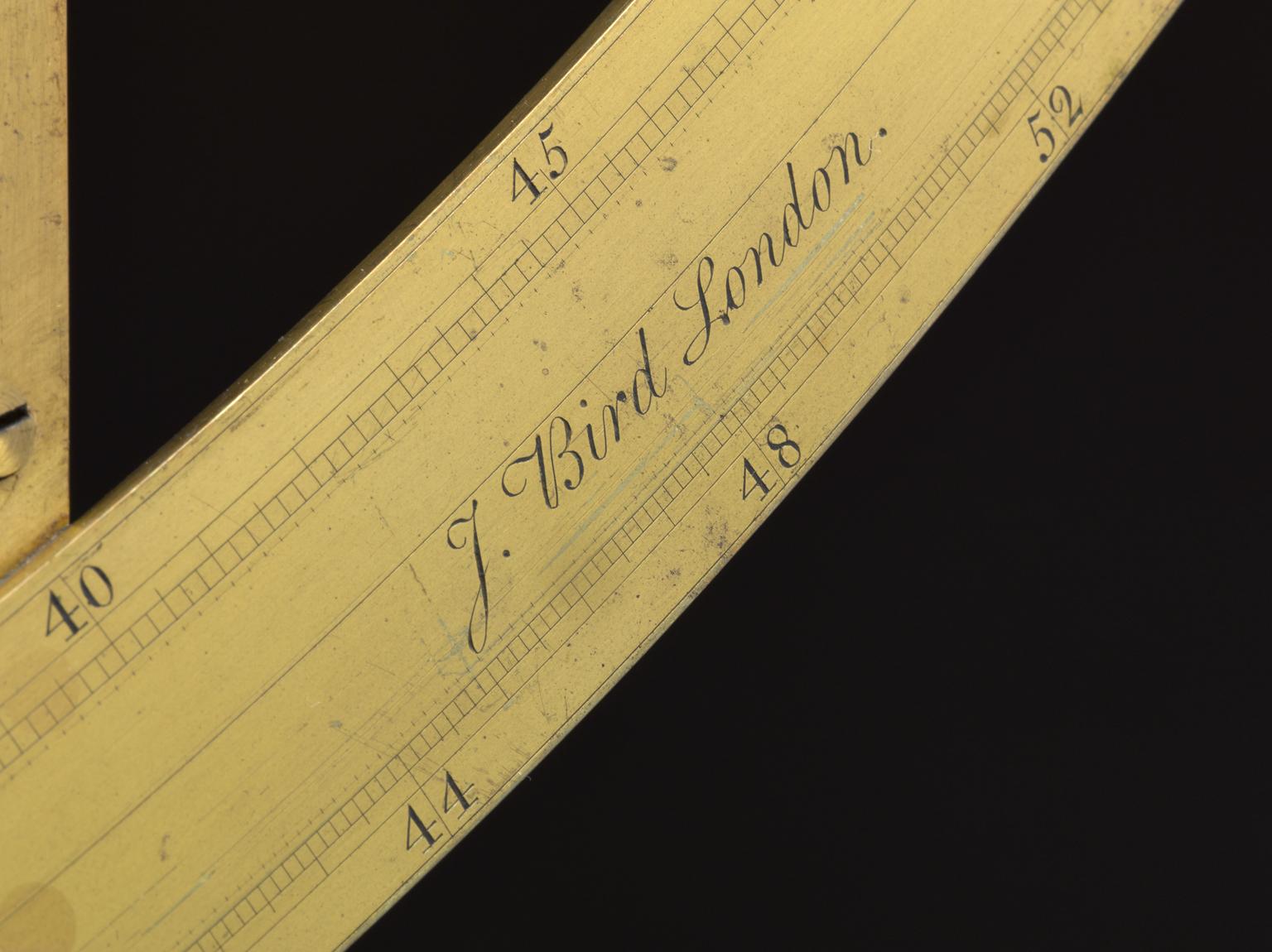
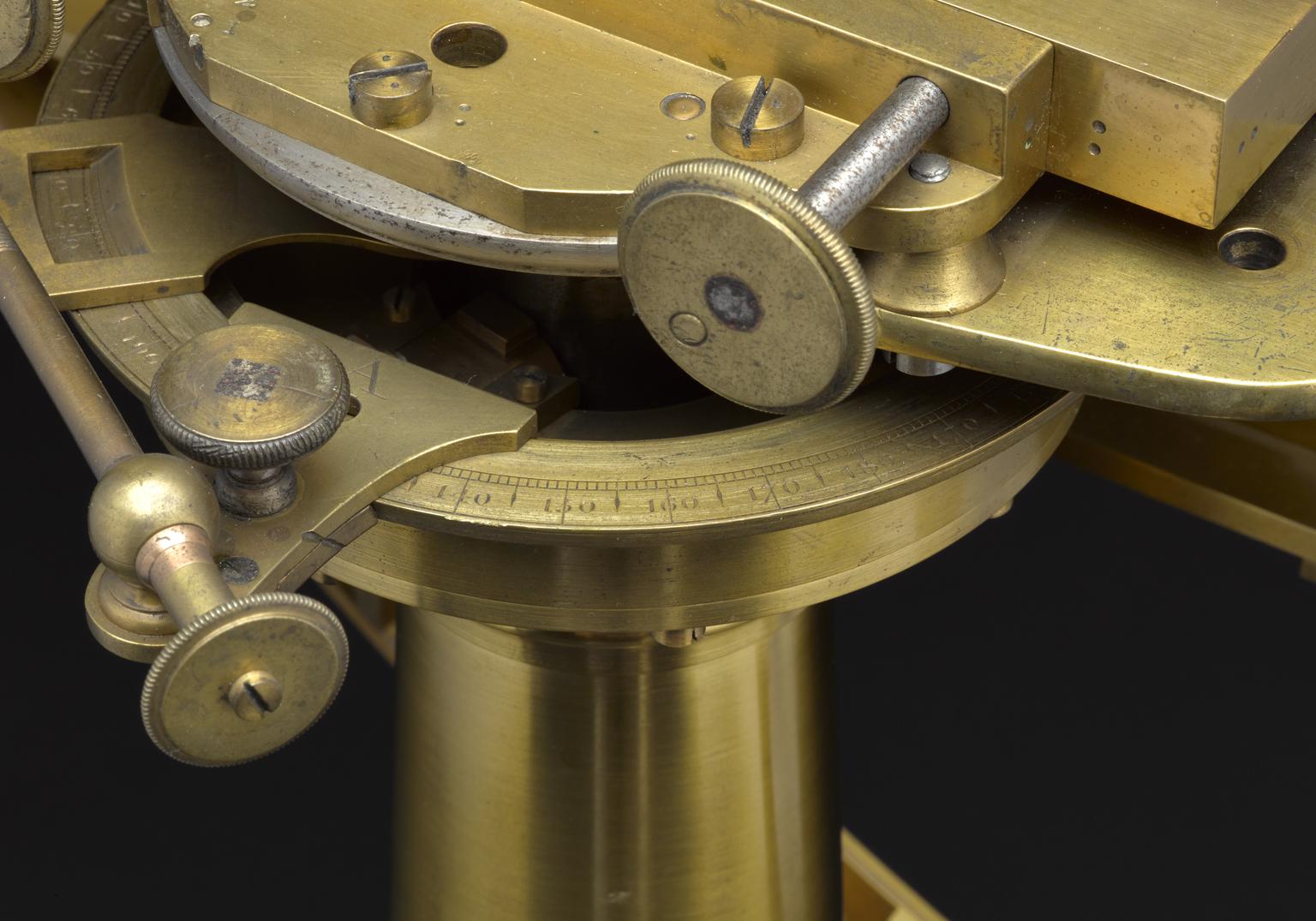
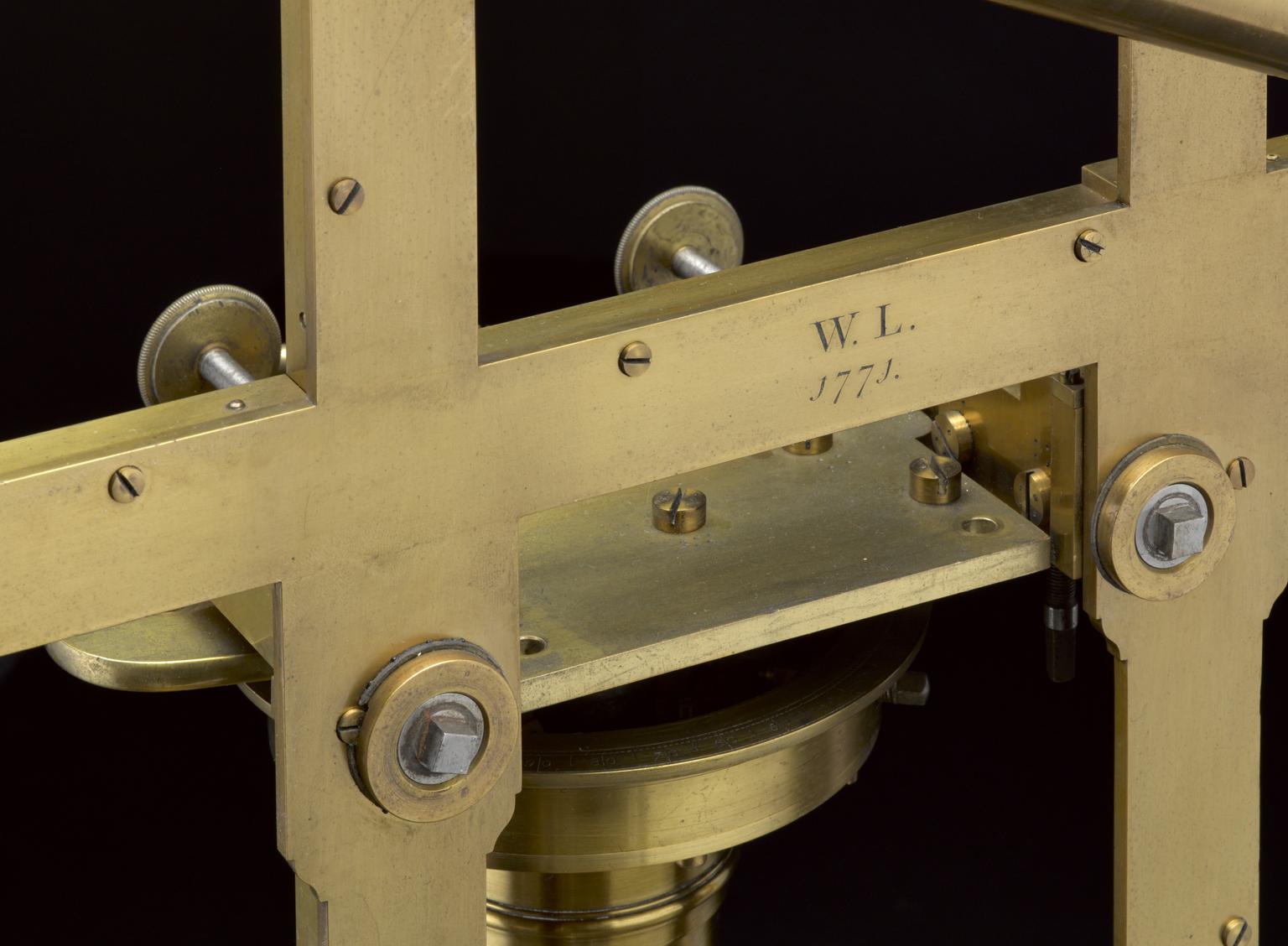
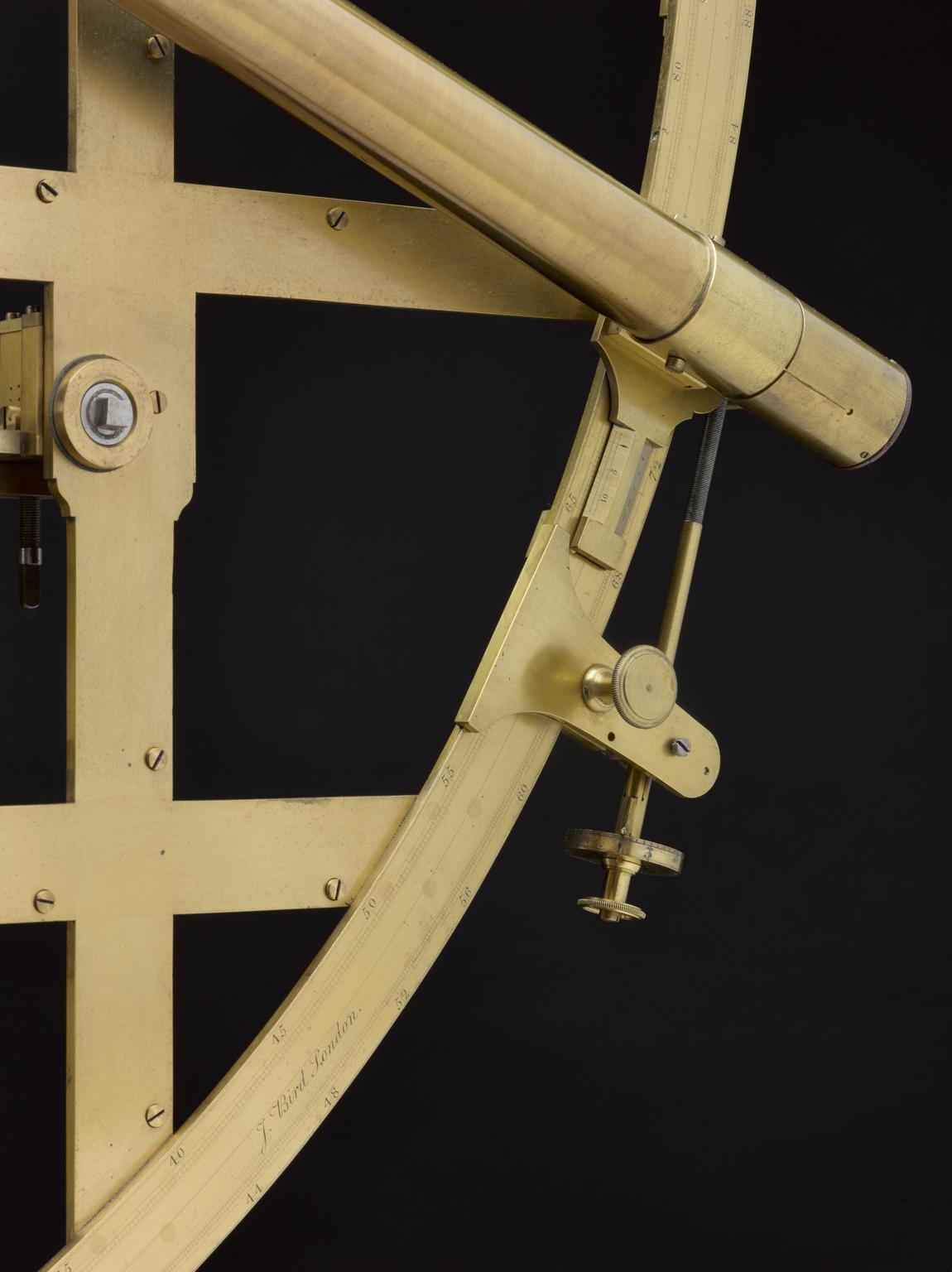
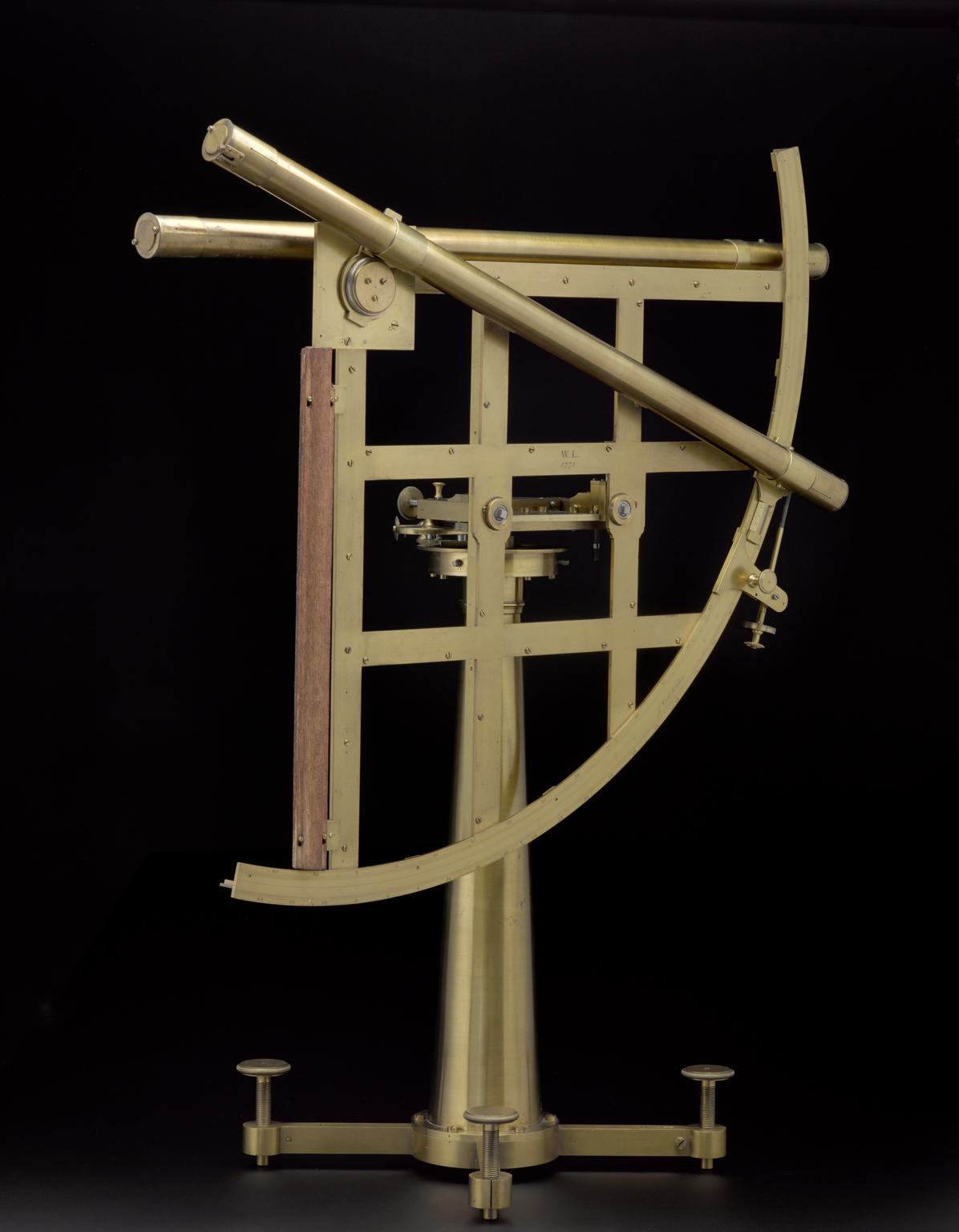
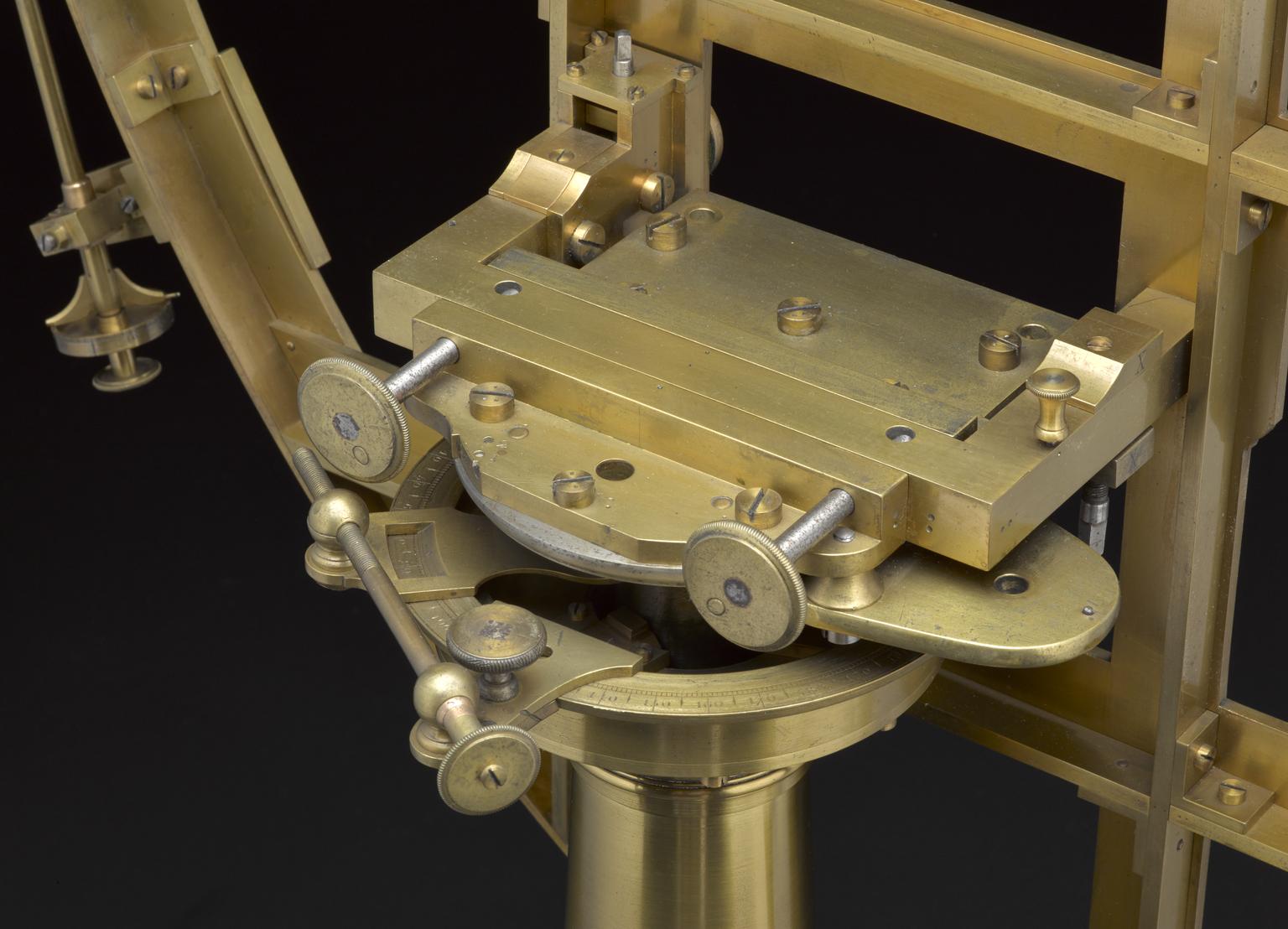
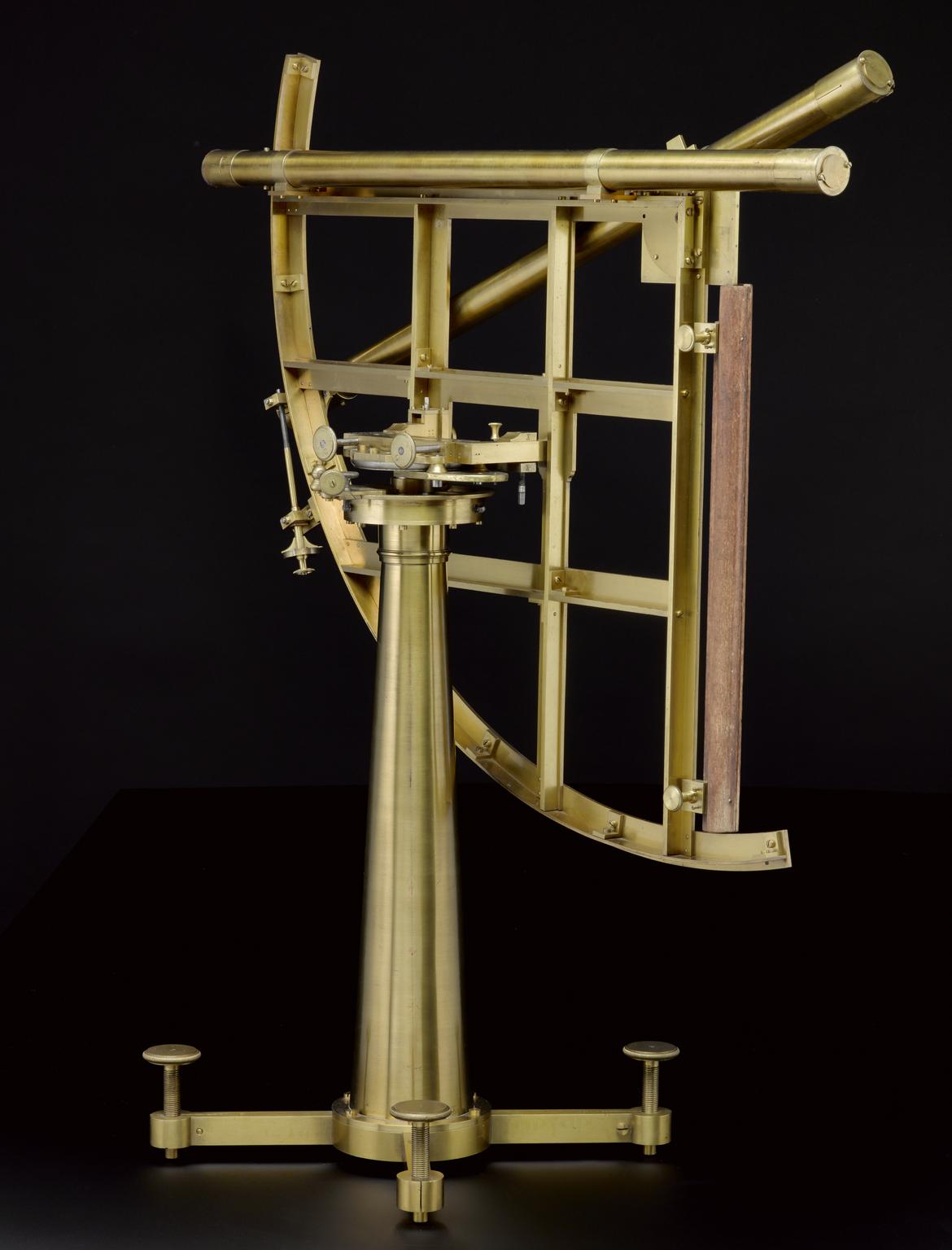
Brass quadrant with 0-90° scale of 18-inch radius with second scale of 0- 96° divisions with stand, two optical sights. Signed by the maker "J. Bird, London" and dated 1771; also engraved with the initials "W.L." of its original owner, the Reverend William Ludlam, mathematician and Fellow of St John's College, Cambridge.
Astronomical quadrants were used primarily to determine the altitude of a celestial body above the horizon. By combining these angle measurements with astronomical tables and calculations, observers could determine the positions of celestial bodies and calculate their latitude.
This quadrant takes its name from its shape: a quarter-circle, marked with a scale spanning 90°. It features two sighting tubes to let the observer align the instrument with a celestial body and read its altitude from the graduated scale.
It was made by John Bird (1709–1776), a British mathematical instrument maker with a particular interest in astronomy. He was known throughout Europe for the high quality and accuracy of his instruments. This particular example belonged to the Reverend William Ludlam, a mathematician and Fellow of St John's College, Cambridge. His initials, ‘W.L.’, are engraved on the instrument together with the maker’s signature.