Expansion Vessel
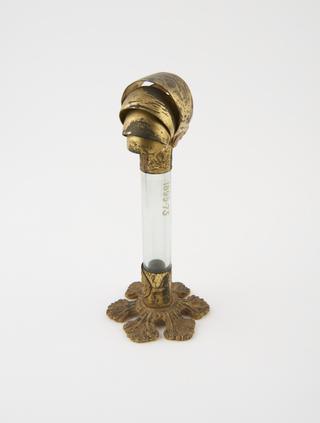
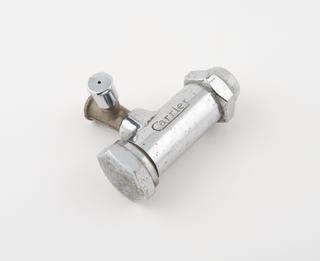
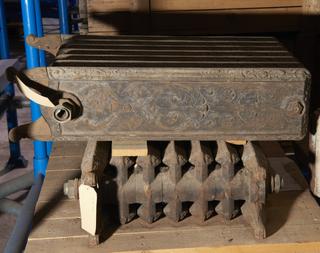
Expansion vessel and associated parts from a Perkins high pressure hot water heating system, built and installed at St. Mary’s Church in Aylesbury around 1900 by A.M Perkins Ltd, a heating engineering company based in London.
More
Central heating systems started to emerge in the early 19th century, with some of the earliest designs being found in pre-Victorian England. Whilst previous systems of heating used steam or circulated hot air, the 19th century saw the development of high-pressure hot water heating systems. One of the first pioneers of this technology was Angier March Perkins, an American-born entrepreneur who moved to the UK in 1821 to join his father’s engraving company. Angier Perkins eventually established his own heating engineering business in 1830 in London, and in 1832 developed one of the first commercially available high pressure hot water heating system.
Perkins high pressure water system is a type of indirect hot water system, which used pressurised pipes (tested up to 4000 psi) to move hot water heated at a fire to a boiler. This type of design was far safer as it significantly reduced the possibility of the boiler exploding, and this indirect design is still used in contemporary boiler designs. An early problem with Perkins' design was that the high pressure made the pipes very hot on the surface, leading to potential fire hazards which became a problem for insurance companies. Eventually, Perkins refined his system to operate at lower temperatures. This design was highly popular and Perkins heating systems were installed throughout the UK during the 19th century. This expansion vessel was a key part of a Perkins heating system which was installed at the St. Mary’s Church in Aylesbury in the late 19th century.
- Measurements:
-
overall (as packed): 160 mm x 2310 mm x 430 mm,
- Object Number:
- 1979-482 Pt1
- type:
- expansion vessel