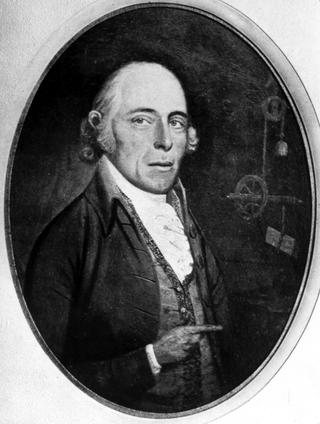
Portrait of Ada, Countess of Lovelace
- artist:
- Alfred Edward Chalon


 This image is released under a CC BY-NC-SA 4.0
Licence
This image is released under a CC BY-NC-SA 4.0
Licence
License this image for commercial use at Science and Society Picture Library
LicenseThis image is released under a CC BY-NC-SA 4.0
Licence
License this image for commercial use at Science and Society Picture Library
License
Science Museum Group
© The Board of Trustees of the Science Museum
Science Museum Group Collection
© The Board of Trustees of the Science Museum
Ada Lovelace, possibly by Alfred Edward Chalon (1780-1860), c.1840, watercolour.
In this watercolour portrait, mathematician and computer visionary, Ada Lovelace (1815-1852), is presented as a fashionable member of the aristocracy. The daughter of Romantic poet Lord Byron and highly educated Annabella Milbanke, Lovelace was a gifted mathematician, whose mother encouraged her scientific education. She was mentored and tutored by the best mathematicians of her time, including Mary Fairfax Somerville and Augustus De Morgan. Today, she is recognised as anticipating the potential of computer programming with her 1843 translation and extensive interpretation of an article about Charles Babbage’s calculating machine, the Analytical Engine (1878-3).
This portrait of Lovelace as a young woman is thought to have been painted by Alfred Edward Chalon (1780-1860), court painter to Queen Victoria, around 1838. This was shortly after Ada’s husband William King was made Earl of Lovelace and Ada became Countess of Lovelace. She wears a dress of purple shot silk and a black lace mantilla, and holds a fan. However, Lovelace was dismissive of her portrait by Chalon, writing to her mother that she thought ‘all his dresses in very bad taste, being stiff & an exaggeration of fashion…’
Details
- Category:
- Art
- Object Number:
- 1995-796
- Materials:
- paint
- Measurements:
-
overall (frame): 443 mm x 365 mm
overall (watercolour): 250 mm x 183 mm
- type:
- watercolour, drawing and portrait
- credit:
- Stirling, A.
Related Objects
Advertisement for photographic memorial mounts
Print, plain. Gilt frame
Portrait - Sir John F.W.Herschel
Print, hand coloured. Carriage Accident