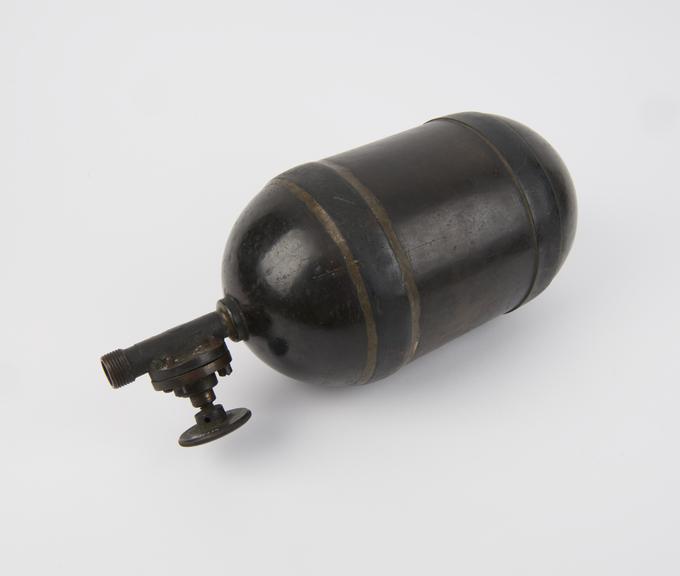
Empty nitrous oxide cylinder
- Made:
- 1868-1880 in unknown
- maker:
- Unknown
 This image is released under a CC BY-NC-SA 4.0
Licence
This image is released under a CC BY-NC-SA 4.0
Licence
License this image for commercial use at Science and Society Picture Library
LicenseEmpty nitrous oxide cylinder, used in dentistry(?), 1840-1868
Science Museum Group
© The Board of Trustees of the Science Museum
Empty nitrous oxide cylinder, used in dentistry(?), 1868-1880
This gas cylinder, now empty, once contained nitrous oxide or ‘laughing gas’. In the late 1860s, nitrous oxide replaced chloroform as the preferred anaesthetic in dentistry.
In England in 1868, George Barth and J Coxeter, of Coxeter & Son, a surgical and medical supplier, developed a way to turn nitrous oxide from gas to liquid so it could be stored easily in cylinders and sold commercially. Two years later, Coxeter & Son began selling cylinders of nitrous oxide for 3 d per gallon in exchange for empty cylinders.
Details
- Category:
- Anaesthesiology
- Collection:
- Sir Henry Wellcome's Museum Collection
- Object Number:
- A625424
- Materials:
- copper
- Measurements:
-
length 330 mm
diameter 143 mm
- type:
- gas cylinders
Related Objects
Measure for ether for use with anaesthetic inhaler
Case for Clover portable ether inhaler
Collection of books on the history of anaesthemia
Wheeled stand for gas cylinder
