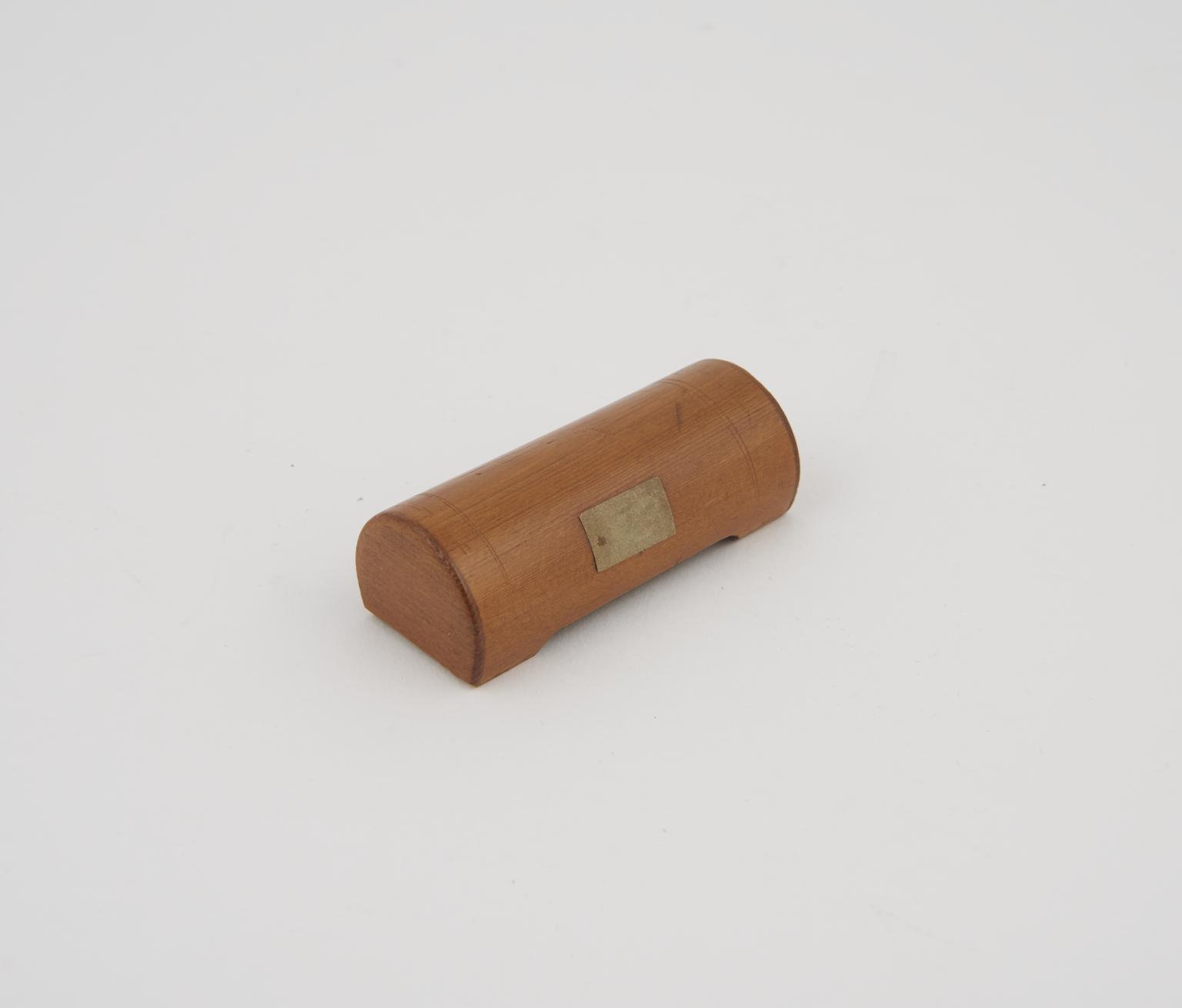
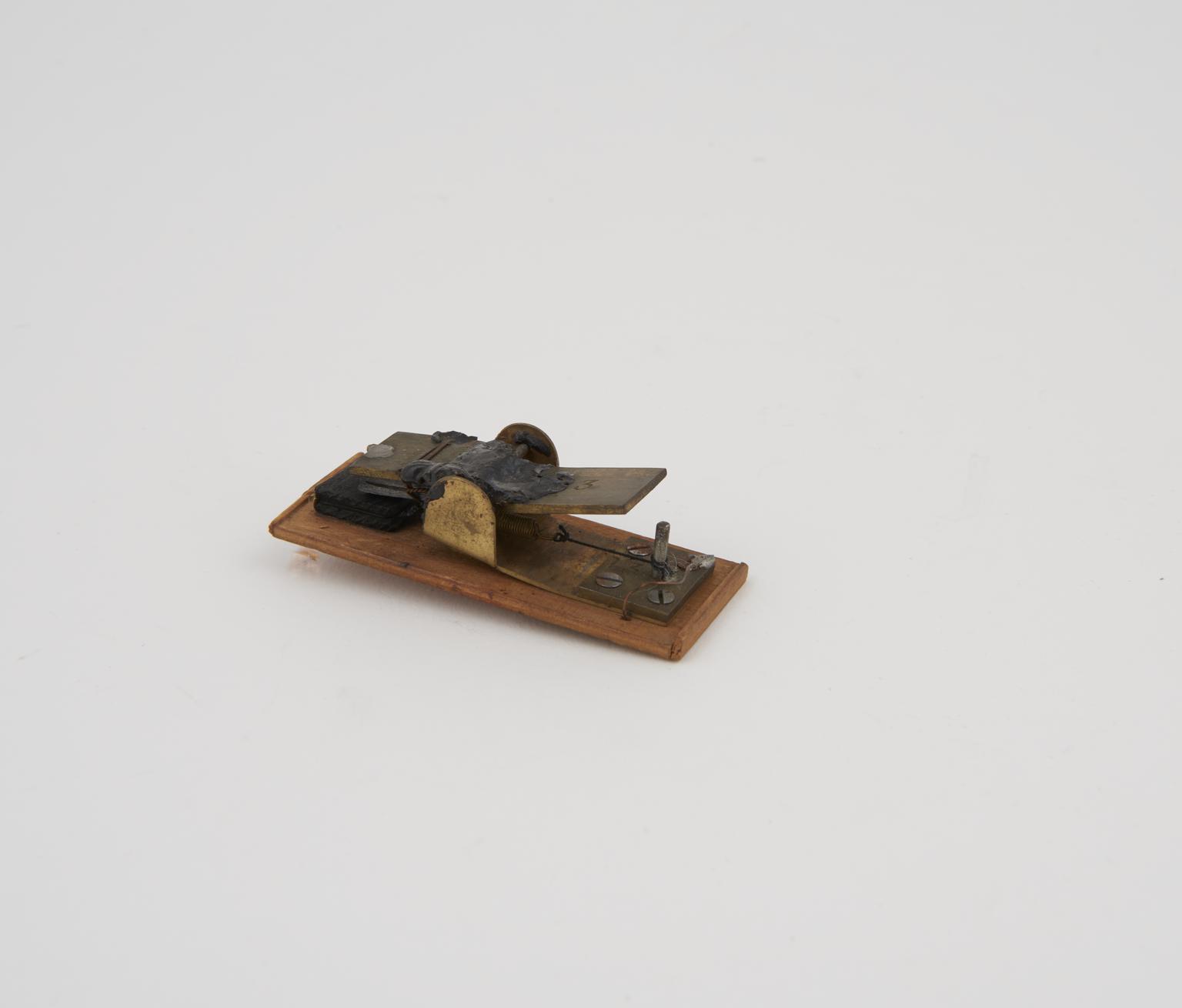
One experimental microphone in sound box, consisting of two small blocks of wood-charcoal pressed upon each other by a spring, probably made by David Edward Hughes, England, 1878-1890
The development of the microphone owes much to David Edward Hughes. In some of his experiments, Hughes accidentally reduced and detected Herzian waves such as are now used in radio communication. He detected the radiations with microphones. In this microphone, wood charcoal blocks were pressed together using a spring. Hughes did not patent his discoveries, meaning that subsequent inventors were able to make use of his work in the development of the carbon-granule type of microphone.