
Beagle 2 Mars lander, 2002 Beagle 2 Mars lander, 2002 Beagle 2 Mars lander, 2002 Beagle 2 Mars lander, 2002

Creative Commons LicenseThis image is released under a CC BY-NC-SA 4.0 Licence

License this image for commercial use at Science and Society Picture Library

License

Creative Commons LicenseThis image is released under a CC BY-NC-SA 4.0 Licence

License this image for commercial use at Science and Society Picture Library

License

Creative Commons LicenseThis image is released under a CC BY-NC-SA 4.0 Licence

License this image for commercial use at Science and Society Picture Library

License

Creative Commons LicenseThis image is released under a CC BY-NC-SA 4.0 Licence

License this image for commercial use at Science and Society Picture Library

License

Science Museum Group
© The Board of Trustees of the Science Museum
Science Museum Group
© The Board of Trustees of the Science Museum
Science Museum Group
© The Board of Trustees of the Science Museum
Science Museum Group
© The Board of Trustees of the Science Museum
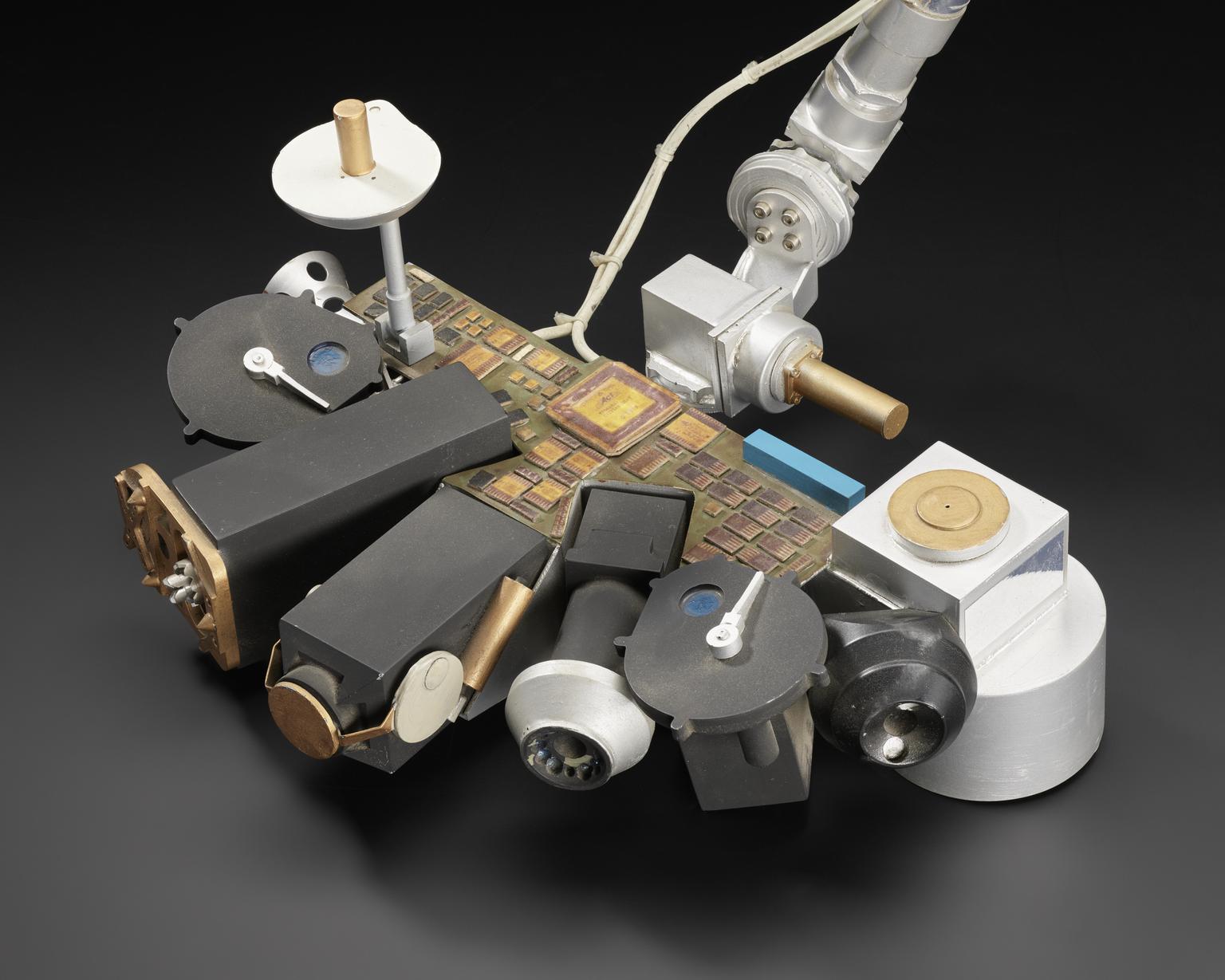
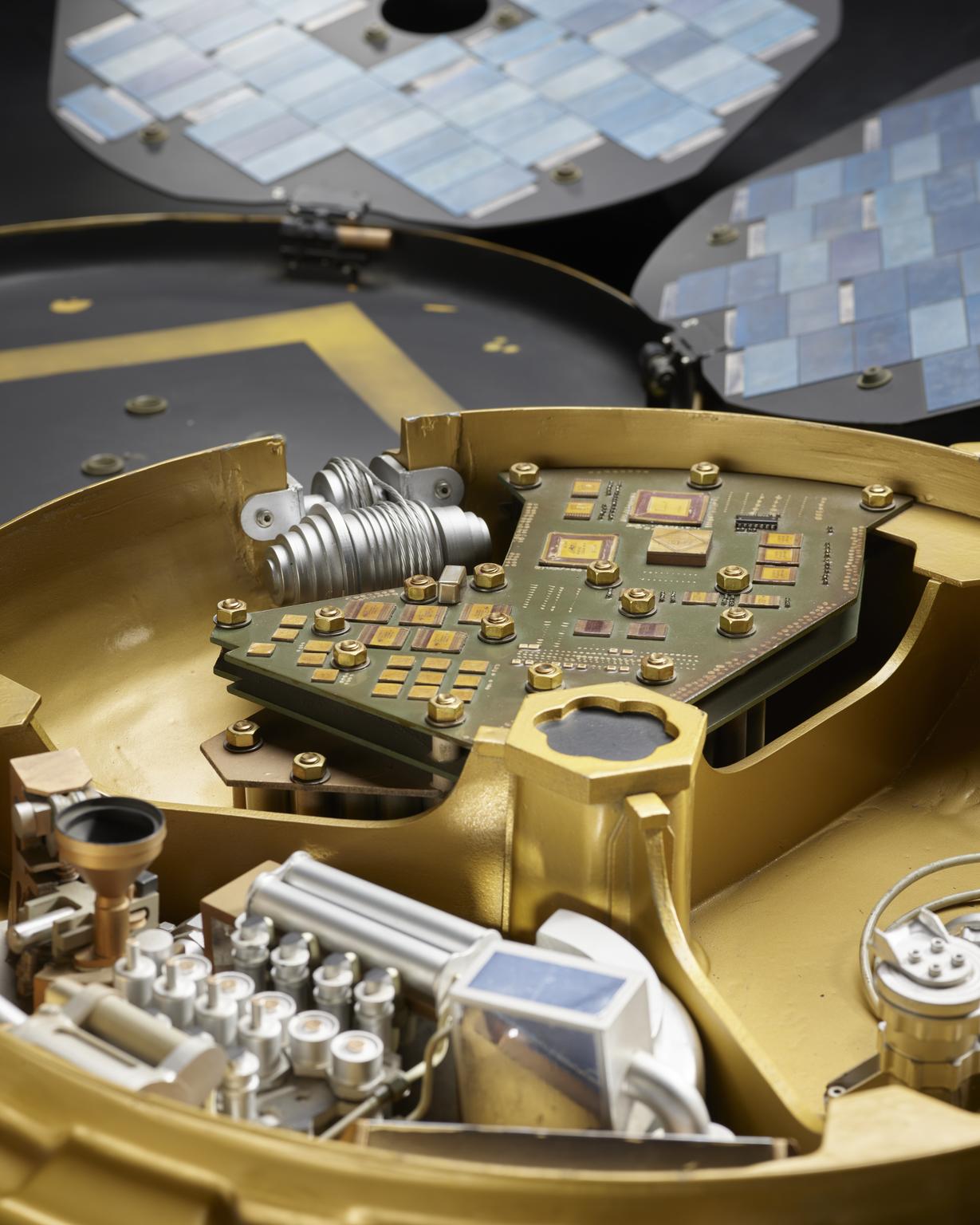
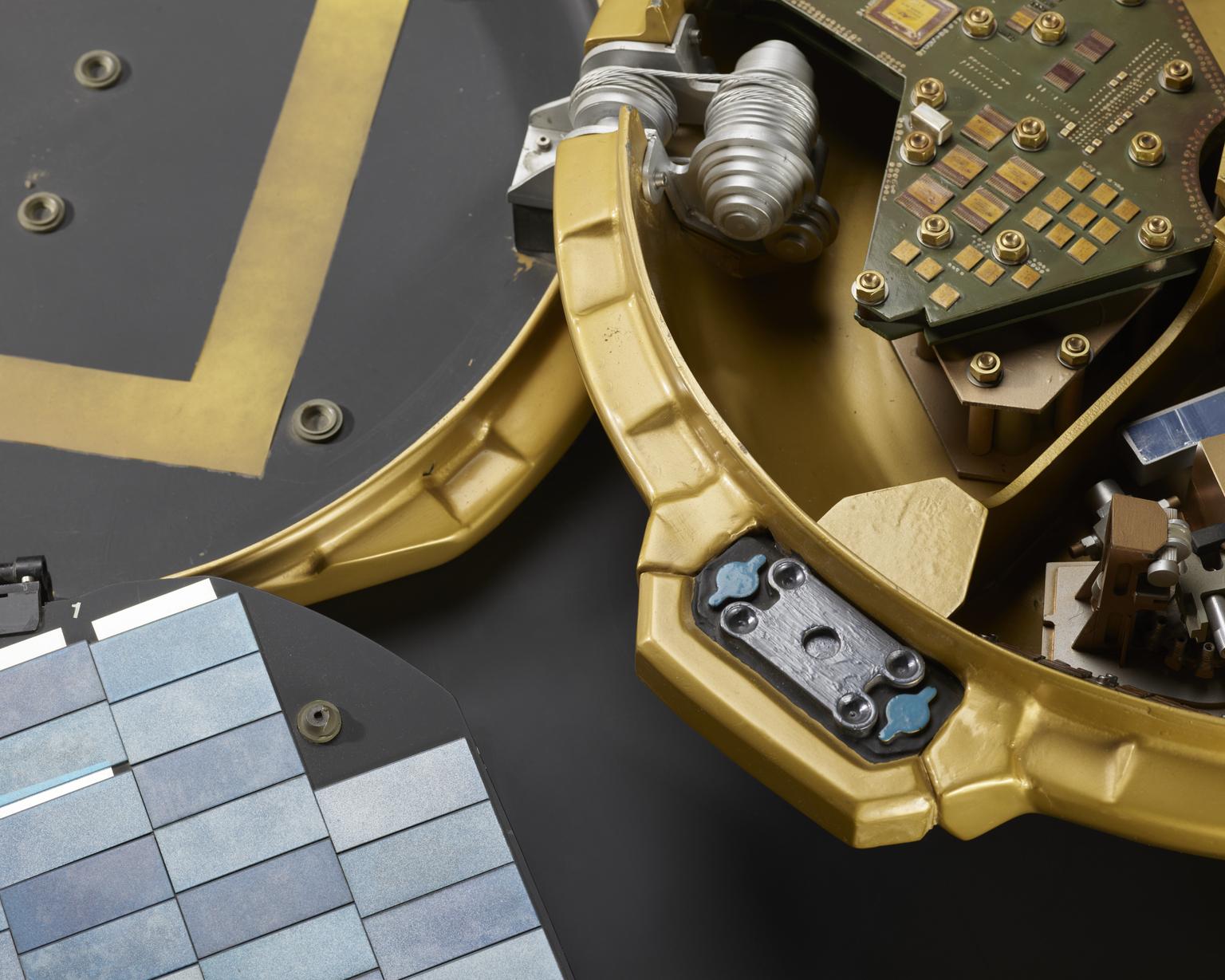
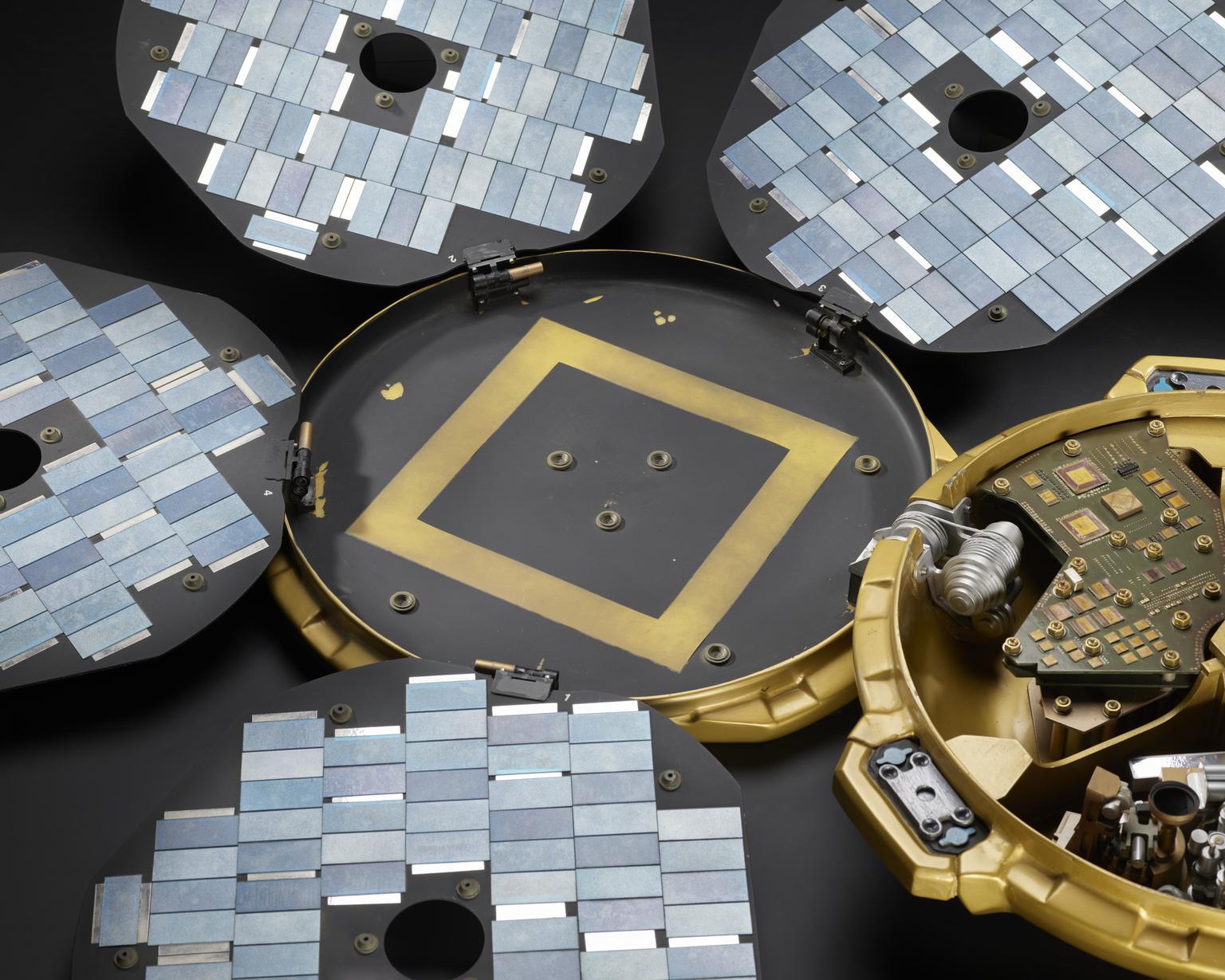
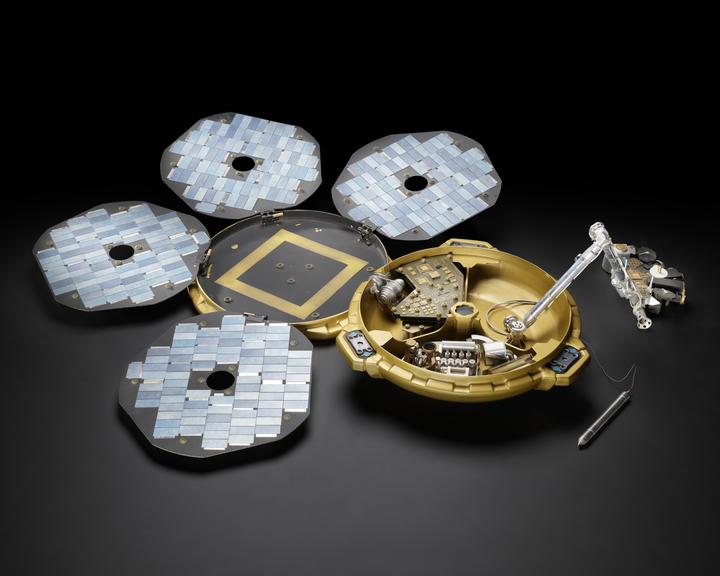
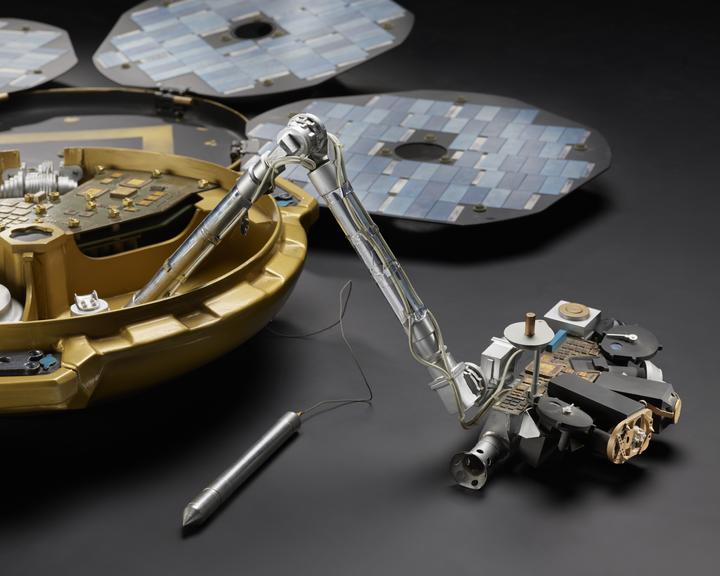
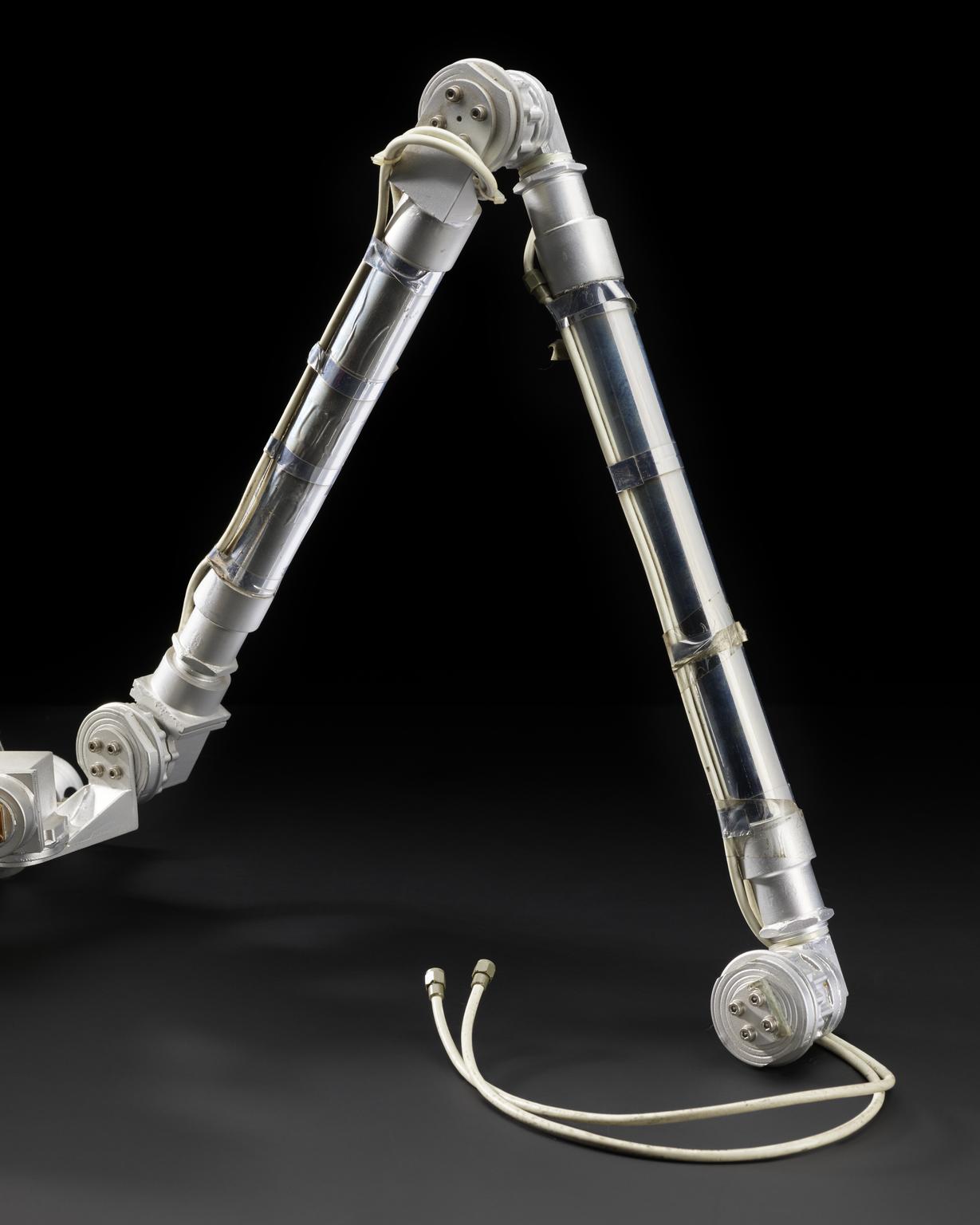
Beagle 2 Mars lander, model (scale 1:1). Spacecraft developed by Open University Planetary and Space Sciences Research Institute (PSSRI), Milton Keynes, UK, 2002.

Britain’s Beagle 2 lander launched to Mars on 2 June 2003 aboard the European Space Agency’s Mars Express. The lander's aim was to search the Martian soil and atmosphere for signs of carbon that would indicate life. Beagle was deployed to the Martian surface and scheduled to land on 25 December 2003. Unfortunately, it never made contact after deployment and after repeated attempts to locate it, Beagle was declared lost in February 2004.

In January 2015, however, NASA's Mars Reconnaissance Orbiter released high resolution images which showed the lander on the Mars surface and - critically - intact. It seems likely that one or more of Beagle's solar panels did not deploy. This meant the radio transmitter was not able to send and receive data from Earth.

Landing on any planetary body is incredibly difficult so the fact that Beagle 2 managed to achieve a soft landing is a success in itself. But the innovations the Beagle team made in miniaturising technology – especially the spacecraft’s gas analysis package – have been adapted for future missions and uses on Earth.

Details

Category:
Space Technology
Object Number:
2007-8
Materials:
plastic (unidentified), metal (unknown) and paint
Measurements:
overall (closed): 740 mm x 745 mm x 255 mm,
overall (open): 1795 mm
type:
spacecraft
credit:
The Open University on behalf of the Beagle 2 Project

Parts

Beagle 2 Mars lander, 2002

Beagle 2 Mars lander, model (scale 1:1). Spacecraft developed by Open University Planetary and Space Sciences Research Institute (PSSRI), Milton Keynes, UK, 2002.

More

Britain’s Beagle 2 lander launched to Mars on 2 June 2003 aboard the European Space Agency’s Mars Express. The lander's aim was to search the Martian soil and atmosphere for signs of carbon that would indicate life. Beagle was deployed to the Martian surface and scheduled to land on 25 December 2003. Unfortunately, it never made contact after deployment and after repeated attempts to locate it, Beagle was declared lost in February 2004.

In January 2015, however, NASA's Mars Reconnaissance Orbiter released high resolution images which showed the lander on the Mars surface and - critically - intact. It seems likely that one or more of Beagle's solar panels did not deploy. This meant the radio transmitter was not able to send and receive data from Earth.

Landing on any planetary body is incredibly difficult so the fact that Beagle 2 managed to achieve a soft landing is a success in itself. But the innovations the Beagle team made in miniaturising technology – especially the spacecraft’s gas analysis package – have been adapted for future missions and uses on Earth.

Measurements:
overall (closed): 740 mm x 745 mm x 255 mm,
Materials:
metal (unknown) , plastic (unidentified) and paint
Object Number:
2007-8/1
type:
spacecraft
Image ©
The Board of Trustees of the Science Museum
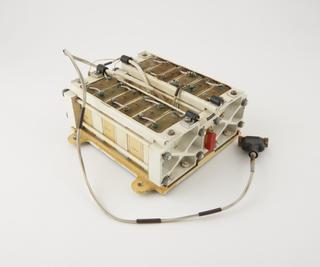
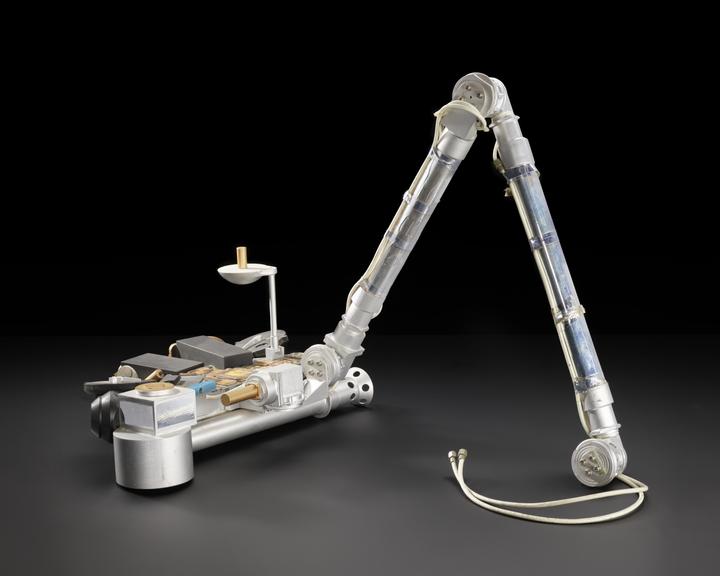
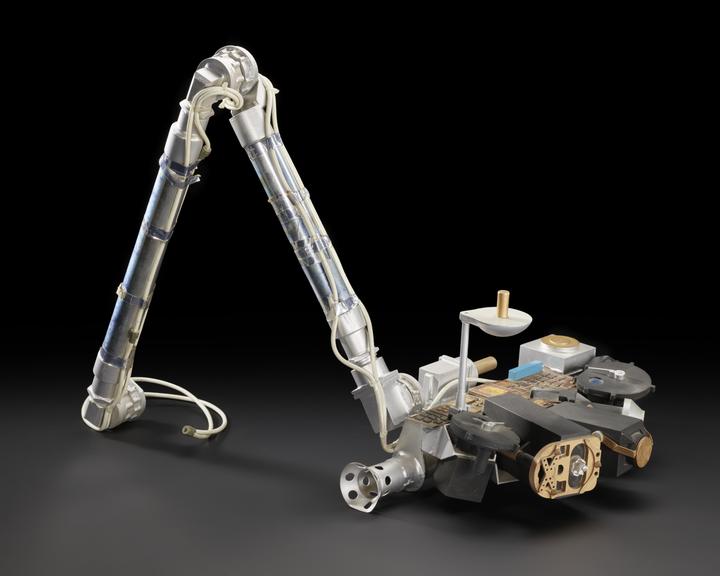
Beagle 2 Mars lander, instrument arm

Beagle 2 Mars lander, instrument arm

Beagle 2 Mars lander, model (scale 1:1). Spacecraft developed by Open University Planetary and Space Sciences Research Institute (PSSRI), Milton Keynes, UK, 2002.

More

Britain’s Beagle 2 lander launched to Mars on 2 June 2003 aboard the European Space Agency’s Mars Express. The lander's aim was to search the Martian soil and atmosphere for signs of carbon that would indicate life. Beagle was deployed to the Martian surface and scheduled to land on 25 December 2003. Unfortunately, it never made contact after deployment and after repeated attempts to locate it, Beagle was declared lost in February 2004.

In January 2015, however, NASA's Mars Reconnaissance Orbiter released high resolution images which showed the lander on the Mars surface and - critically - intact. It seems likely that one or more of Beagle's solar panels did not deploy. This meant the radio transmitter was not able to send and receive data from Earth.

Landing on any planetary body is incredibly difficult so the fact that Beagle 2 managed to achieve a soft landing is a success in itself. But the innovations the Beagle team made in miniaturising technology – especially the spacecraft’s gas analysis package – have been adapted for future missions and uses on Earth.

Measurements:
overall: 600 mm x 360 mm x 105 mm,
Materials:
metal (unknown) , plastic (unidentified) and paint
Object Number:
2007-8/2
type:
spacecraft
Image ©
The Board of Trustees of the Science Museum
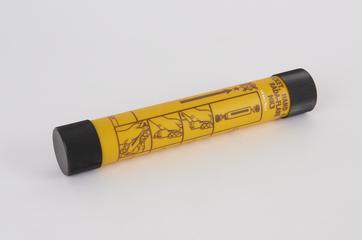
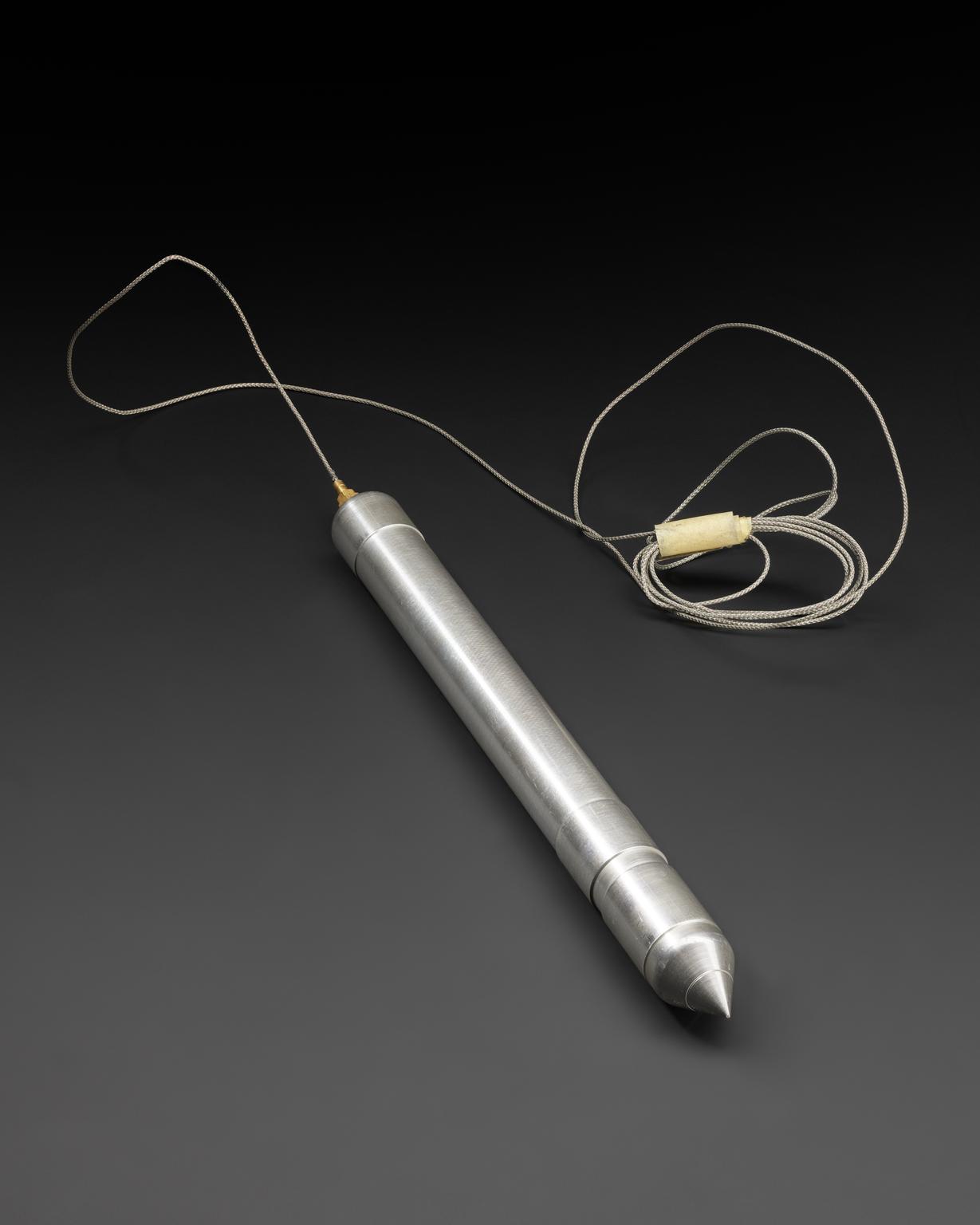
Beagle 2 Mars lander, silver rod

Beagle 2 Mars lander, silver rod

Beagle 2 Mars lander, model (scale 1:1). Spacecraft developed by Open University Planetary and Space Sciences Research Institute (PSSRI), Milton Keynes, UK, 2002.

More

Britain’s Beagle 2 lander launched to Mars on 2 June 2003 aboard the European Space Agency’s Mars Express. The lander's aim was to search the Martian soil and atmosphere for signs of carbon that would indicate life. Beagle was deployed to the Martian surface and scheduled to land on 25 December 2003. Unfortunately, it never made contact after deployment and after repeated attempts to locate it, Beagle was declared lost in February 2004.

In January 2015, however, NASA's Mars Reconnaissance Orbiter released high resolution images which showed the lander on the Mars surface and - critically - intact. It seems likely that one or more of Beagle's solar panels did not deploy. This meant the radio transmitter was not able to send and receive data from Earth.

Landing on any planetary body is incredibly difficult so the fact that Beagle 2 managed to achieve a soft landing is a success in itself. But the innovations the Beagle team made in miniaturising technology – especially the spacecraft’s gas analysis package – have been adapted for future missions and uses on Earth.

Measurements:
overall: 300 mm x 30 mm x 80 mm,
Materials:
metal (unknown) , plastic (unidentified) and textile
Object Number:
2007-8/3
type:
spacecraft
Image ©
The Board of Trustees of the Science Museum

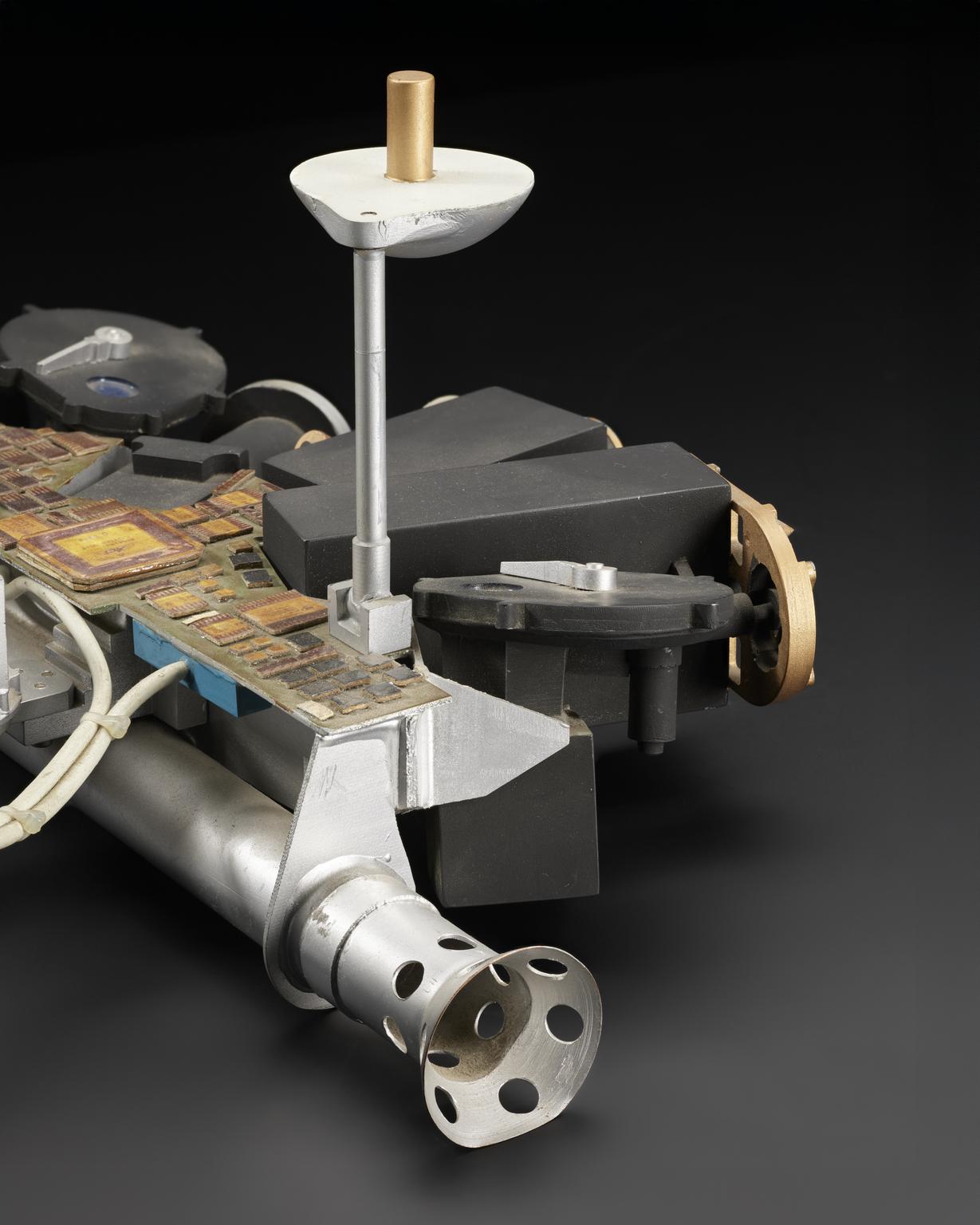
Beagle 2 Mars lander, instrument arm attachment piece

Beagle 2 Mars lander, model (scale 1:1). Spacecraft developed by Open University Planetary and Space Sciences Research Institute (PSSRI), Milton Keynes, UK, 2002.

More

Britain’s Beagle 2 lander launched to Mars on 2 June 2003 aboard the European Space Agency’s Mars Express. The lander's aim was to search the Martian soil and atmosphere for signs of carbon that would indicate life. Beagle was deployed to the Martian surface and scheduled to land on 25 December 2003. Unfortunately, it never made contact after deployment and after repeated attempts to locate it, Beagle was declared lost in February 2004.

In January 2015, however, NASA's Mars Reconnaissance Orbiter released high resolution images which showed the lander on the Mars surface and - critically - intact. It seems likely that one or more of Beagle's solar panels did not deploy. This meant the radio transmitter was not able to send and receive data from Earth.

Landing on any planetary body is incredibly difficult so the fact that Beagle 2 managed to achieve a soft landing is a success in itself. But the innovations the Beagle team made in miniaturising technology – especially the spacecraft’s gas analysis package – have been adapted for future missions and uses on Earth.

Measurements:
overall: 155 mm x 55 mm x 67 mm,
Materials:
metal (unknown)
Object Number:
2007-8/4
type:
spacecraft
Image ©
The Board of Trustees of the Science Museum