Huygens Descent Control Sub-System (DCSS)

Made:
1997 in Denham

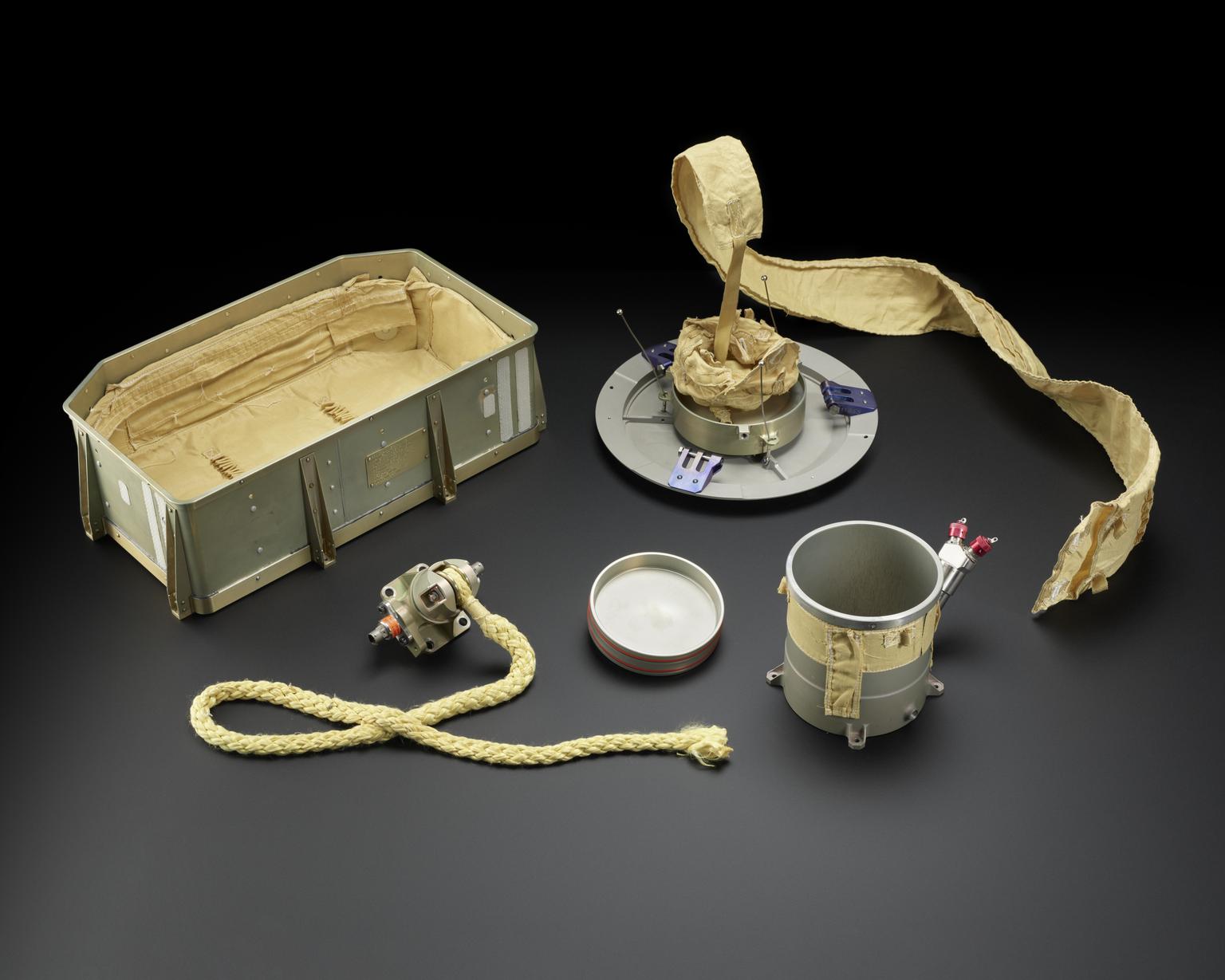
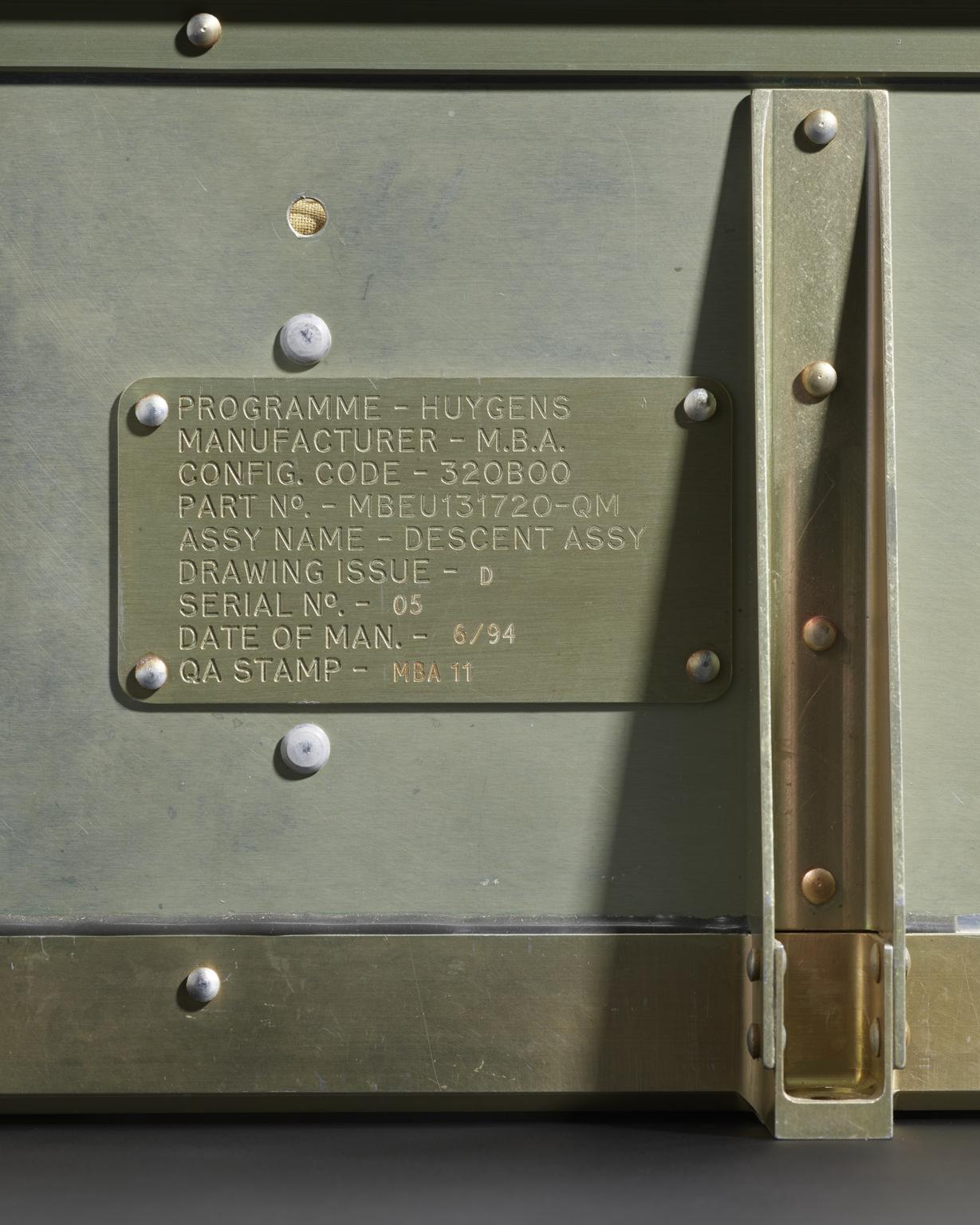
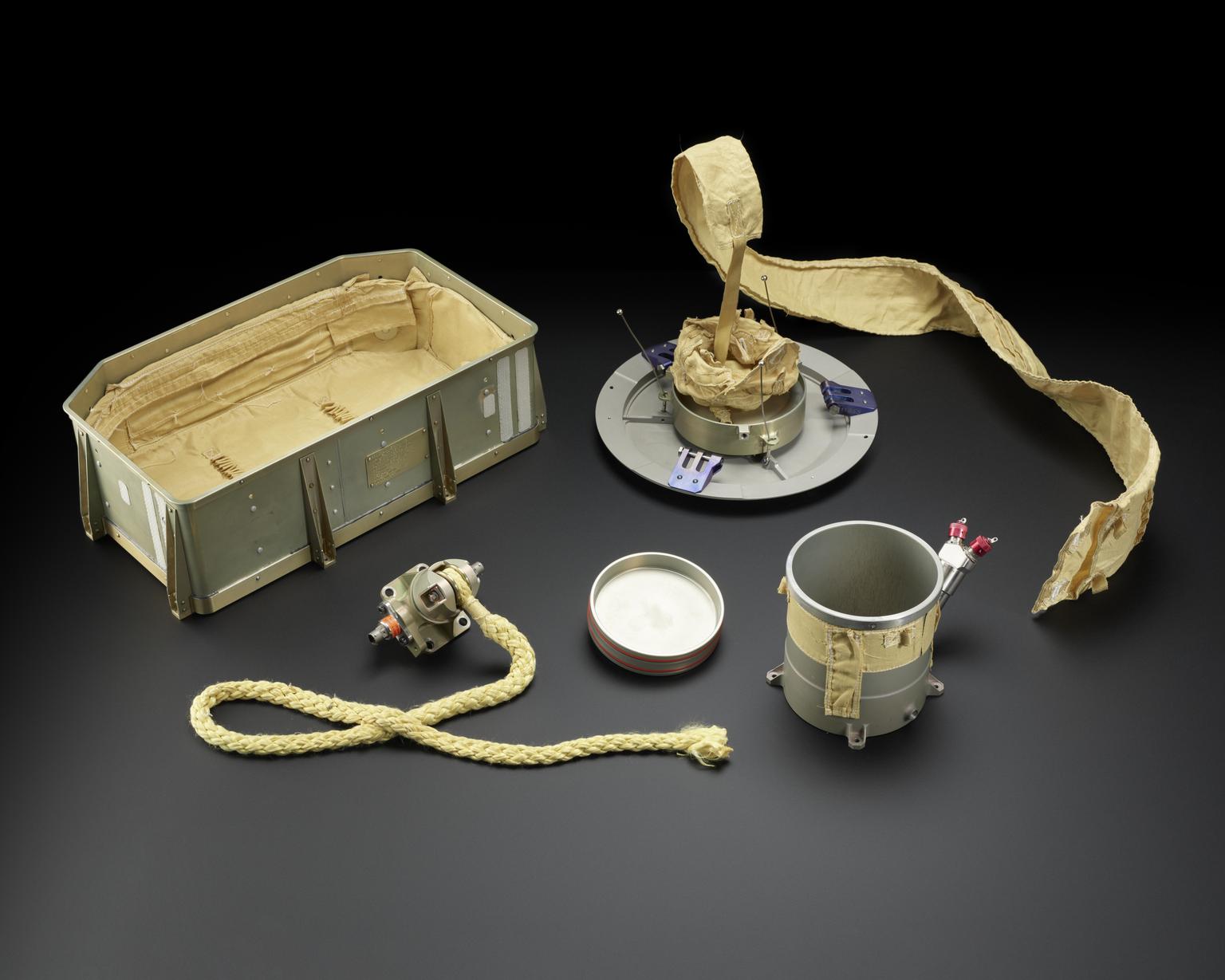
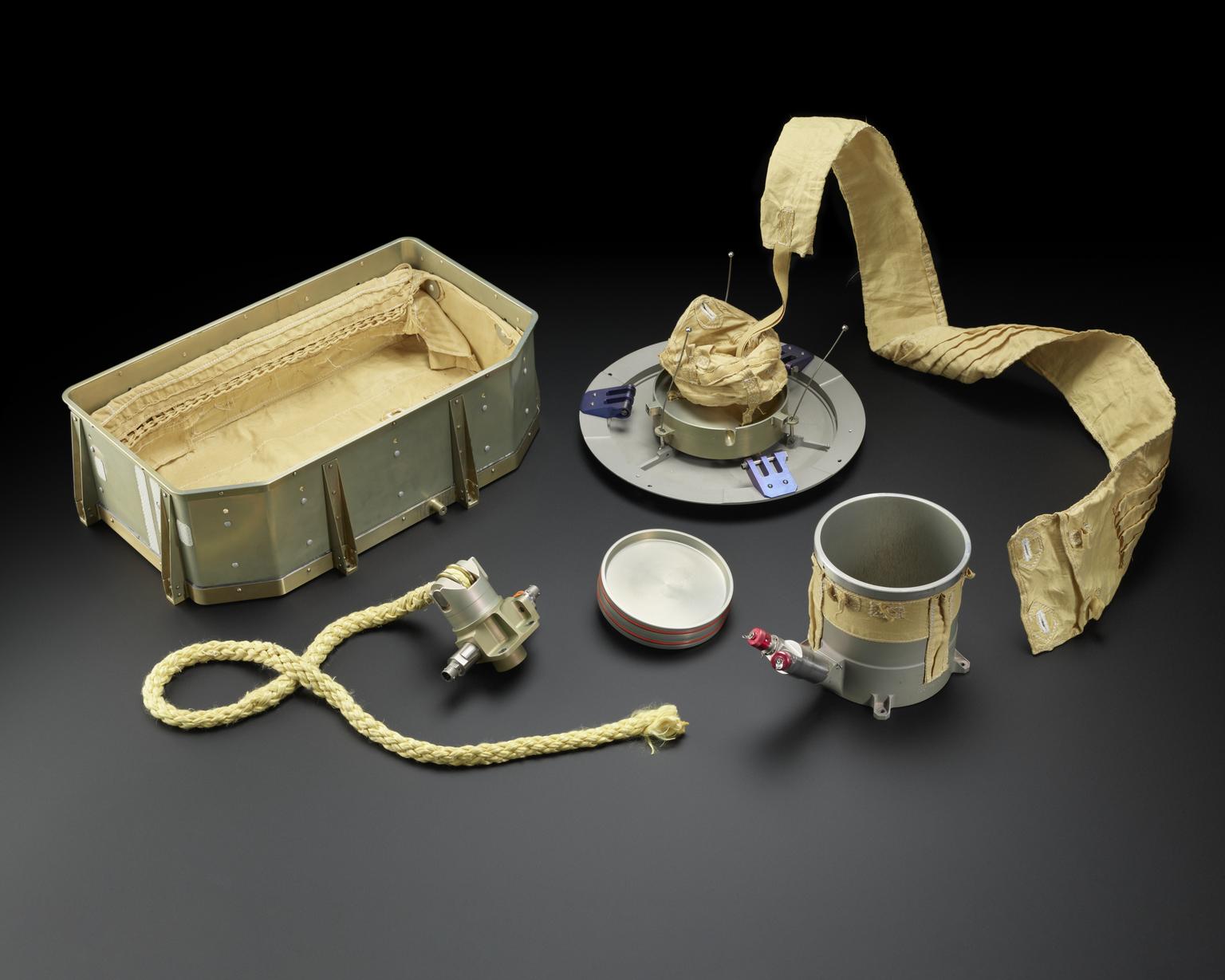
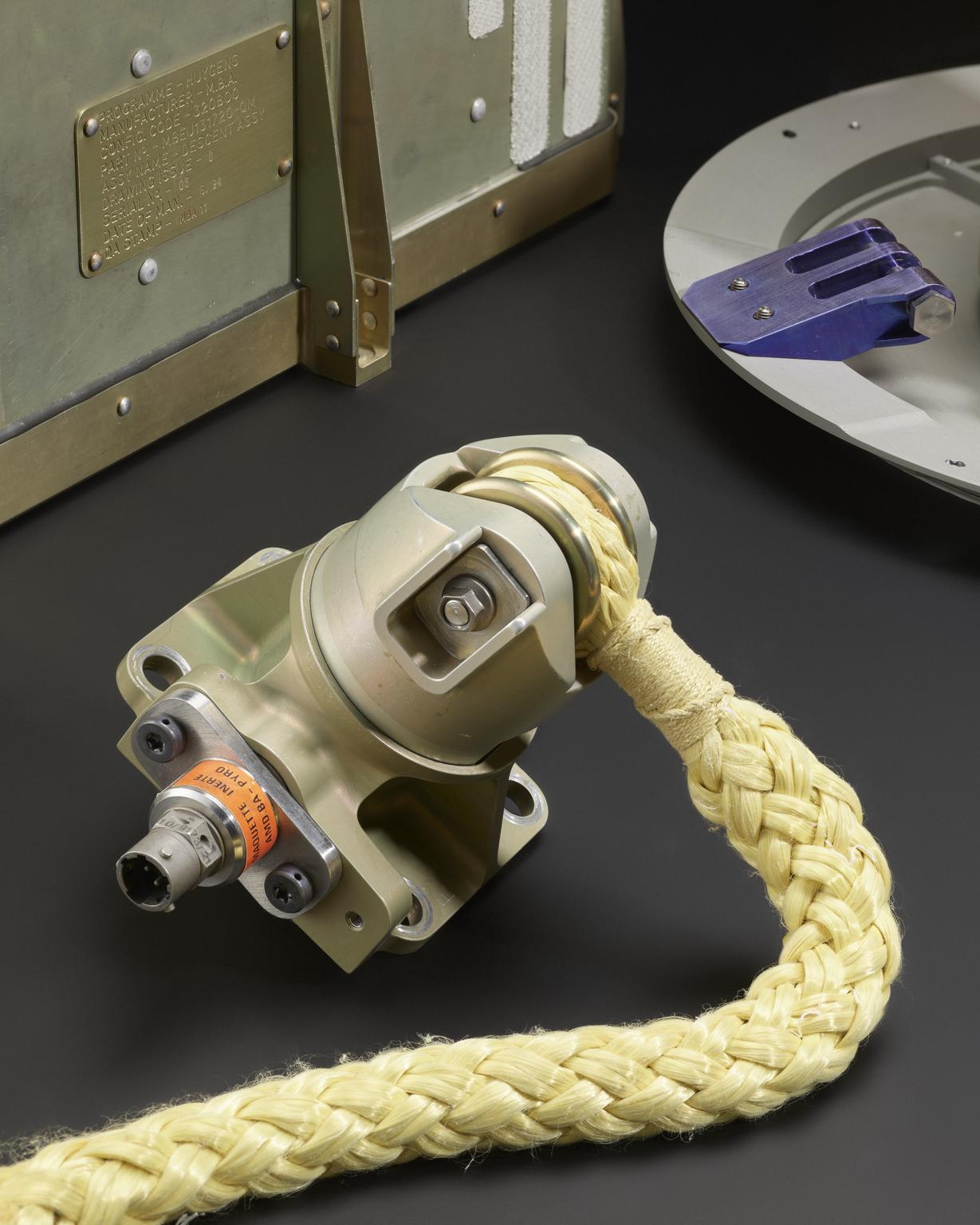
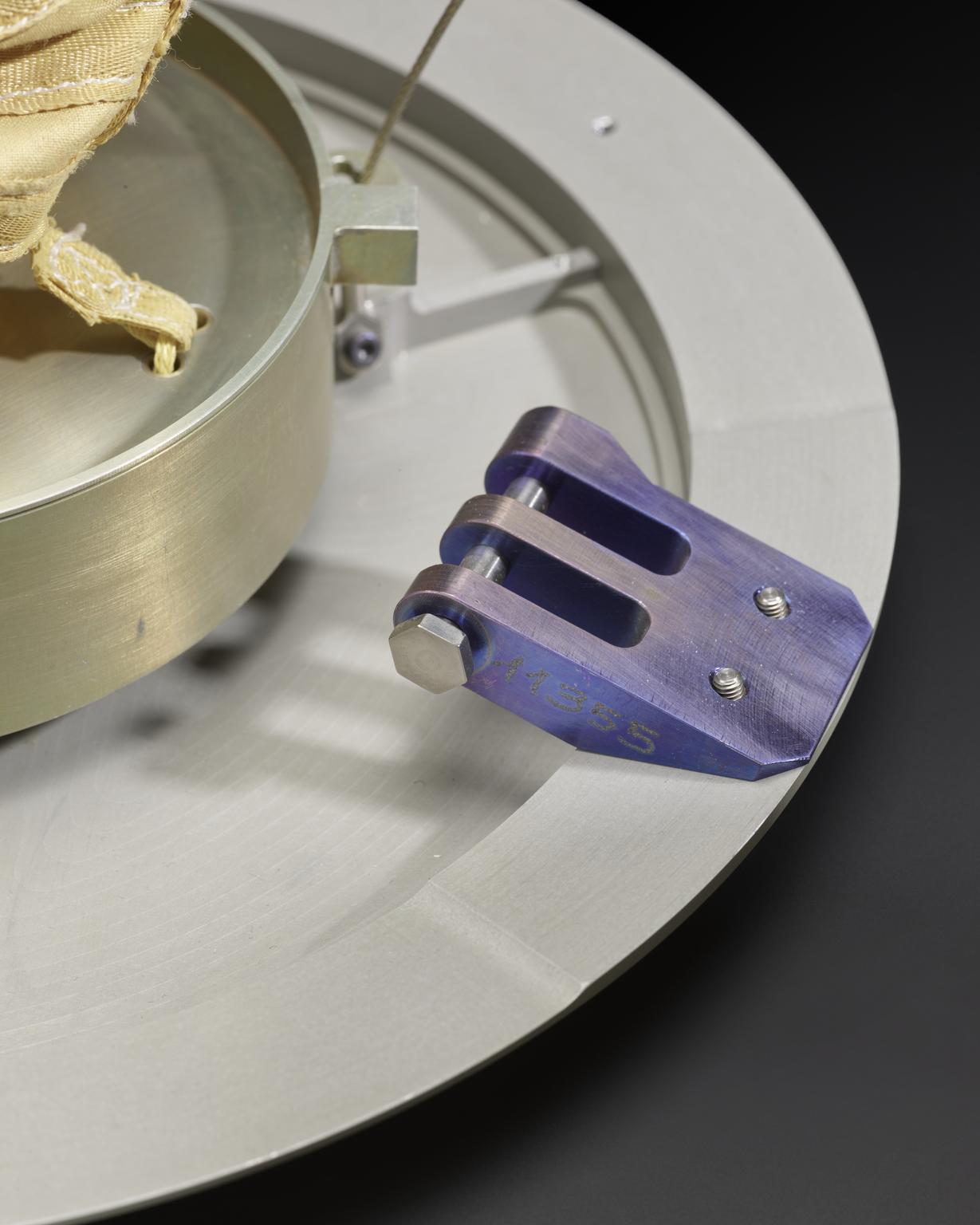
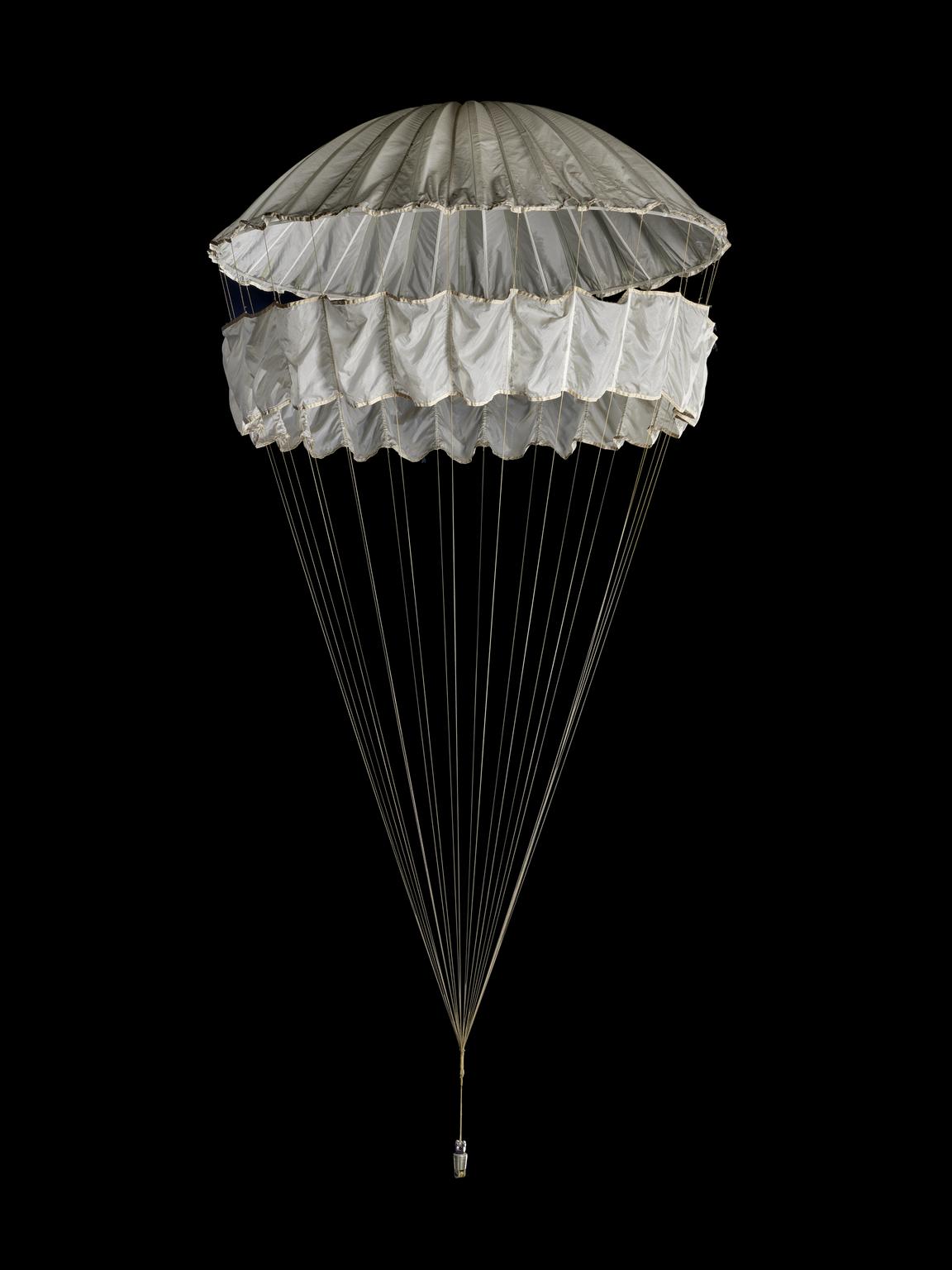
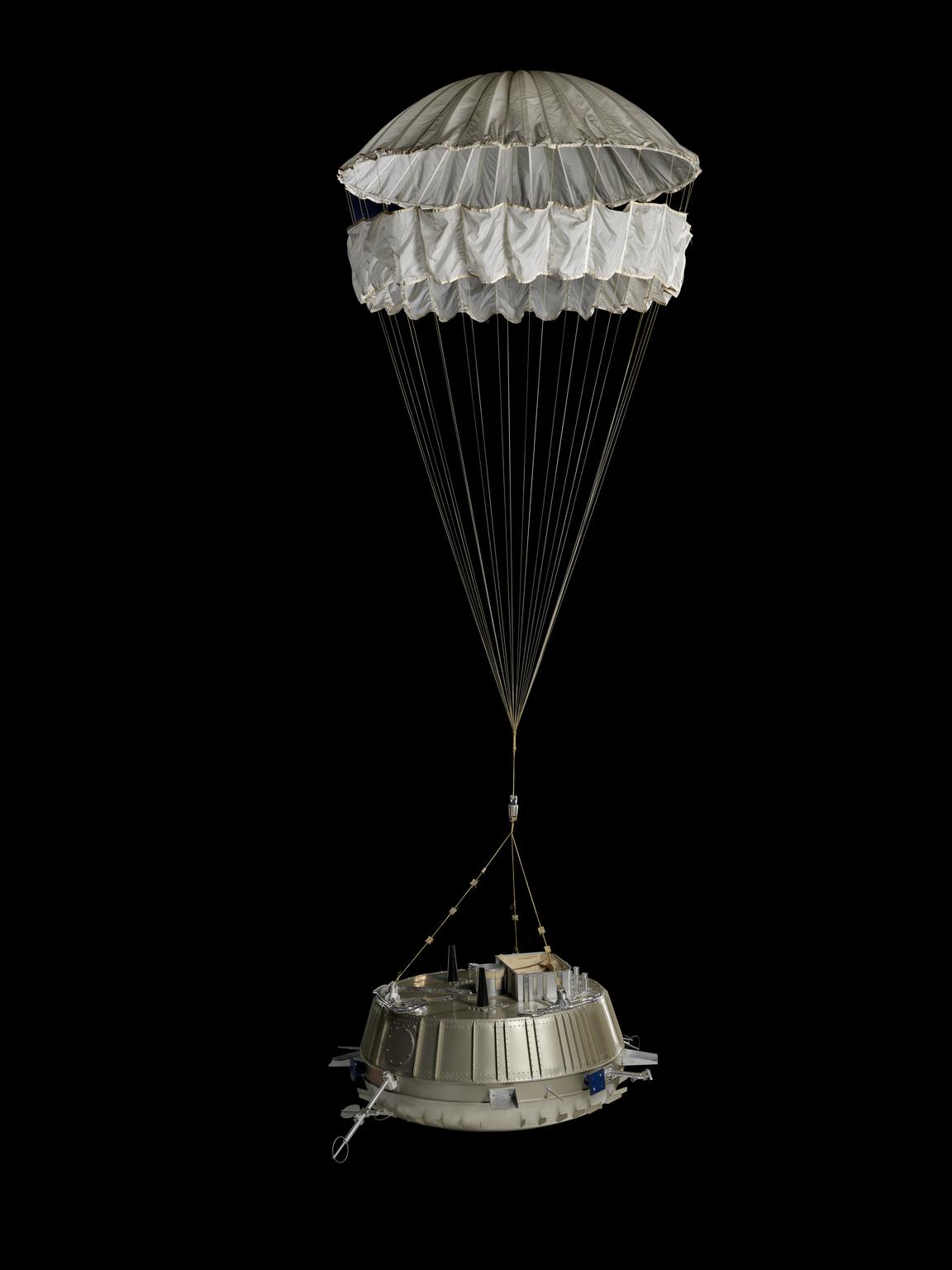
Huygens Descent Control Sub-System (DCSS), parachute mechanism, made by Martin Baker Aircraft Co. Ltd. in 1997, on behalf of the European Space Agency.

Details

Category:
Space Technology
Object Number:
2006-110
type:
parachutes
credit:
Martin Baker Aircraft Co. Ltd.

Parts

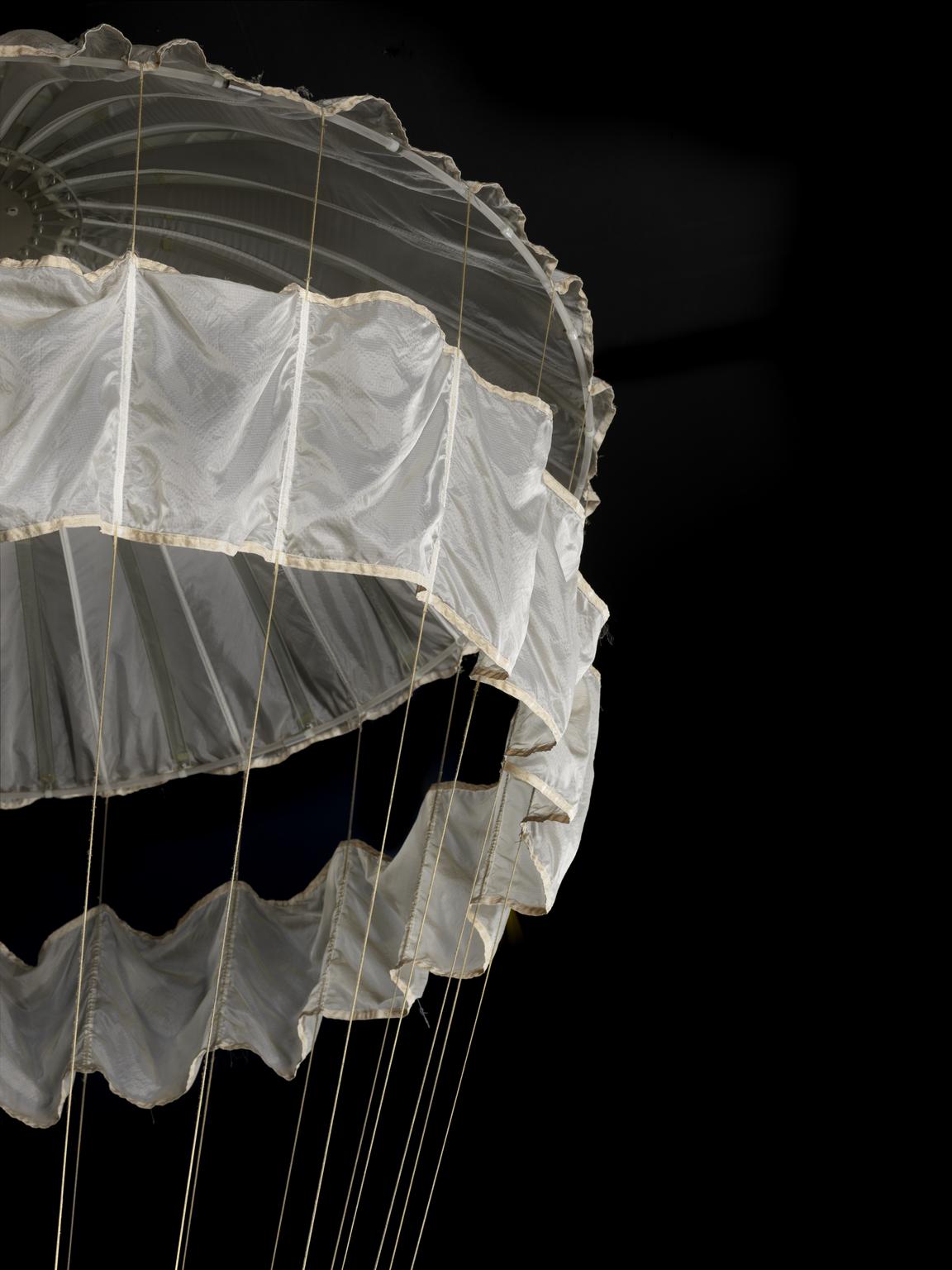
Huygens Descent Control Sub-System (DCSS) parachute from Cassini-Huygens mission to Saturn and Titan

Huygens Descent Control Sub-System (DCSS), stabilizing drogue parachute. Made by Martin Baker Aircraft Co. Ltd. in 1997, on behalf of the European Space Agency. The entire DCSS system is a series of three parachutes and mechanisms on the Huygens lander which slowed the 320kg spacecraft from 20,000km/h to a soft landing on Titan. The system was the most critical sub-system for Huygens as its failure would have meant mission failure.

More

The Huygens spacecraft, which travelled to Titan on the Cassini spacecraft, consisted of a Descent Module inside a front shield and a back cover. The shield and cover protected the spacecraft from the harsh temperature and radiaion extremes of space during its seven year journey to Saturn. The spacecraft also experienced intense heat buildup from Titan's atmosphere as it slowed during entry.

As the spacecraft reached the top of Titan's atmosphere, it decelerated to 1,400 km/hr, 160km above the surface of Titan. A mortar from the back of the spacecraft fired, deploying a 2.6m diameter pilot parachute. The back cover then released along with the pilot chute which pulled it away from the descent module. Next an 8.3m diameter main parachute deployed. Once the spacecraft decelerated further, the front shield (which primarily protected from the heat of entry) released and fell away.

Using the main parachute, it would take Huygens six hours to reach the surface, which would have completely drained its batteries. So three pyrotechnics jettisoned the main parachute from the spacecraft after 15 minutes and deployed a smaller, 3m diameter stabilising drogue parachute, which allowed for a shorter descent time (two hours). Stability of Huygens was essential during this descent stage both to maintain the radio link and to allow the camera to take clear pictures of Titan's clouds and surface. Winds on Titan can reach up to 250km/hr so this was not an easy task.

Measurements:
overall (as on mount): 4780 mm x 1685 mm
Materials:
textile , metal (unknown) and plastic (unidentified)
Object Number:
2006-110/1
type:
parachutes
Image ©
The Board of Trustees of the Science Museum
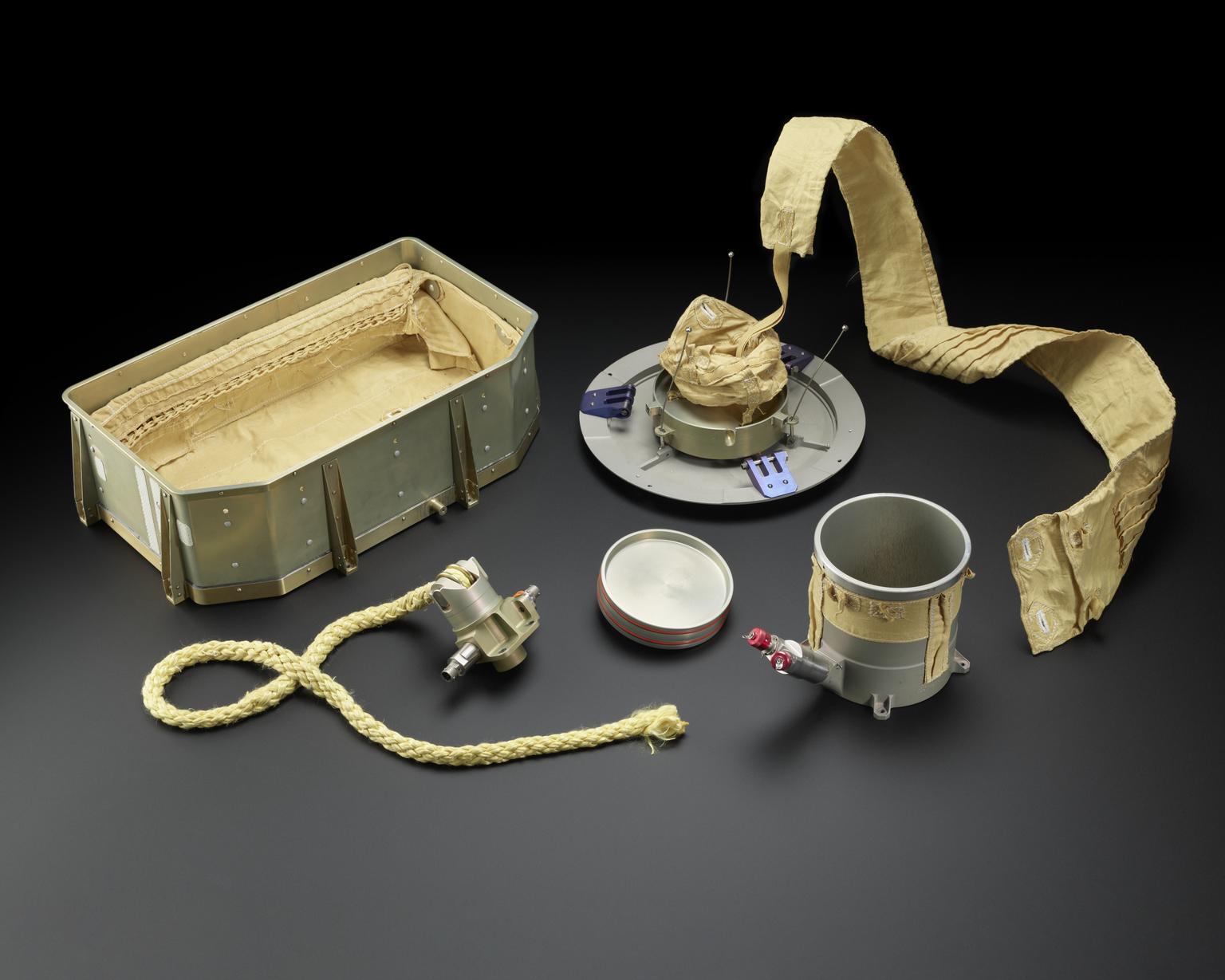
Huygens Descent Control Sub-System (DCSS) parachute mechanism from Cassini-Huygens mission to Saturn and Titan

Huygens Descent Control Sub-System (DCSS) parachute mechanism from Cassini-Huygens mission to Saturn and Titan

Huygens Descent Control Sub-System (DCSS), parachute mechanism, made by Martin Baker Aircraft Co. Ltd. in 1997, on behalf of the European Space Agency. The entire DCSS system is a series of three parachutes and mechanisms on the Huygens lander which slowed the 320kg spacecraft from 20,000km/h to a soft landing on Titan. The system was the most critical sub-system for Huygens as its failure would have meant mission failure.

More

The Huygens spacecraft, which travelled to Titan on the Cassini spacecraft, consisted of a Descent Module inside a front shield and a back cover. The shield and cover protected the spacecraft from the harsh temperature and radiaion extremes of space during its seven year journey to Saturn. The spacecraft also experienced intense heat buildup from Titan's atmosphere as it slowed during entry.

As the spacecraft reached the top of Titan's atmosphere, it decelerated to 1,400 km/hr, 160km above the surface of Titan. A mortar from the back of the spacecraft fired, deploying a 2.6m diameter pilot parachute. The back cover then released along with the pilot chute which pulled it away from the descent module. Next an 8.3m diameter main parachute deployed. Once the spacecraft decelerated further, the front shield (which primarily protected from the heat of entry) released and fell away.

Using the main parachute, it would take Huygens six hours to reach the surface, which would have completely drained its batteries. So three pyrotechnics jettisoned the main parachute from the spacecraft after 15 minutes and deployed a smaller, 3m diameter stabilising drogue parachute, which allowed for a shorter descent time (two hours). Stability of Huygens was essential during this descent stage both to maintain the radio link and to allow the camera to take clear pictures of Titan's clouds and surface. Winds on Titan can reach up to 250km/hr so this was not an easy task.

Measurements:
overall (estimate): 145 mm x 285 mm x 455 mm,
Object Number:
2006-110/2
type:
parachutes