
Birtac cine camera/projector

"Birtac" camera projector for 17 "Birtac" camera projector for 17 "Birtac" camera projector for 17 "Birtac" camera projector for 17 "Birtac" camera projector for 17 "Birtac" camera projector for 17

Creative Commons LicenseThis image is released under a CC BY-NC-ND 4.0 Licence

License this image for commercial use at Science and Society Picture Library

License

Creative Commons LicenseThis image is released under a CC BY-NC-ND 4.0 Licence

License this image for commercial use at Science and Society Picture Library

License

Creative Commons LicenseThis image is released under a CC BY-NC-ND 4.0 Licence

License this image for commercial use at Science and Society Picture Library

License

Creative Commons LicenseThis image is released under a CC BY-NC-ND 4.0 Licence

License this image for commercial use at Science and Society Picture Library

License

Creative Commons LicenseThis image is released under a CC BY-NC-ND 4.0 Licence

License this image for commercial use at Science and Society Picture Library

License

Creative Commons LicenseThis image is released under a CC BY-NC-ND 4.0 Licence

License this image for commercial use at Science and Society Picture Library

License

"Birtac" camera projector for 17
Science Museum Group
© The Board of Trustees of the Science Museum, London

"Birtac" camera projector for 17
Science Museum Group
© The Board of Trustees of the Science Museum, London

"Birtac" camera projector for 17
Science Museum Group
© The Board of Trustees of the Science Museum, London

"Birtac" camera projector for 17
Science Museum Group
© The Board of Trustees of the Science Museum, London

"Birtac" camera projector for 17
Science Museum Group
© The Board of Trustees of the Science Museum, London

"Birtac" camera projector for 17
Science Museum Group
© The Board of Trustees of the Science Museum, London

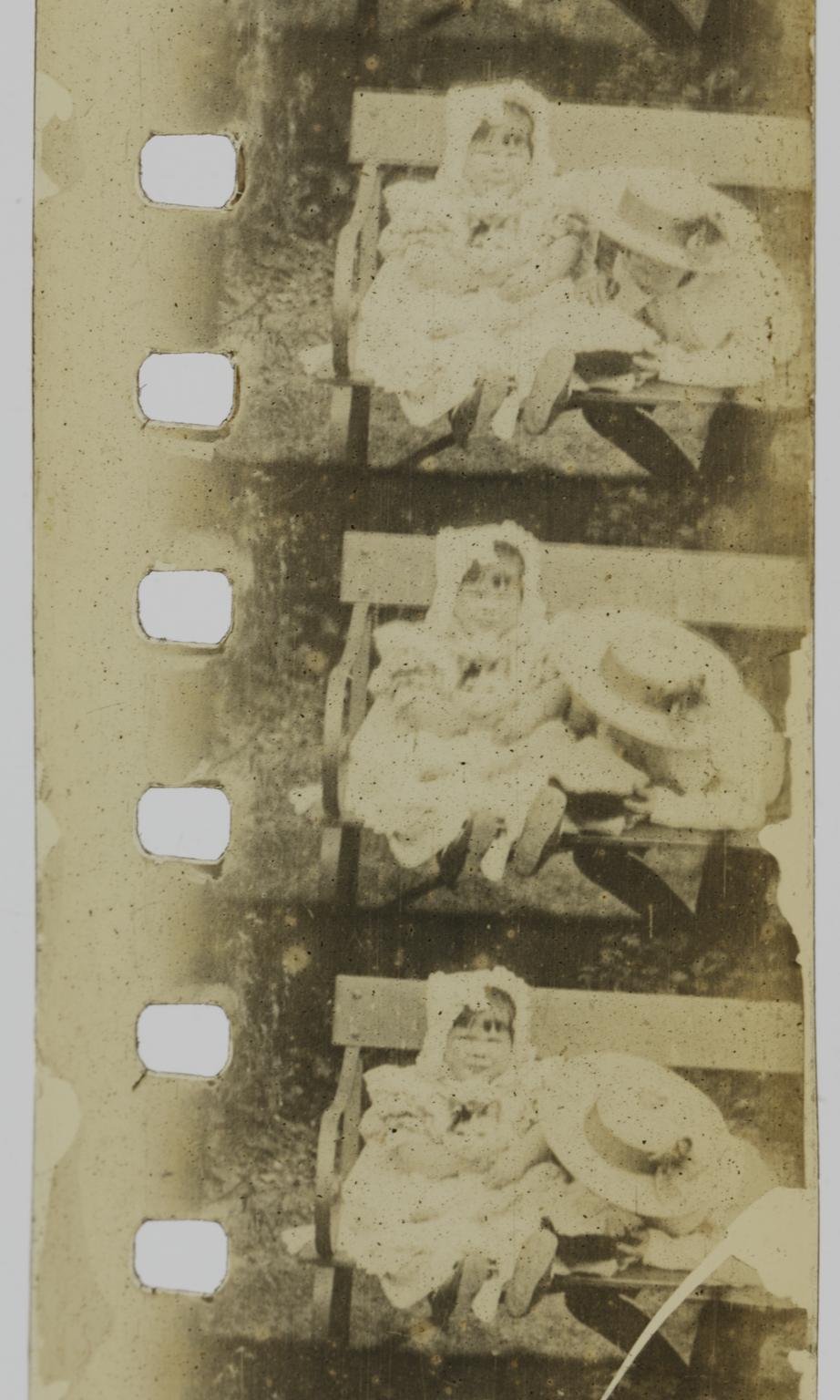
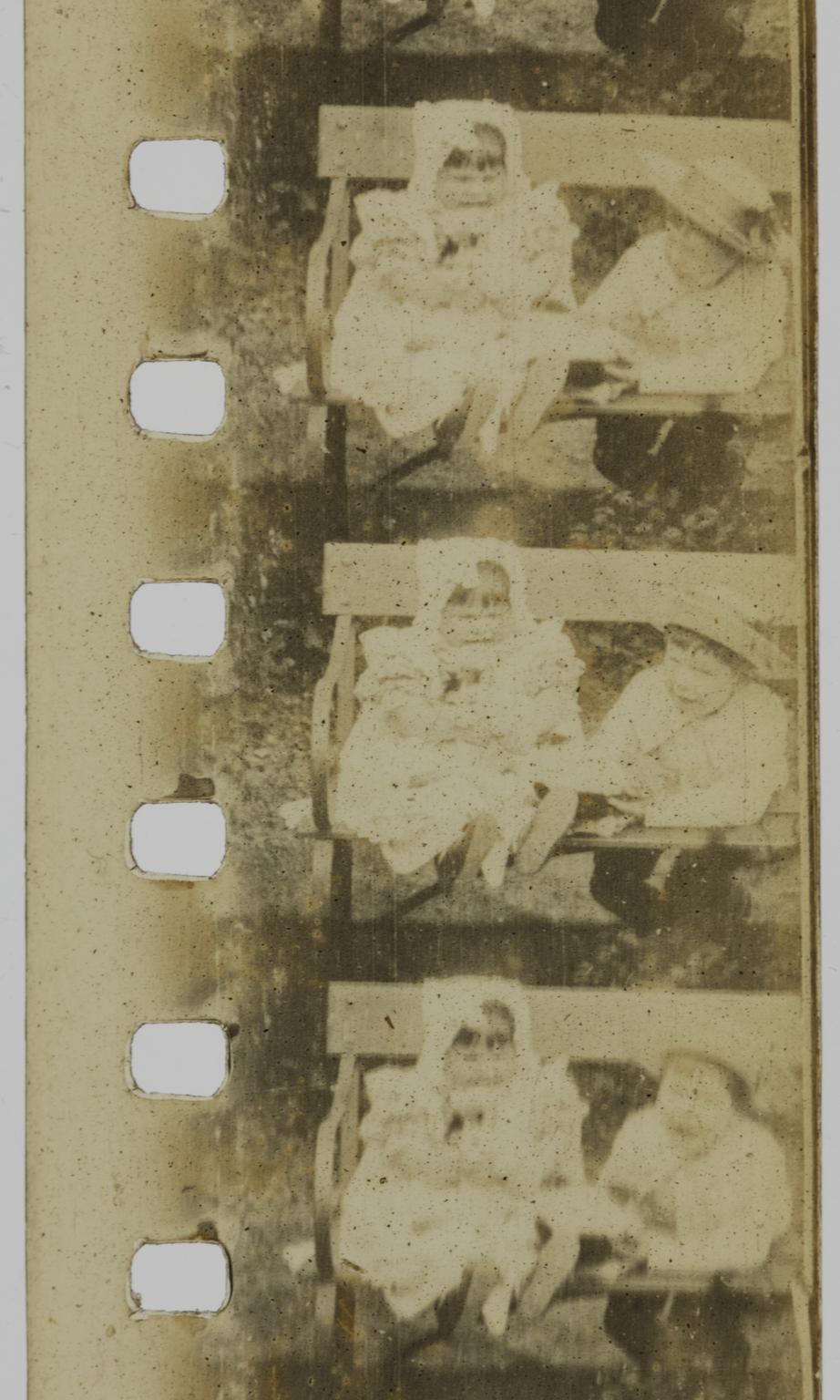
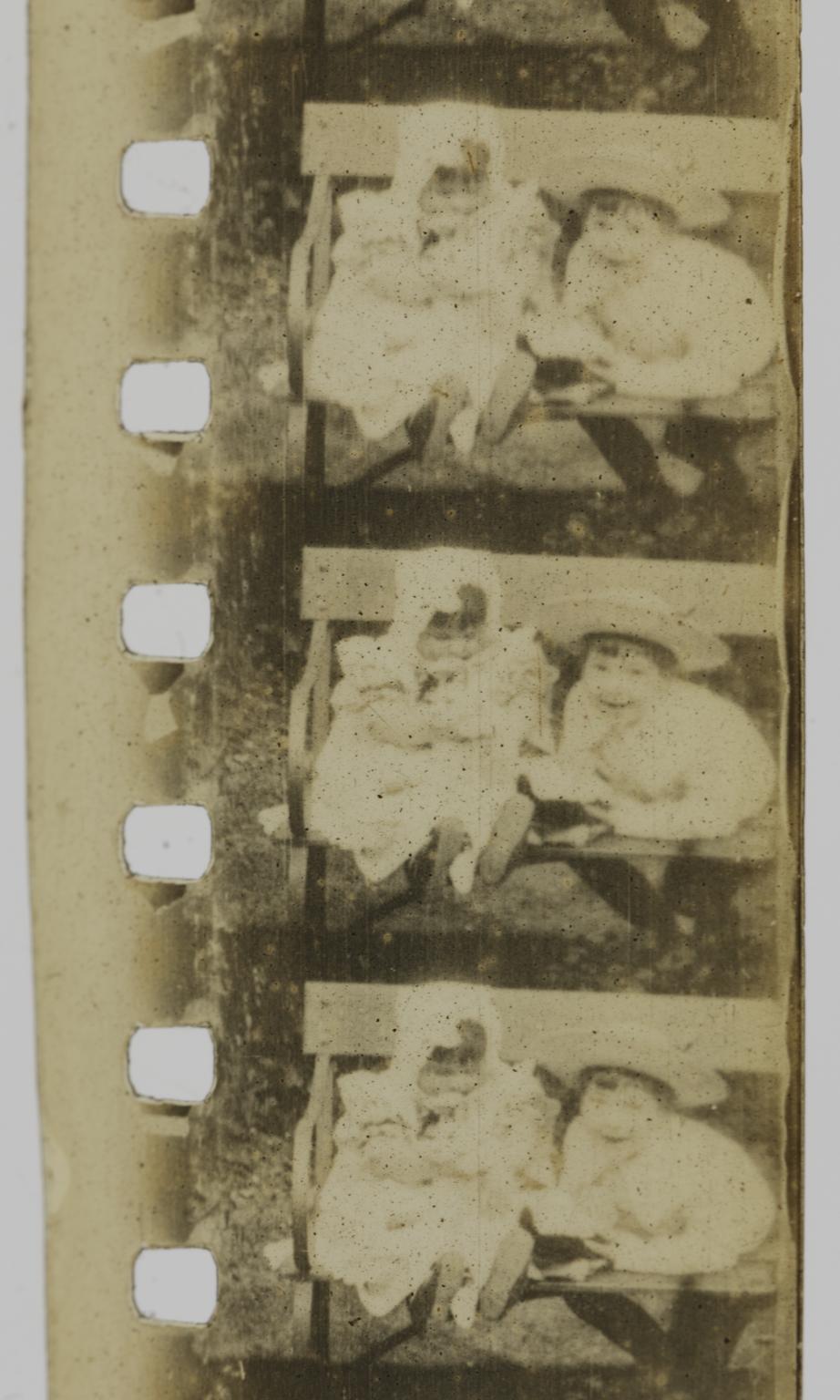
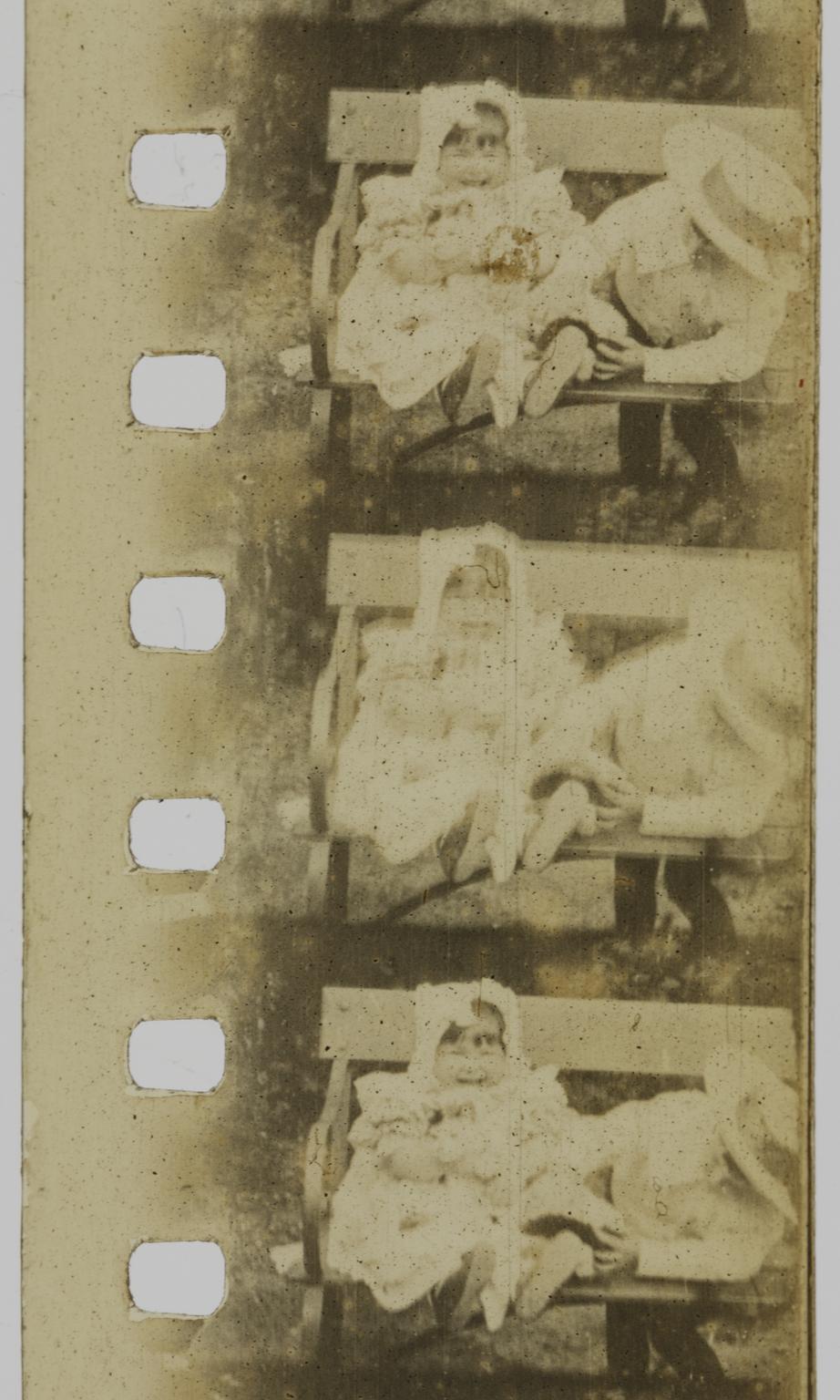
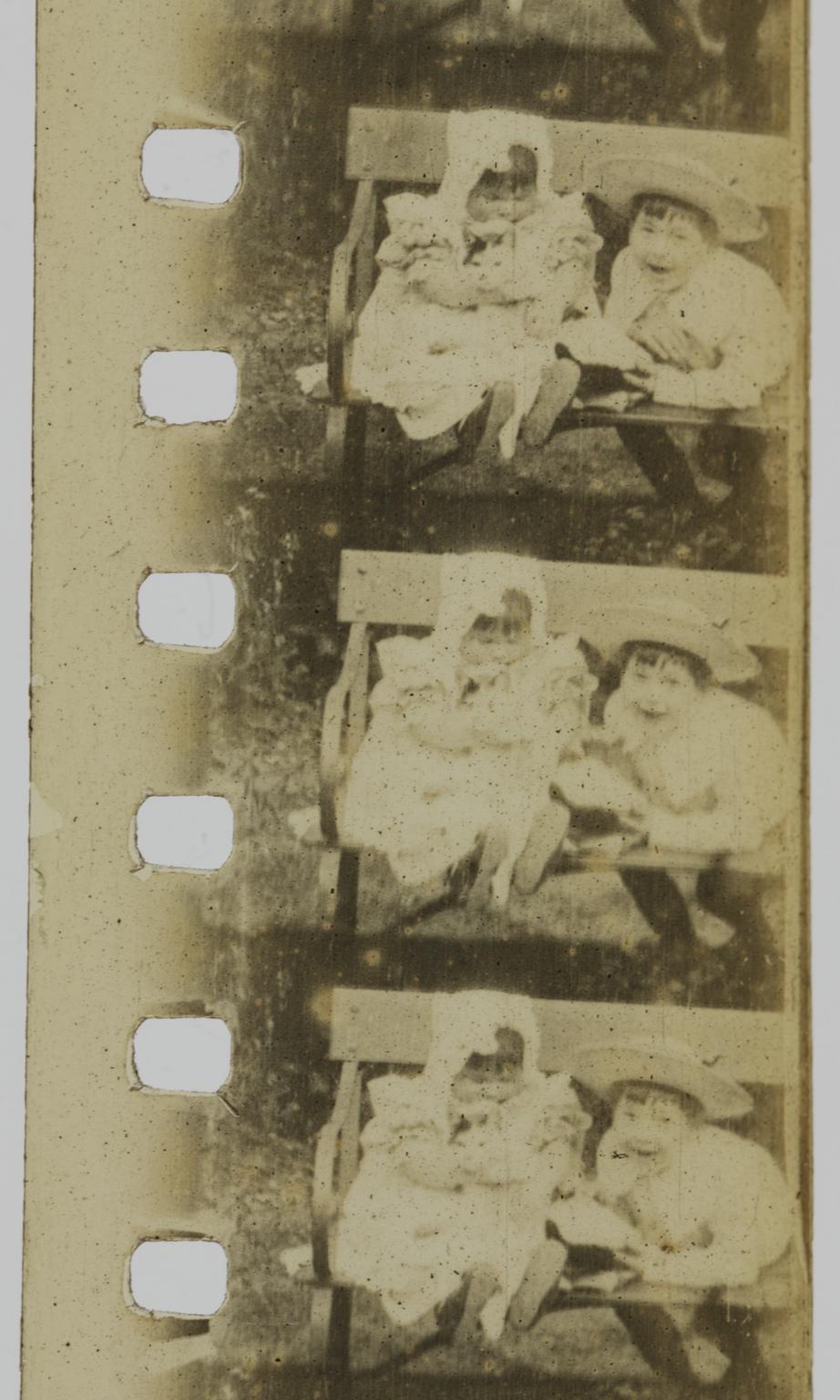
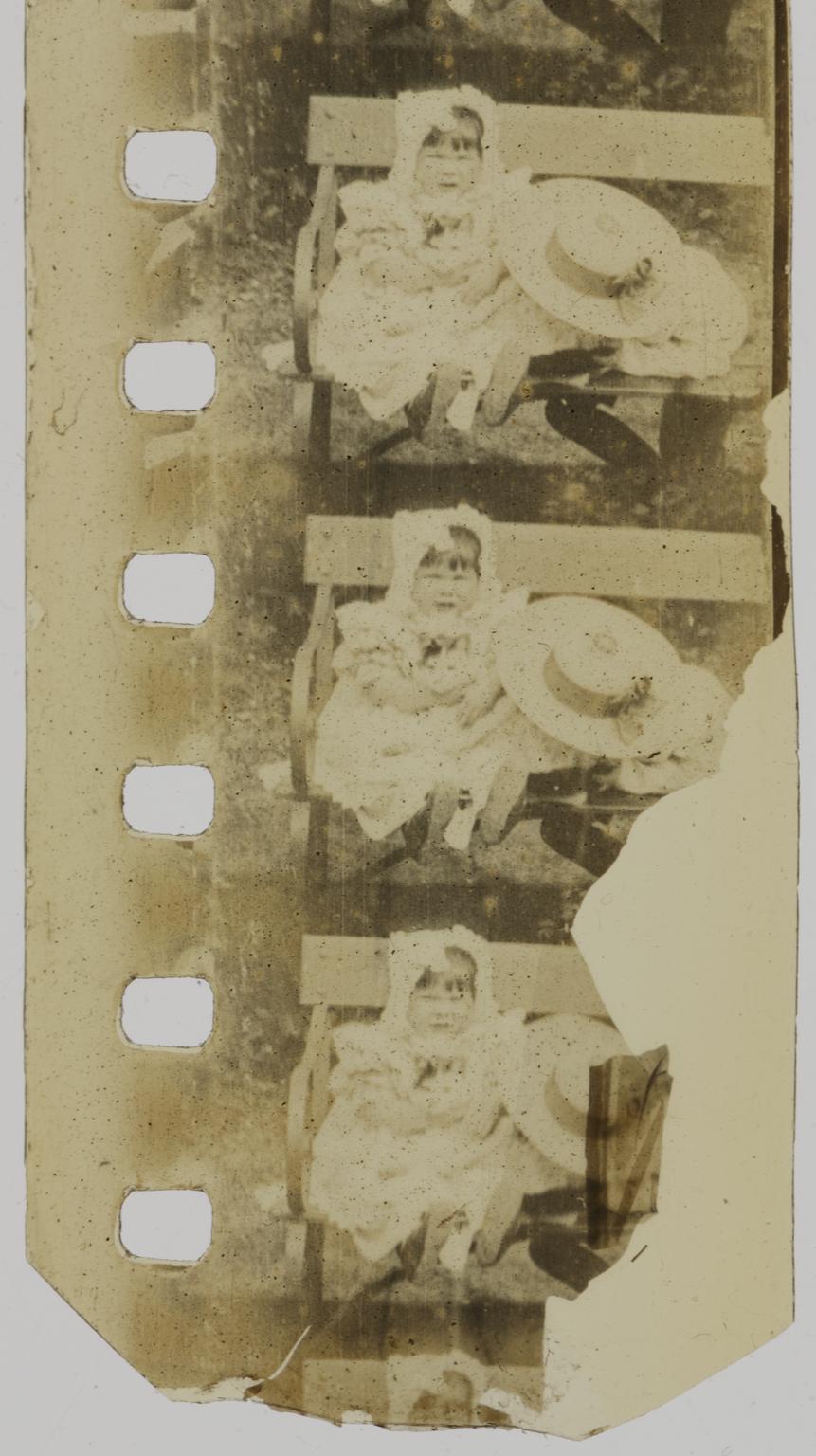
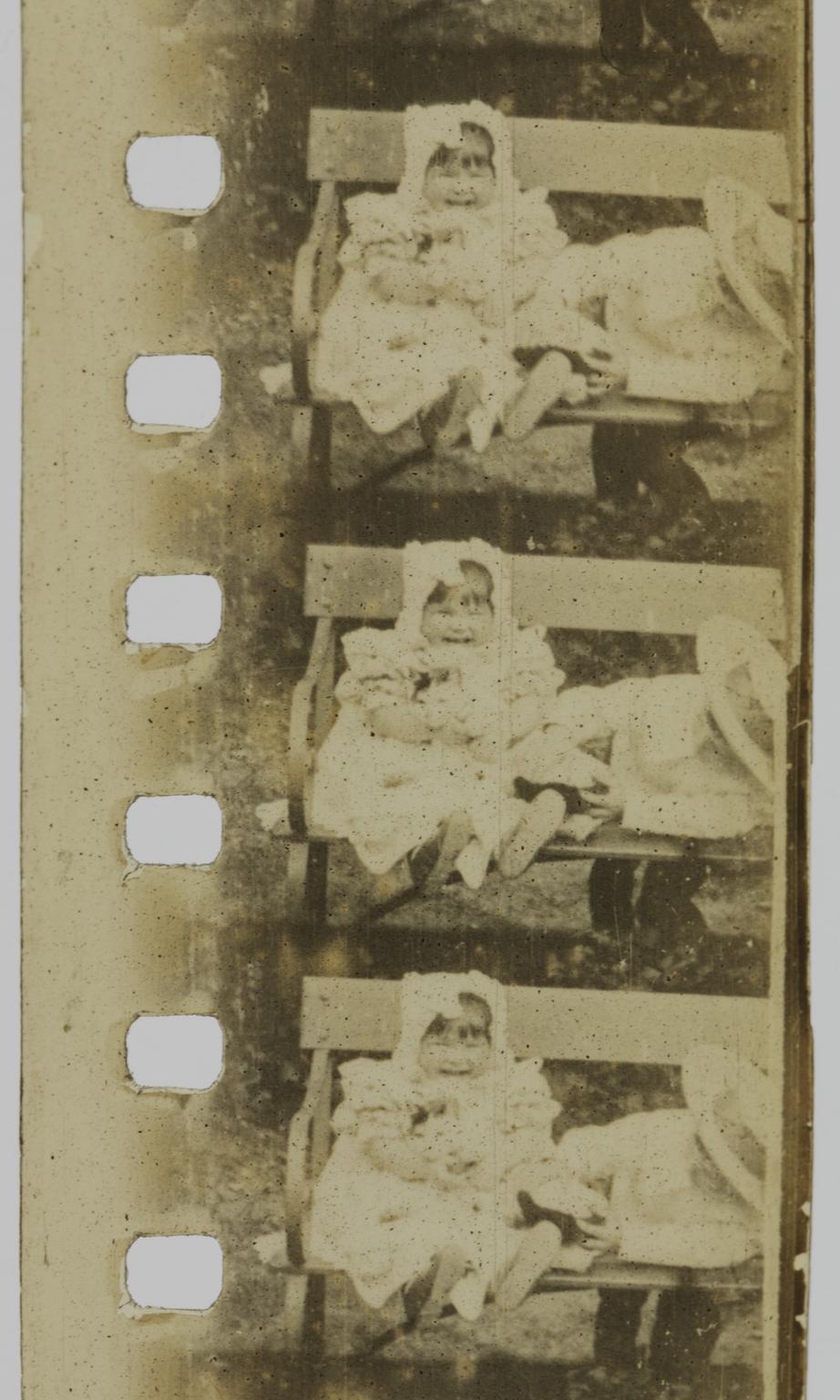
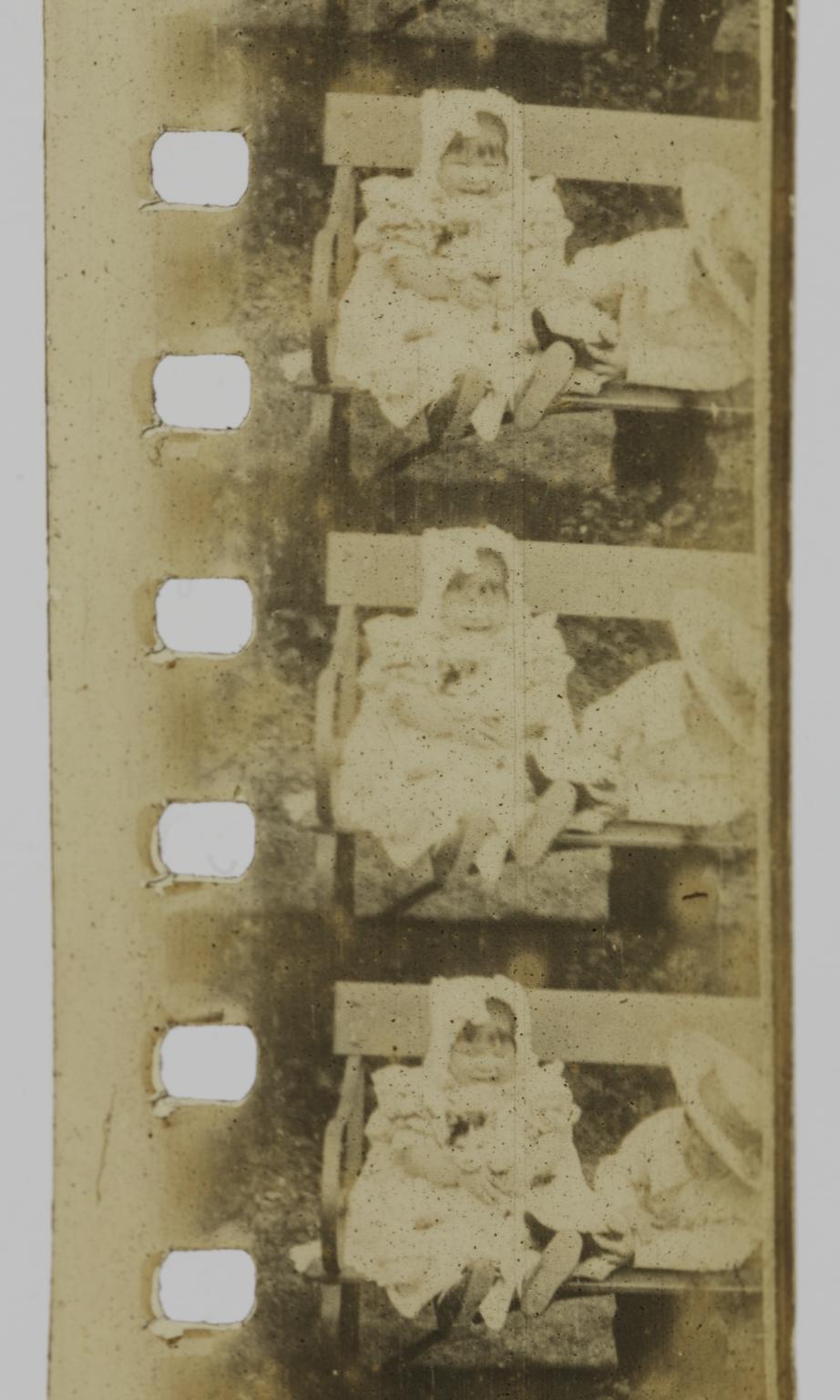
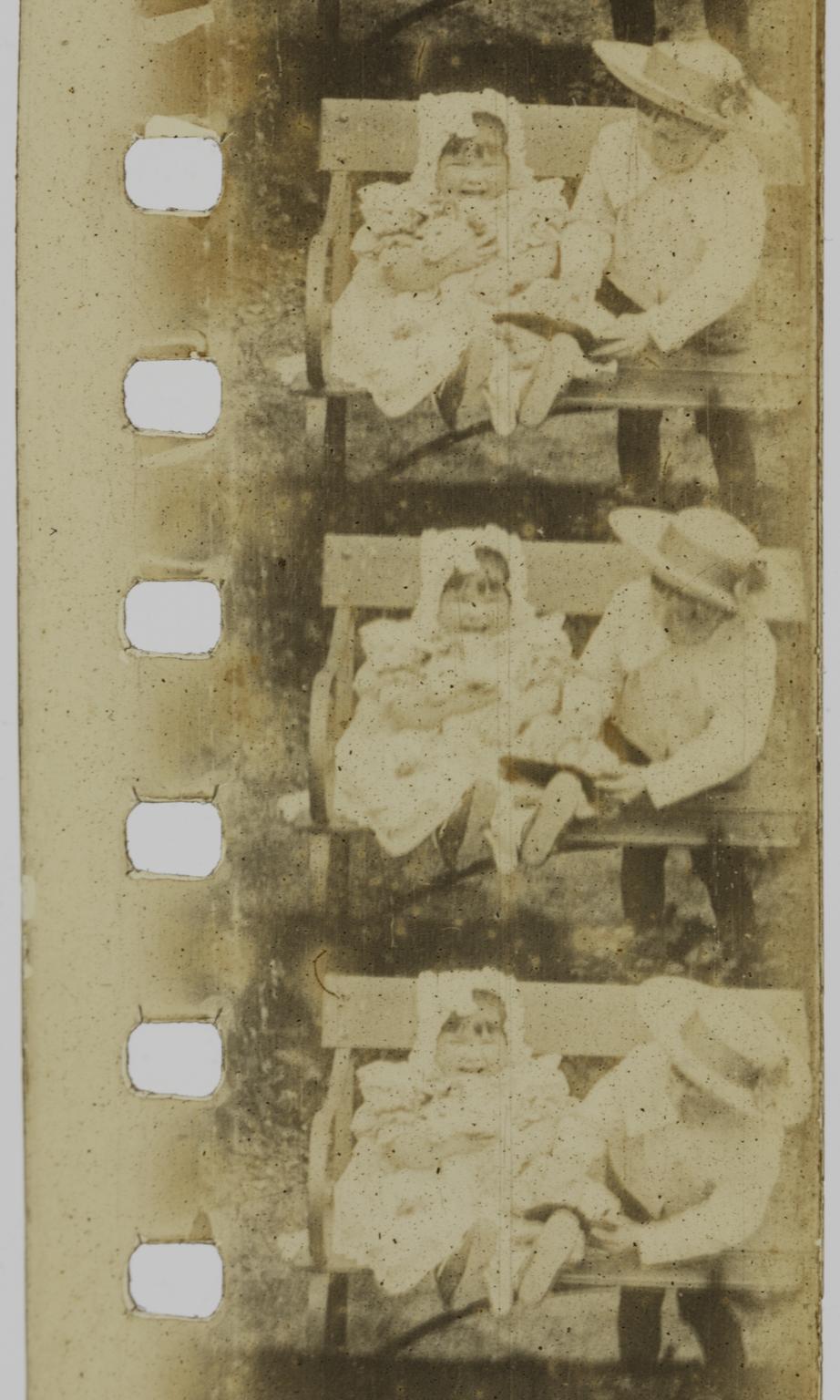
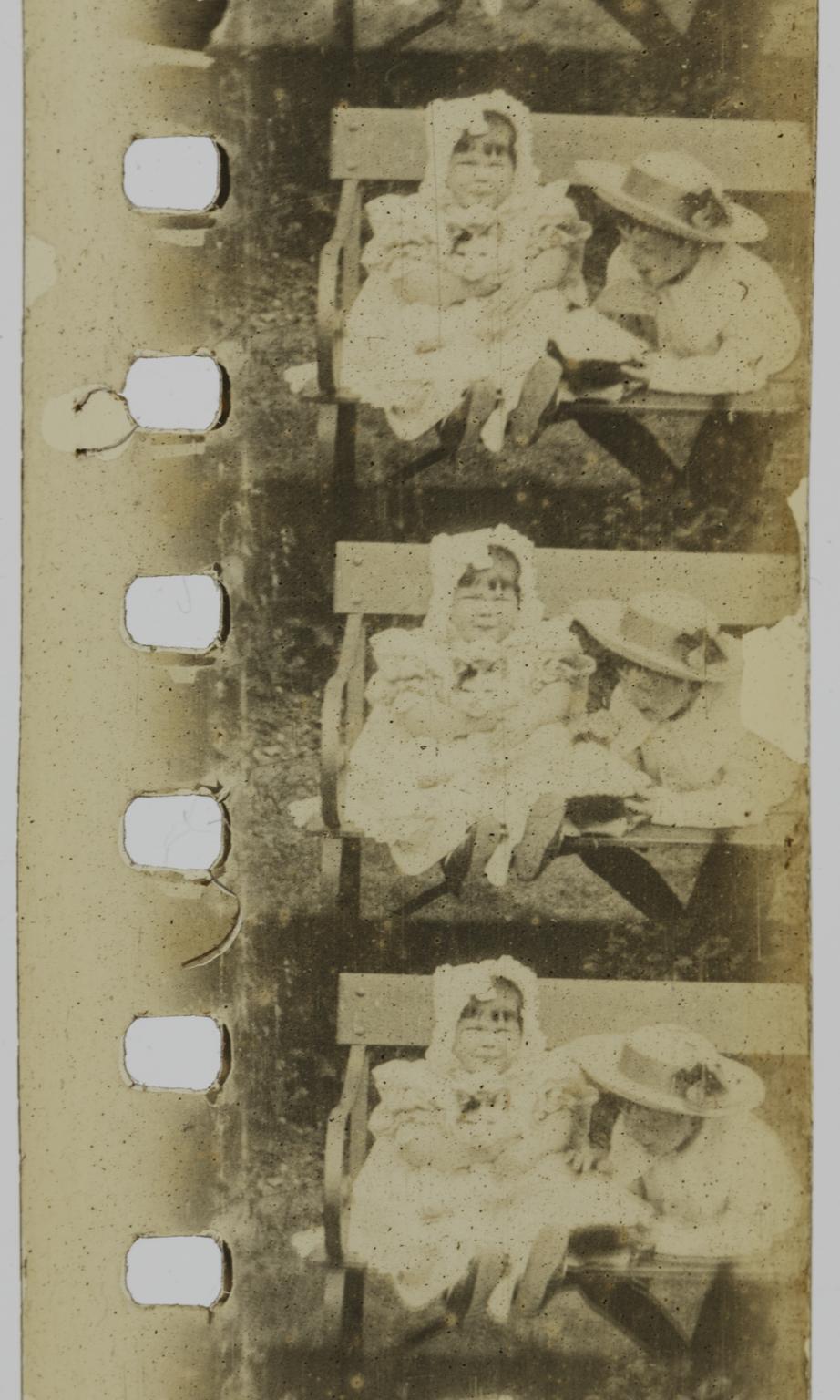
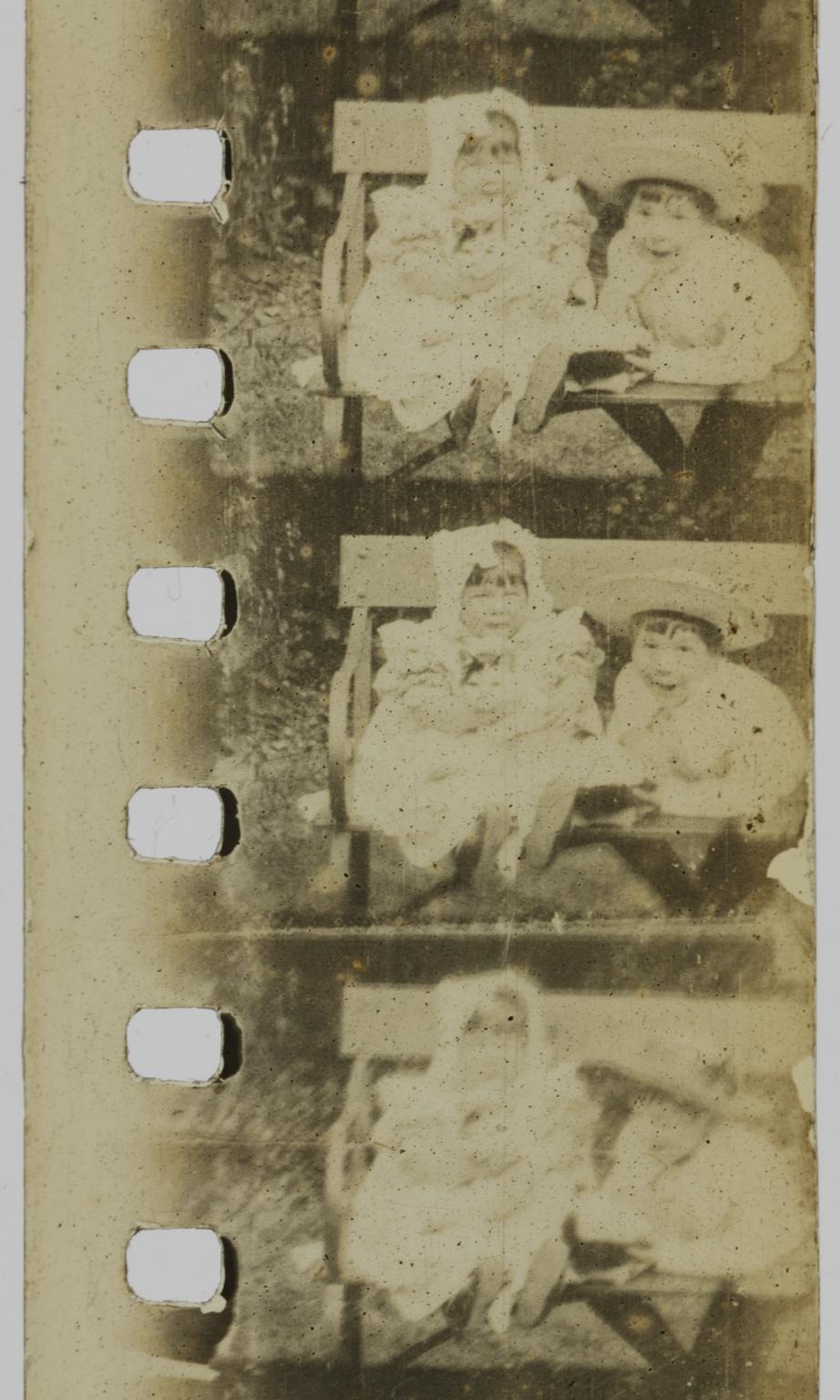
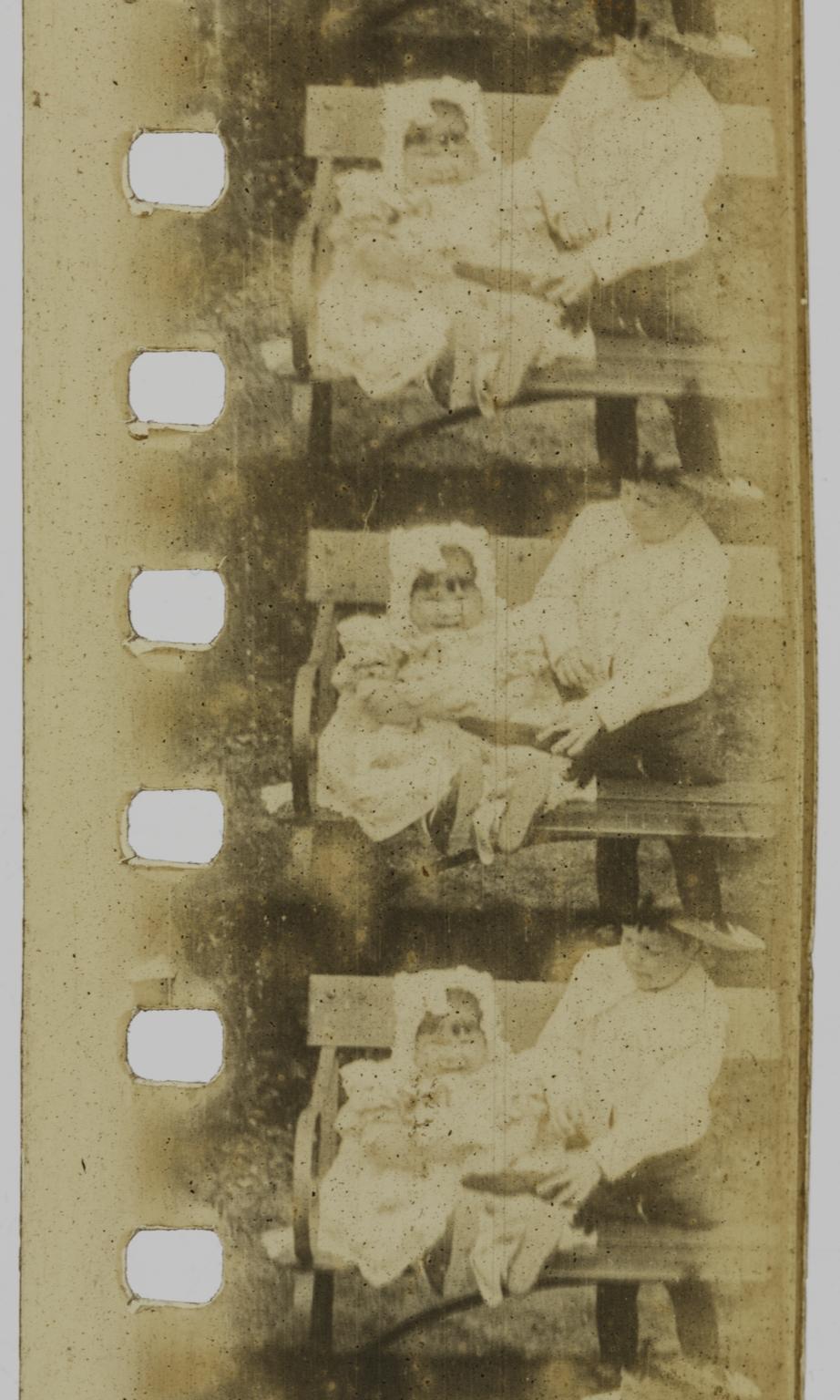
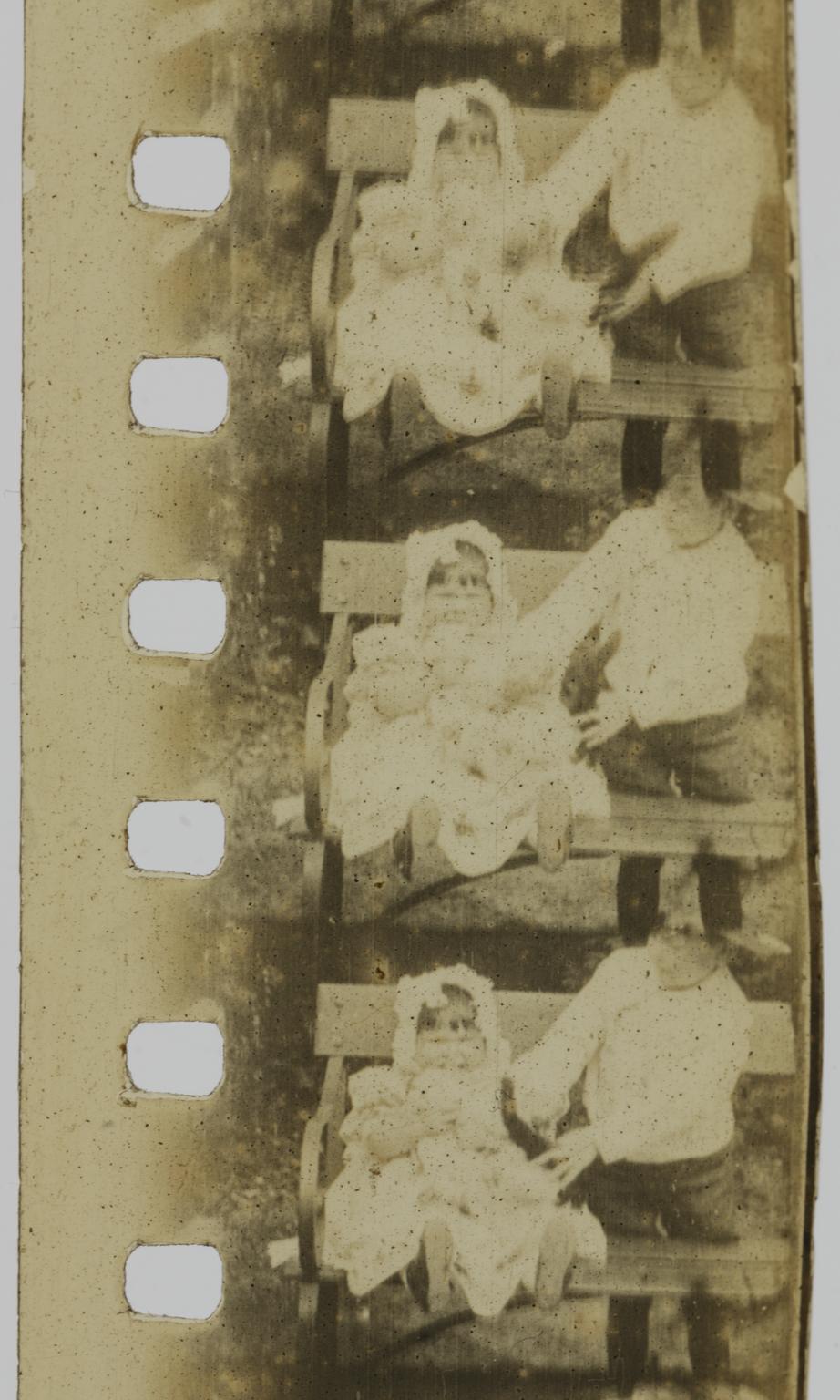
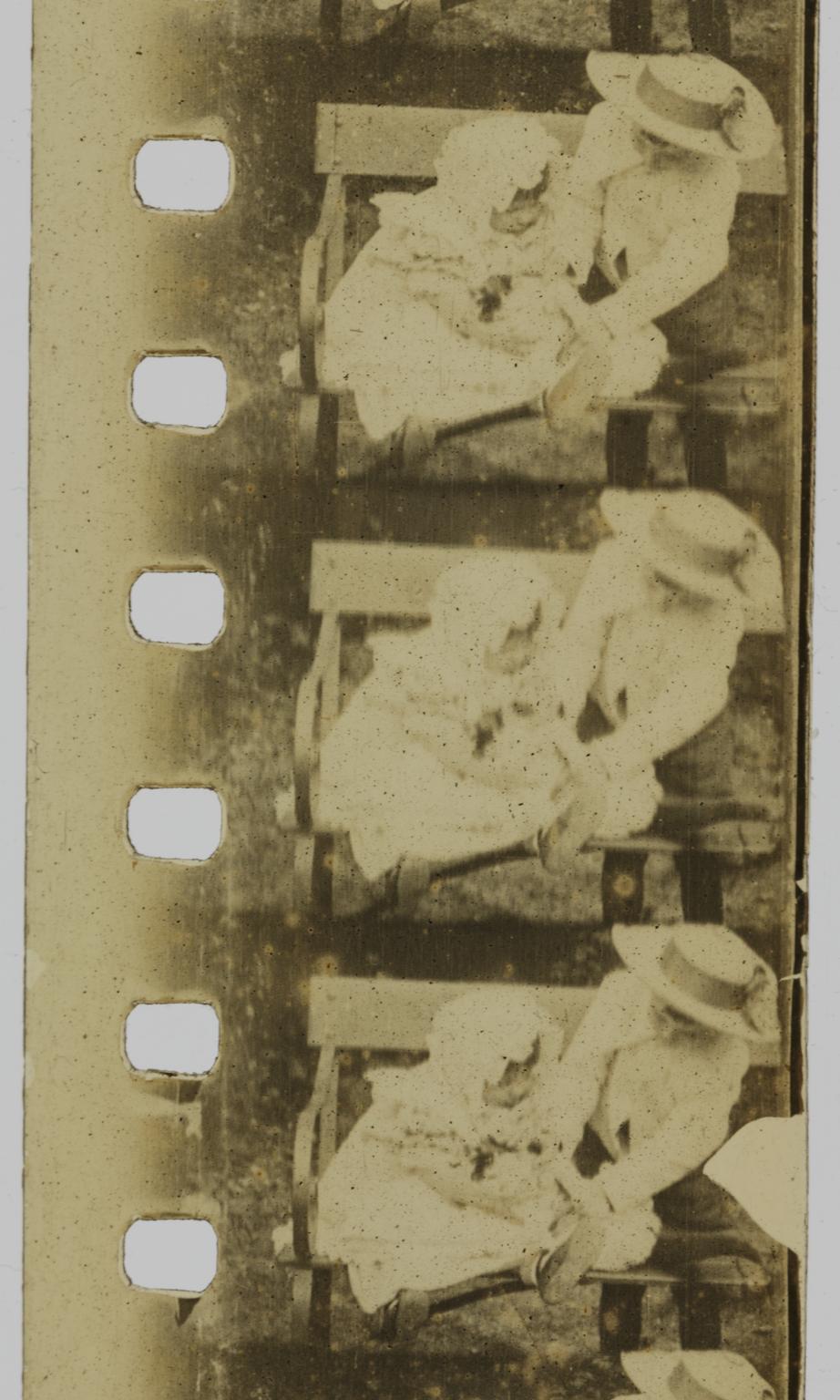
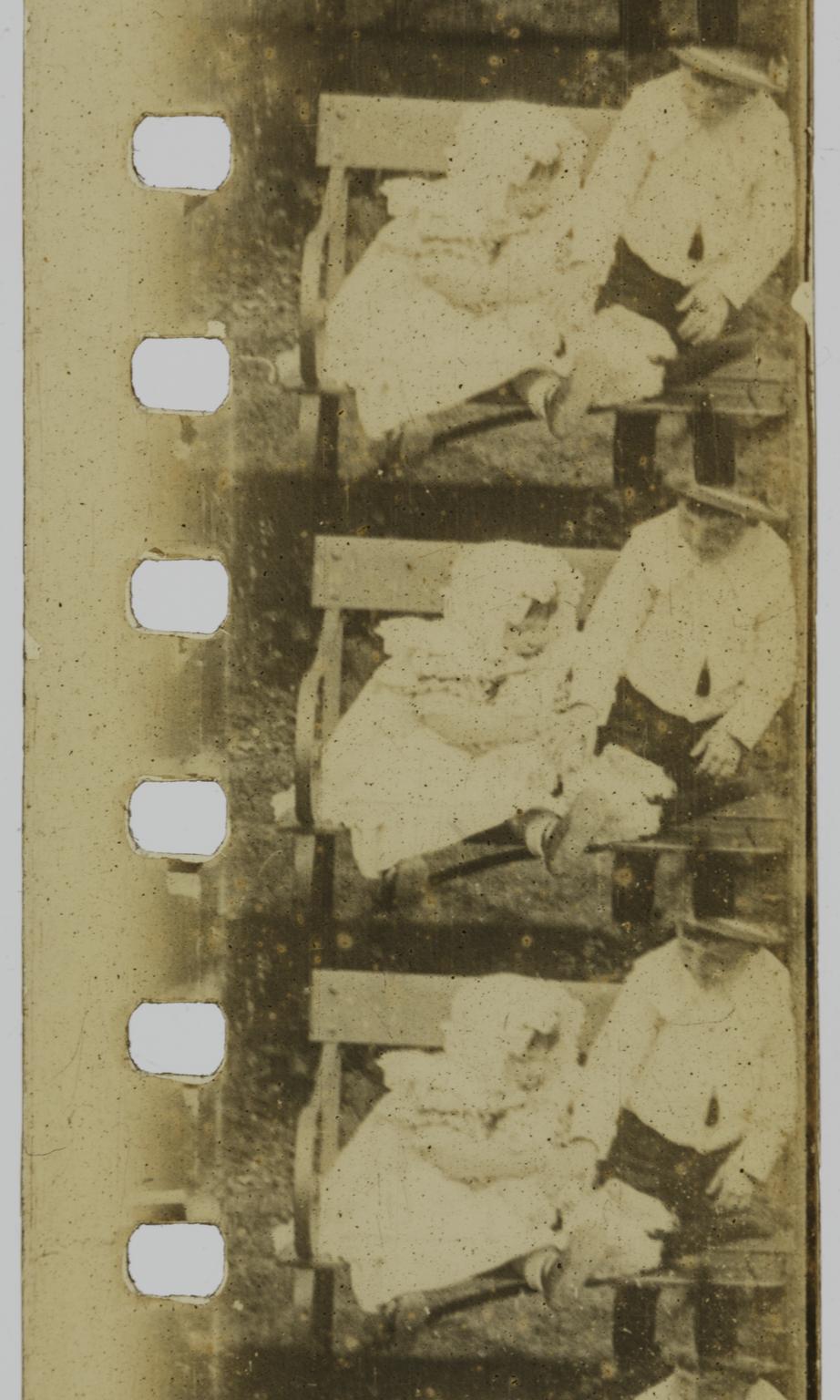
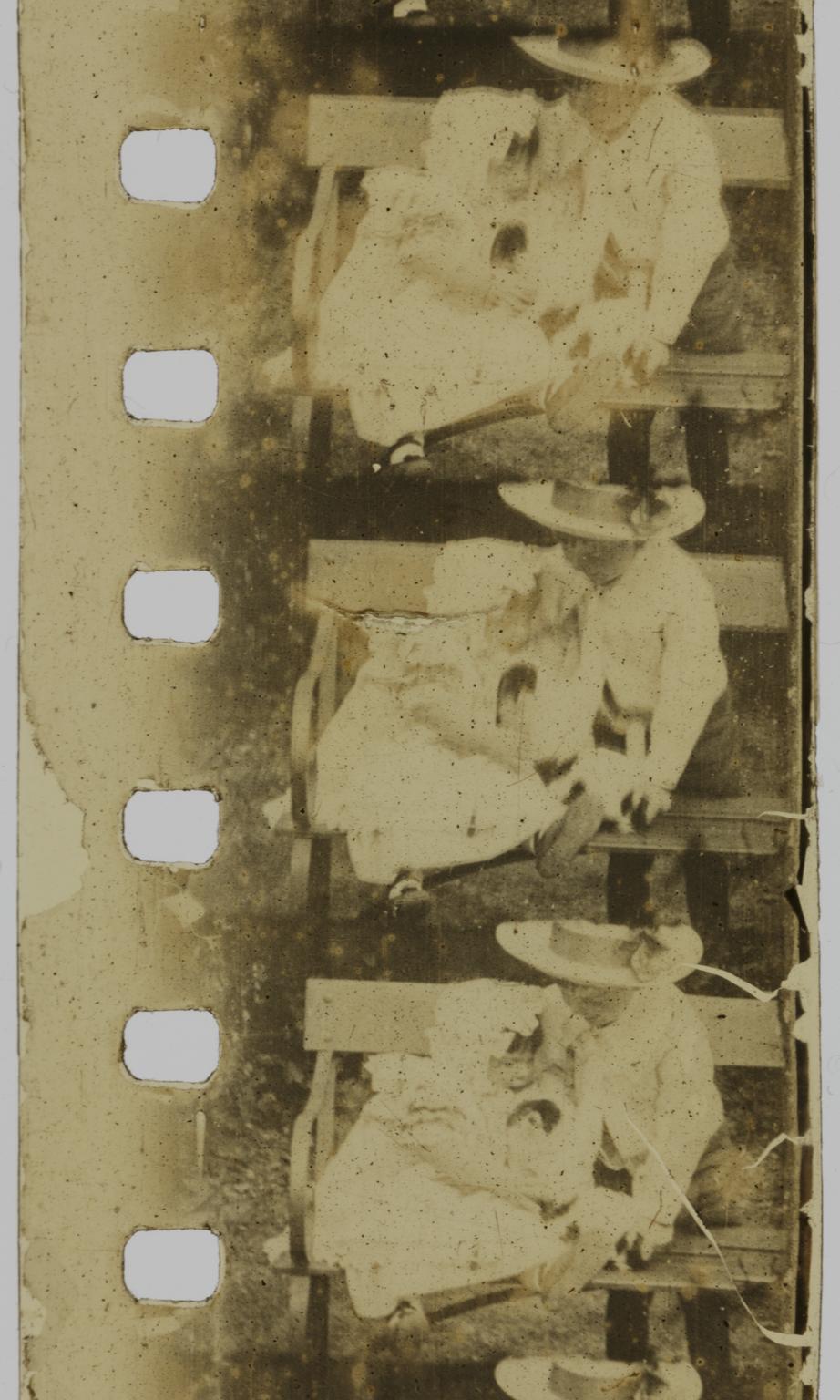
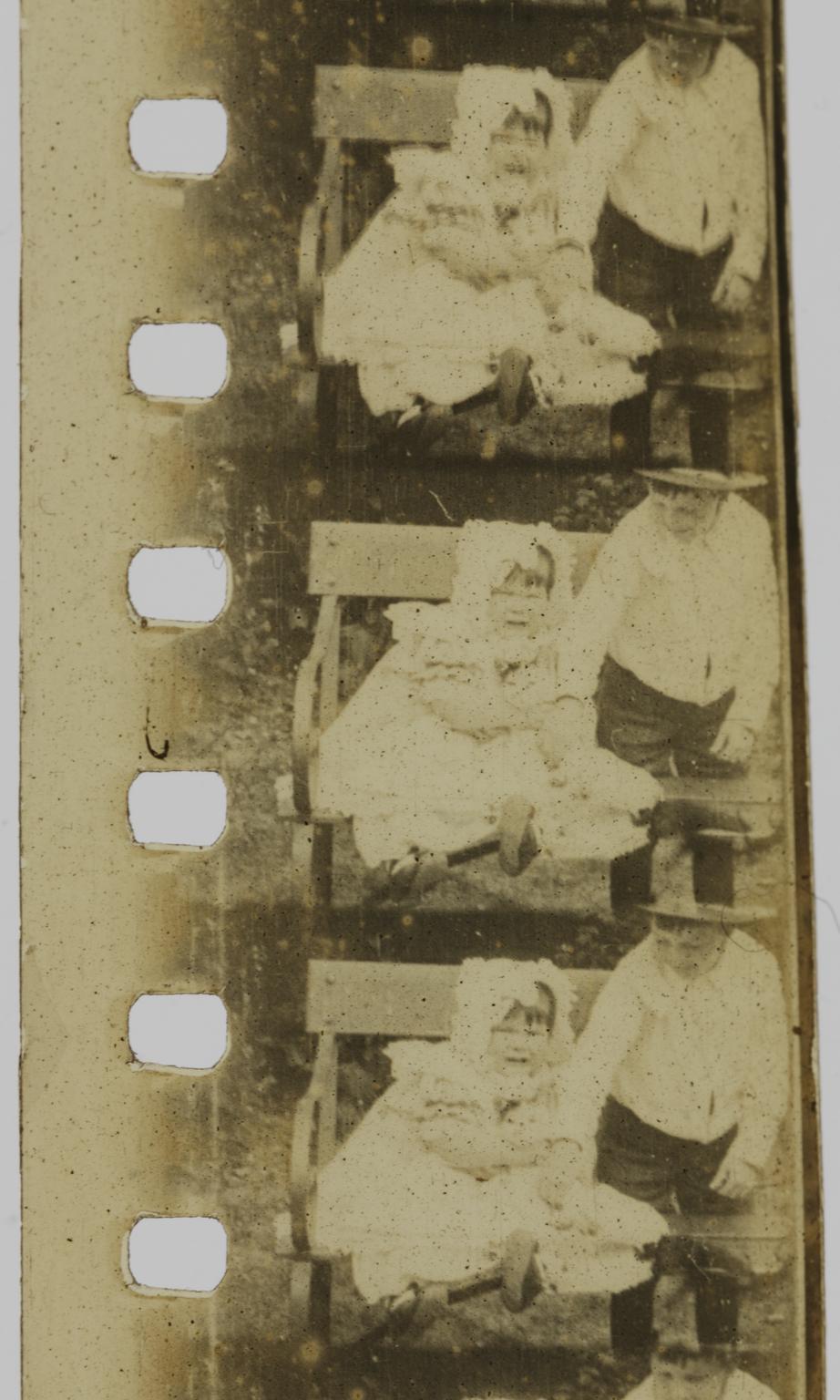
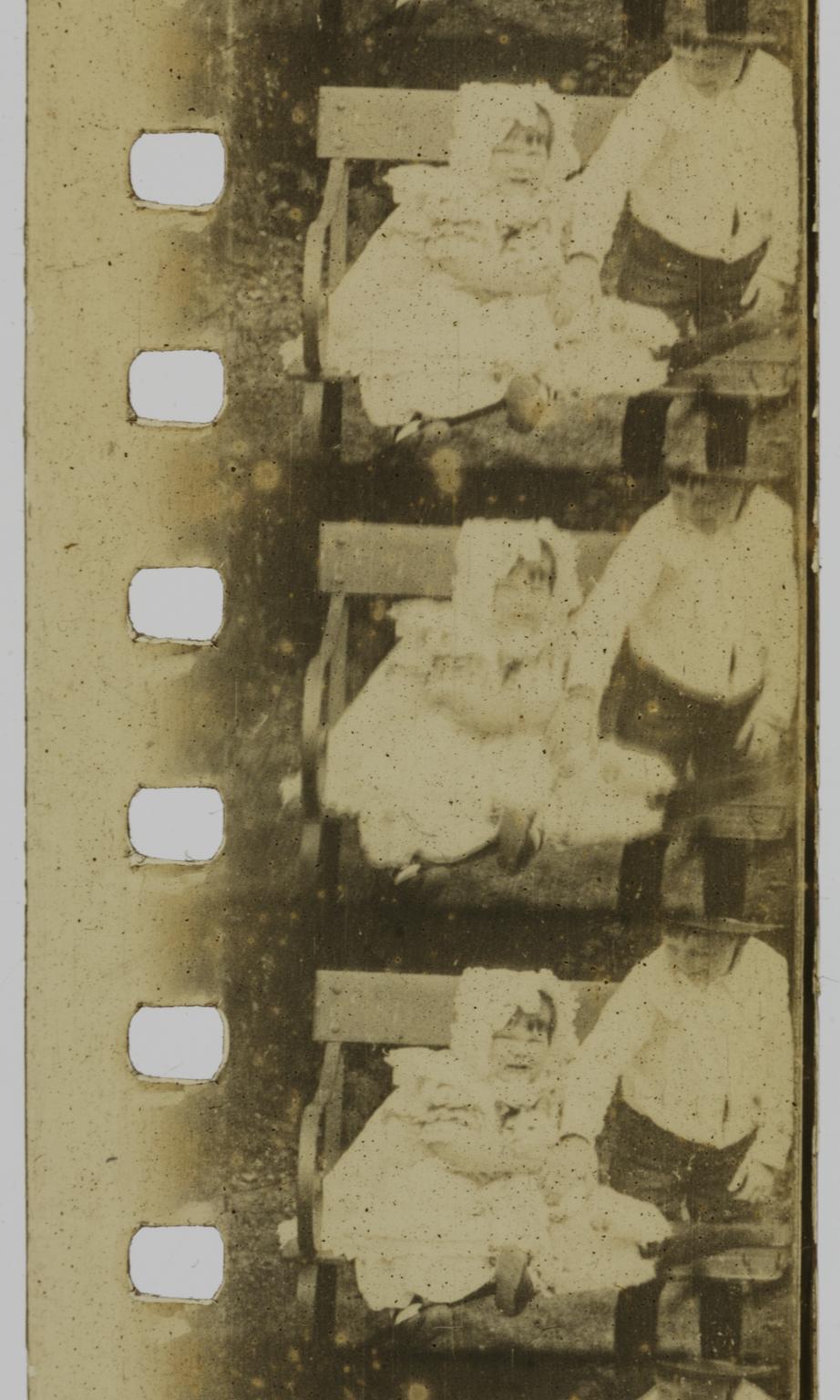
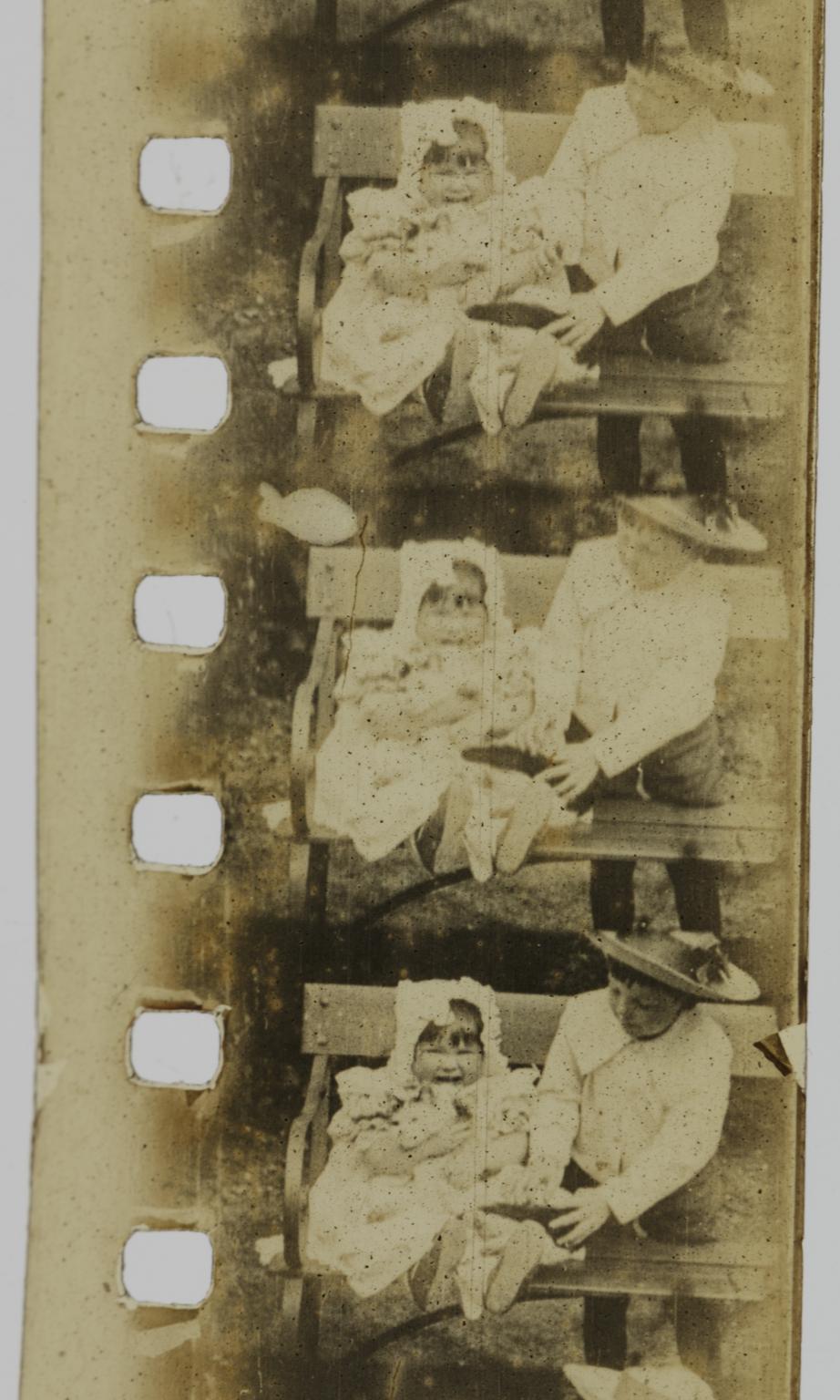
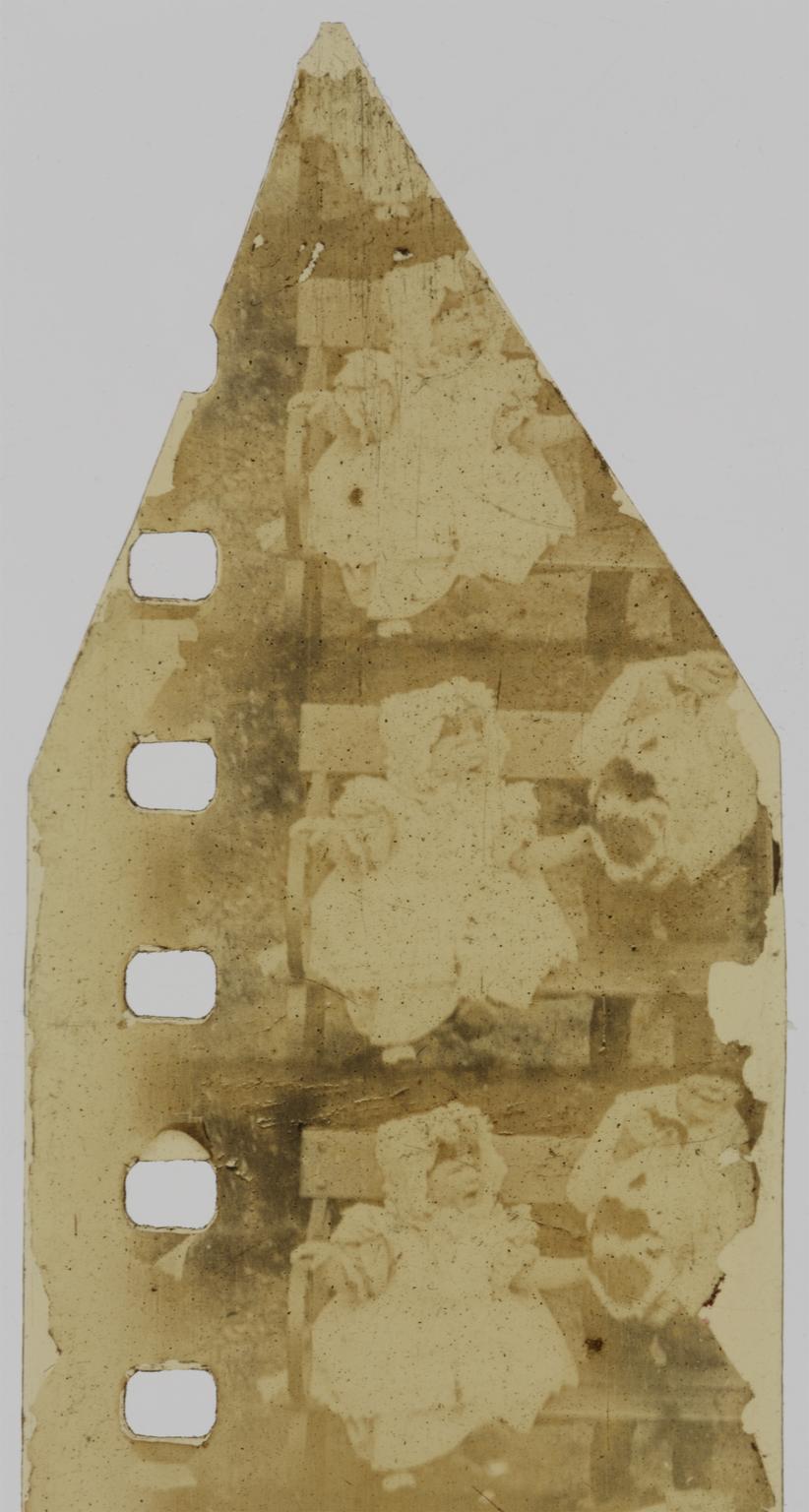
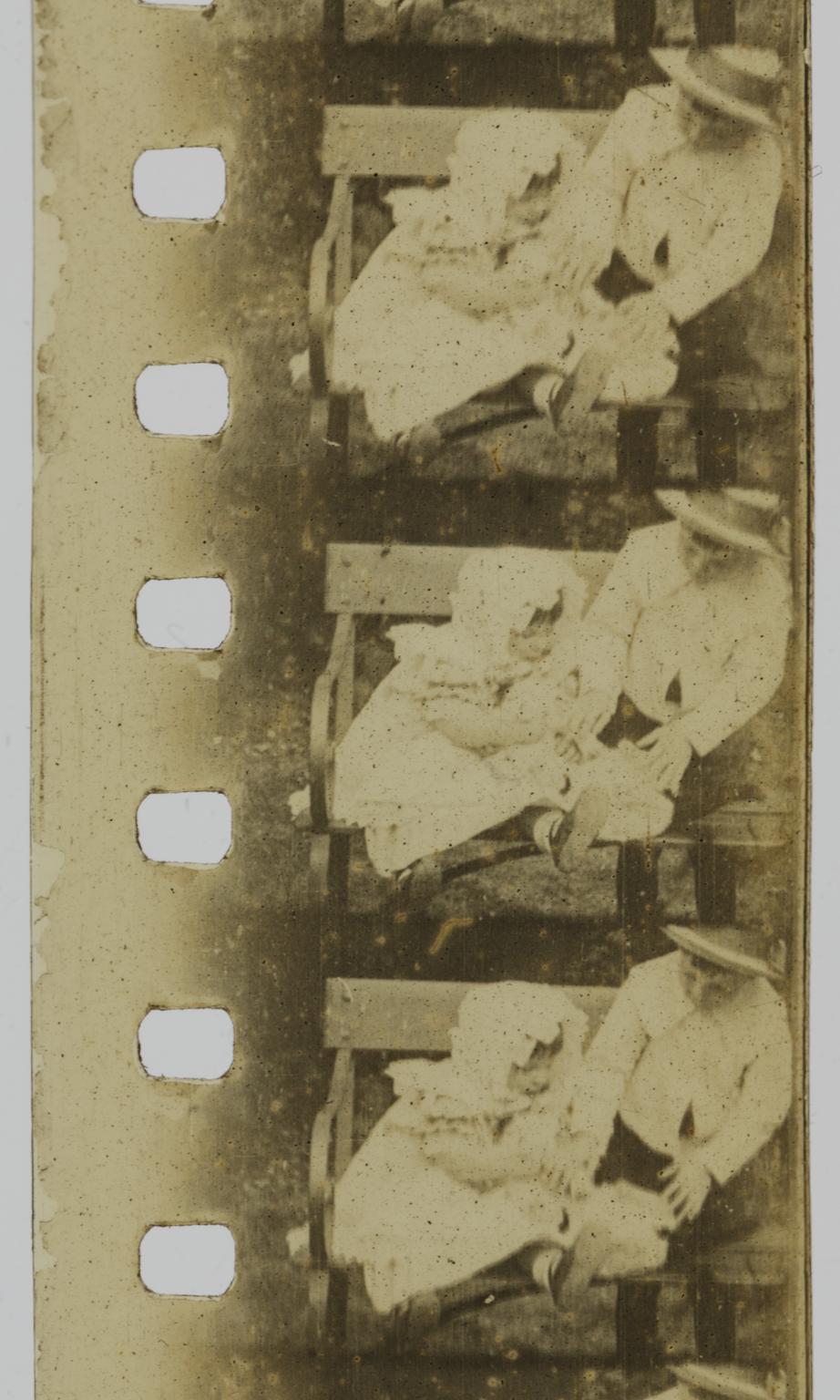
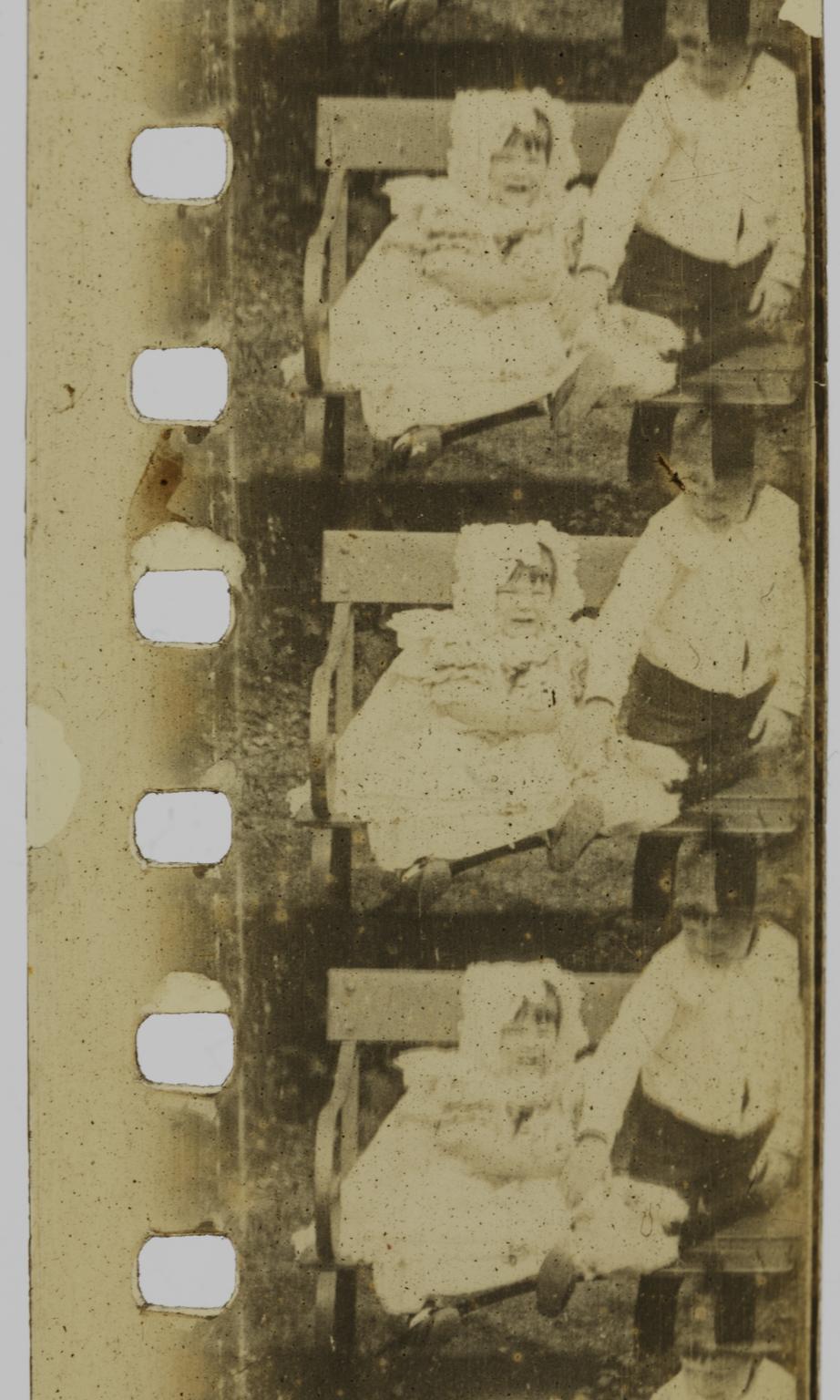
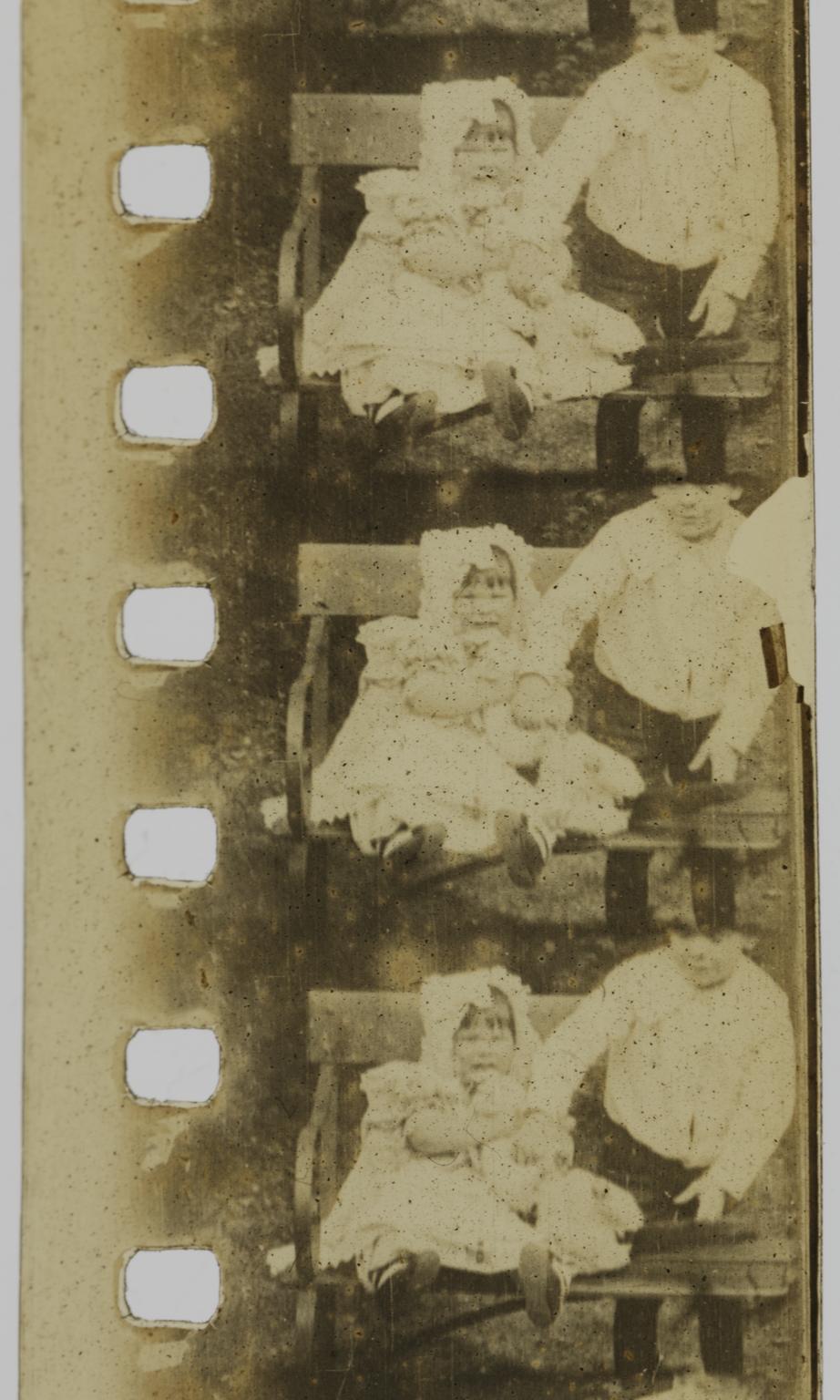
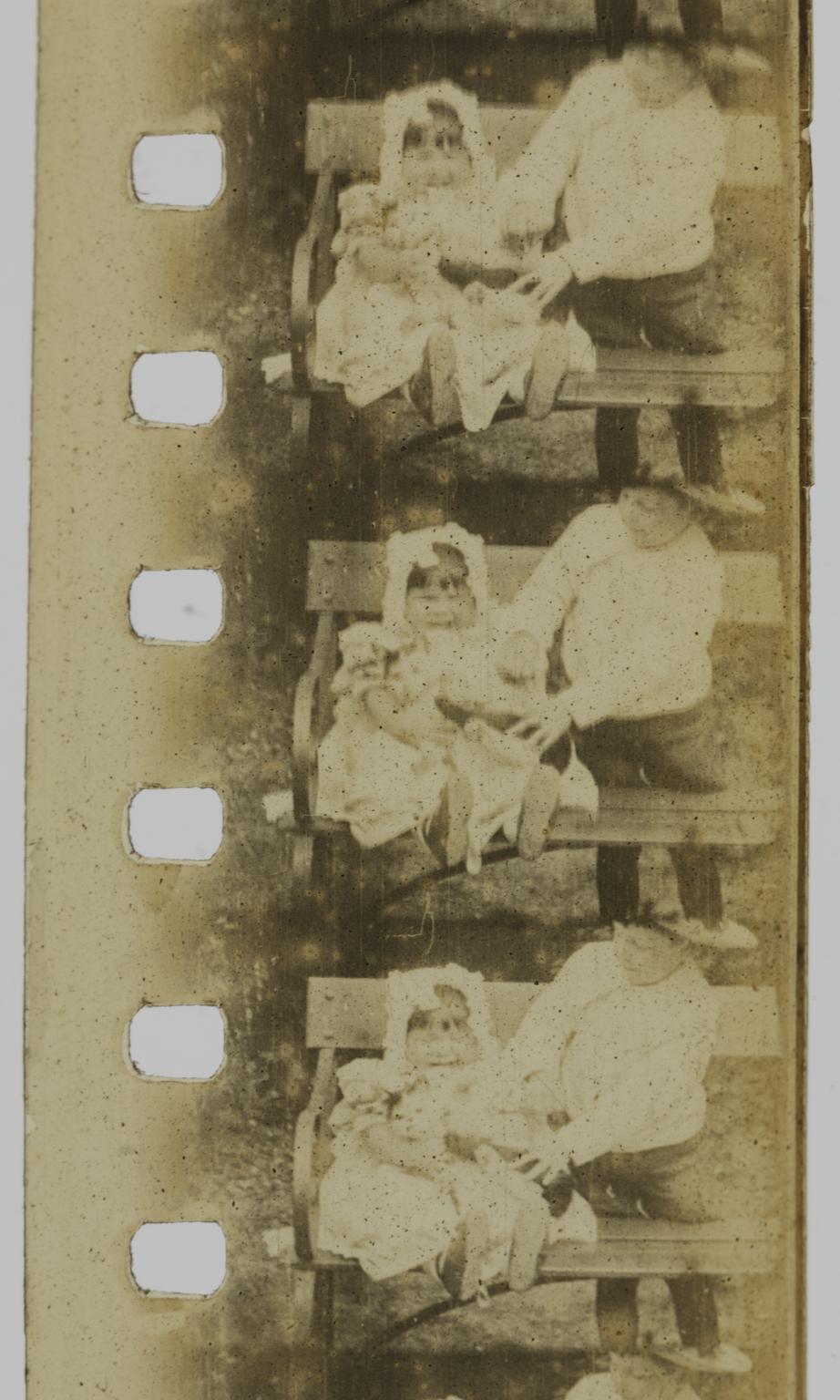
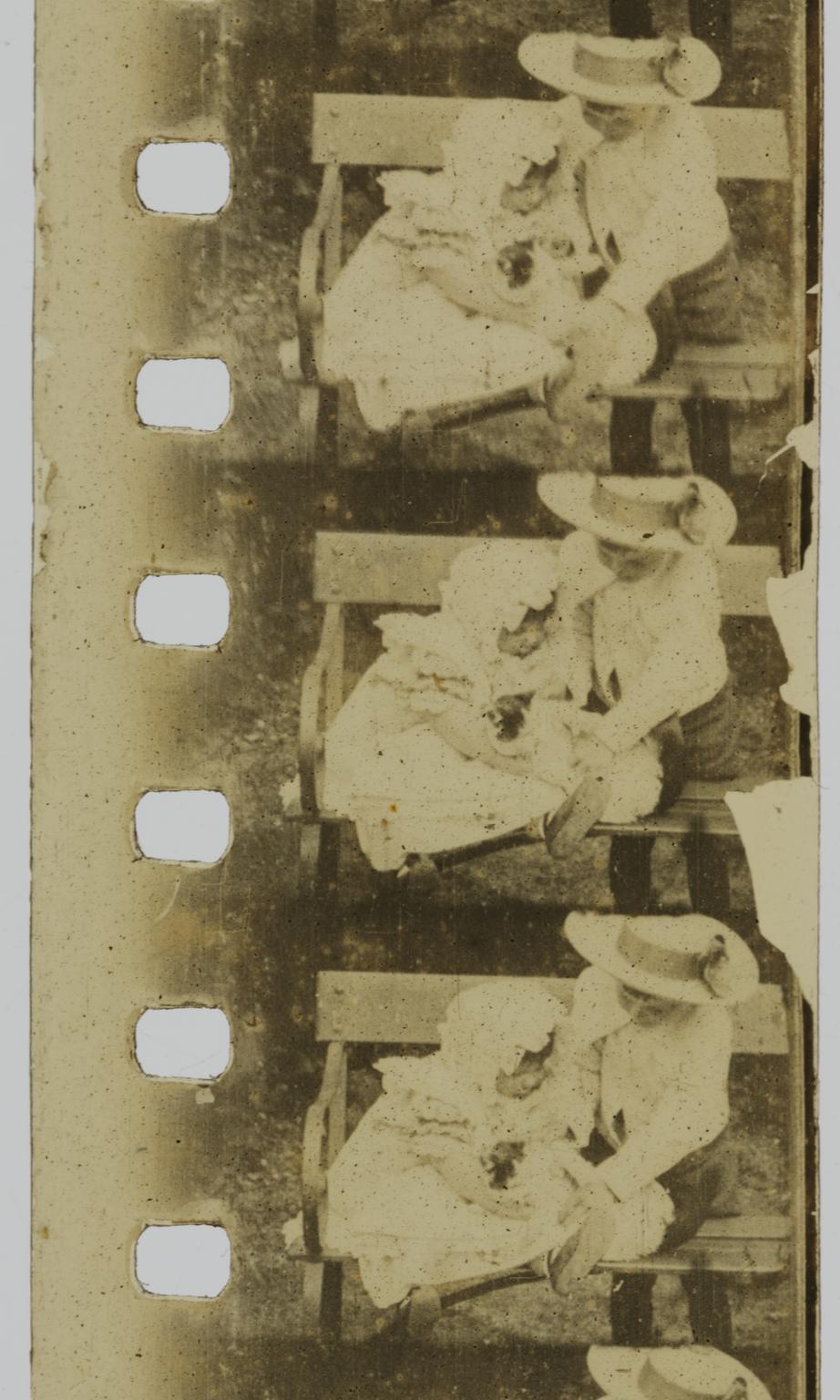
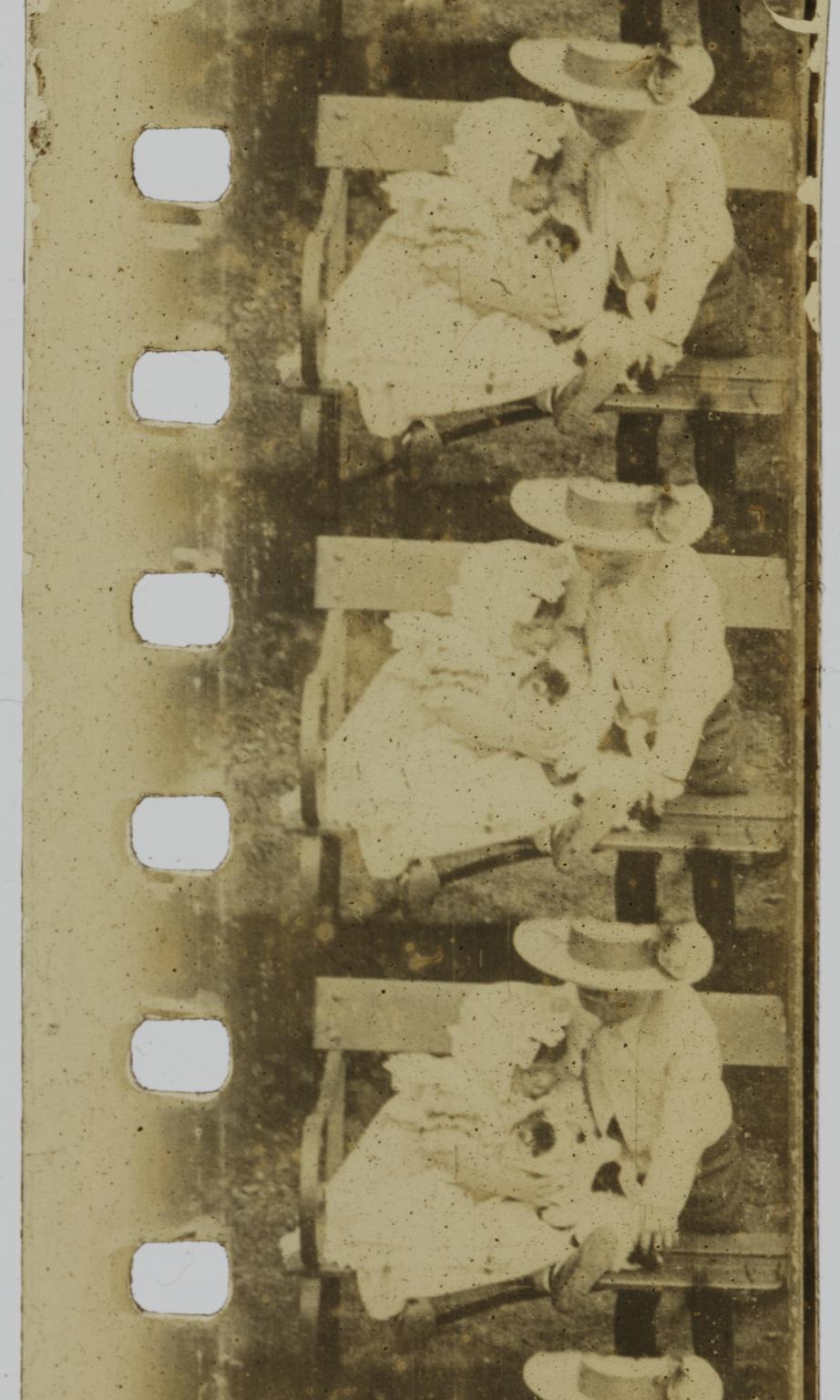
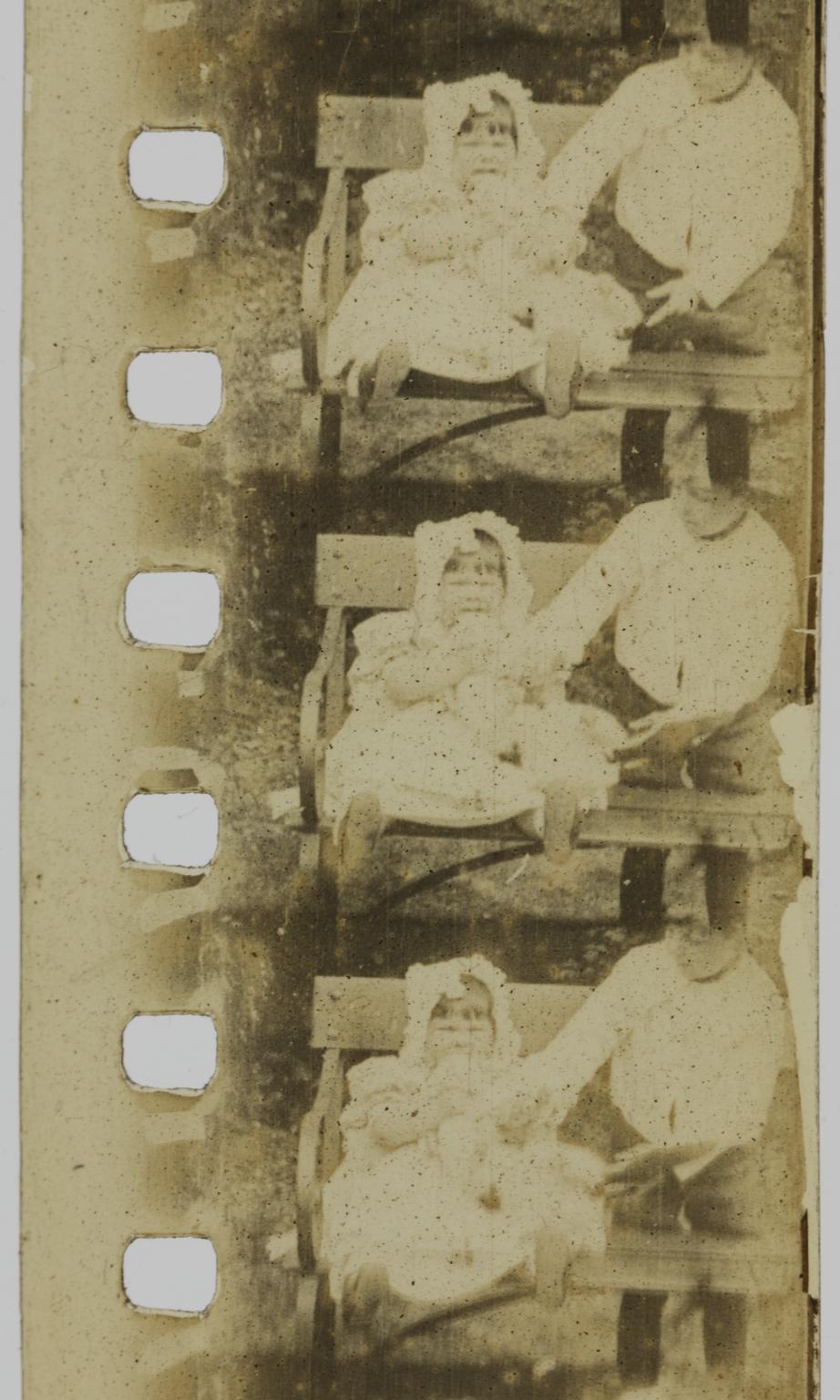
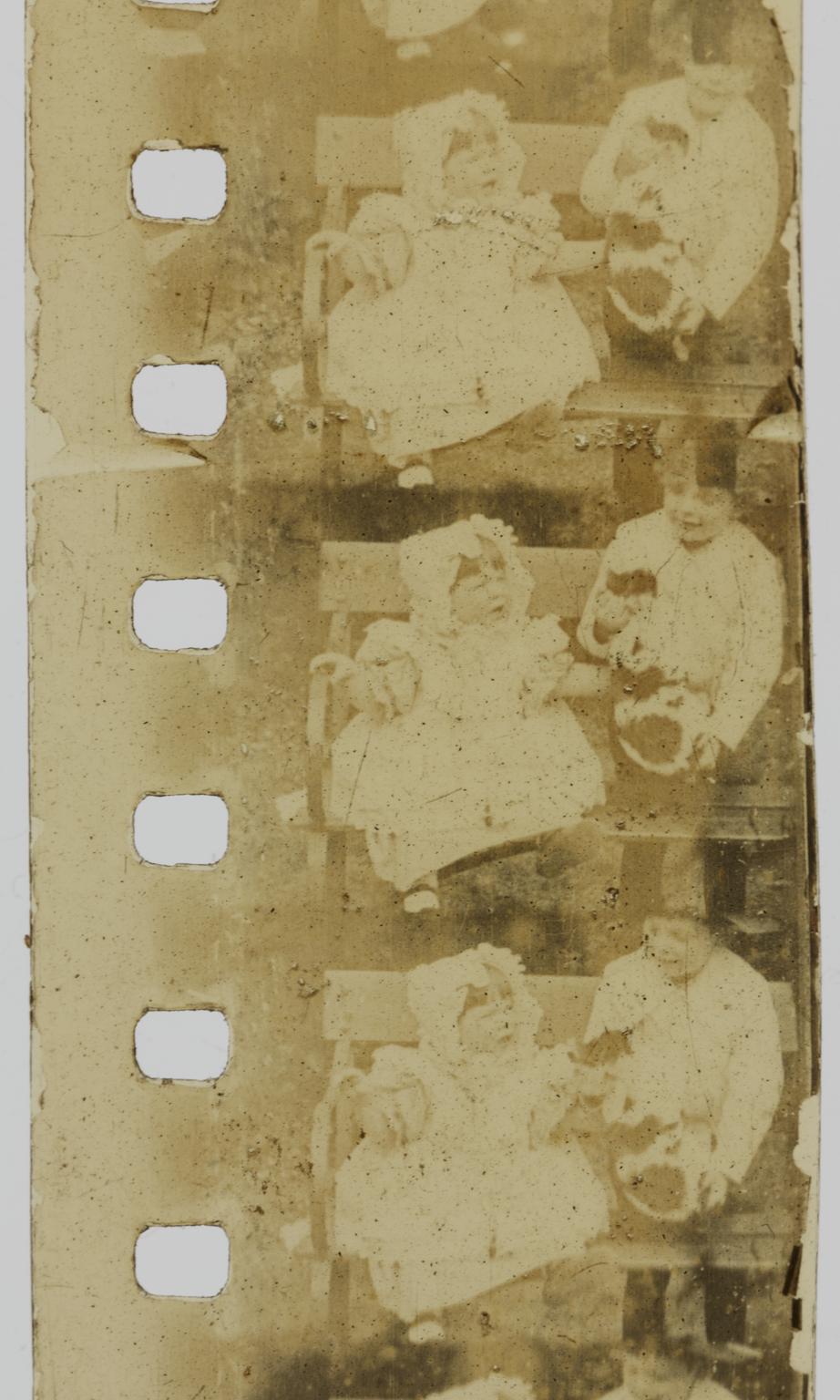
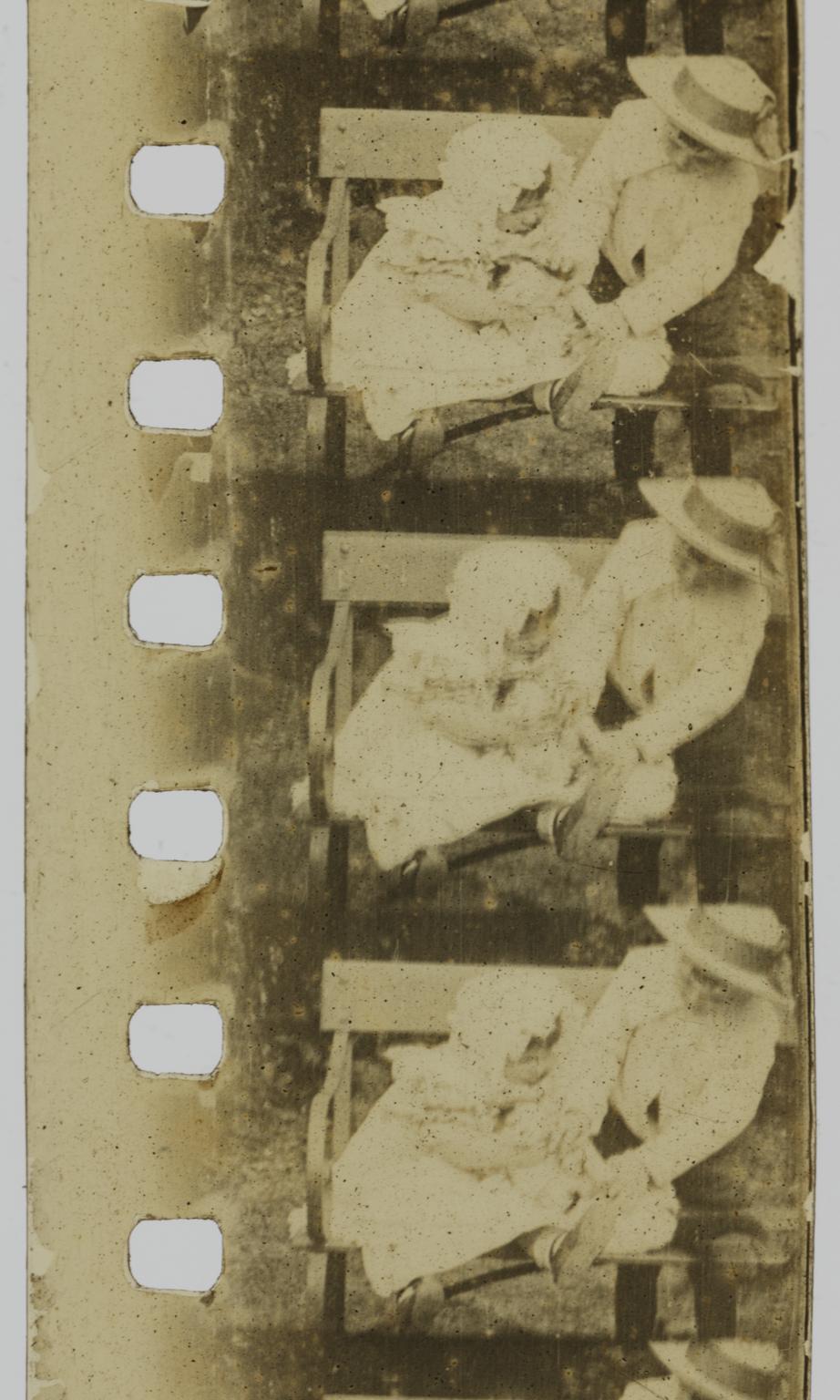
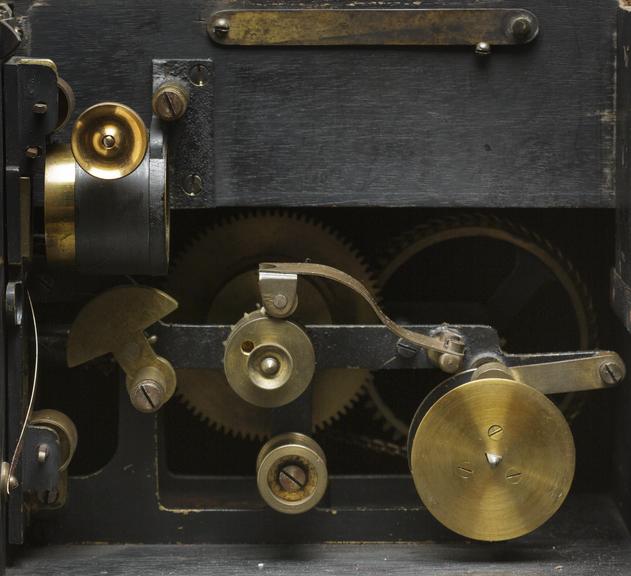
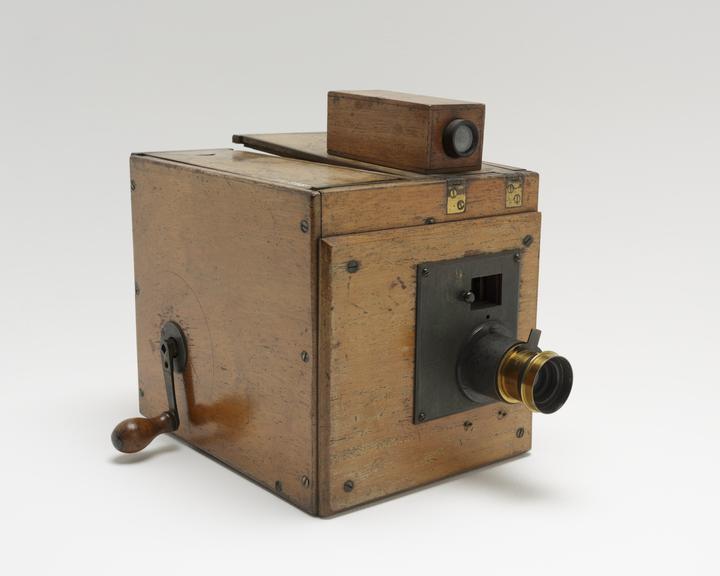
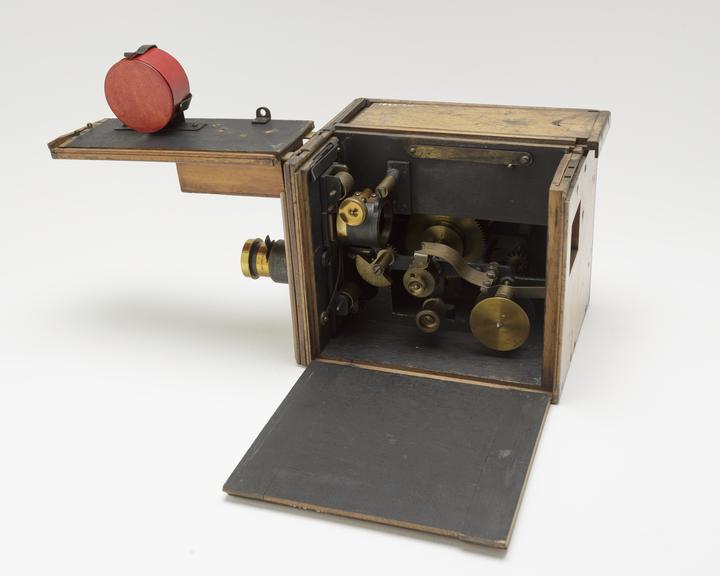
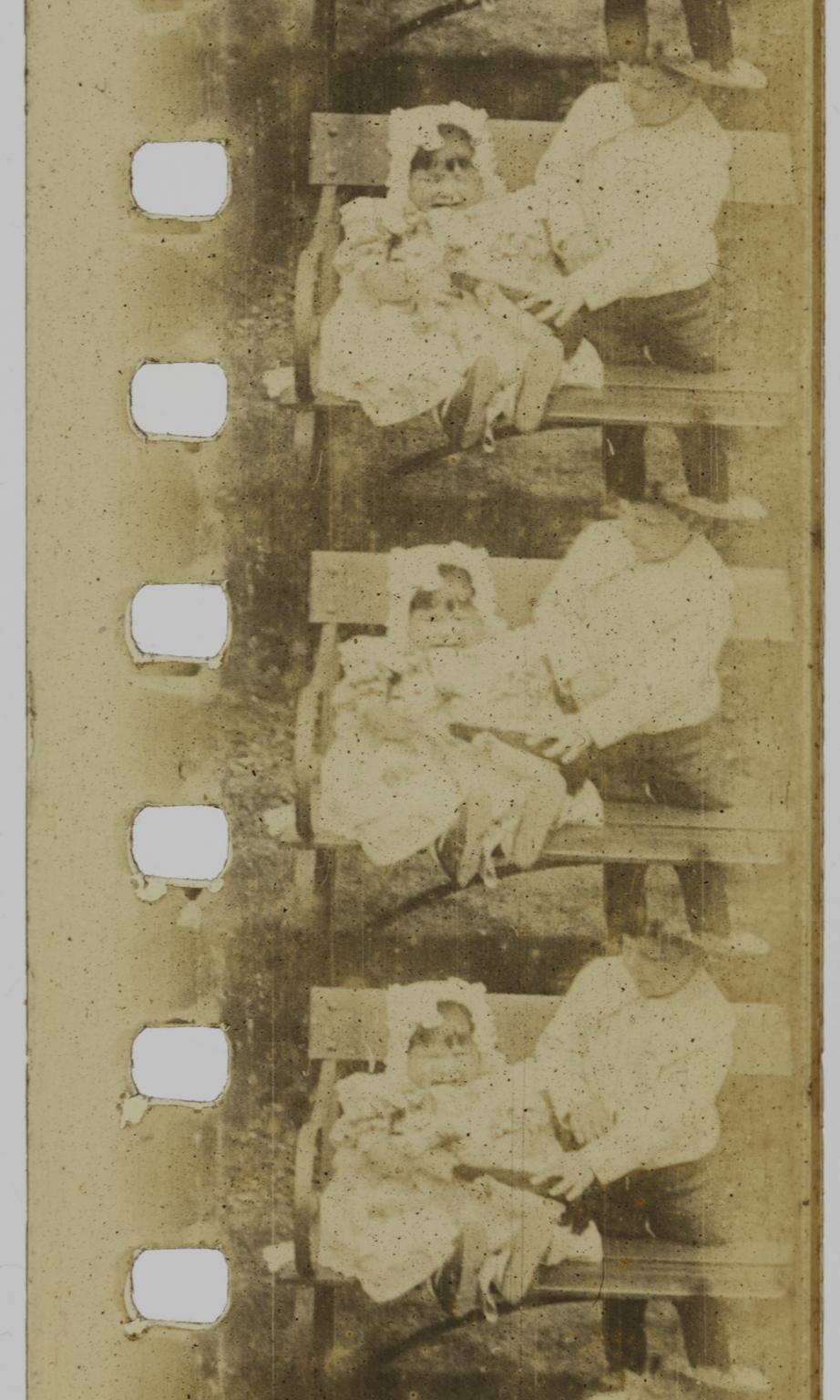
"Birtac" camera projector for 17.5mm film, made by Birt Acres in 1898; complete with handle, lens, two mantle holders and spool of positive film showing "Domestic Scene". The magazines hold 20 feet of film, sufficient for about 40 seconds of filming. The intermittent motion is of the 'dog' type.

Designed by the film pioneer, Birt Acres (1854-1918), this was the first piece of film-making apparatus intended for taking and projecting films principally for home use - the beginnings of what would become the amateur film market. It used 17.5mm film, which was produced by slitting standard 35mm film in half. the recommended turning speed was about 40 frames per second for which it was necessary to turn the handle at a steady rate of 3 revolutions per second. to help with this, a plumb bob was supplied of the correct length which when hung by its loop swung at the rate of 3 beats per second, helping to indicate the correct speed.

The Birtac was not successful. shortly after its announcement, a rival, the Biokam was announced in march 1899. this home movie outfit was marketed as a snap shot camera and enlarger as well as for moving pictures and was half the price of the Birtac.

Details

Category:
Cinematography
Object Number:
1946-311
Materials:
brass (copper, zinc alloy), glass and wood (unidentified)
Measurements:
whole: 2.6kg
type:
17.5 mm ciné camera/projector
credit:
The National Media Museum, Bradford

Parts

Birtac ciné camera projector for 17.5 mm film

Birtac ciné camera projector for 17.5 mm film

"Birtac" camera projector for 17.5mm. film, made by Birt Acres in 1898; with handle, lens, and two mantle holders

More

Designed by the film pioneer, Birt Acres (1854-1918), this was the first piece of film-making apparatus intended for taking and projecting films principally for home use - the beginnings of what would become the amateur film market. It used 17.5mm film, which was produced by slitting standard 35mm film in half. the recommended turning speed was about 40 frames per second for which it was necessary to turn the handle at a steady rate of 3 revolutions per second. to help with this, a plumb bob was supplied of the correct length which when hung by its loop swung at the rate of 3 beats per second, helping to indicate the correct speed.

The Birtac was not successful. shortly after its announcement, a rival, the Biokam was announced in march 1899. this home movie outfit was marketed as a snap shot camera and enlarger as well as for moving pictures and was half the price of the Birtac.

Measurements:
overall: 150 mm x 150 mm x 200 mm, 2.6 kg
Materials:
brass (copper, zinc alloy) , glass and wood (unidentified)
Object Number:
1946-311/1
type:
17.5 mm ciné camera/projector

Birtac 17.5 mm ciné film spool

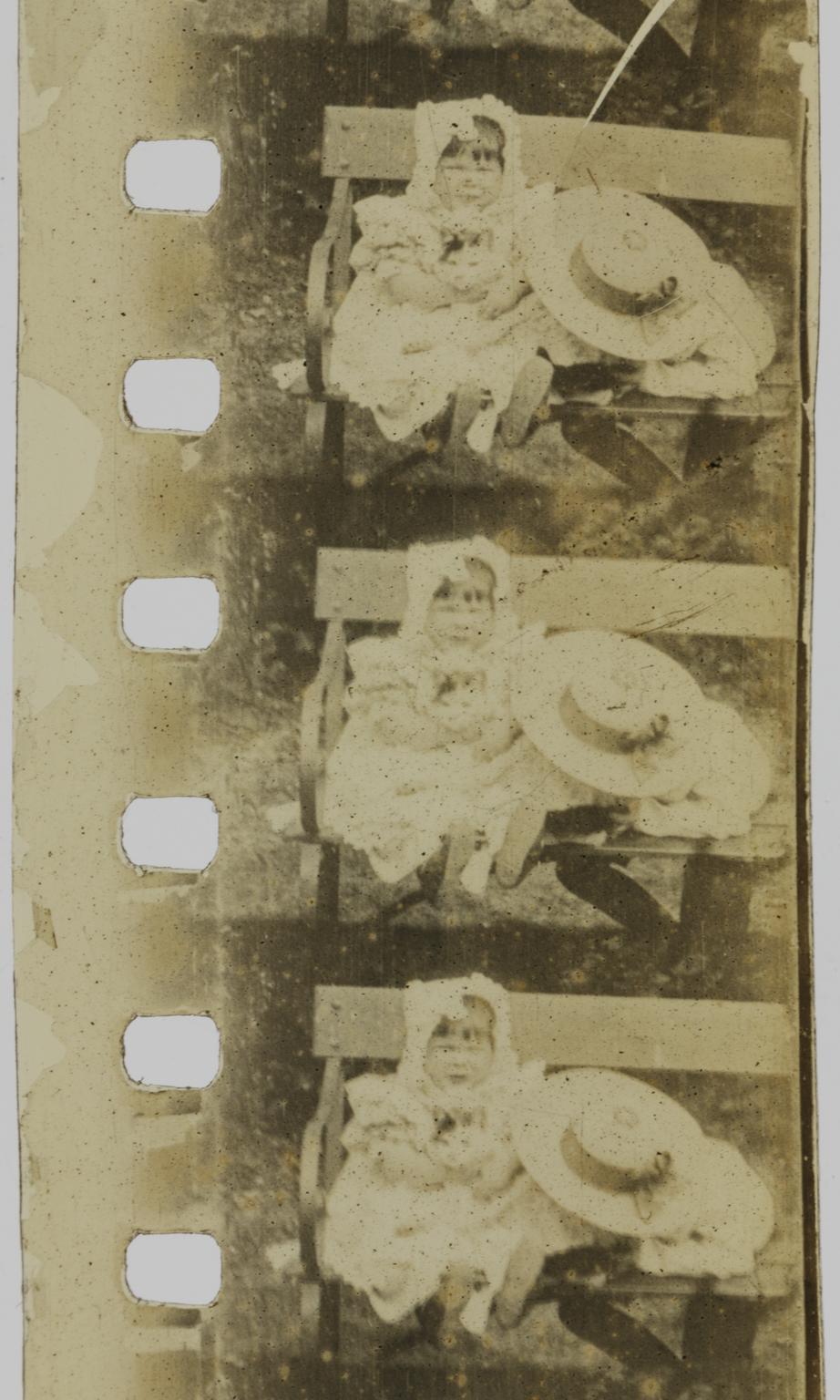
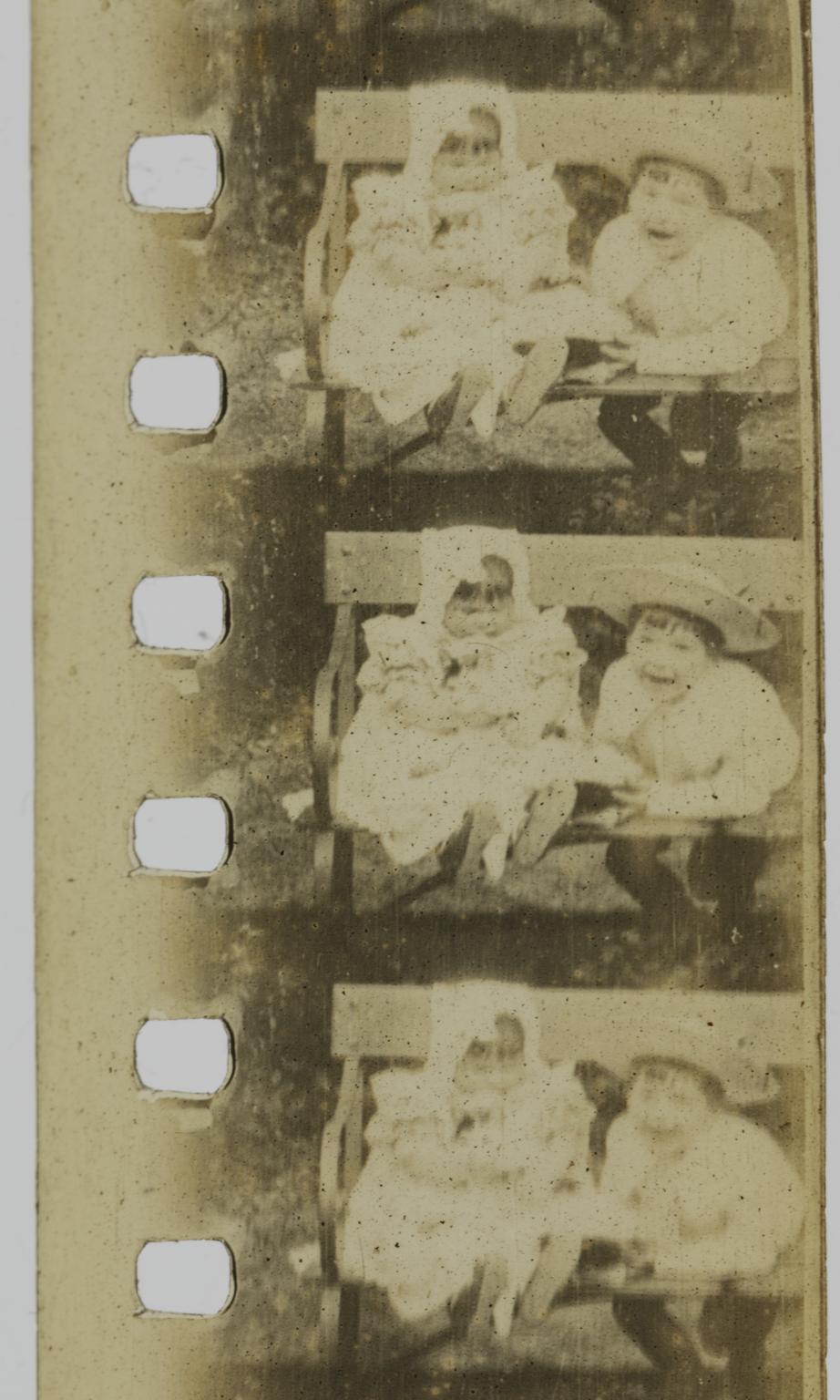
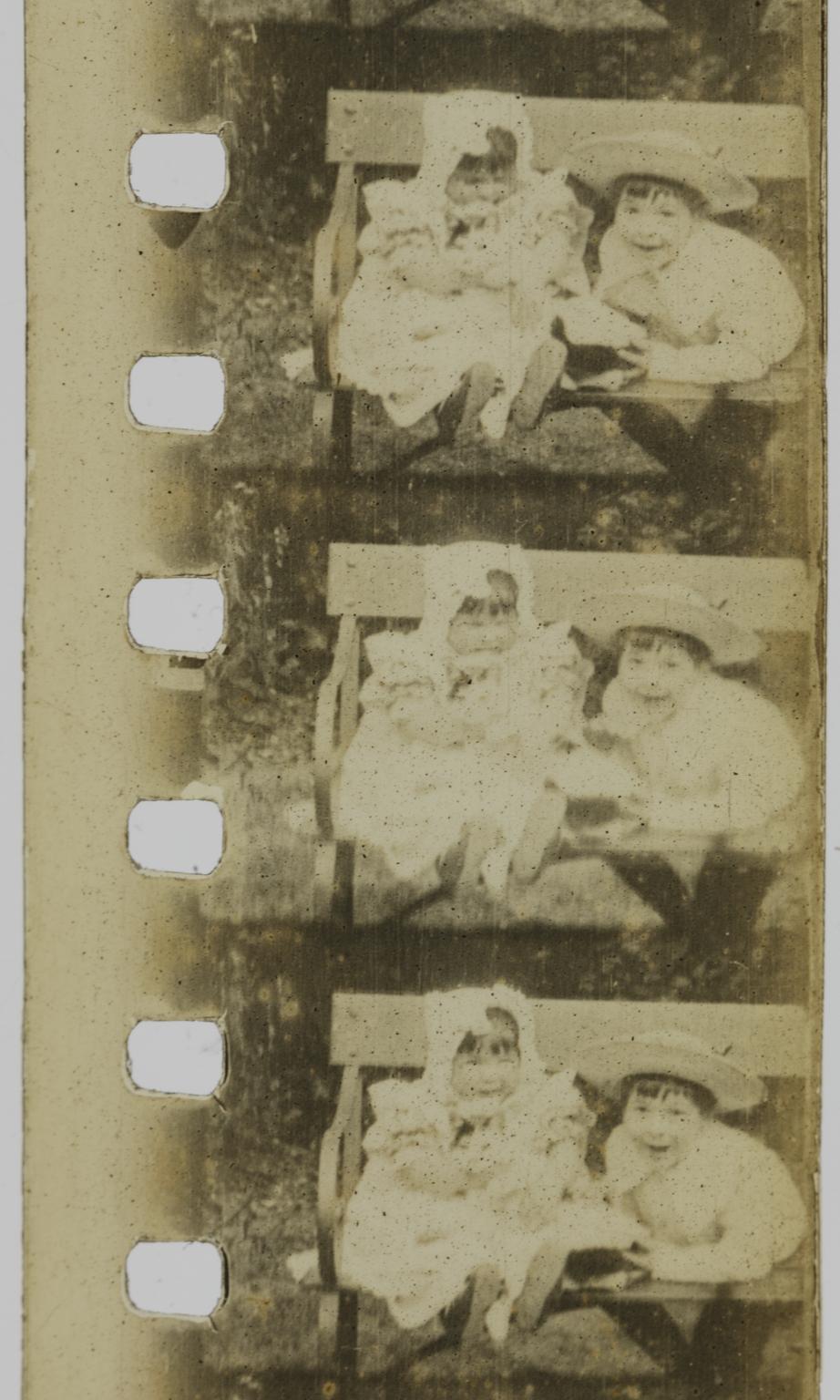
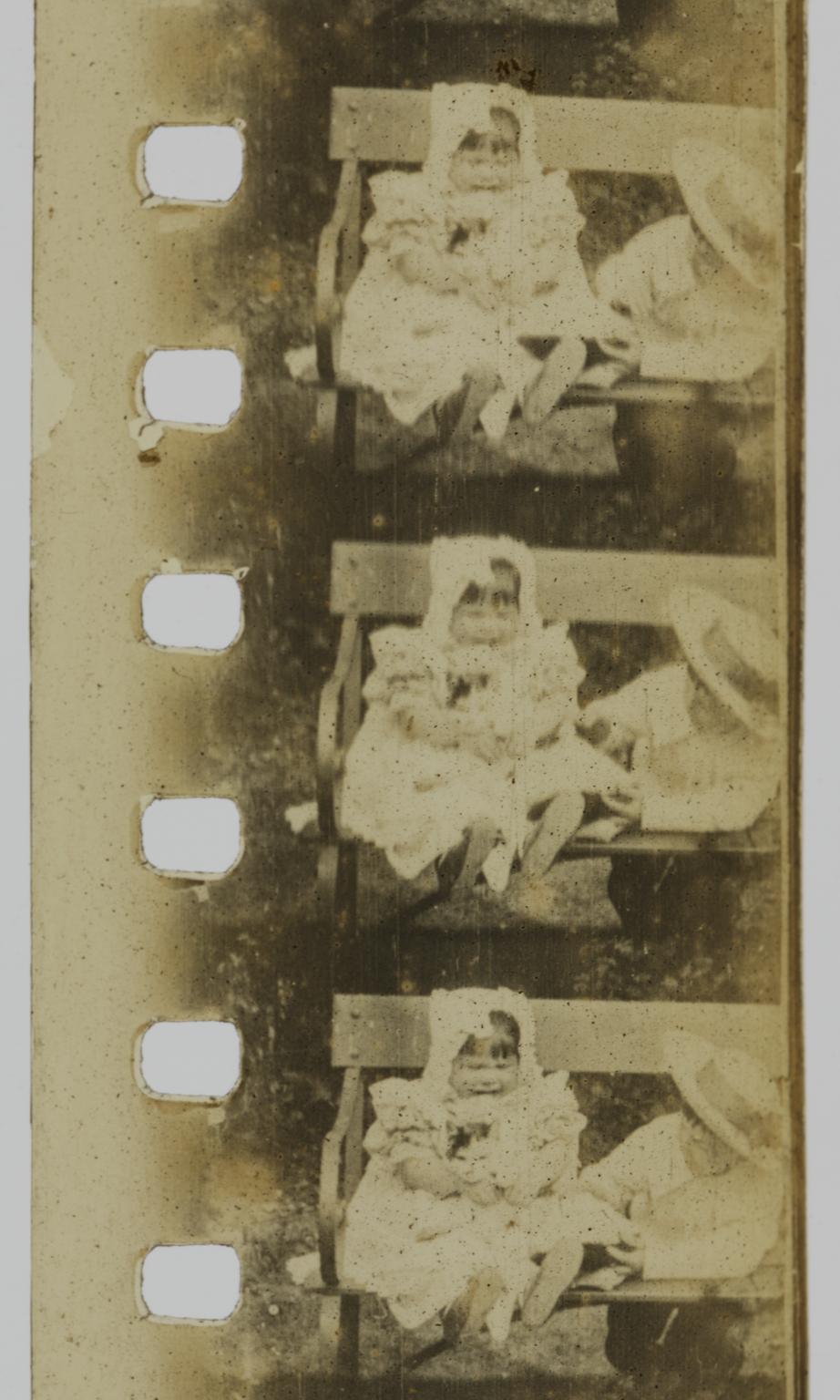
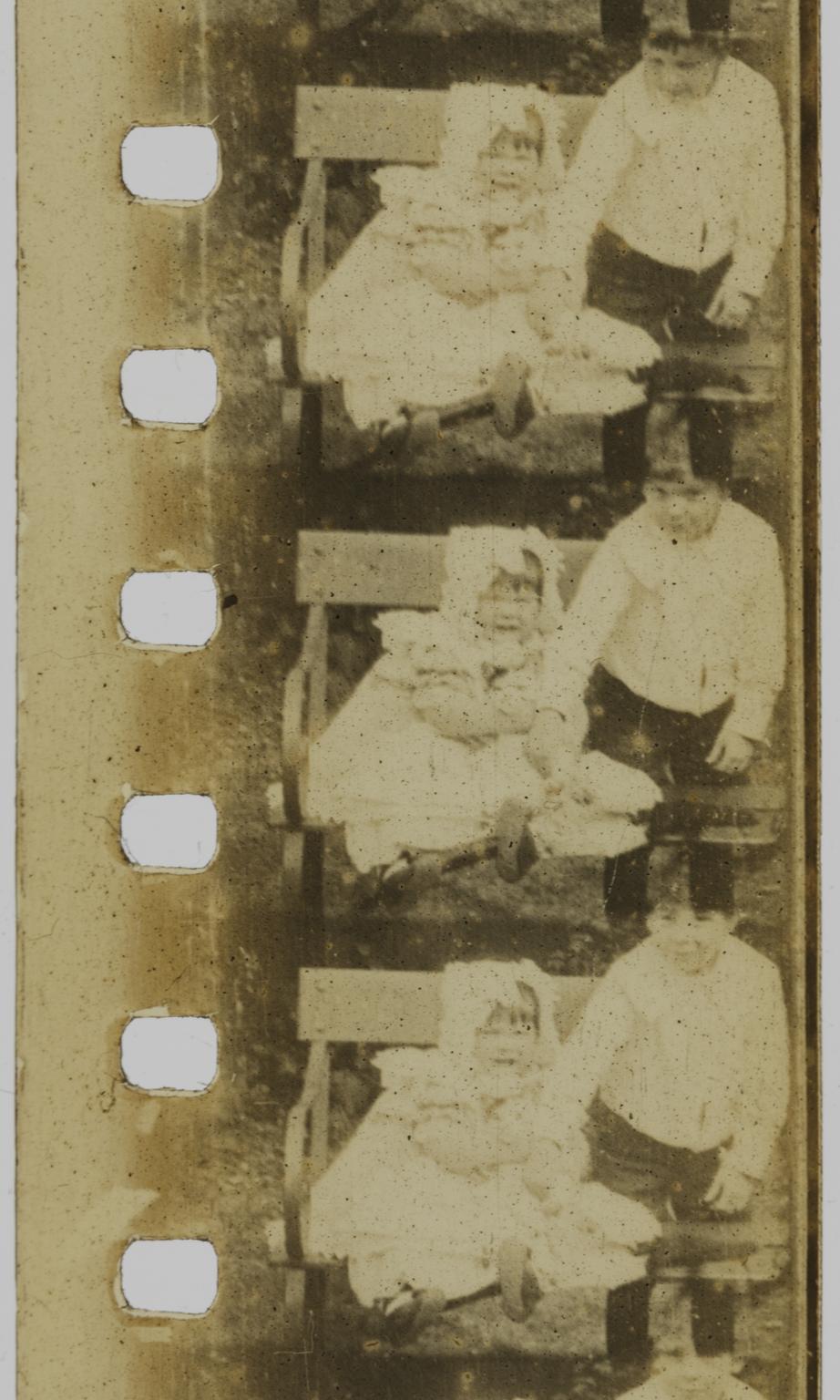
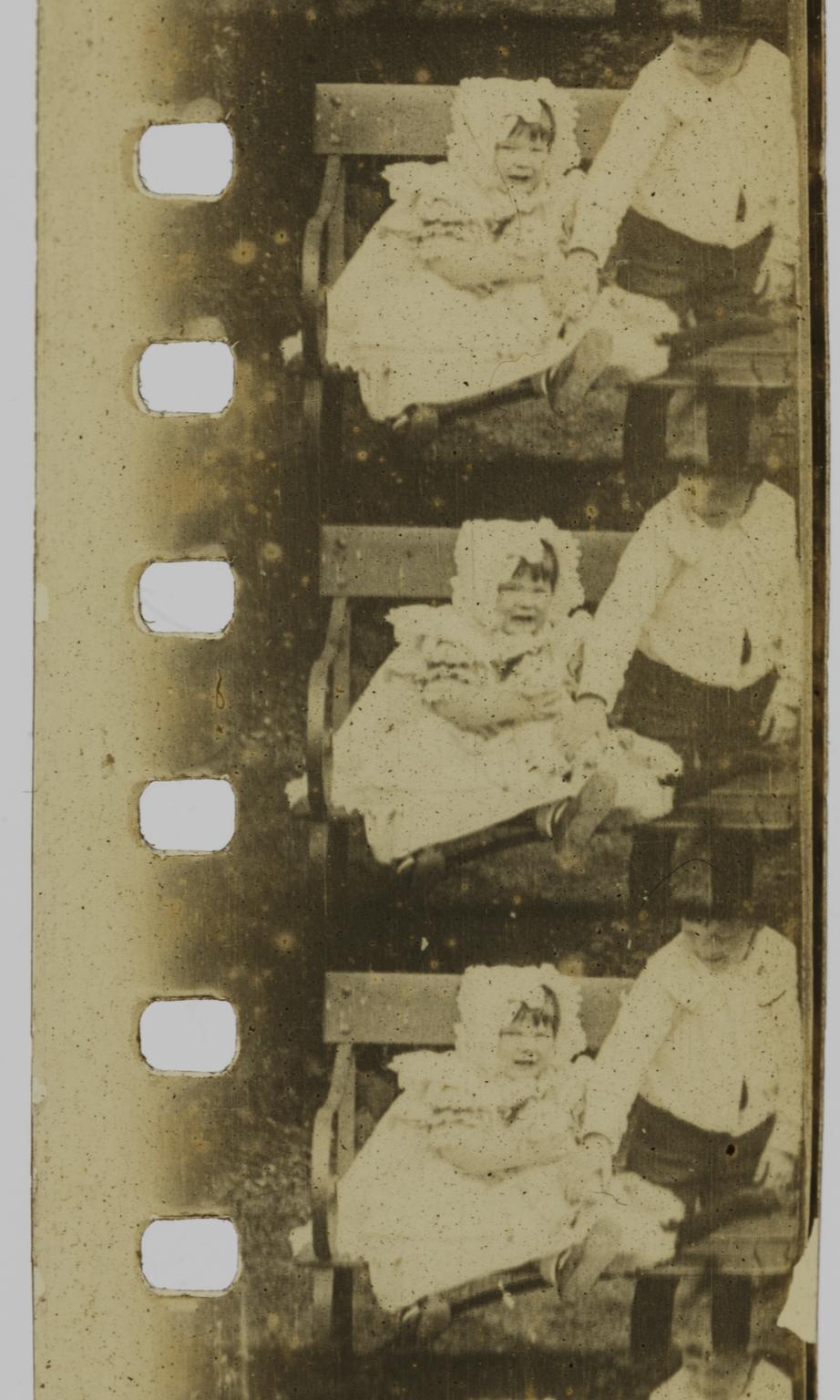
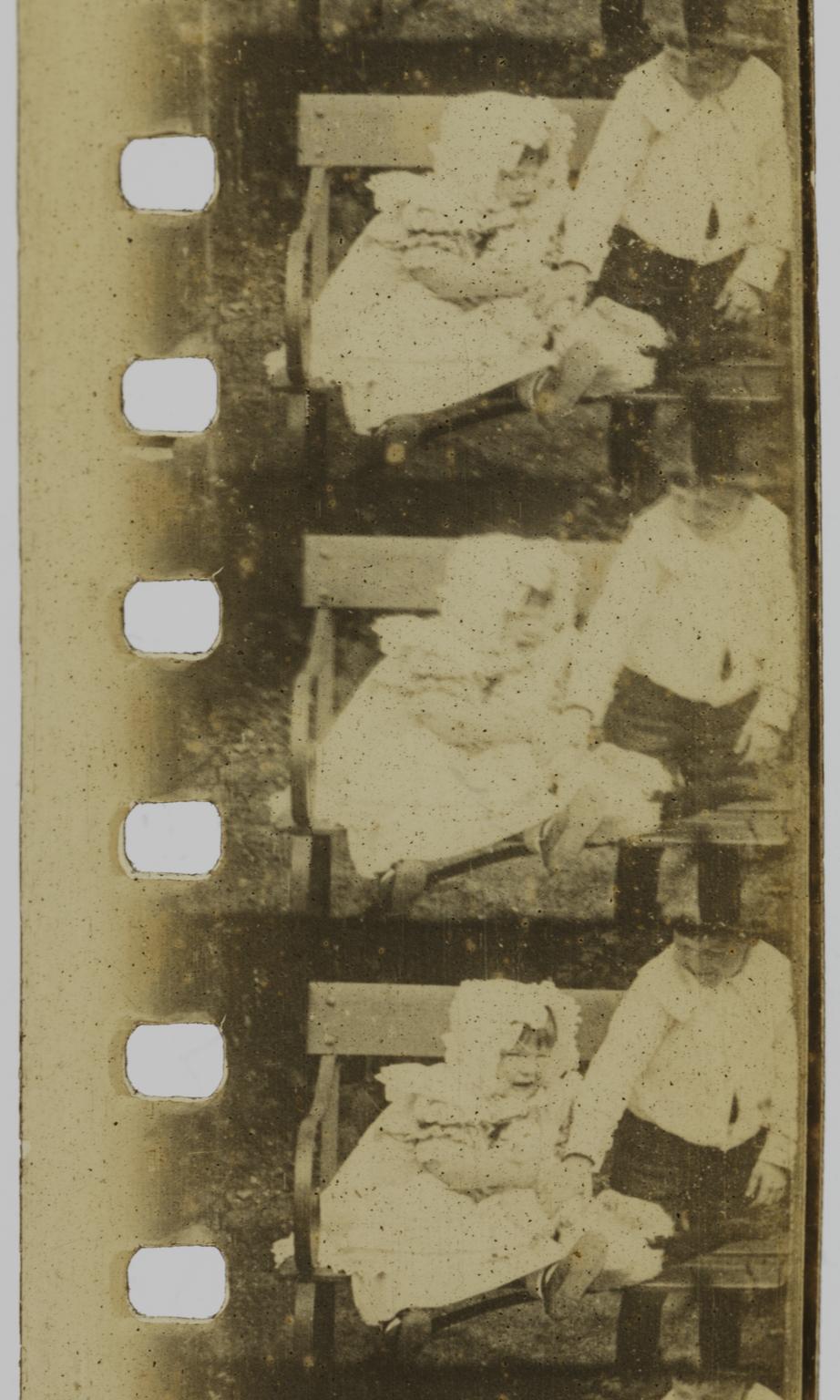
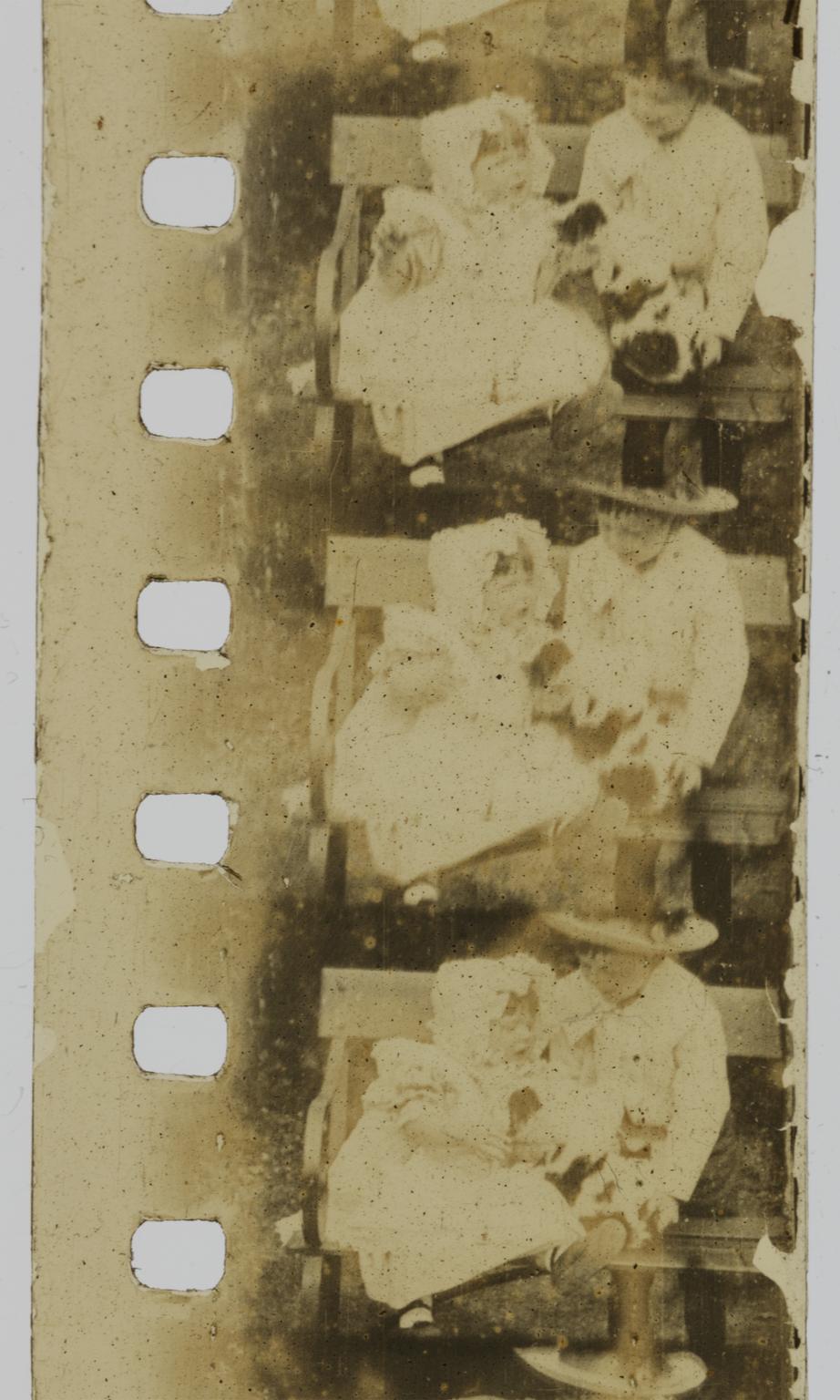
Spool of film associated with "Birtac" camera/projector for 17.5mm. film, made by Birt Acres in 1898, showing the Acres children, one holding a cat.

More

Designed by the film pioneer, Birt Acres (1854-1918), this was the first piece of film-making apparatus intended for taking and projecting films principally for home use - the beginnings of what would become the amateur film market. It used 17.5mm film, which was produced by slitting standard 35mm film in half. the recommended turning speed was about 40 frames per second for which it was necessary to turn the handle at a steady rate of 3 revolutions per second. to help with this, a plumb bob was supplied of the correct length which when hung by its loop swung at the rate of 3 beats per second, helping to indicate the correct speed.

The Birtac was not successful. shortly after its announcement, a rival, the Biokam was announced in march 1899. this home movie outfit was marketed as a snap shot camera and enlarger as well as for moving pictures and was half the price of the Birtac.

Measurements:
overall: 150 mm x 150 mm x 200 mm, 2.6 kg
Materials:
cellulose nitrate
Object Number:
1946-311/2
type:
17.5 mm ciné film
Image ©
The Board of Trustees of the Science Museum, London