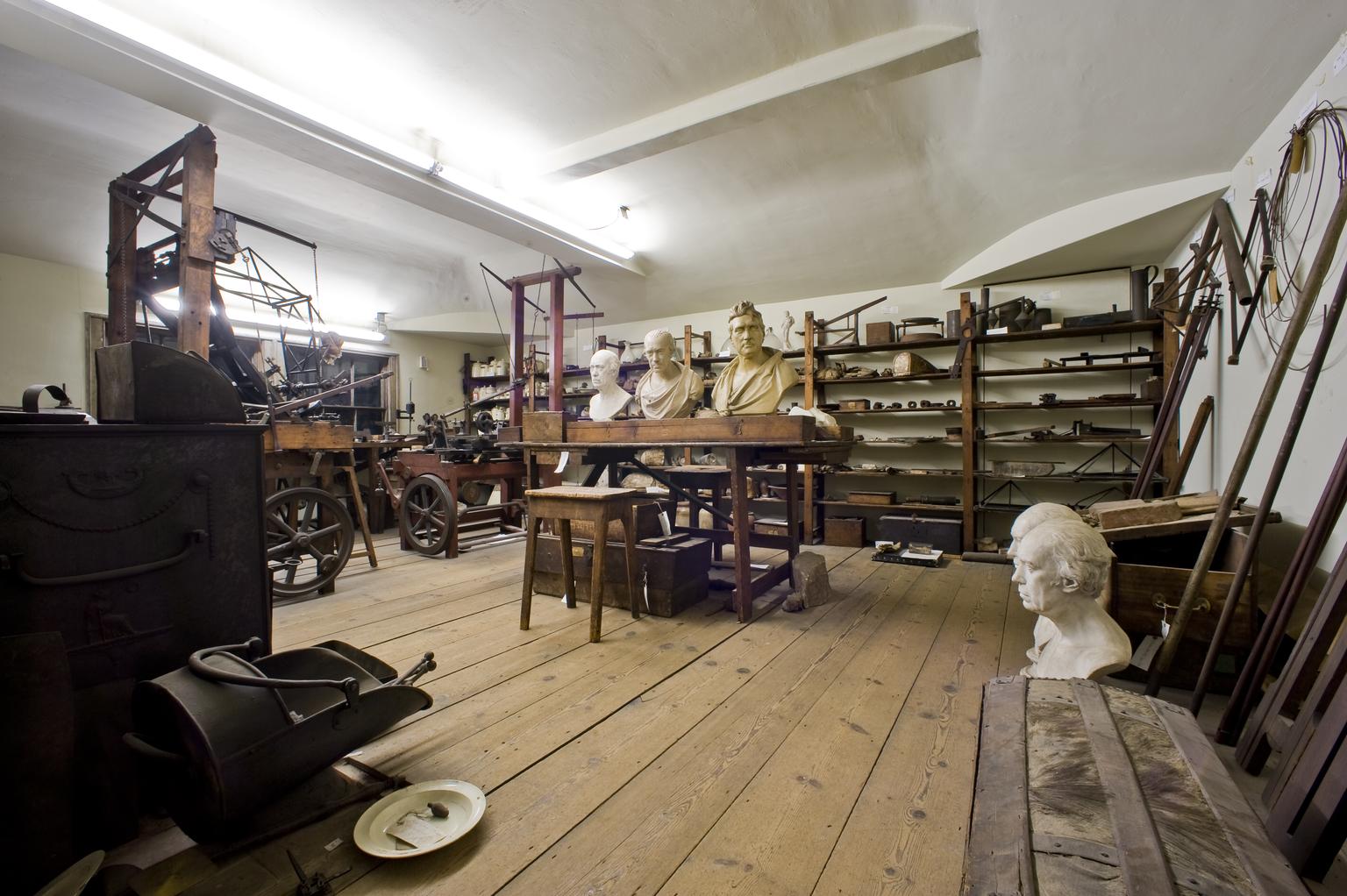
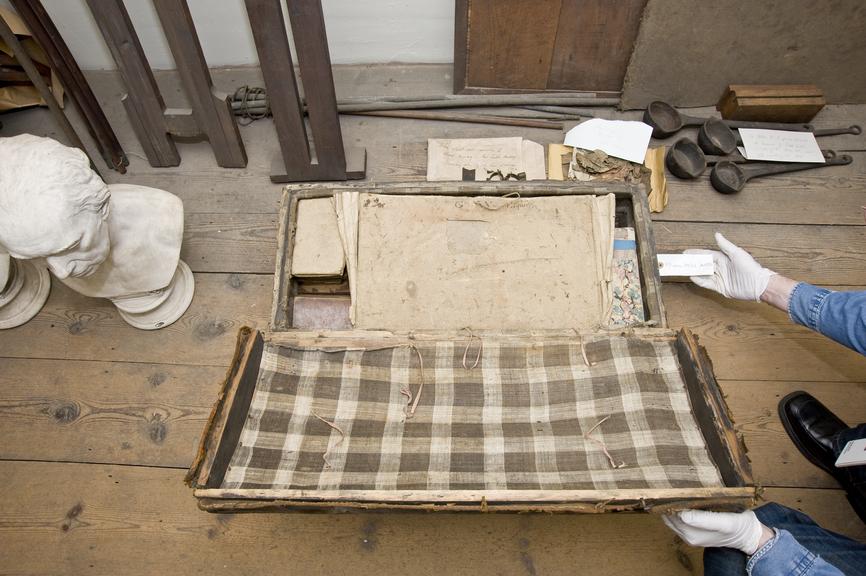
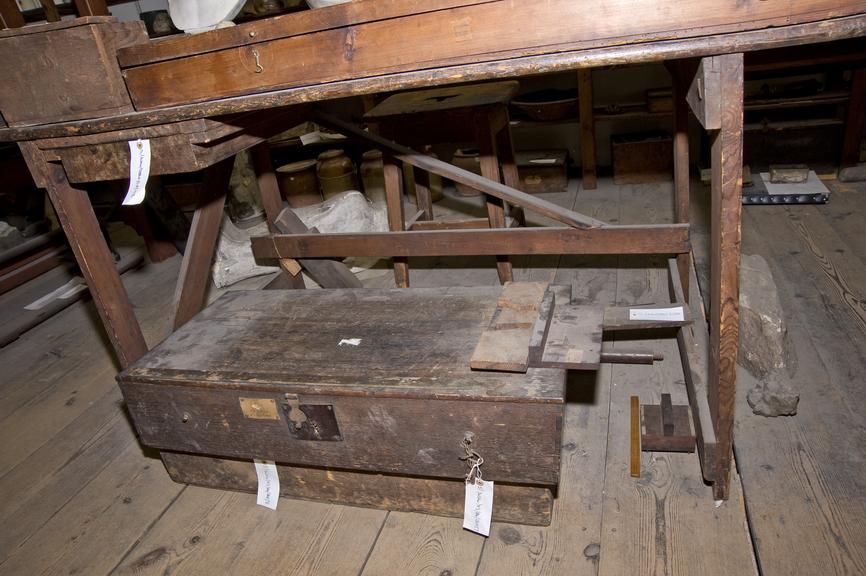
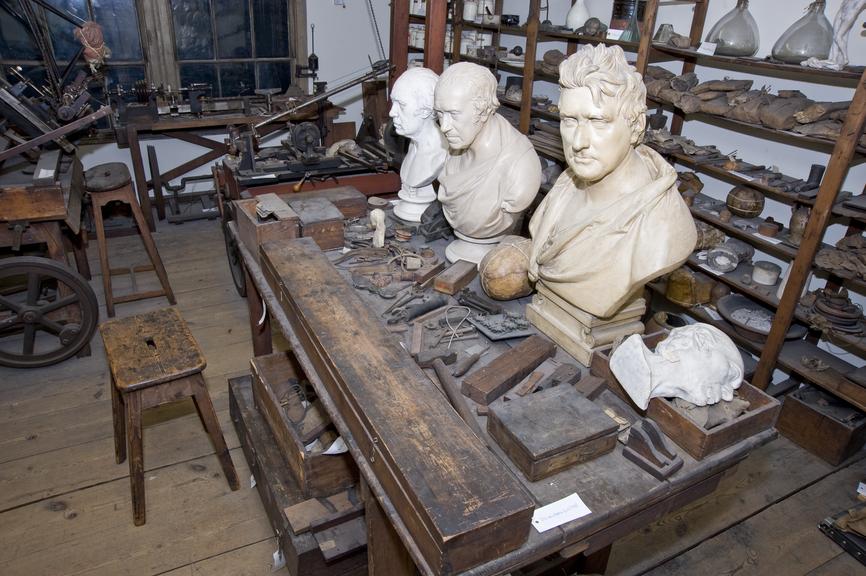
Upwards of 6,600 objects, as detailed in the inventory hereto annexed, being contents of the private workshop of James Watt from his house of Heathfield, Birmingham, where he lived from 1790 to his death in 1819 (see part records)
Upwards of 6,600 objects, as detailed in the inventory hereto annexed, being contents of the private workshop of James Watt from his house of Heathfield, Birmingham, where he lived from 1790 to his death in 1819
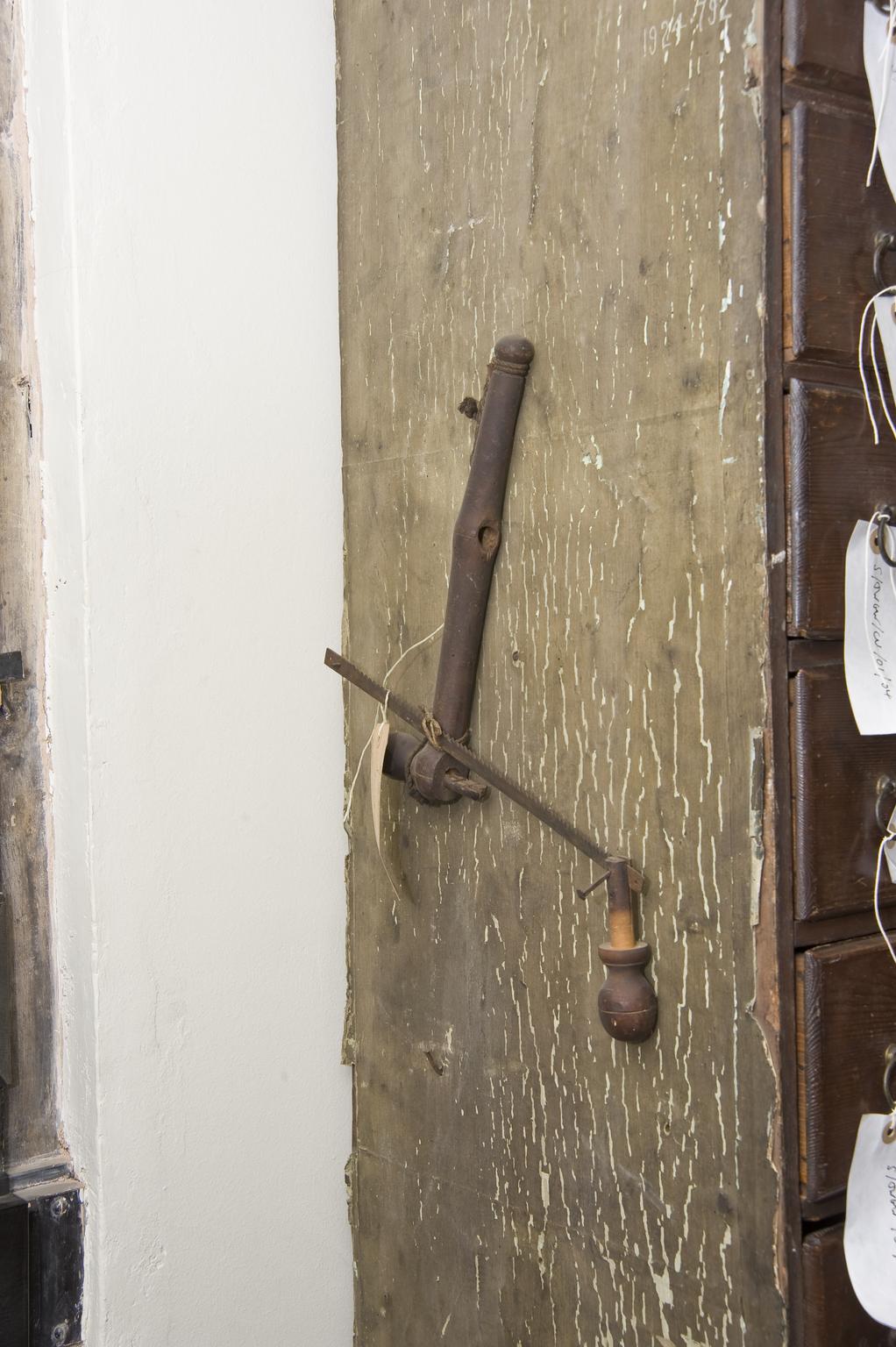
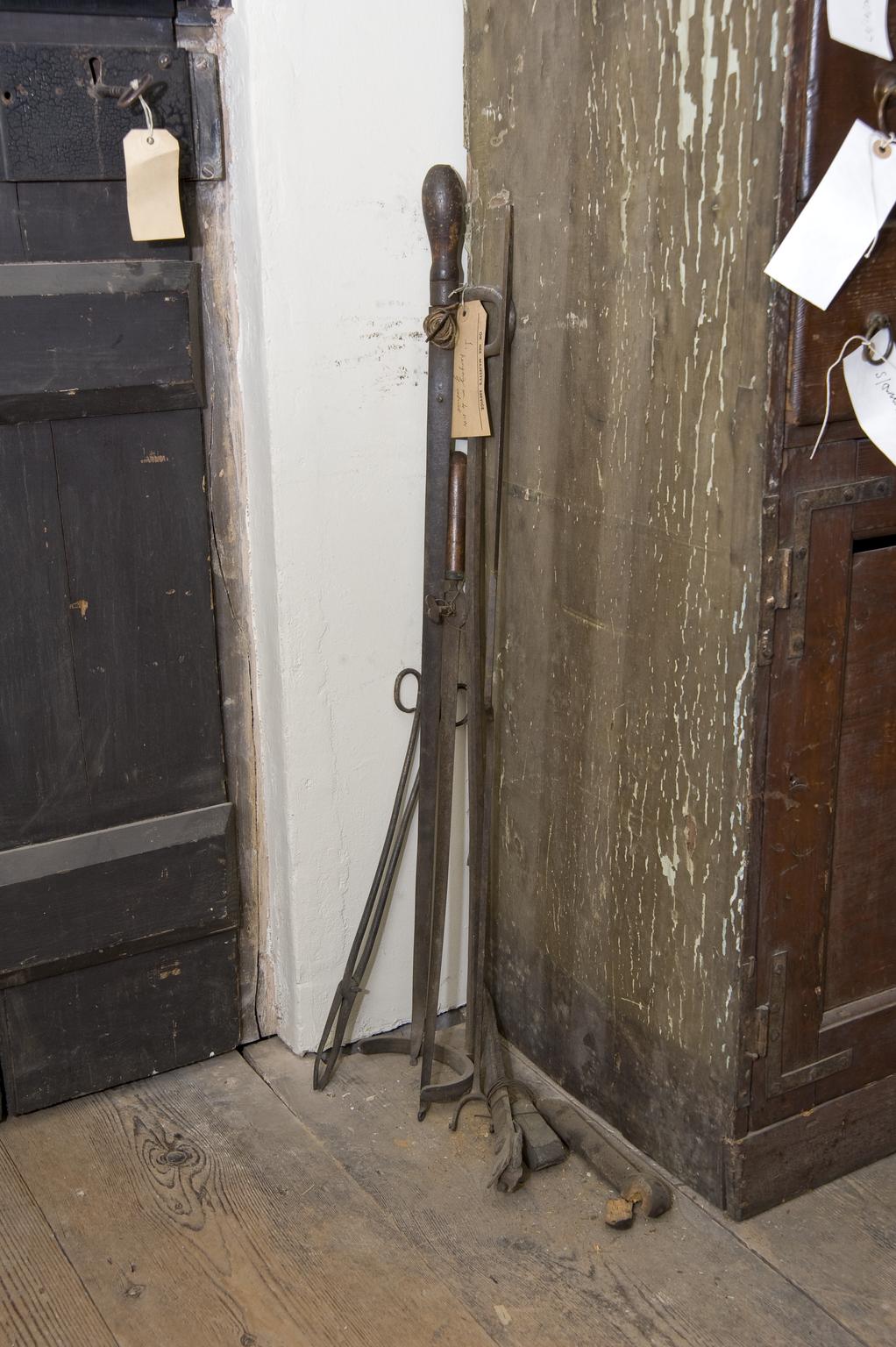
1 Soldering bolt, broken, piece of copper attached by wire.
More
This object is part of the contents of the workshop which belonged to Scottish engineer James Watt, best known for his work on the steam engine. It is a ruined soldering iron. The iron shank lacks its wooden handle. The copper bit has been broken, and is loosely attached to the shank with wire. It is unusable in this state. The workshop contents consist of a mixture of ongoing projects, and also items from Watt's working career stretching back to his early work as an instrument-maker in Glasgow.
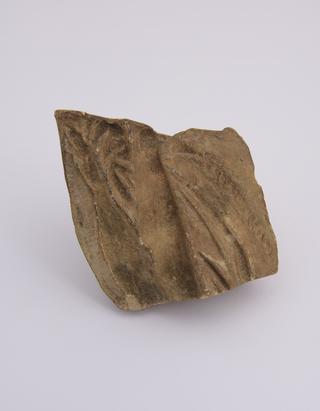
Components forming part of model factory from James Watt's workshop
Part of roof of oak model of factory
More
This item is part of the contents of the workshop that Scottish engineer James Watt developed at his home, Heathfield, at Handsworth, Birmingham. Although Watt is best known for his work on the steam engine, his workshop contains a wide variety of objects from many different projects, from chemistry to sculpture-copying.
The description of the item was written by Edward Collins, the land agent responsible for Heathfield when the workshop was given to the Science Museum in 1924. Collins could not always identify what he was looking at, but always described what he saw clearly. This has allowed his descriptions to form the basis of subsequent research.
The model's interior comprised over one hundred moveable wooden parts to represent internal walls. However, a study of prints showing the Soho Manufactory shows that the model cannot, in fact, have represented that building - so, its subject remains a mystery.
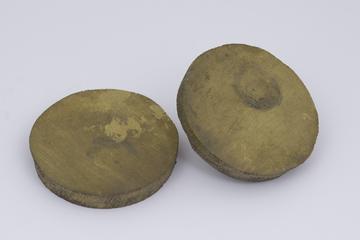
25 Lumps of tin, in packet from James Watt's workshop
25 Lumps of tin, in packet
More
This item is part of the contents of the workshop that Scottish engineer James Watt developed at his home, Heathfield, at Handsworth, Birmingham. Although Watt is best known for his work on the steam engine, his workshop contains a wide variety of objects from many different projects, from chemistry to sculpture-copying.
The description of the item was written by Edward Collins, the land agent responsible for Heathfield when the workshop was given to the Science Museum in 1924. Collins could not always identify what he was looking at, but always described what he saw clearly. This has allowed his descriptions to form the basis of subsequent research.
This item is part of the contents of the workshop that Scottish engineer James Watt developed at his home, Heathfield, at Handsworth, Birmingham. Although Watt is best known for his work on the steam engine, his workshop contains a wide variety of objects from many different projects, from chemistry to sculpture-copying.
The description of the item was written by Edward Collins, the land agent responsible for Heathfield when the workshop was given to the Science Museum in 1924. Collins could not always identify what he was looking at, but always described what he saw clearly. This has allowed his descriptions to form the basis of subsequent research.




 This image is released under a