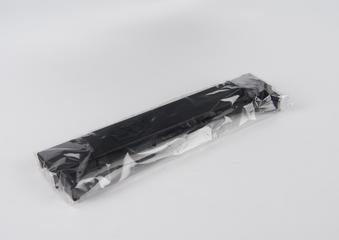
Random generator component from ERNIE I
- PART OF:
- Components of ERNIE I
- Made:
- c. 1956
Random generator component from ERNIE I (Electronic Random Number Indicator Equipment)
The electronic random number indicator equipment, named ERNIE was built at the Post Office Research Station, Dollis Hill. This fantastically innovative machine was developed to randomly select Premium Bond numbers, a new scheme launched in 1956 by the post-war government to reduced inflation and encourage more people to save. The public had the chance to win life change sums through tax-free prizes in monthly prize draws and ERNIE quickly became a household name. For many people it was the first ‘electronic brain’ they had evert heard of.
The machine was built by some of the same team members who had also worked on the Second World War code-breaking digital electronic computer, Colossus. It was not until the 1970s, when the veil of official secrecy was lifted, that it became clear there was a link between ERNIE 1 and Colossus and that British computer pioneers, including Sydney Broadhurst, Harry Fensom and Tommy Flowers, had worked on both. Mathematician Stephanie ‘Steve’ Brook (now Dame Stephanie Shirley) – the only women who worked on ERNIE – worked on the statistics used to make sure that the machine was truly random. Shirley went on to become a trailblazing entrepreneur in the male-dominated world of computing. Her pioneering all-female software firm Freelance Programmers created flexible work practices decades before remote work became mainstream.
The first winning Bond number was drawn on 1 June 1957. ERNIE took 16 minutes to produce the first nine-digit winning number and ran for over 55 hours to complete the first draw. ERNIE combined a number of cutting-edge technologies for its time. It used printed circuit boards, included 1600 transistors and counted and stored random numbers in over 1000 tiny magnetic rings, called ferrite cores. By combining these pioneering technologies ERNIE was able to rapidly produce prize-winning numbers without any human intervention. This guaranteed that every number selected was random.
Each random number generator contained a gas neon diode in a heavy metal container. It was mounted on inflexible springs to prevent vibration affecting its output.
Since the creation of ERNIE there have been three more ERNIEs. The machines are regularly updated to enable them to randomly generate more Premium Bond numbers, more quickly. The first ERNIE generates random numbers from a physical event – the random movement of electrons through neon gas. Subsequent ERNIE machines have continued to use an unpredictable physical event, rather than computer software, to generate the true random numbers needed to pick winning Premium Bonds.
Today the generation of random numbers is important for many everyday computational activities. These include simulating real physical processes such as the weather or financial markets, encrypting secure transactions over the internet and creating chance in computer games.
Details
- Category:
- Computing & Data Processing
- Object Number:
- 1985-1/1
- Materials:
- metal (unknown) and plastic (unidentified)
- Measurements:
-
overall: 320 mm x 94 mm x 150 mm,
- type:
- component