ABC (A Behaviour Changing) syringe

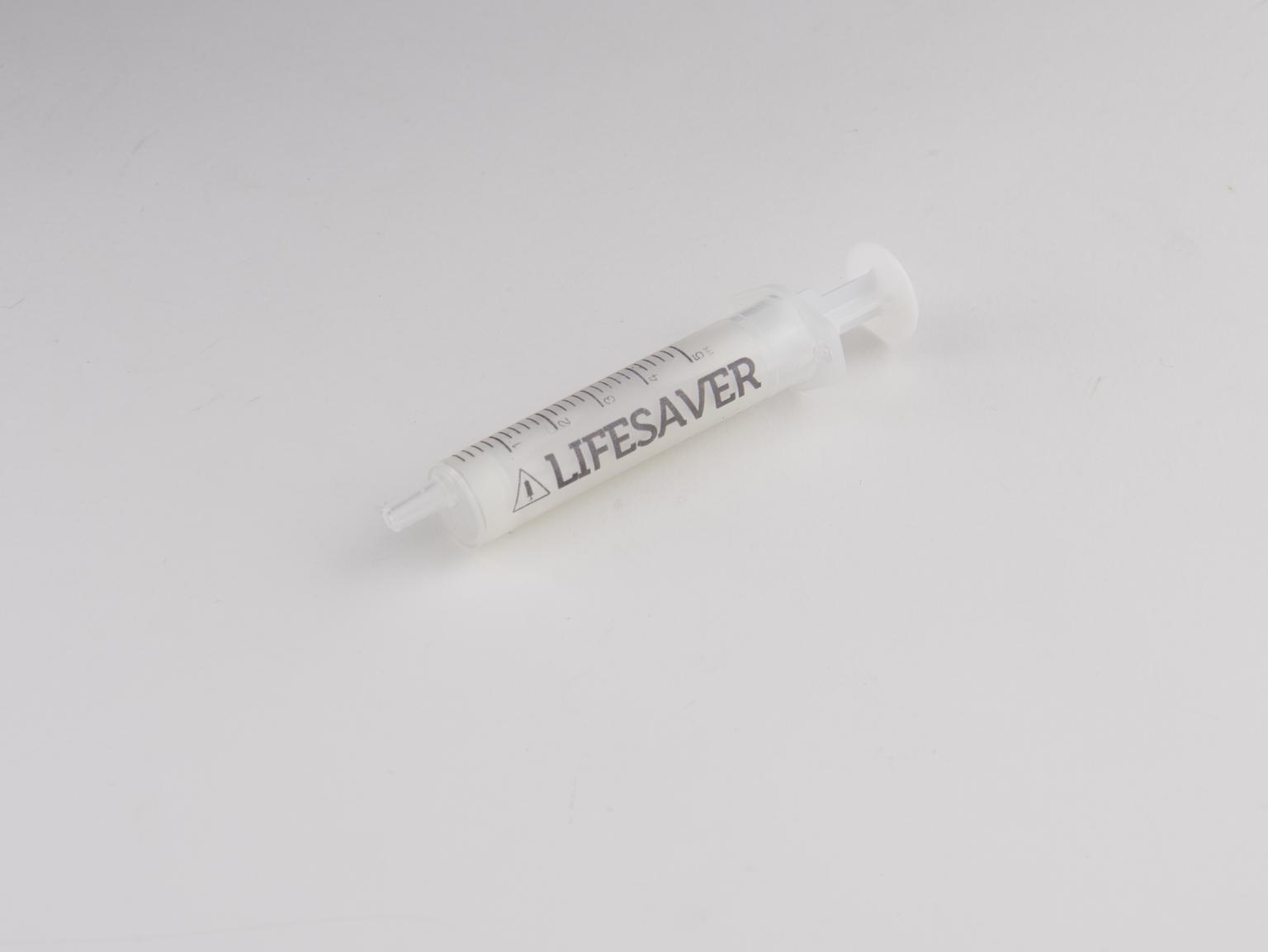
ABC (A Behaviour Changing) syringe, changes colour after one use to deter re-use, made and developed by Dr David Swann, University of Huddersfield, 2014

While in a nitrogen-filled sealed pack, a plastic syringe barrel remains clear. Once exposed to the air, ink applied to the label on the barrel starts to change to red. After a minute, the colour change is complete. The colour change is to alert users and patients that the syringe has already been used. Re-use of syringes is global public health problem. In 2008, the World Health Organisation estimated that up to 40% of the 40 billion injections administered each year are delivered with syringes reused without sterilisation. This caused 1.3 million deaths globally and accounted for 30% of cases of hepatitis A and B and 5% of HIV cases.

Instead of redesigning the standard syringe, Dr David Swann and his team looked at applying colour changing technology to existing designs. The cost of adding the design to existing syringes was estimated at £0.008. Dr David Swann won numerous awards for his invention including The International Council of Societies of Industrial Design 2014 World Design Impact Prize.

Details

Category:
Public Health & Hygiene
Object Number:
2014-506
Materials:
plastic
Measurements:
100 mm x 5 mm (dia)
type:
syringe
credit:
Donated by Dr David Swann

Parts

ABC (A Behaviour Changing) syringe

ABC (A Behaviour Changing) syringe

A clear ABC (A Behaviour Changing) syringe, changes colour after one use to deter re-use, made and developed by Dr David Swann, University of Huddersfield, 2014.

More

While in a nitrogen-filled sealed pack, a plastic syringe barrel remains clear. Once exposed to the air, ink applied to the label on the barrel starts to change to red. After a minute, the colour change is complete. The colour change is to alert users and patients that the syringe has already been used. Re-use of syringes is global public health problem. In 2008, the World Health Organisation estimated that up to 40% of the 40 billion injections administered each year are delivered with syringes reused without sterilisation. This caused 1.3 million deaths globally and accounted for 30% of cases of hepatitis A and B and 5% of HIV cases.

Instead of redesigning the standard syringe, Dr David Swann and his team looked at applying colour changing technology to existing designs. The cost of adding the design to existing syringes was estimated at £0.008. Dr David Swann won numerous awards for his invention including The International Council of Societies of Industrial Design 2014 World Design Impact Prize.

Materials:
plastic (unidentified)
Object Number:
2014-506/1
type:
syringe
Image ©
The Board of Trustees of the Science Museum
ABC (A Behaviour Changing) syringe

ABC (A Behaviour Changing) syringe

A red ABC (A Behaviour Changing) syringe, changes colour after one use to deter re-use, made and developed by Dr David Swann, University of Huddersfield, 2014.

More

While in a nitrogen-filled sealed pack, a plastic syringe barrel remains clear. Once exposed to the air, ink applied to the label on the barrel starts to change to red. After a minute, the colour change is complete. The colour change is to alert users and patients that the syringe has already been used. Re-use of syringes is global public health problem. In 2008, the World Health Organisation estimated that up to 40% of the 40 billion injections administered each year are delivered with syringes reused without sterilisation. This caused 1.3 million deaths globally and accounted for 30% of cases of hepatitis A and B and 5% of HIV cases.

Instead of redesigning the standard syringe, Dr David Swann and his team looked at applying colour changing technology to existing designs. The cost of adding the design to existing syringes was estimated at £0.008. Dr David Swann won numerous awards for his invention including The International Council of Societies of Industrial Design 2014 World Design Impact Prize.

Materials:
plastic (unidentified)
Object Number:
2014-506/2
type:
syringe
Image ©
The Board of Trustees of the Science Museum
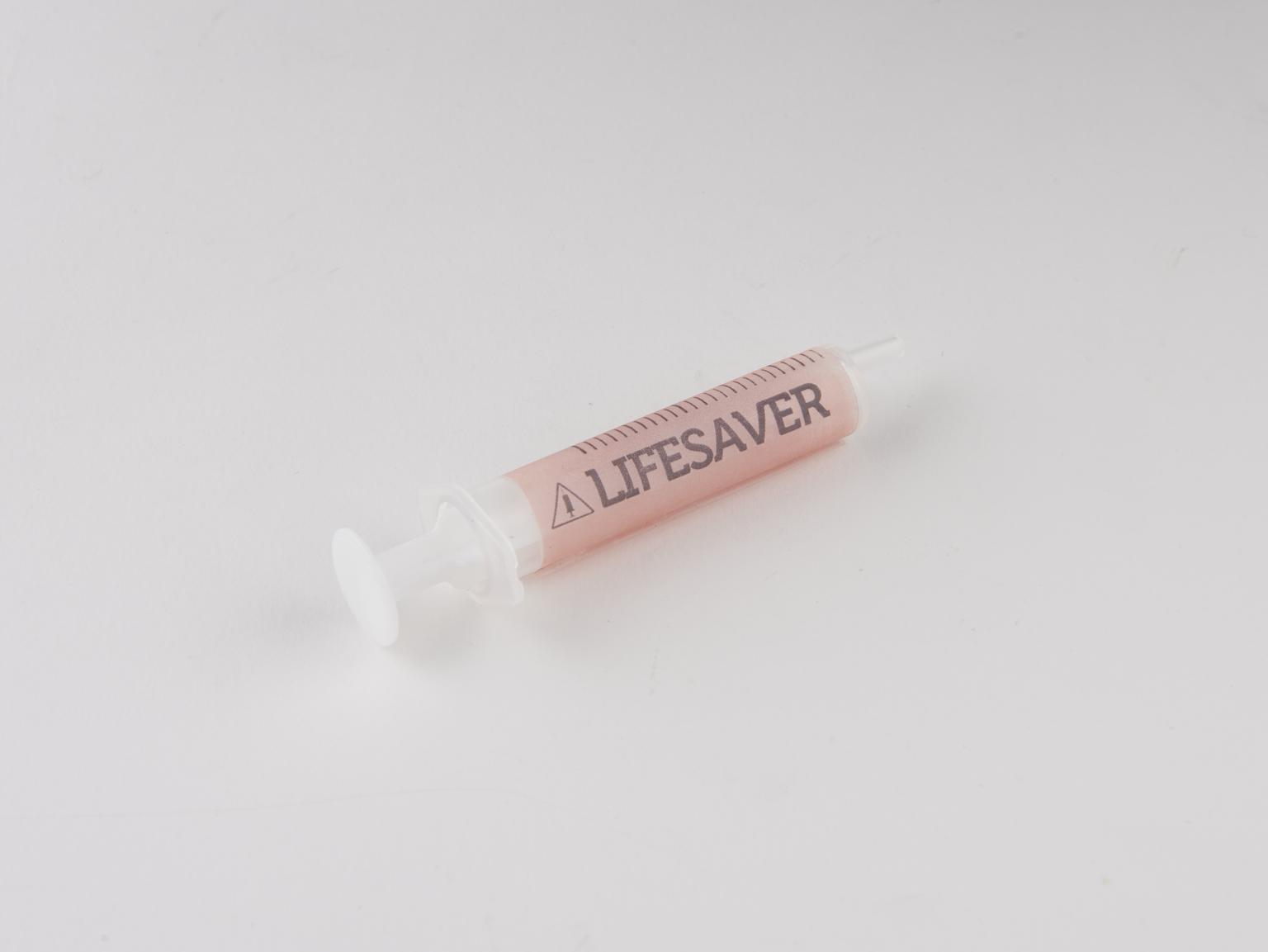
ABC (A Behaviour Changing) syringe

ABC (A Behaviour Changing) syringe

An ABC (A Behaviour Changing) syringe with a slight red tint, changes colour after one use to deter re-use, made and developed by Dr David Swann, University of Huddersfield, 2014.

More

While in a nitrogen-filled sealed pack, a plastic syringe barrel remains clear. Once exposed to the air, ink applied to the label on the barrel starts to change to red. After a minute, the colour change is complete. The colour change is to alert users and patients that the syringe has already been used. Re-use of syringes is global public health problem. In 2008, the World Health Organisation estimated that up to 40% of the 40 billion injections administered each year are delivered with syringes reused without sterilisation. This caused 1.3 million deaths globally and accounted for 30% of cases of hepatitis A and B and 5% of HIV cases.

Instead of redesigning the standard syringe, Dr David Swann and his team looked at applying colour changing technology to existing designs. The cost of adding the design to existing syringes was estimated at £0.008. Dr David Swann won numerous awards for his invention including The International Council of Societies of Industrial Design 2014 World Design Impact Prize.

Materials:
plastic (unidentified)
Object Number:
2014-506/3
type:
syringe
Image ©
The Board of Trustees of the Science Museum
ABC (A Behaviour Changing) syringe

ABC (A Behaviour Changing) syringe

A deep red ABC (A Behaviour Changing) syringe, changes colour after one use to deter re-use, made and developed by Dr David Swann, University of Huddersfield, 2014.

More

While in a nitrogen-filled sealed pack, a plastic syringe barrel remains clear. Once exposed to the air, ink applied to the label on the barrel starts to change to red. After a minute, the colour change is complete. The colour change is to alert users and patients that the syringe has already been used. Re-use of syringes is global public health problem. In 2008, the World Health Organisation estimated that up to 40% of the 40 billion injections administered each year are delivered with syringes reused without sterilisation. This caused 1.3 million deaths globally and accounted for 30% of cases of hepatitis A and B and 5% of HIV cases.

Instead of redesigning the standard syringe, Dr David Swann and his team looked at applying colour changing technology to existing designs. The cost of adding the design to existing syringes was estimated at £0.008. Dr David Swann won numerous awards for his invention including The International Council of Societies of Industrial Design 2014 World Design Impact Prize.

Materials:
plastic (unidentified)
Object Number:
2014-506/4
type:
syringe
Image ©
The Board of Trustees of the Science Museum
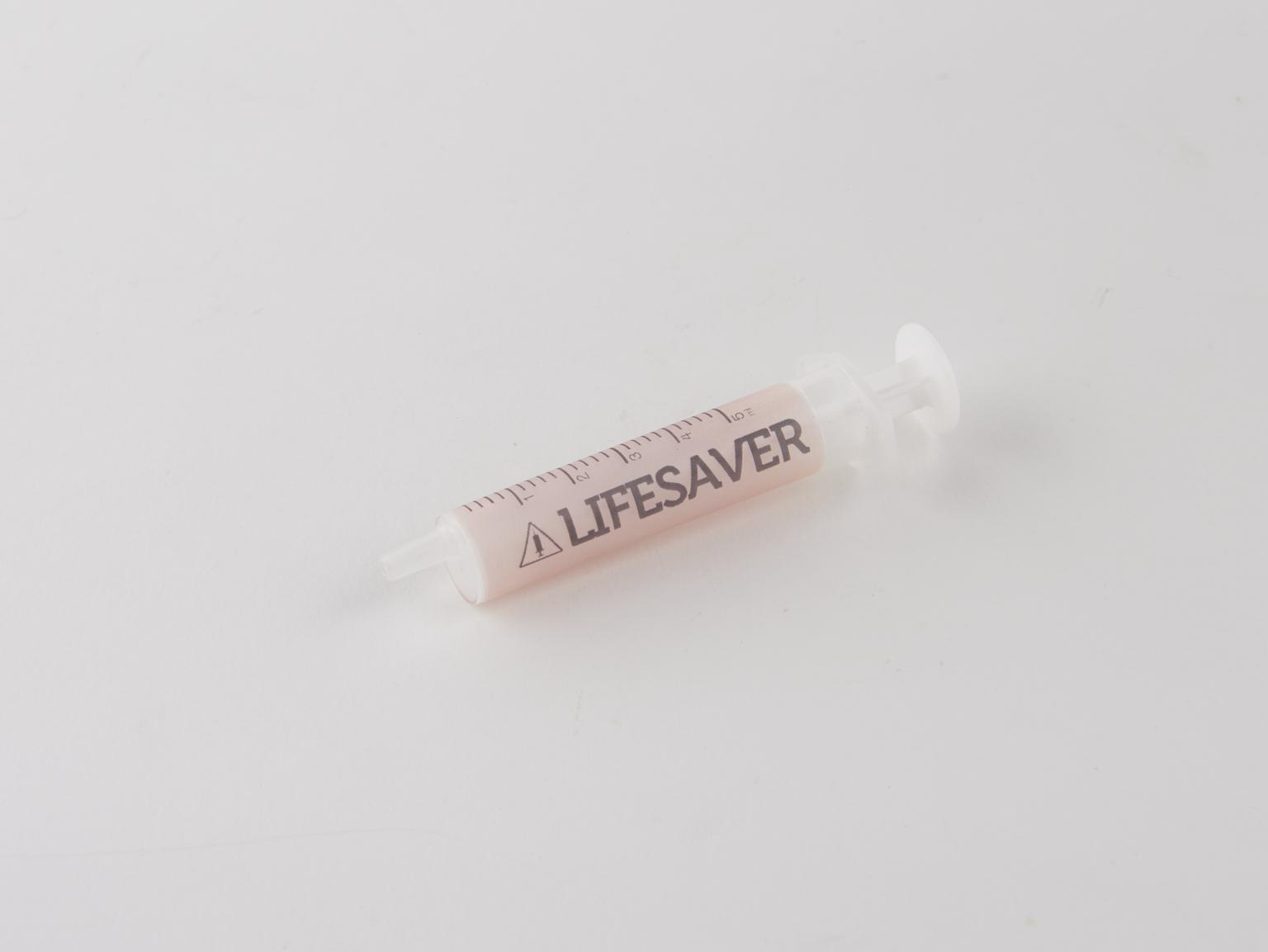
ABC (A Behaviour Changing) syringe

ABC (A Behaviour Changing) syringe

An ABC (A Behaviour Changing) syringe with a slight pink tint, changes colour after one use to deter re-use, made and developed by Dr David Swann, University of Huddersfield, 2014.

More

While in a nitrogen-filled sealed pack, a plastic syringe barrel remains clear. Once exposed to the air, ink applied to the label on the barrel starts to change to red. After a minute, the colour change is complete. The colour change is to alert users and patients that the syringe has already been used. Re-use of syringes is global public health problem. In 2008, the World Health Organisation estimated that up to 40% of the 40 billion injections administered each year are delivered with syringes reused without sterilisation. This caused 1.3 million deaths globally and accounted for 30% of cases of hepatitis A and B and 5% of HIV cases.

Instead of redesigning the standard syringe, Dr David Swann and his team looked at applying colour changing technology to existing designs. The cost of adding the design to existing syringes was estimated at £0.008. Dr David Swann won numerous awards for his invention including The International Council of Societies of Industrial Design 2014 World Design Impact Prize.

Materials:
plastic (unidentified)
Object Number:
2014-506/5
type:
syringe
Image ©
The Board of Trustees of the Science Museum