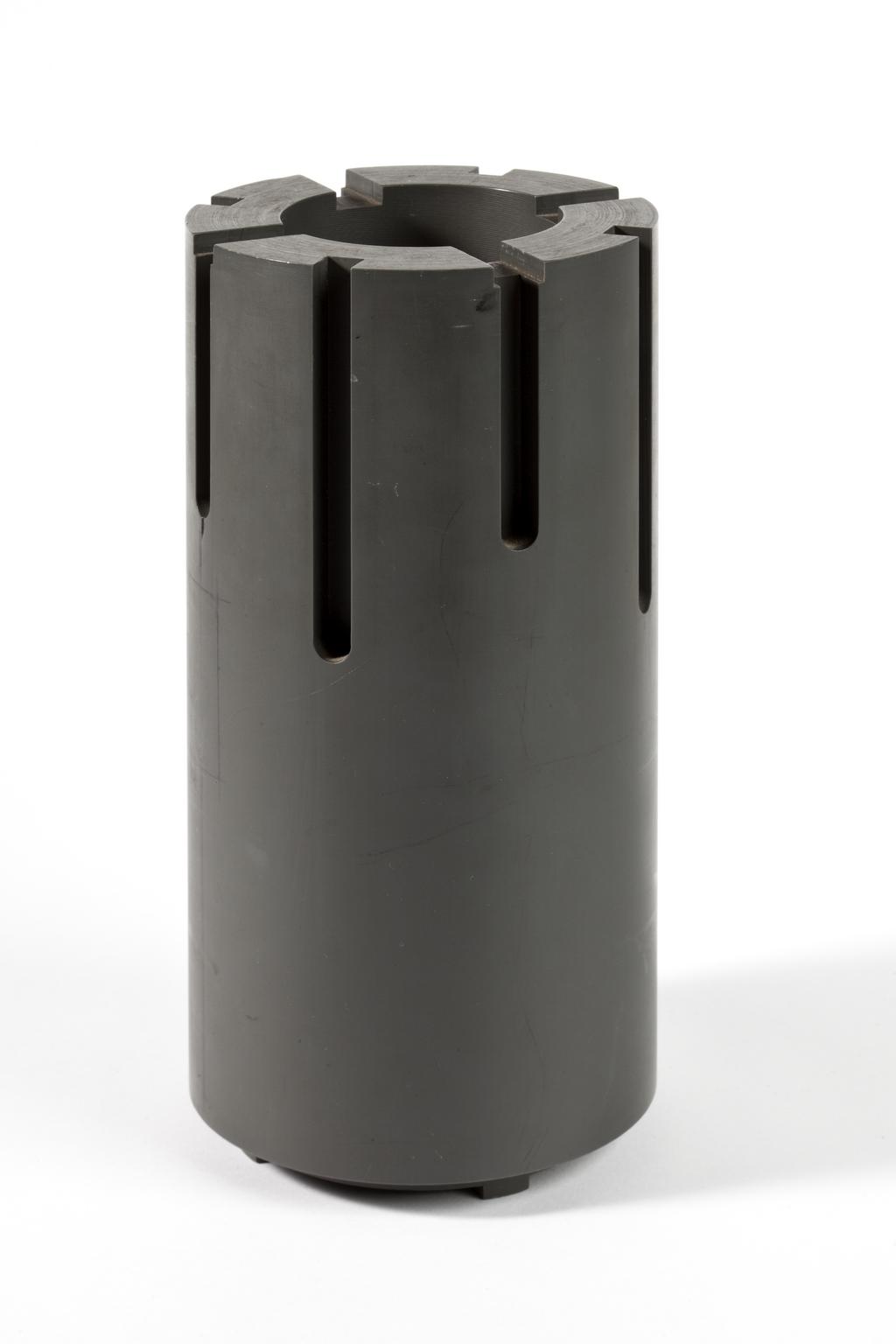
A quarter-scale model nuclear reactor 'brick' made by AMEC in Warrington in about 2010. In a real reactor
A quarter-scale model nuclear reactor 'brick' made by AMEC in Warrington in about 2010.
Y2012.8.1
A quarter-scale model nuclear reactor 'brick'
What is it?
A model nuclear reactor brick used in experiments on nuclear reactor safety and maintenance.
What does it look like.
It’s a heavy cylinder of thick black plastic, over a foot long and about 6 inches diameter. There are 8 slots cut into the sides at the top and some parts on the base.
To me this looks either like a piece of thick black drainpipe with some bits cut out of it, or perhaps the tower of a castle with some battlements on top.
Historical background
A nuclear power station uses a nuclear reactor to release the energy stored in radioactive uranium. This energy is used to heat up water or gas, which is then used to drive turbo generators that make electricity for our towns and cities.
The core of most British nuclear reactors is made up of thousands of graphite bricks that hold the uranium fuel rods. Over decades use, the reactor bricks can develop cracks in them. Smaller cracks are acceptable, but if the cracks become serious, they can affect the safe operation of then reactor, meaning it would have to be shut down. The graphite bricks are far too radioactive to be safely replaced.
This means that monitoring the graphite bricks in the reactor for cracks is really important. This model was used to prepare for an experiment to study cracks in nuclear reactor cores. It was made in 2010 by Amec Foster Wheeler, an engineering and consultancy firm who used to have offices in Warrington.
This brick is made out of plastic and is only a quarter of the size of real graphite reactor brick. The circular hole in the middle is the fuel channel into which a uranium fuel rod would be inserted on a real brivk. The slots in the side are called keyways and are used to interlock the reactor bricks with each other.
Links to everyday?
Where do you think the electricity you use at home has come from?
Can you think of other uses for models?
- Measurements:
-
overall: 250 mm, 3 kg
- Materials:
- plastic and Heavy grey plastic cylinder with ribbed grooves.
- Object Number:
- Y2012.8.1
- type:
- model reactor part
- Image ©
- The Board of Trustees of the Science Museum