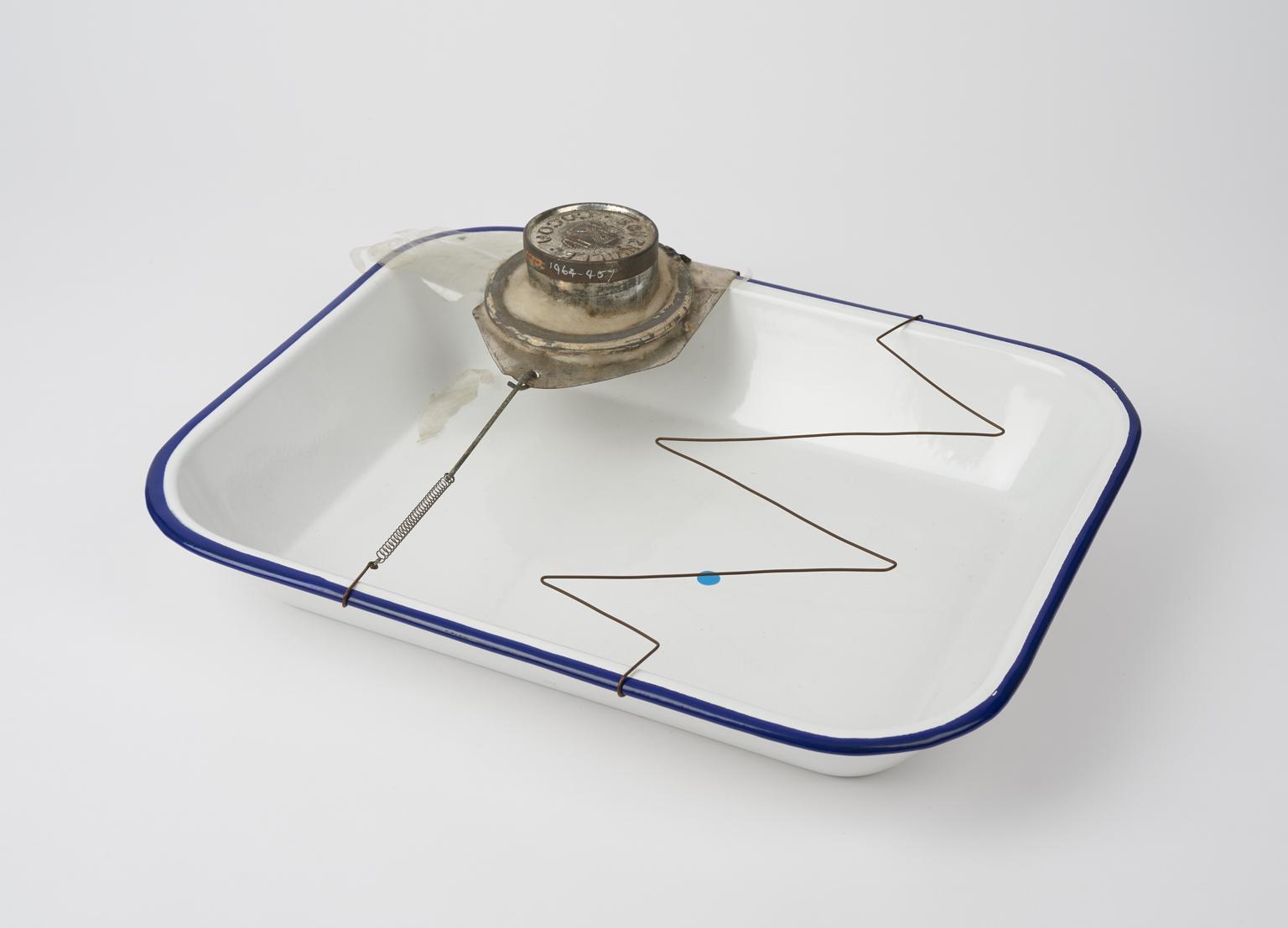
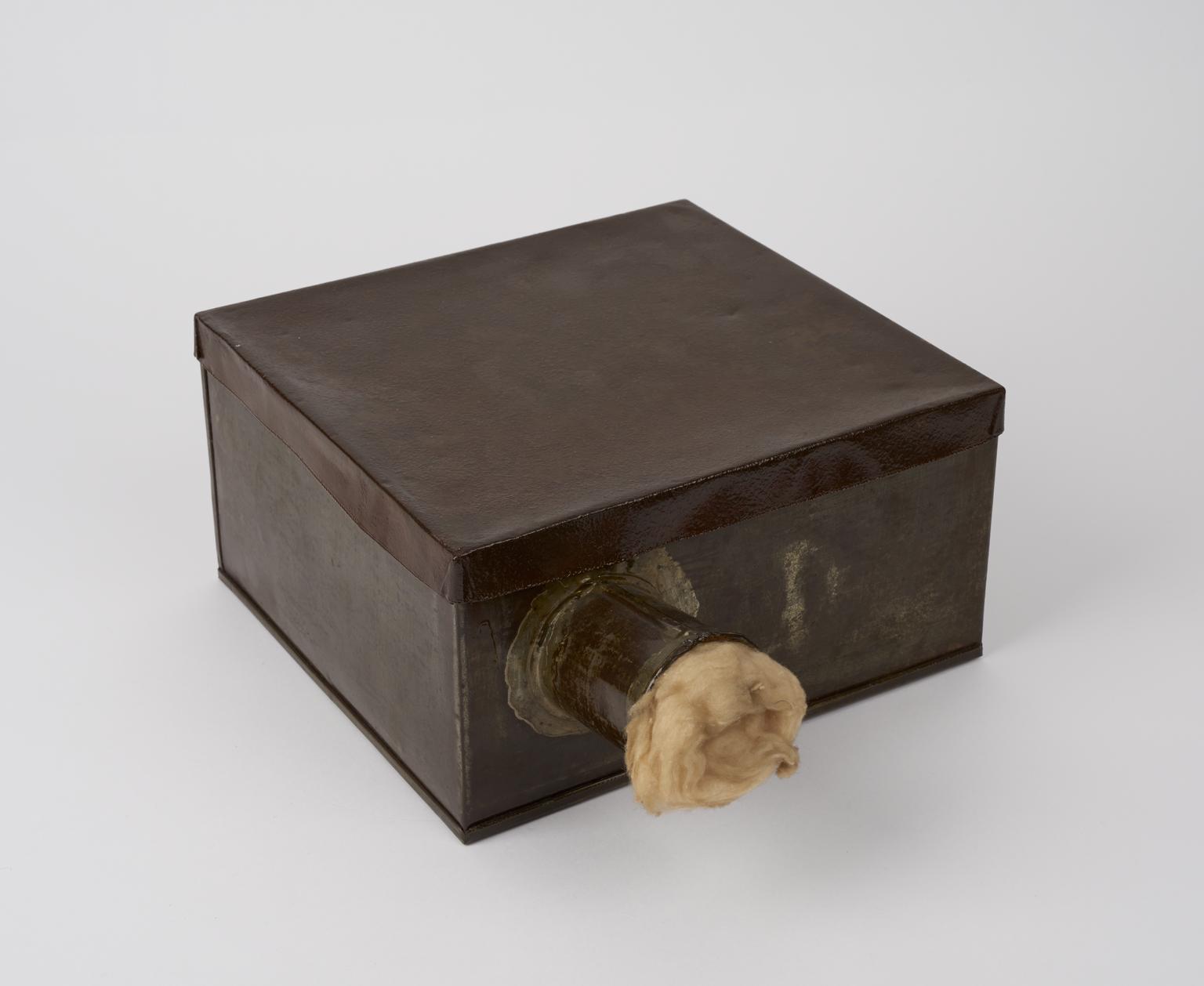
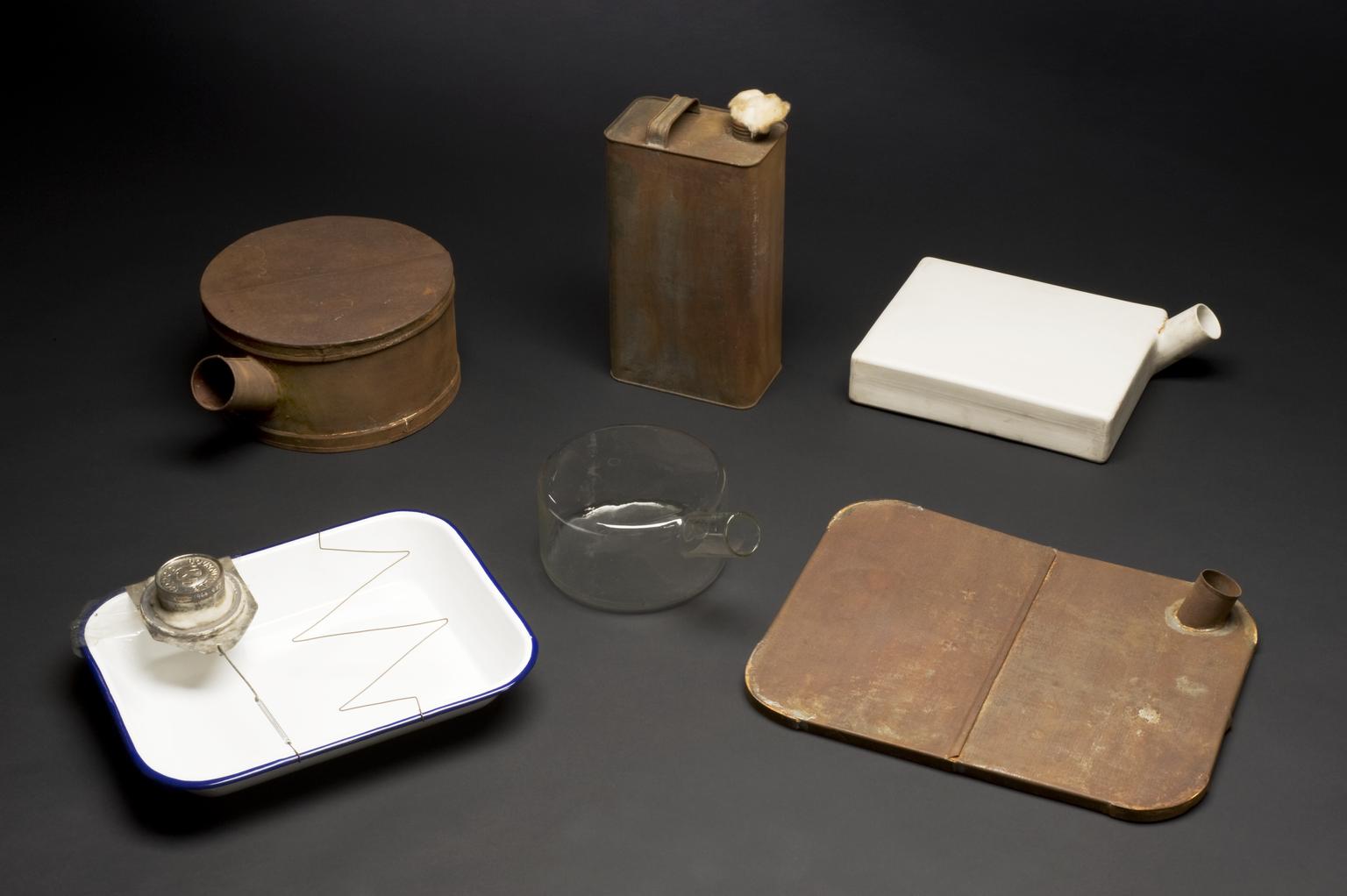
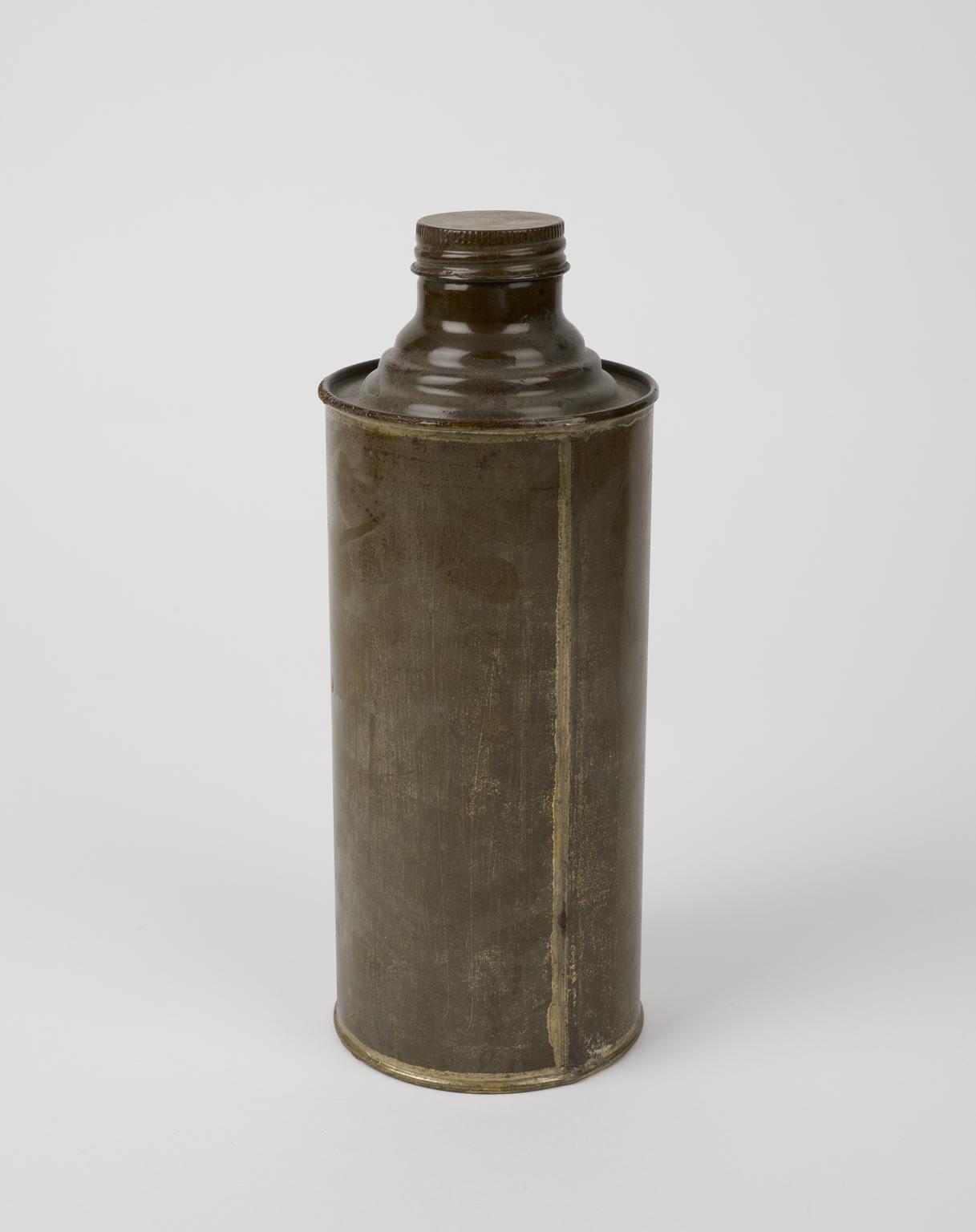
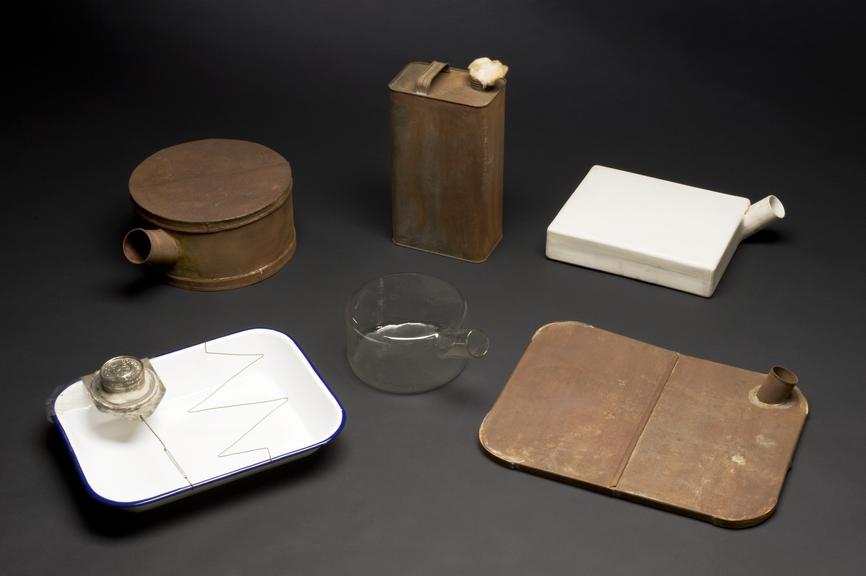
Set of apparatus used in experimental work with penicillin, comprising enamel dish and metal device to contain liquid, cellophane cover, wire to support cellophane, by Glaxo Laboratories Limited, England, 1939-1949
Although the effects of penicillin on bacteria were observed in 1928 by the British bacteriologist Alexander Fleming (1881-1955), the drug was not successfully made in any quantity or isolated from the juice exuded by the penicillium mould until the early 1940s. The pioneering work on making and separating penicillin, and finding its huge medical potential was conducted at the Sir William Dunn School of Pathology at the University of Oxford. The team included Howard Florey, an Australian pharmacologist, Ernst Chain a German born-British biochemist, Norman Heatley, a British biochemist, Margaret Jennings, a British bacteriologist, Arthur Gardener, a British doctor and professor.
Ernst Chain, Howard Florey and Alexander Fleming shared the 1945 Nobel Prize for Physiology or Medicine for their work.
This apparatus was used in some of the very earliest experimental work there. It was used to grow the mould which produces penicillin, on the surface of a shallow nutrient soup. The sterilisable containers were plugged with cotton wool. This stopped air bringing in common microbes which would contaminate the growing process. They were once biscuit tins and butter containers purchased from an Oxfordshire greengrocer. Drawing on the experience with this apparatus, specially designed ceramic vessels were soon developed.
 This image is released under a