Phil Leakey's make-up trunk for 'The Romantic Englishwoman'
Contents and value list from the lid of Phil Leakey's make-up trunk for 'The Romantic Englishwoman' which was flown by air from Dial Films Limited, England to Dial Films Ltd. Germany via France. The trunk contained a variety of make-up, listed as pansticks, pancakes, artificial eye lashes, sponges, powder puffs, skin freshener, artificial blood, sealore, talc, hair whitener, moustaches, oil colours, glycerine, cleansing cream, face powder, eye shadow, eye m/up removing pads, 'quickies', liquid make-up, towels, iron heater, beard block, make-up gowns, electric shaver, razors, personal make-up boxes containing used articles of make-up & equipment and also used articles of protective clothing.
Roy Ashton (1909–95) and Phil Leakey (1908–92) were master makeup artists who worked on many of the British cult horror films of the mid-20th century. A trained artist, Australia-born Ashton began his career at Gaumont-British Film Corporation in 1932 as a means of supplementing his passion for opera singing. In 1955, Ashton became the assistant to Hammer Films’ Phil Leakey, the first makeup artist to receive on-screen credit for ‘Special Make-up Effects’. Following Leakey’s departure from Hammer in 1958, Ashton took over as head makeup artist, where he continued his expert work throughout the 1960s.
From sketches to clay models, reference photographs to prosthetic fangs and glass eyeballs, the Ashton and Leakey Collection shows how special effects makeup moved from concept to screen. Titles represented include The Curse of Frankenstein (1957), Dracula (1958), The Mummy (1959), and Phantom of the Opera (1962), among many others.
The Romantic Englishwomanis a 1975 British film directed by Joseph Losey and featuring Glenda Jackson, Michael Caine and Helmut Berger.
Details
- Category:
- Cinematography
- Collection:
- Roy Ashton & Phil Leakey Collection
- Object Number:
- 2000-5000/1
- type:
- make up box
Parts
"Lady Jayne" Spring Curl Clips
Box of "Lady Jayne" coil spring curl clips in original packaging.
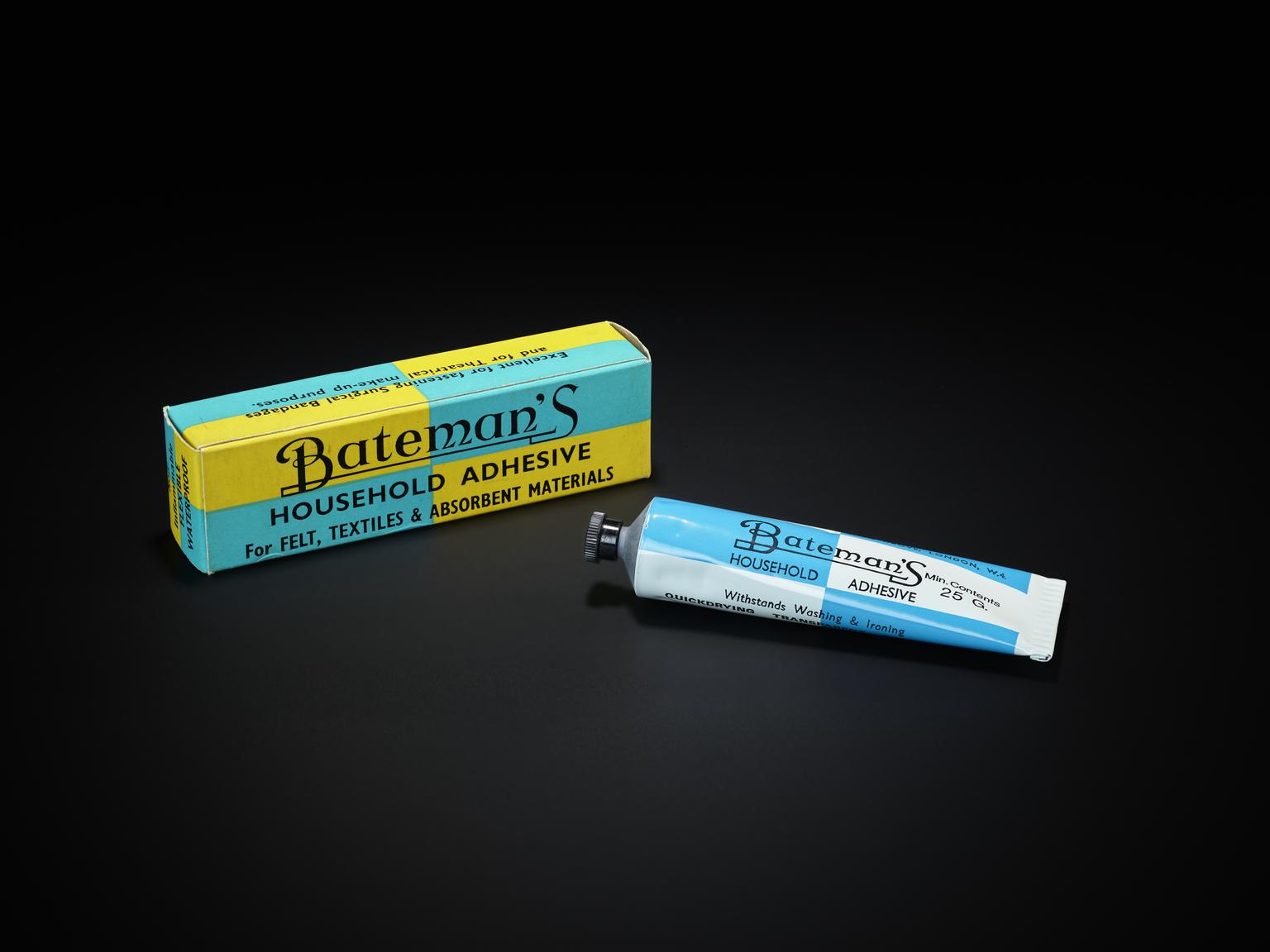
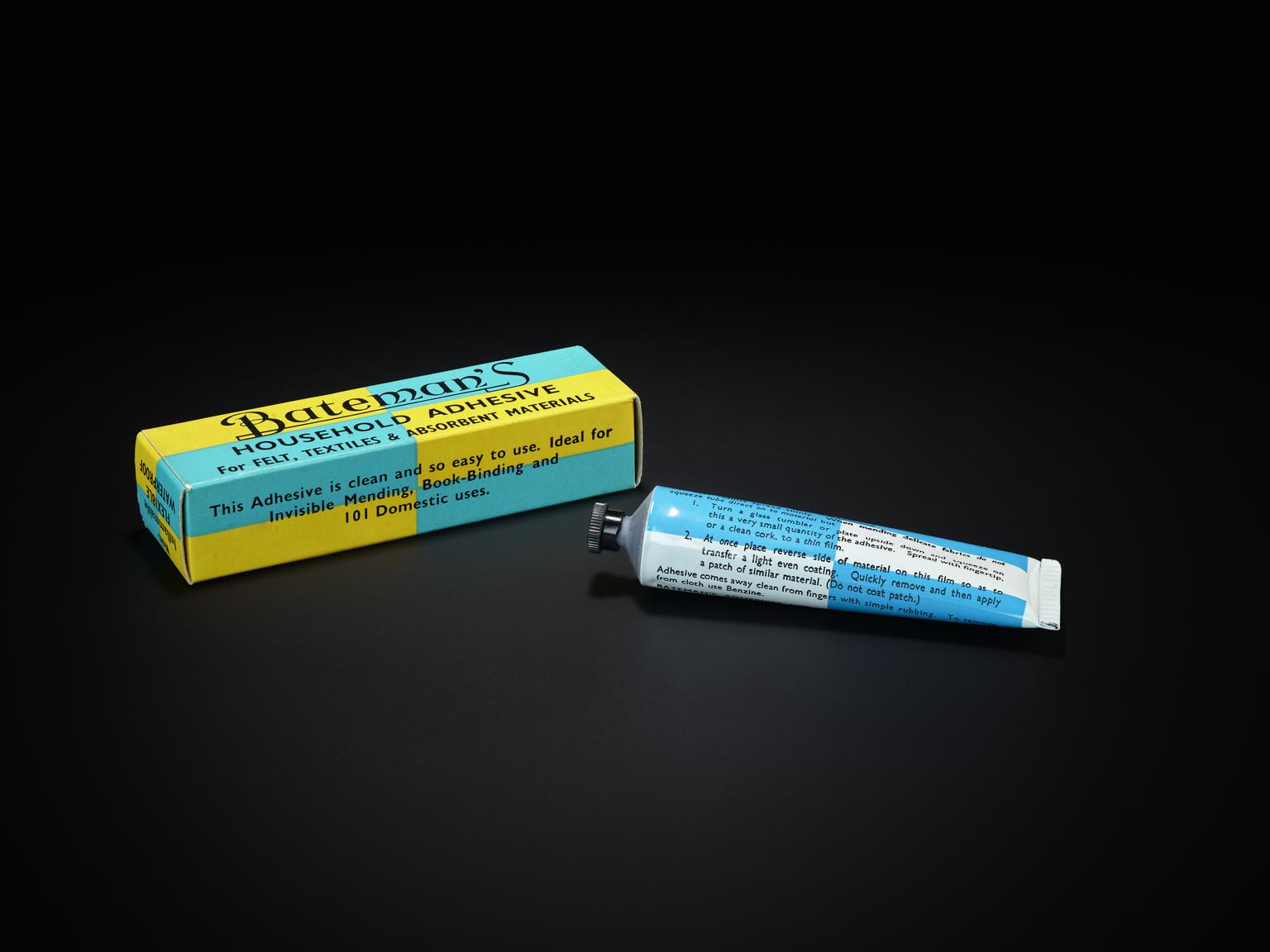
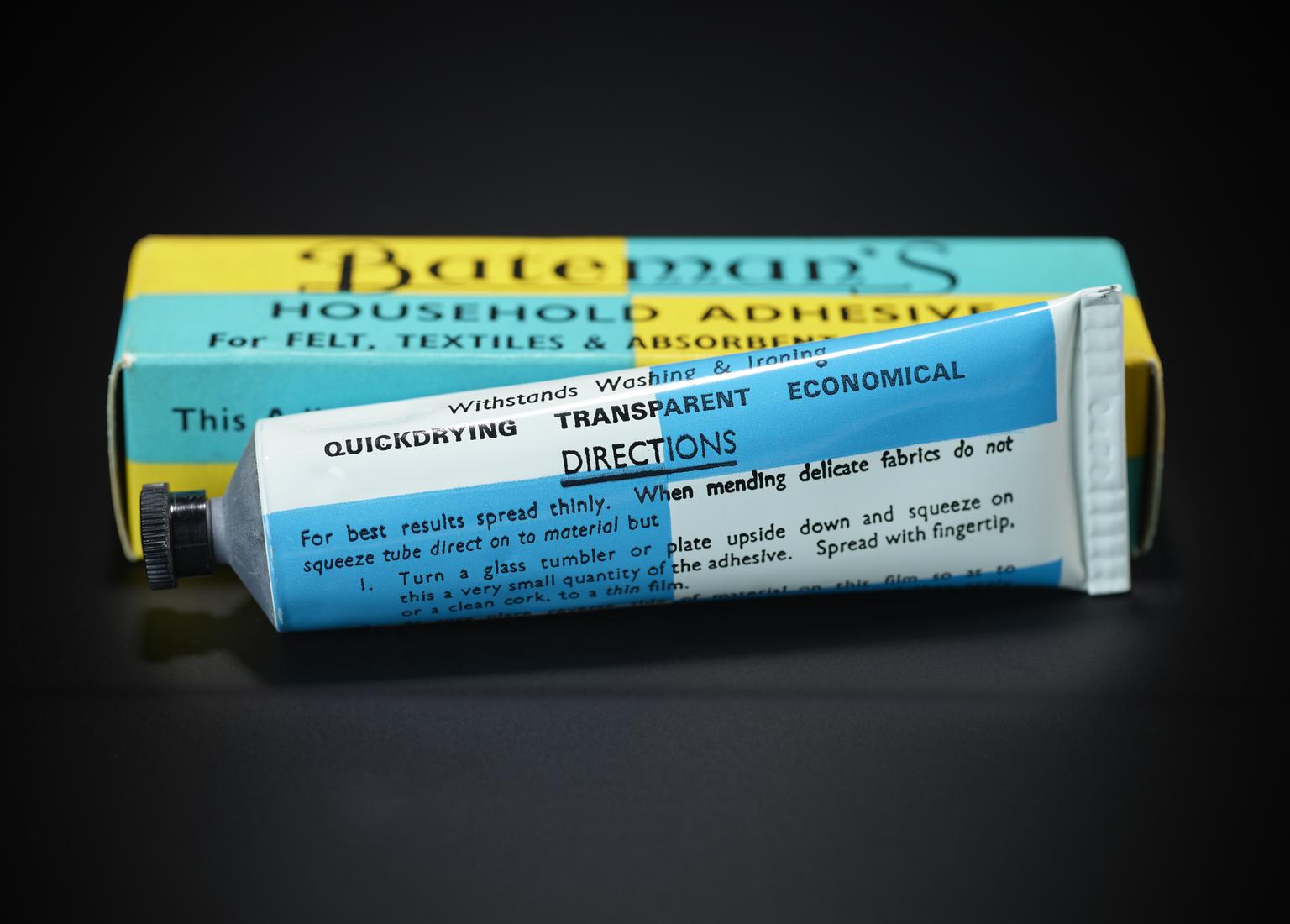
Bateman's Household Adhesive
Tube of Bateman's Household adhesive in original packaging, unopened.
More
Roy Ashton (1909–95) and Phil Leakey (1908–92) were master makeup artists who worked on many of the British cult horror films of the mid-20th century. A trained artist, Australia-born Ashton began his career at Gaumont-British Film Corporation in 1932 as a means of supplementing his passion for opera singing. In 1955, Ashton became the assistant to Hammer Films’ Phil Leakey, the first makeup artist to receive on-screen credit for ‘Special Make-up Effects’. Following Leakey’s departure from Hammer in 1958, Ashton took over as head makeup artist, where he continued his expert work throughout the 1960s and 1970s.
This tube of household adhesive comes from Phil Leakey's make-up trunk which he used during his work on the film 'The Romantic Englishwoman' in 1975. The trunk was flown by air from Dial Films Limited, England to Dial Films Ltd. Germany via France. The trunk contained a variety of make-up such as pansticks, pancakes, artificial eye lashes, sponges, powder puffs, skin freshener, artificial blood, talcum powder, hair whitener, moustaches, oil colours, glycerine, cleansing cream, face powder, eye shadow, liquid make-up, towels, iron heater, beard block, make-up gowns, electric shaver and razors.
- Measurements:
-
box: 25 mm x 110 mm x 30 mm,
tube: 25 mm x 100 mm x 35 mm,
- Materials:
- cardboard , metal (unknown) and plastic (unidentified)
- Object Number:
- 2000-5000/1/11
- type:
- adhesive
- Image ©
- The Board of Trustees of the Science Museum
Block of Paraffin Wax
Block of paraffin wax.
Plastic bottle containing hektographic ink
Plastic bottle containing hektographic ink.
- Object Number:
- 2000-5000/1/14
- type:
- hektographic ink
Carboard Box "Wig Specialists Ltd"
Small cardboard box with paper label "wig specialists Ltd".
- Materials:
- metal (unknown) and paper (fibre product)
- Object Number:
- 2000-5000/1/15
- type:
- box - container
Gypsona Plaster of Paris Bandage
Can of Gypsona plaster of Paris bandage.
Gypsona Llaster of Paris Bandage
Can of "Gypsona" plaster of Paris bandage.
Gypsona Plaster of Paris Bandage
Can of "Gypsona" plaster of Paris bandage, sealed. Made in England by T. J. Smith & Nephew Ltd.
- Measurements:
-
overall: 160 mm 55 mm,
- Materials:
- metal (unknown)
- Object Number:
- 2000-5000/1/19
- type:
- bandage
Gypsona Llaster of Paris Bandage
Can of "Gypsona" plaster of Paris bandage.
Gypsona Llaster of Paris Bandage
Can of "Gypsona" plaster of Paris bandage.
Curling tongs heater made by Osborne Garrett Nagele Ltd
Curling tongs heater with cable and plug made by Osborne Garrett Nagele Ltd. Used in the creation of special effects make up for Hammer Films.
- Object Number:
- 2000-5000/1/24
- type:
- heater
Heater made by Osborne Garrett Nagele Ltd.
Heater with electric cable and plug made by Osborne Garrett Nagele Ltd. Used in the production of special effects make up for Hammer Films.
- Object Number:
- 2000-5000/1/25
- type:
- heater
Wooden Tool
Wooden implement, use unknown.
Hand Mirror
Double sided hand held mirror.
Scissors used by Phil Leakey
Pair of scissors. Used by Phil Leakey for his special effects make-up
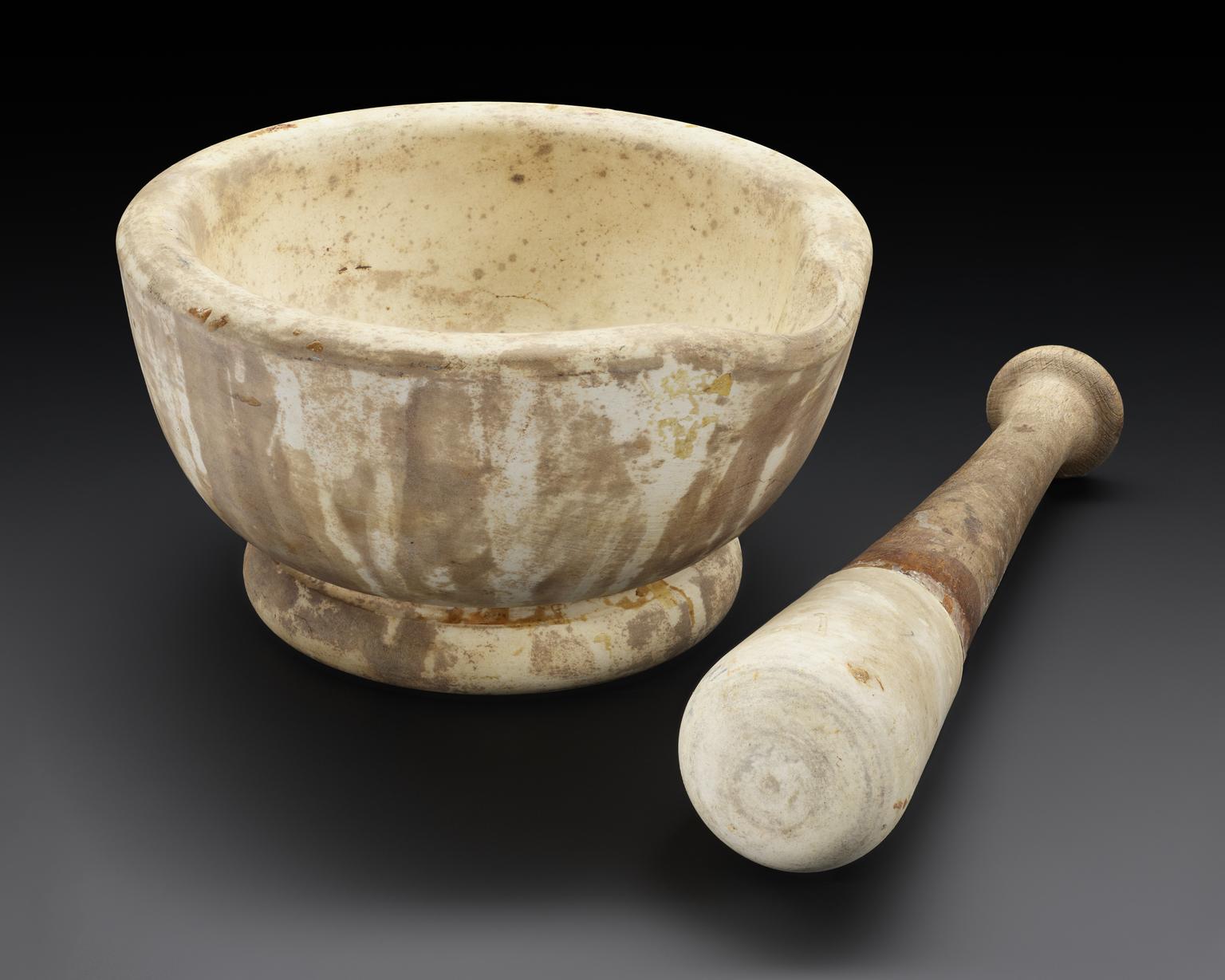
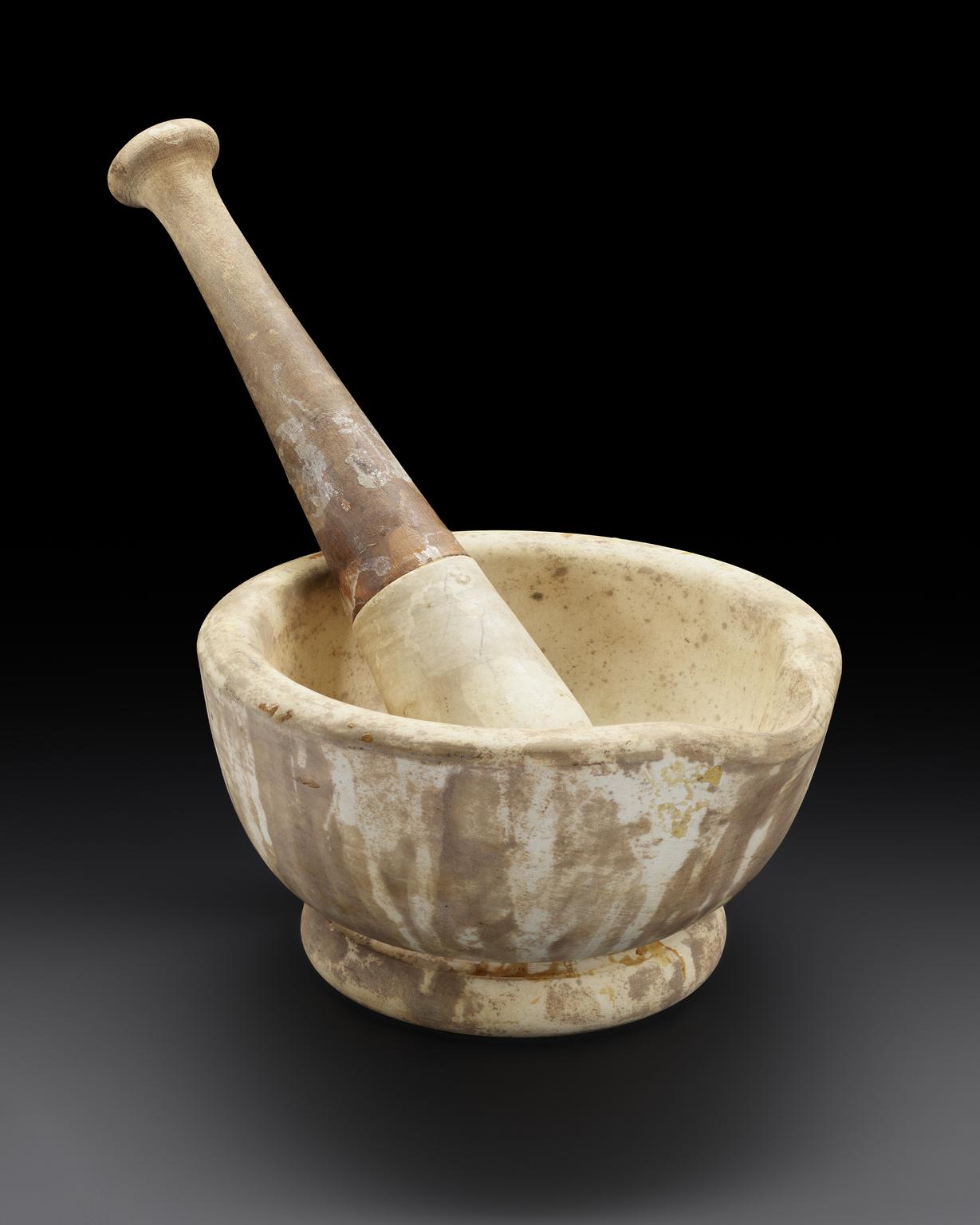
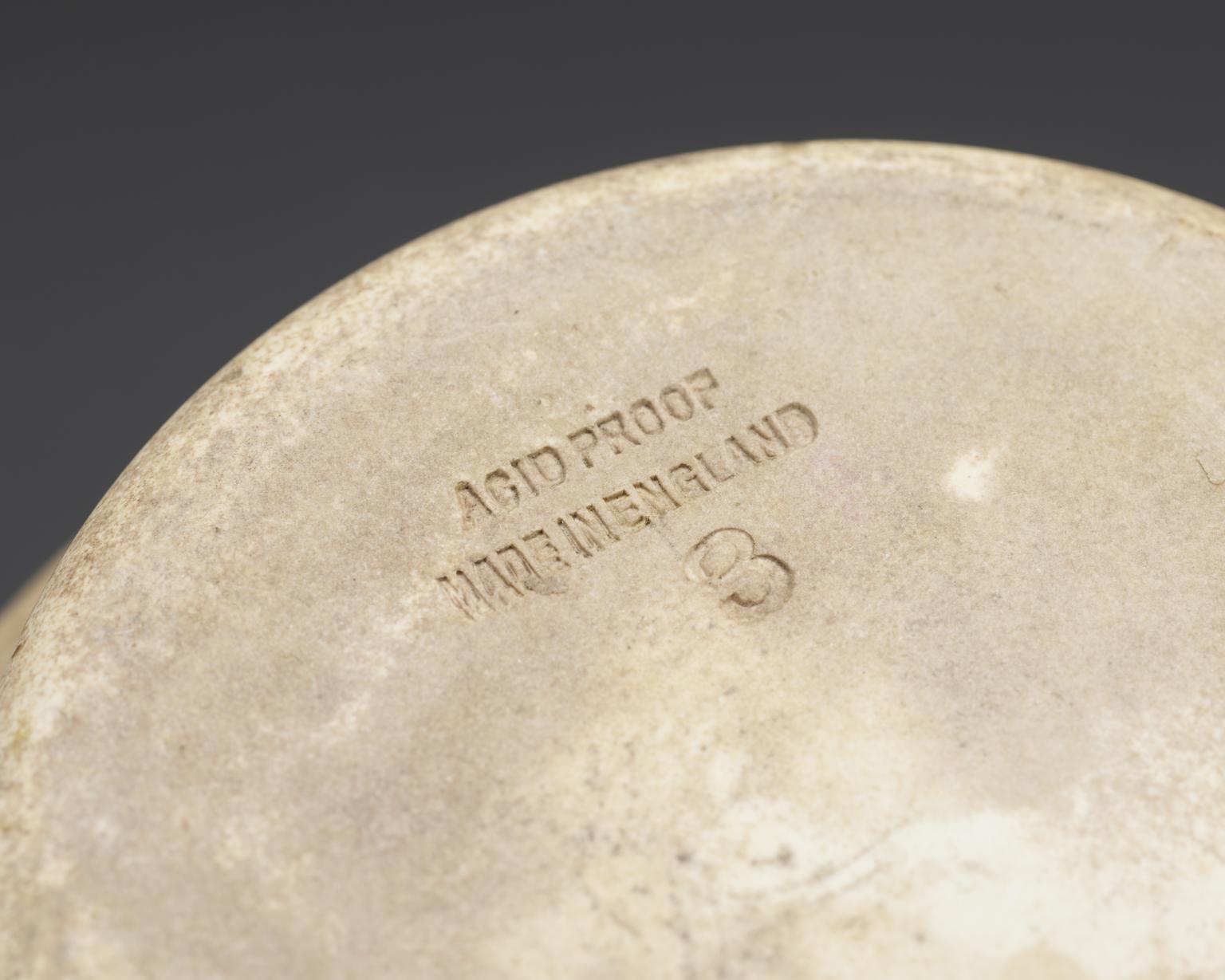
Pestle & Mortar used by Phil Leakey
Pestle and mortar used for preparing mixture used by Phil Leakey for special effects make-up.
More
Roy Ashton (1909–95) and Phil Leakey (1908–92) were master make-up artists who worked on many of the British cult horror films of the mid-20th century. A trained artist, Australia-born Ashton began his career at Gaumont-British Film Corporation in 1932 as a means of supplementing his passion for opera singing. In 1955, Ashton became the assistant to Hammer Films’ Phil Leakey, the first makeup artist to receive on-screen credit for ‘Special Make-up Effects’. Following Leakey’s departure from Hammer in 1958, Ashton took over as head makeup artist, where he continued his expert work throughout the 1960s and 1970s.
This pestle and mortar comes from Phil Leakey's make-up trunk which he used during his work on the film 'The Romantic Englishwoman' in 1975. The trunk was flown by air from Dial Films Limited, England to Dial Films Ltd. Germany via France. The trunk contained a variety of make-up such as pansticks, pancakes, artificial eye lashes, sponges, powder puffs, skin freshener, artificial blood, talcum powder, hair whitener, moustaches, oil colours, glycerine, cleansing cream, face powder, eye shadow, liquid make-up, towels, iron heater, beard block, make-up gowns, electric shaver and razors.
- Measurements:
-
mortar: 85 mm x 160 mm x 155 mm, 1.35 kg
pestle: 45 mm x 45 mm x 210 mm, .2 kg
- Materials:
- wood (unidentified) and clay
- Object Number:
- 2000-5000/1/30
- type:
- pestle and mortar (grinding tool)
- Image ©
- The Board of Trustees of the Science Museum
Can of nobecutane spray
Can of nobecutane spray.
- Object Number:
- 2000-5000/1/32
- type:
- nobecutane spray
Can of Brandel plastic spray
Can of Brandel plastic spray. Brandel "plastic spray for wigs and artificial beards".
- Object Number:
- 2000-5000/1/33
- type:
- can
Naturo "Plasto" No. 1
Tin of Naturo "Plasto" No. 1. A covering compound used by Phil Leakey for his special effects make-up.
- Measurements:
-
overall: 38 mm x 100 mm x 100 mm, .283 kg
- Materials:
- metal (unknown) and wax
- Object Number:
- 2000-5000/1/34
- type:
- motion picture equipment
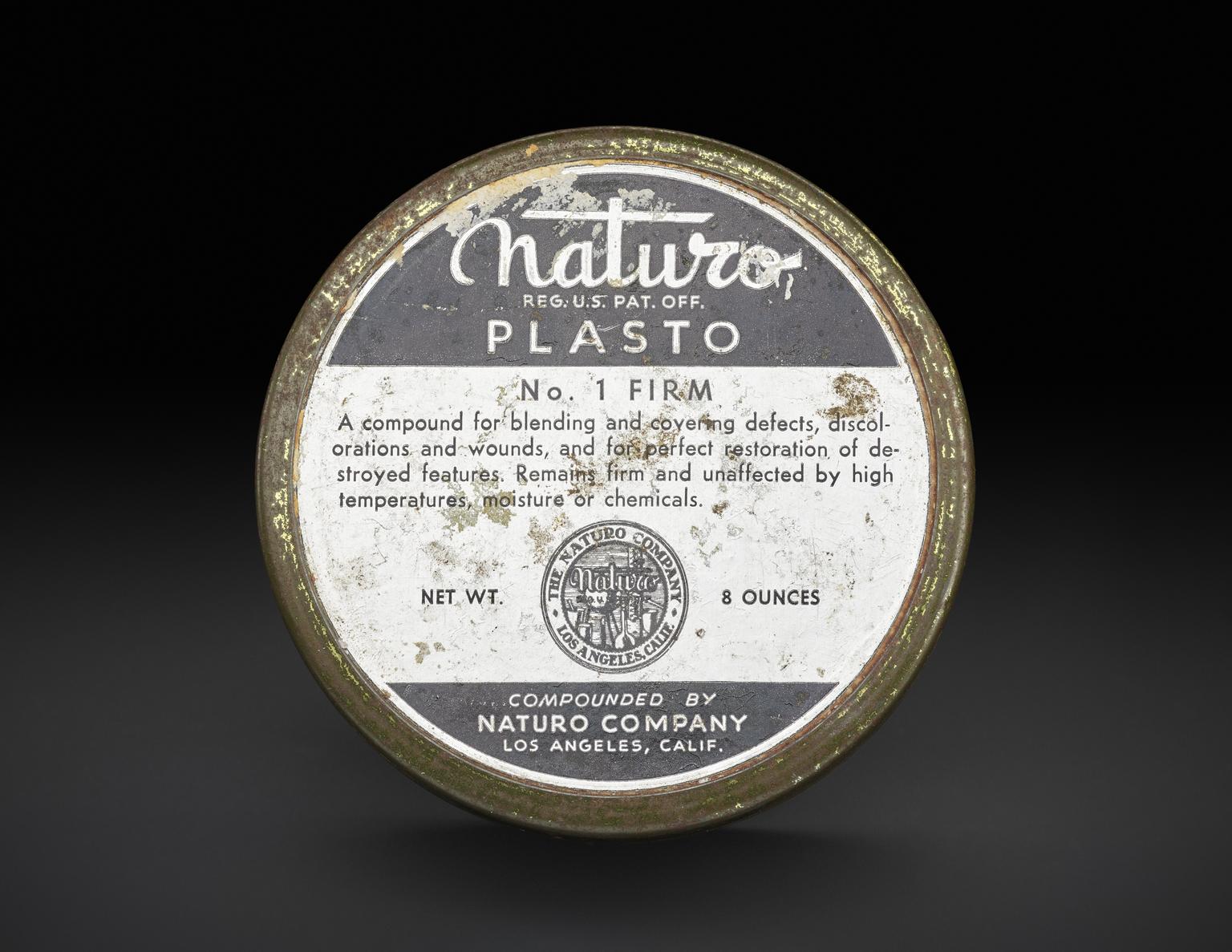
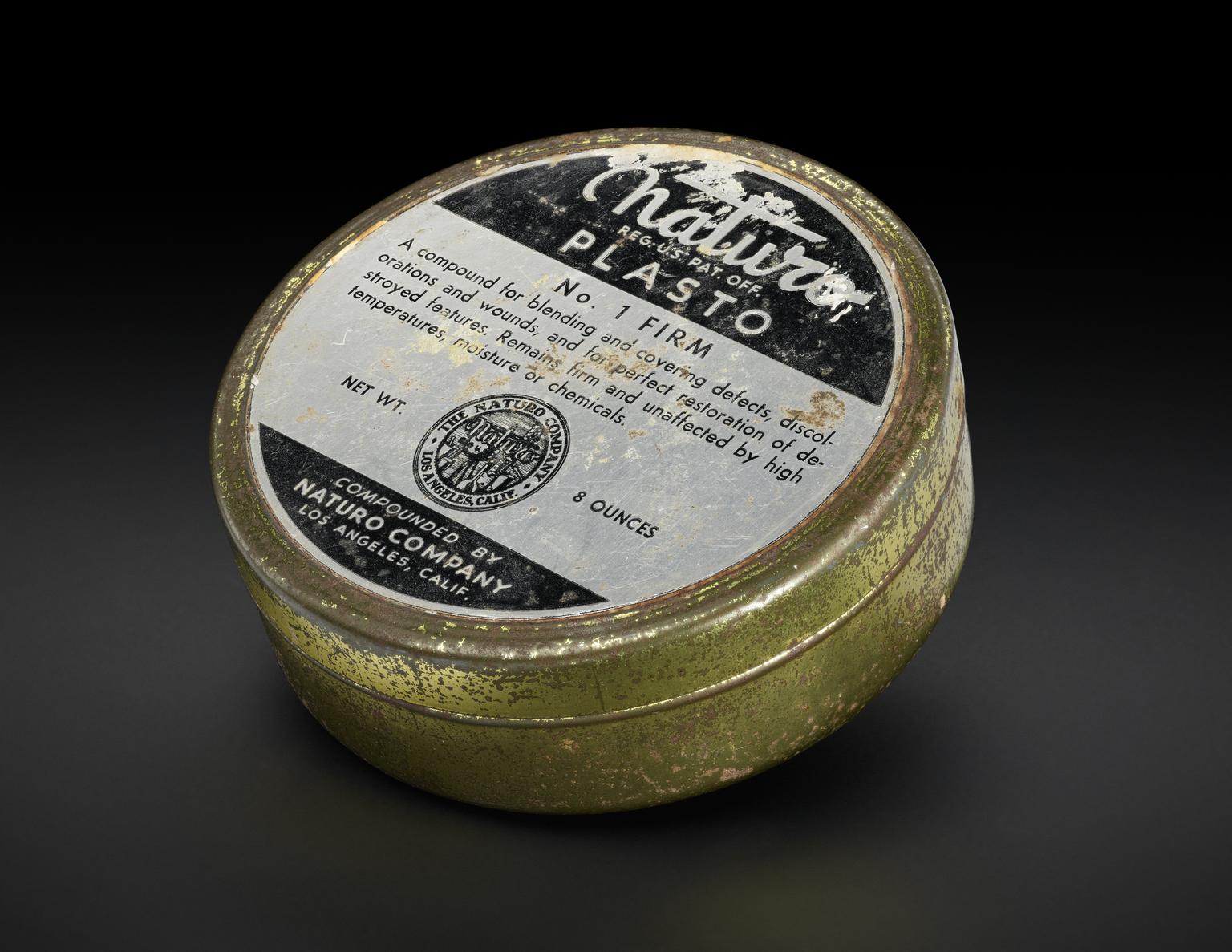
Naturo "Plasto" No. 1
Tin of Naturo "Plasto" No. 1. A covering compound used by Phil Leakey for his special effects make-up.
More
Roy Ashton (1909–95) and Phil Leakey (1908–92) were master make-up artists who worked on many of the British cult horror films of the mid-20th century. A trained artist, Australia-born Ashton began his career at Gaumont-British Film Corporation in 1932 as a means of supplementing his passion for opera singing. In 1955, Ashton became the assistant to Hammer Films’ Phil Leakey, the first makeup artist to receive on-screen credit for ‘Special Make-up Effects’. Following Leakey’s departure from Hammer in 1958, Ashton took over as head makeup artist, where he continued his expert work throughout the 1960s and 1970s.
This tin of 'plasto' comes from Phil Leakey's make-up trunk which he used during his work on the film 'The Romantic Englishwoman' in 1975. The trunk was flown by air from Dial Films Limited, England to Dial Films Ltd. Germany via France. The trunk contained a variety of make-up such as pansticks, pancakes, artificial eye lashes, sponges, powder puffs, skin freshener, artificial blood, talcum powder, hair whitener, moustaches, oil colours, glycerine, cleansing cream, face powder, eye shadow, liquid make-up, towels, iron heater, beard block, make-up gowns, electric shaver and razors.
- Measurements:
-
overall: 35 mm x 100 mm x 100 mm,
- Materials:
- metal (unknown) and wax
- Object Number:
- 2000-5000/1/35
- type:
- motion picture equipment
- Image ©
- The Board of Trustees of the Science Museum
Naturo "Plasto" No. 1
Tin of Naturo "Plasto" No. 1. A covering compound used by Phil Leakey for his special effects make-up.
- Measurements:
-
overall: 35 mm x 97 mm x 97 mm, .28 kg
- Materials:
- metal (unknown) and wax
- Object Number:
- 2000-5000/1/36
- type:
- motion picture equipment
Boots Theatrical Removing Cream
Tin of Boots theatrical removing cream (250 gms).
Reckna Curling Heater
Reckna curling heater in small tin.
- Materials:
- metal (unknown) , paper (fibre product) and rubber (unidentified)
- Object Number:
- 2000-5000/1/39
- type:
- curling heater
Boots Cosmetic Bottle
Empty Boots plastic bottle with paper price label.
- Object Number:
- 2000-5000/1/40
- type:
- cosmetic container
Prosthetic nose and chin used by Phil Leakey
Prosthetic nose and chin used by Phil Leakey for his special effects make-up.
Ey-teb Strip Eyelashes
Ey-teb strip eyelashes in original packaging, labelled "BeBe Daniels Rio Rita".
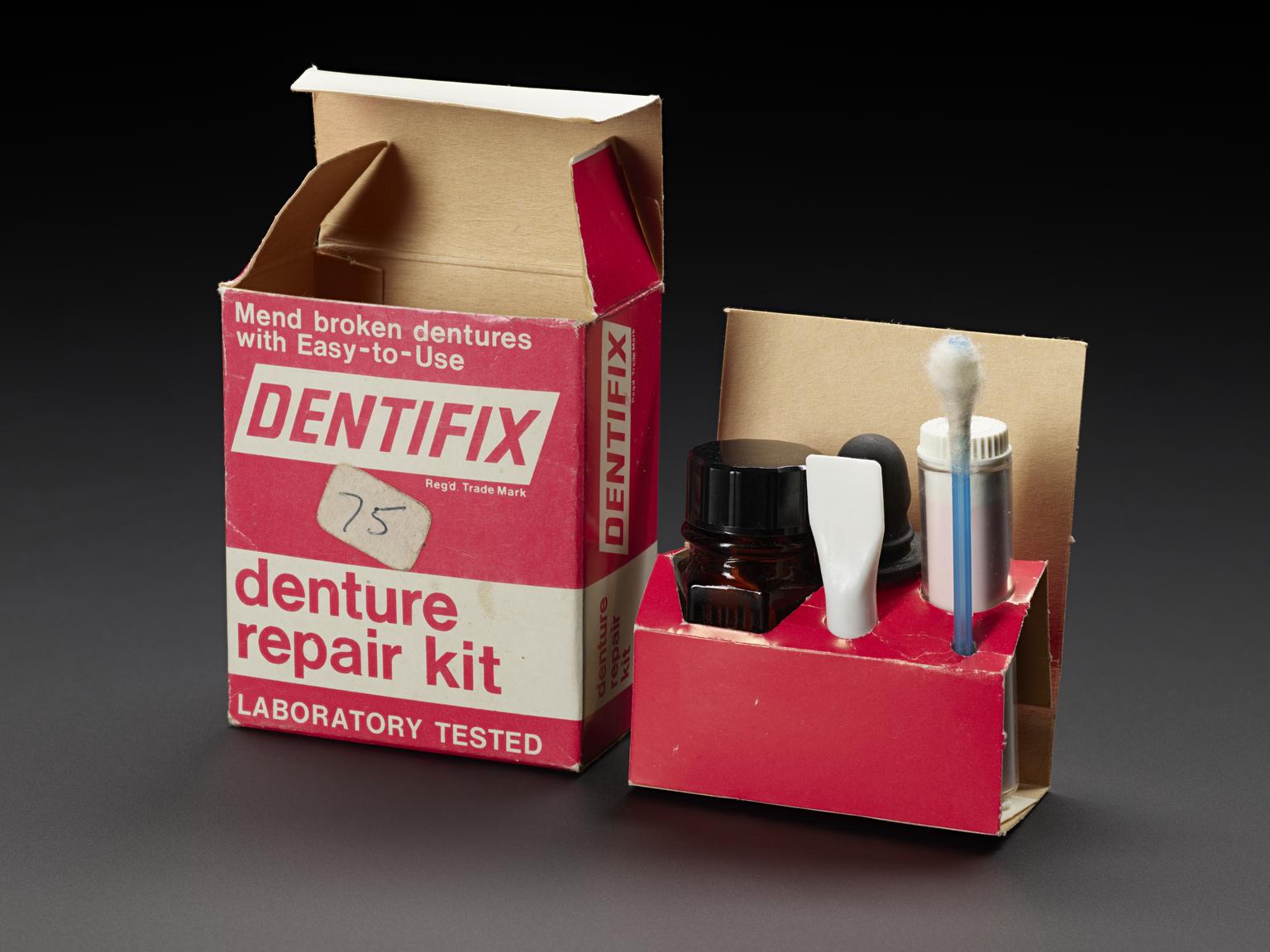
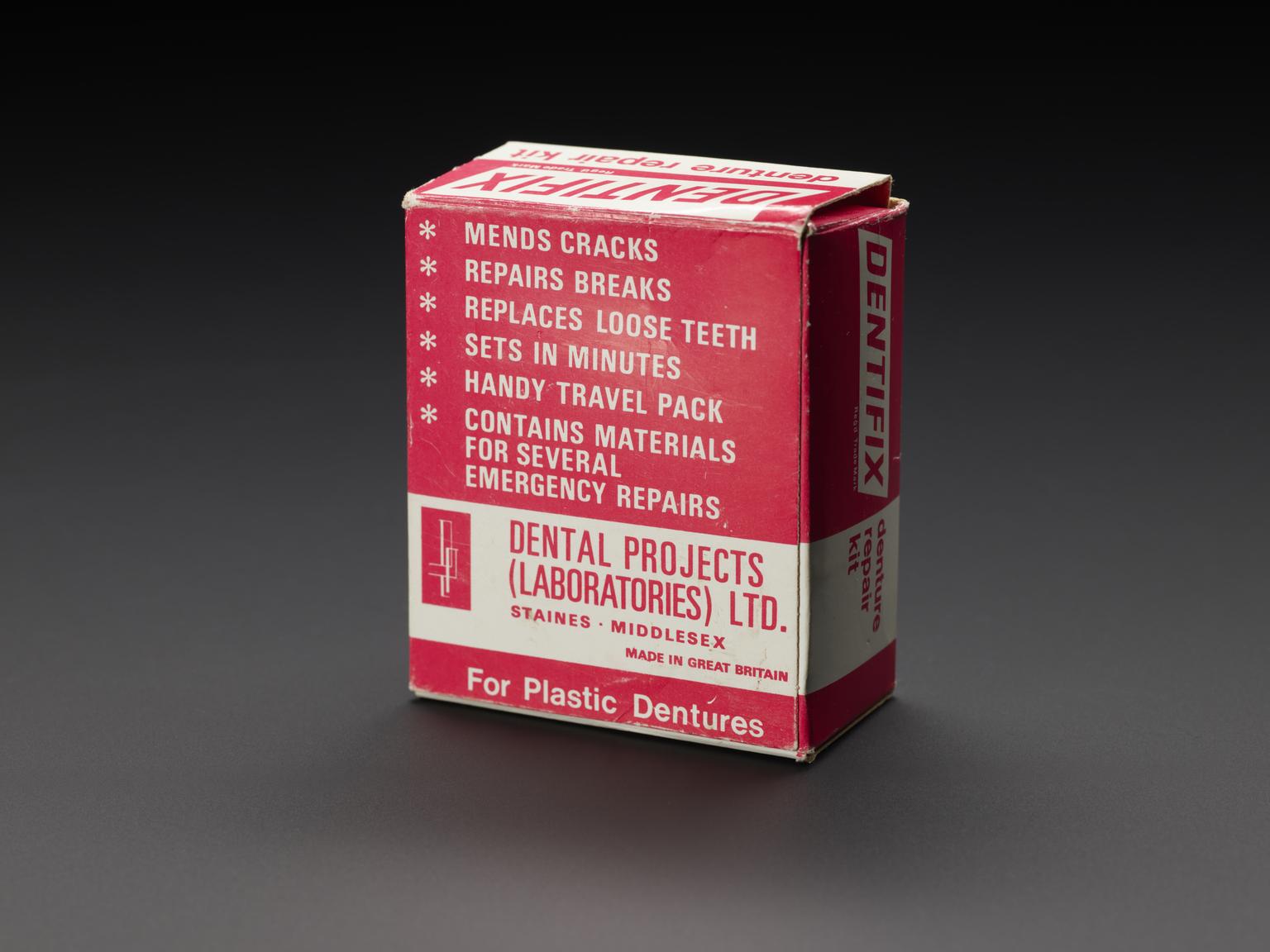
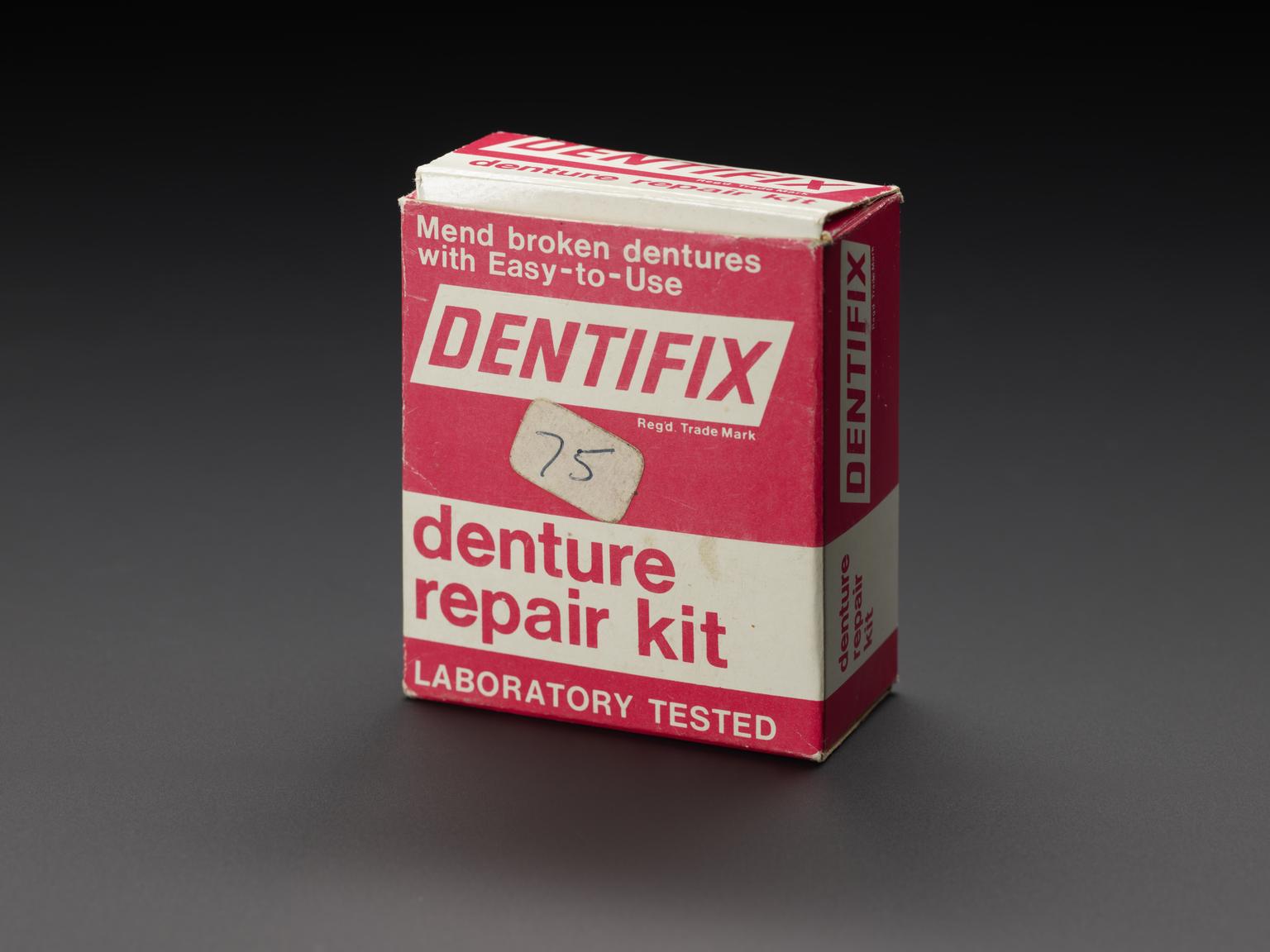
Dentifix denture repair kit used by Phil Leakey
Dentifix denture repair kit for plastic dentures used by Phil Leakey for his special effects make-up.
More
Roy Ashton (1909–95) and Phil Leakey (1908–92) were master make-up artists who worked on many of the British cult horror films of the mid-20th century. A trained artist, Australia-born Ashton began his career at Gaumont-British Film Corporation in 1932 as a means of supplementing his passion for opera singing. In 1955, Ashton became the assistant to Hammer Films’ Phil Leakey, the first makeup artist to receive on-screen credit for ‘Special Make-up Effects’. Following Leakey’s departure from Hammer in 1958, Ashton took over as head makeup artist, where he continued his expert work throughout the 1960s and 1970s.
This packet of Dentifix comes from Phil Leakey's make-up trunk which he used during his work on the film 'The Romantic Englishwoman' in 1975. The trunk was flown by air from Dial Films Limited, England to Dial Films Ltd. Germany via France. The trunk contained a variety of make-up such as pansticks, pancakes, artificial eye lashes, sponges, powder puffs, skin freshener, artificial blood, talcum powder, hair whitener, moustaches, oil colours, glycerine, cleansing cream, face powder, eye shadow, liquid make-up, towels, iron heater, beard block, make-up gowns, electric shaver and razors.
- Measurements:
-
box: 80 mm x 65 mm x 33 mm,
- Materials:
- paper (fibre product) , cotton (fibre) , cardboard , polystyrene , glass and rubber (unidentified)
- Object Number:
- 2000-5000/1/43
- type:
- denture repair kit
- Image ©
- The Board of Trustees of the Science Museum
Bottle of theatrical sealor no 20
Bottle of theatrical sealor no 20.
- Object Number:
- 2000-5000/1/44
- type:
- bottles
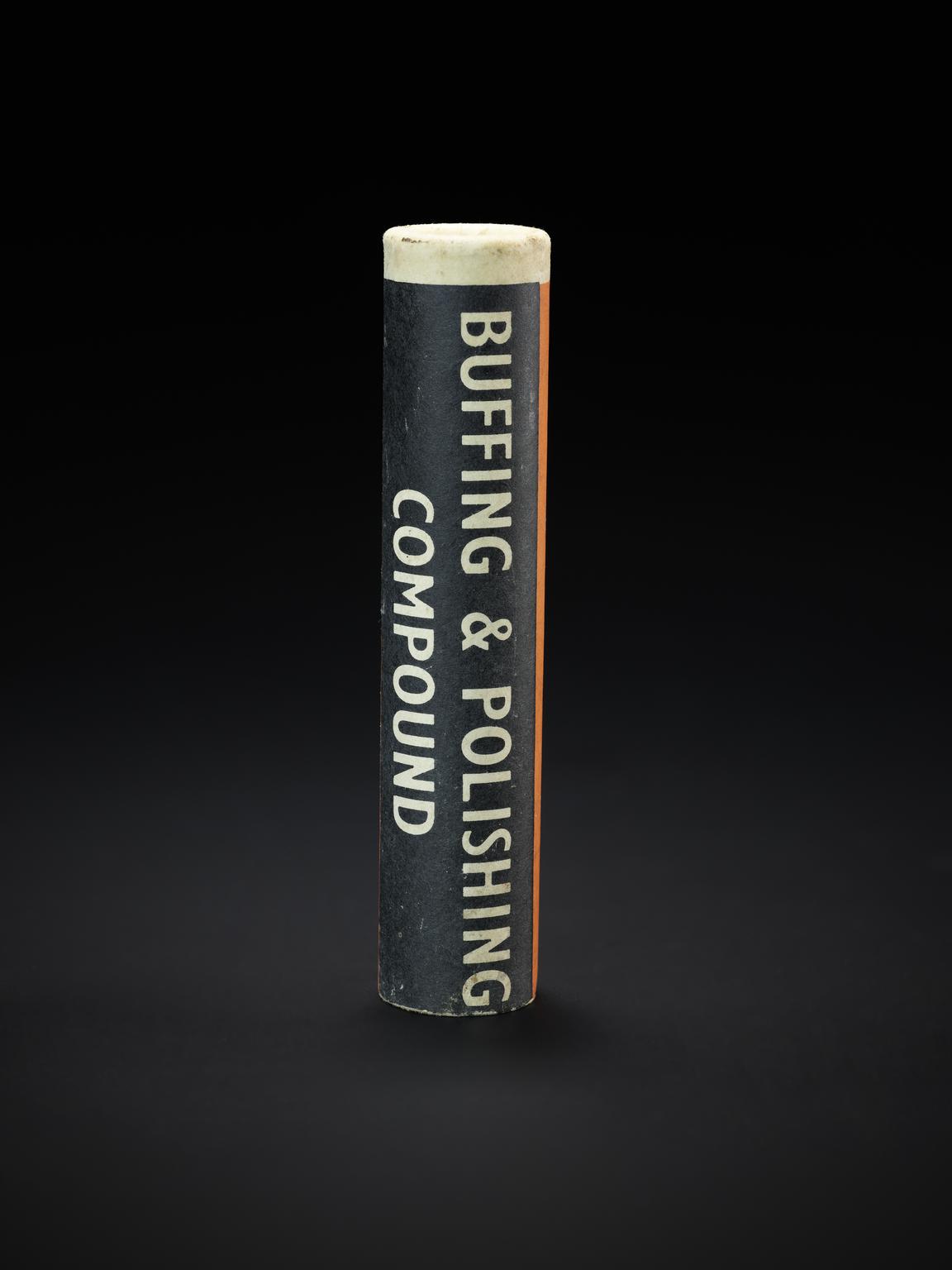
Polishing compound Used by Phil Leakey
Tube of buffing and polishing compound, U-2199 used by Phil Leakey for his special effects make-up.
More
Roy Ashton (1909–95) and Phil Leakey (1908–92) were master make-up artists who worked on many of the British cult horror films of the mid-20th century. A trained artist, Australia-born Ashton began his career at Gaumont-British Film Corporation in 1932 as a means of supplementing his passion for opera singing. In 1955, Ashton became the assistant to Hammer Films’ Phil Leakey, the first makeup artist to receive on-screen credit for ‘Special Make-up Effects’. Following Leakey’s departure from Hammer in 1958, Ashton took over as head makeup artist, where he continued his expert work throughout the 1960s and 1970s.
This tube of buffing and polishing compound comes from Phil Leakey's make-up trunk which he used during his work on the film 'The Romantic Englishwoman' in 1975. The trunk was flown by air from Dial Films Limited, England to Dial Films Ltd. Germany via France. The trunk contained a variety of make-up such as pansticks, pancakes, artificial eye lashes, sponges, powder puffs, skin freshener, artificial blood, talcum powder, hair whitener, moustaches, oil colours, glycerine, cleansing cream, face powder, eye shadow, liquid make-up, towels, iron heater, beard block, make-up gowns, electric shaver and razors.
Max Factor Theatrical Make-Up
Max Factor Creme Puff, Sun Goddess deep tan.
- Object Number:
- 2000-5000/1/46
- type:
- cosmetics
Bag Containing Postcards
Bag "cartes postales" containing postcards.
- Materials:
- cardboard and paper (fibre product)
- Object Number:
- 2000-5000/1/102
- type:
- bag of postcards
Carrier Bag: "Hills Airport Shops"
Carrier bag "Hills Airport Shops".