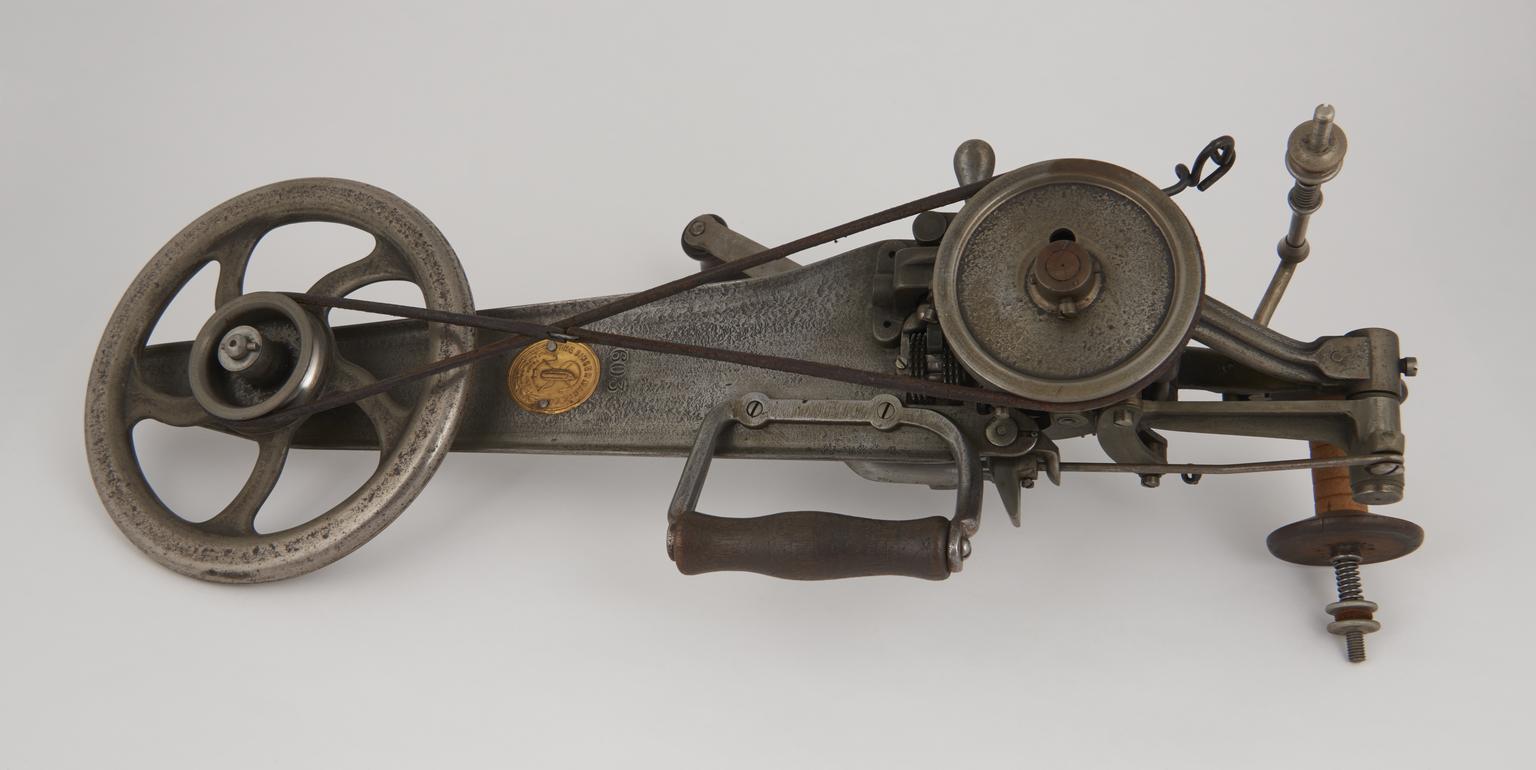
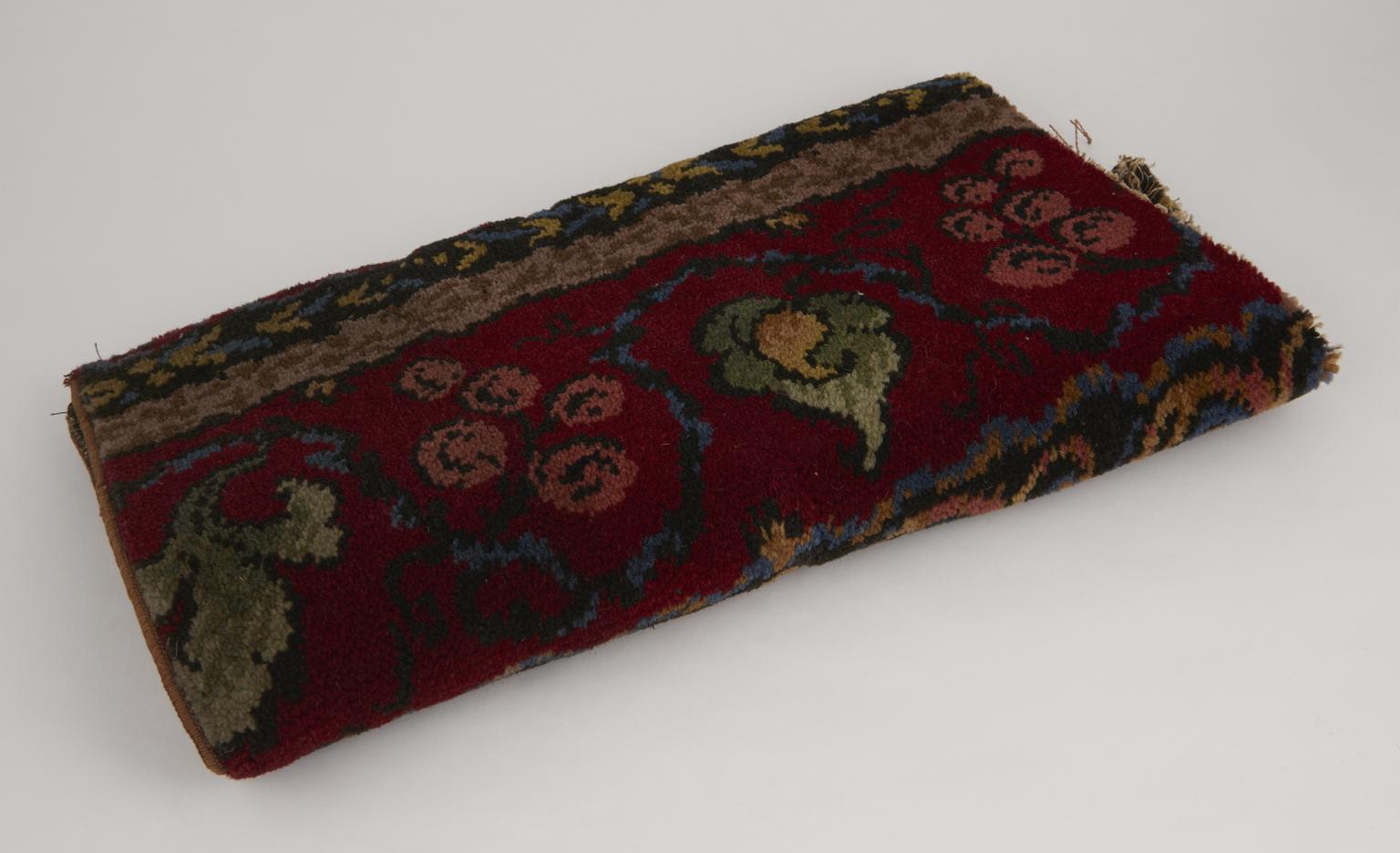
Lockstitch sewing machine for sewing carpets and carpet sample, 1884-1890.
An unusual machine for the specialised work of sewing two carpet ends together. It was a double loop stitch, so positioned that the point of interlocking of the loops occurs at the centre of the thickness of the edge of the material, so that when opened out the carpet will lay quite flat. The frame is built up of thick steel plate, and forms a gap into which the two pieces of carpet are introduced, face to face with the foundation material outwards. The needle is curved, and is carried in a swinging arm with its fulcrum directly in line with the centre of the two carpet edges. The looping feed is actuated by a cam groove on the inner face of a wheel which also drives a distant flywheel by means of a round belt. The feed rollers have serrated edges and are driven by a ratchet and pawl feed. They are self centering and yielding so as to compensate for material of varying thickness, whilst maintaining the two pieces central in relation to the needle track.