This image is released under a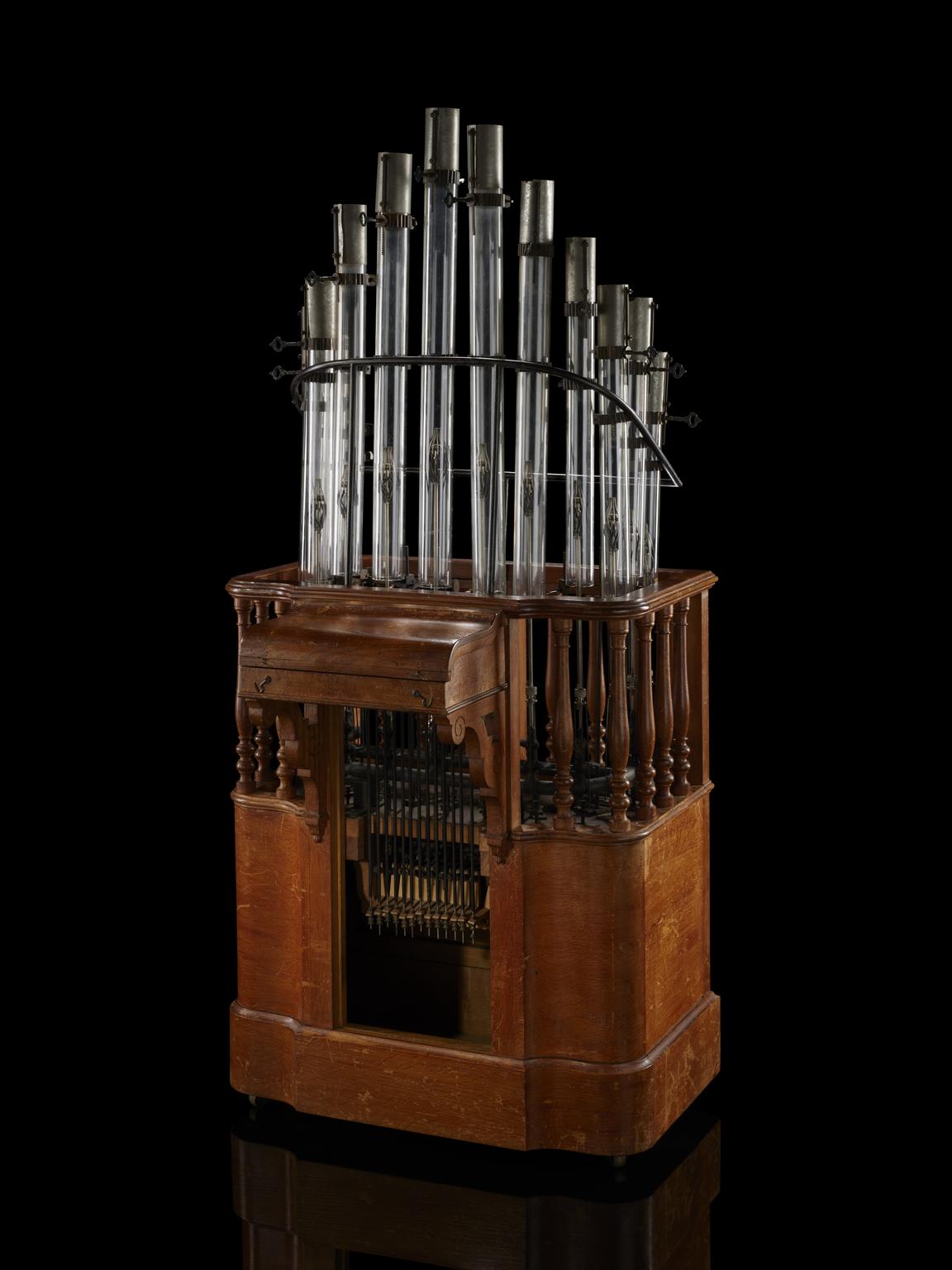
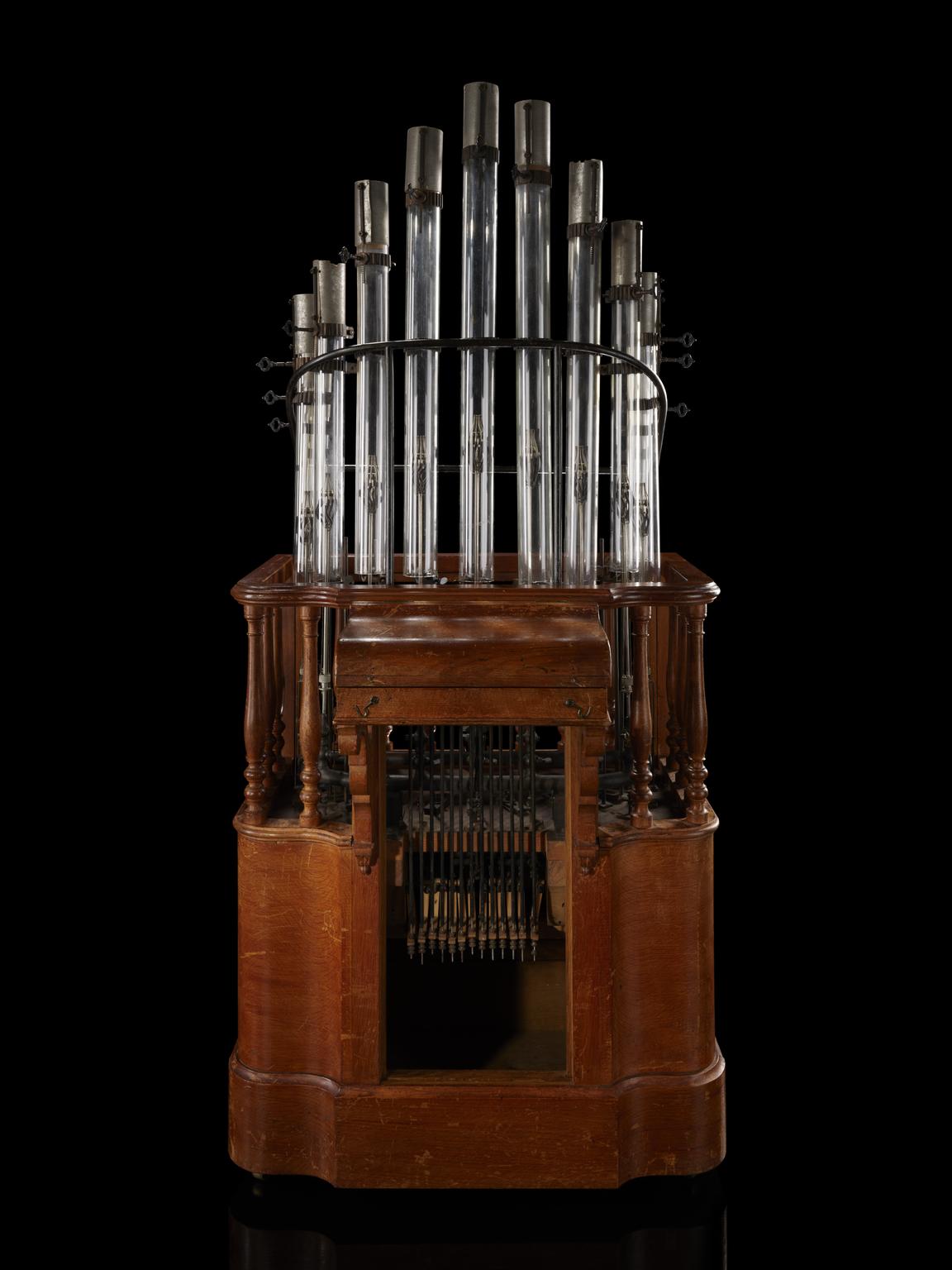
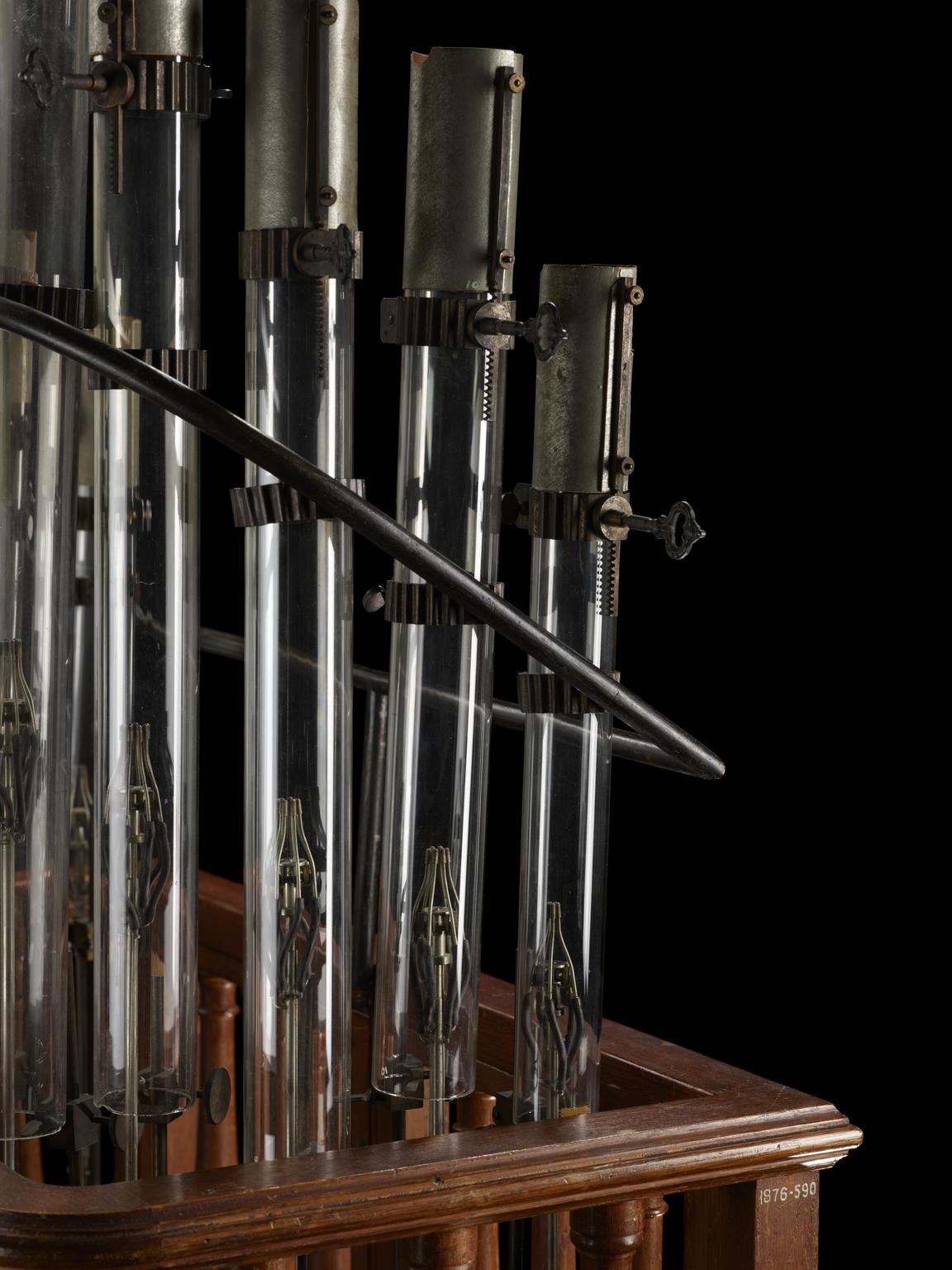
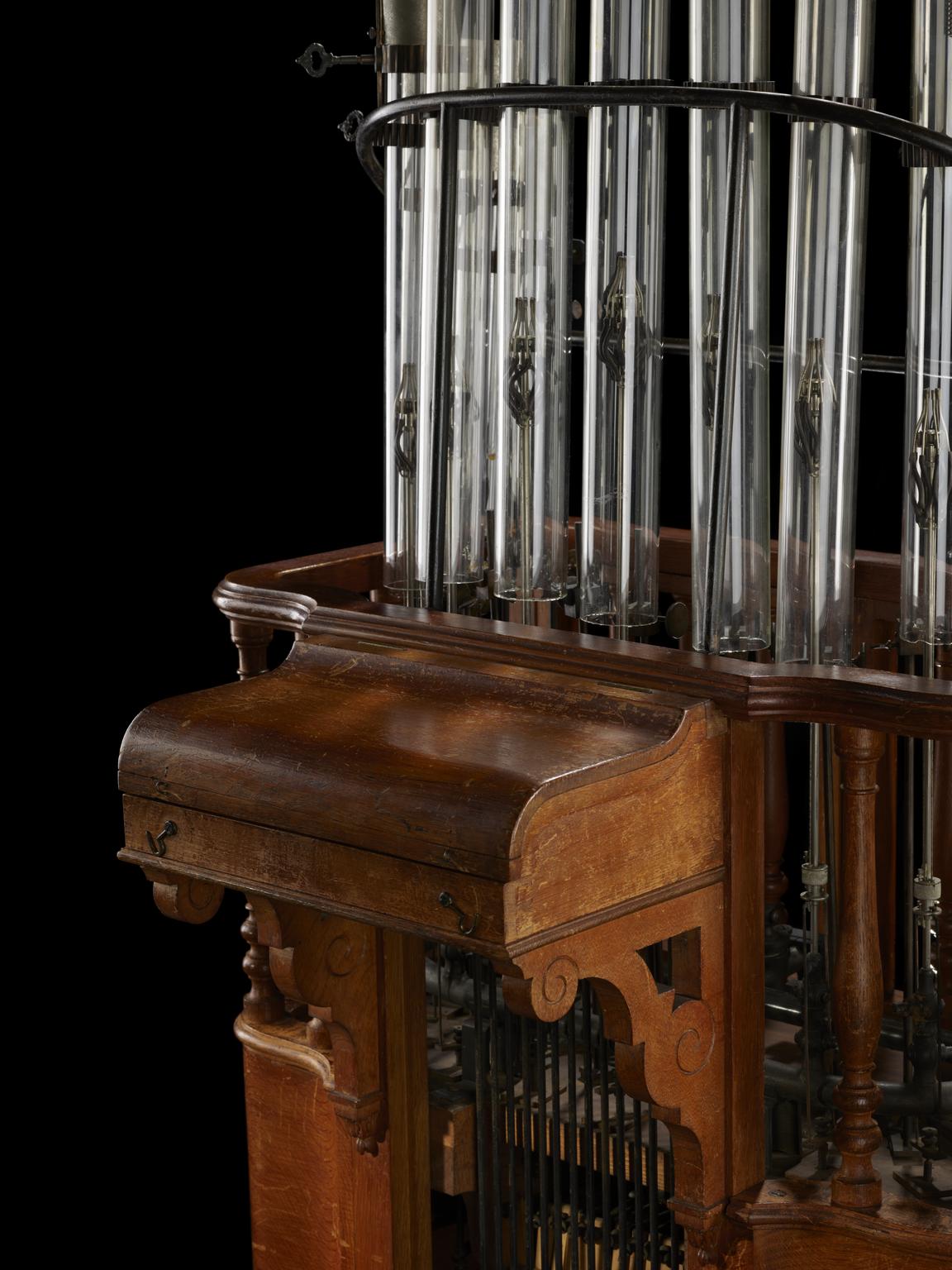
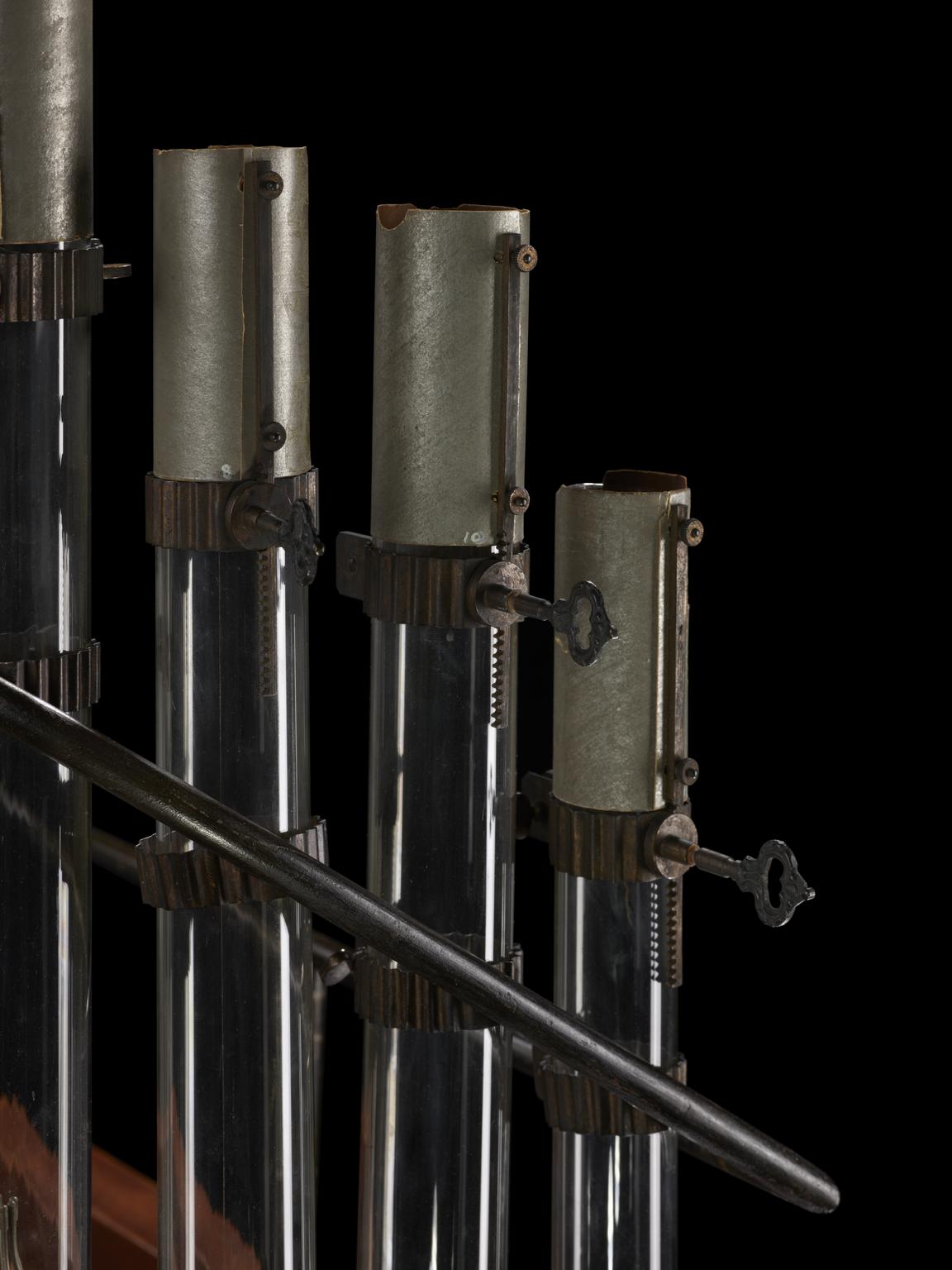
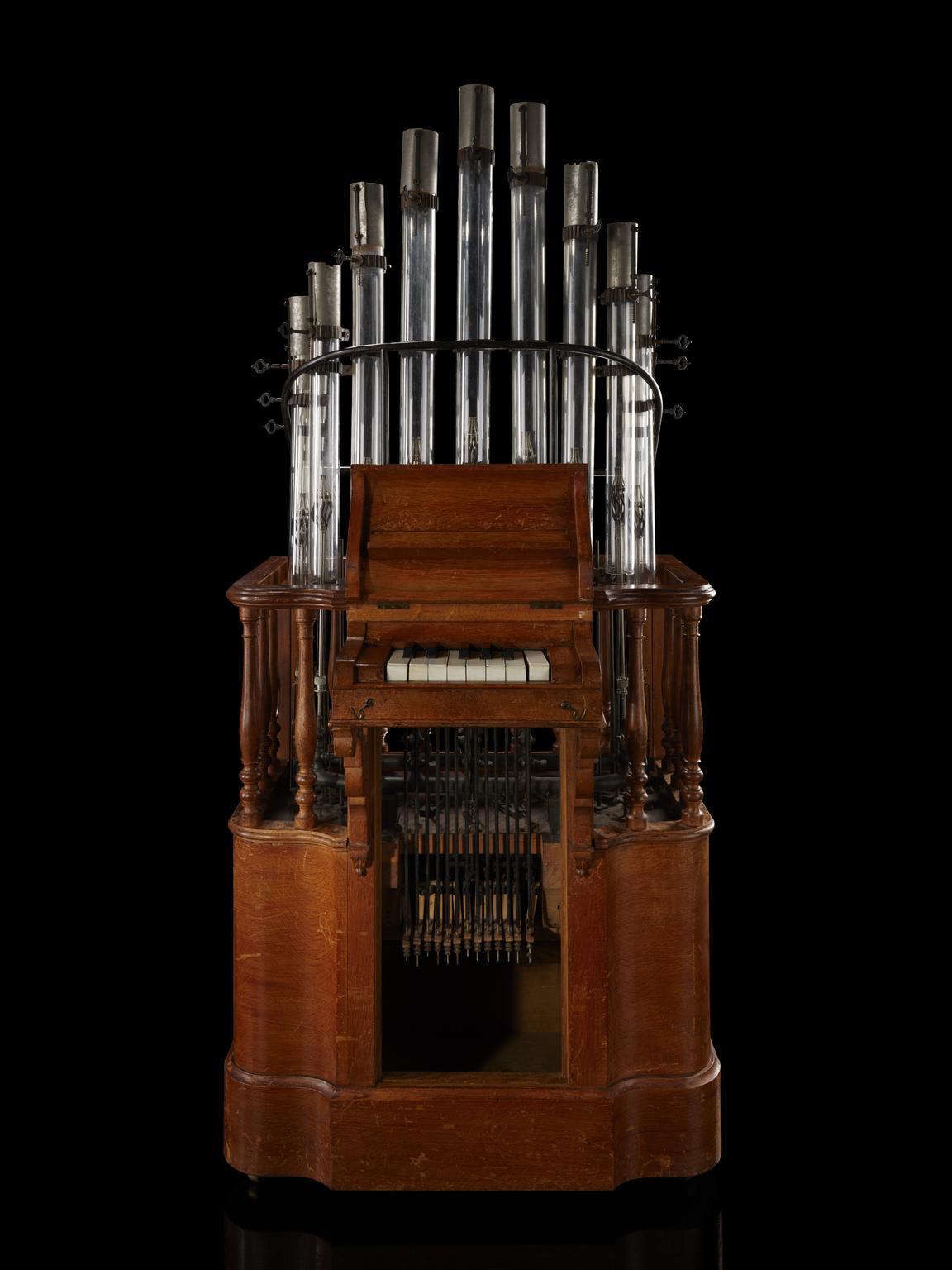
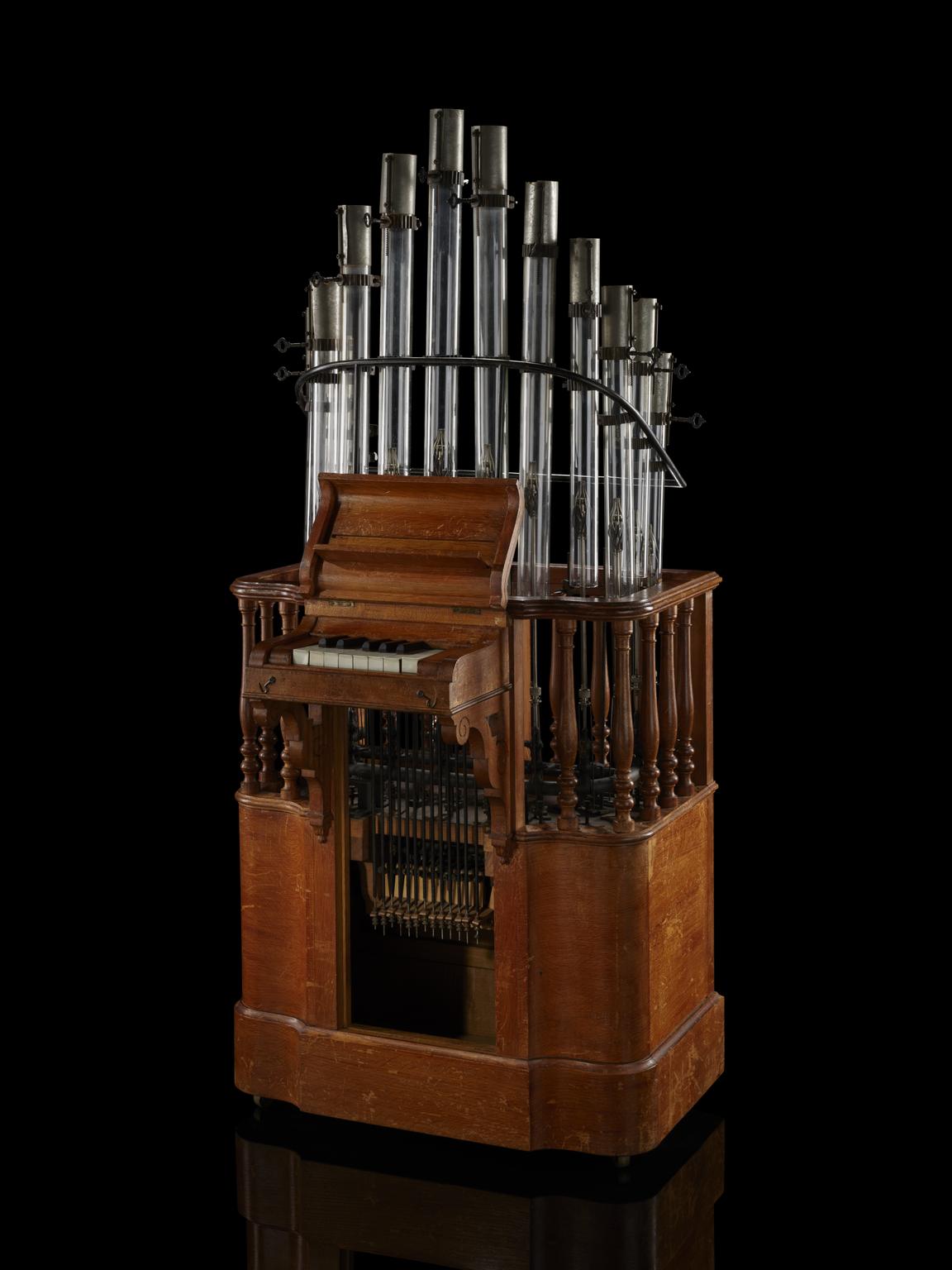
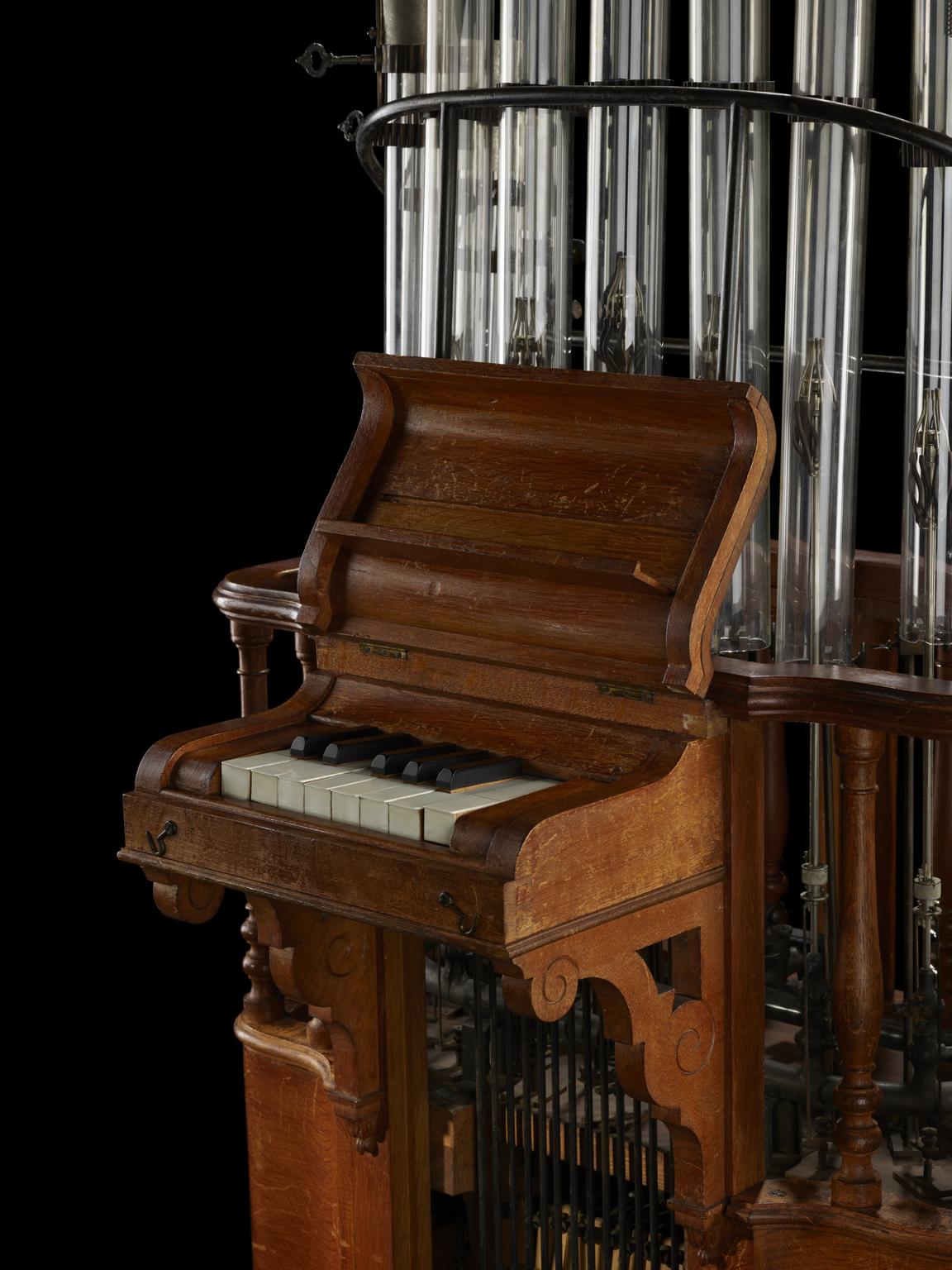
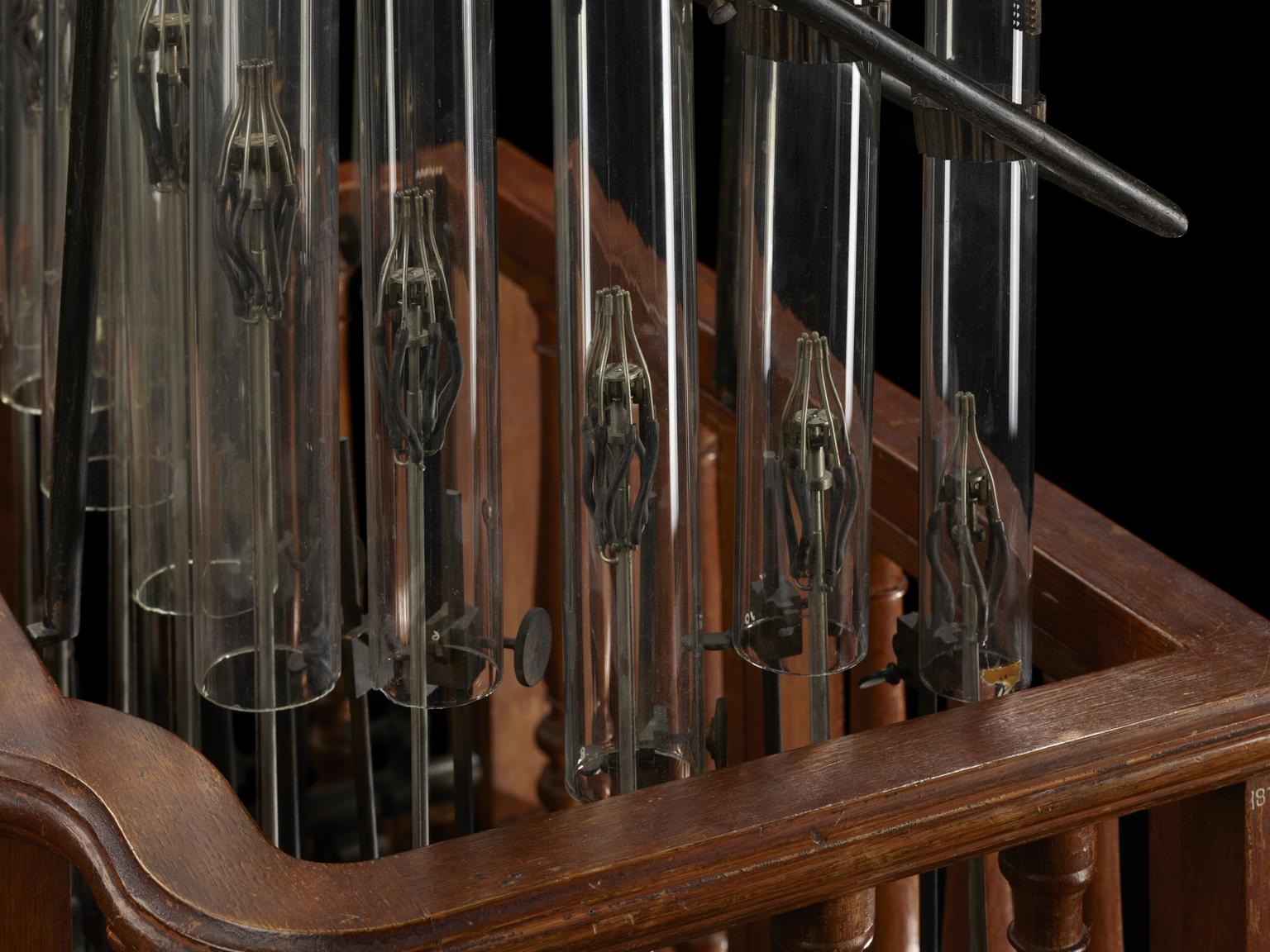
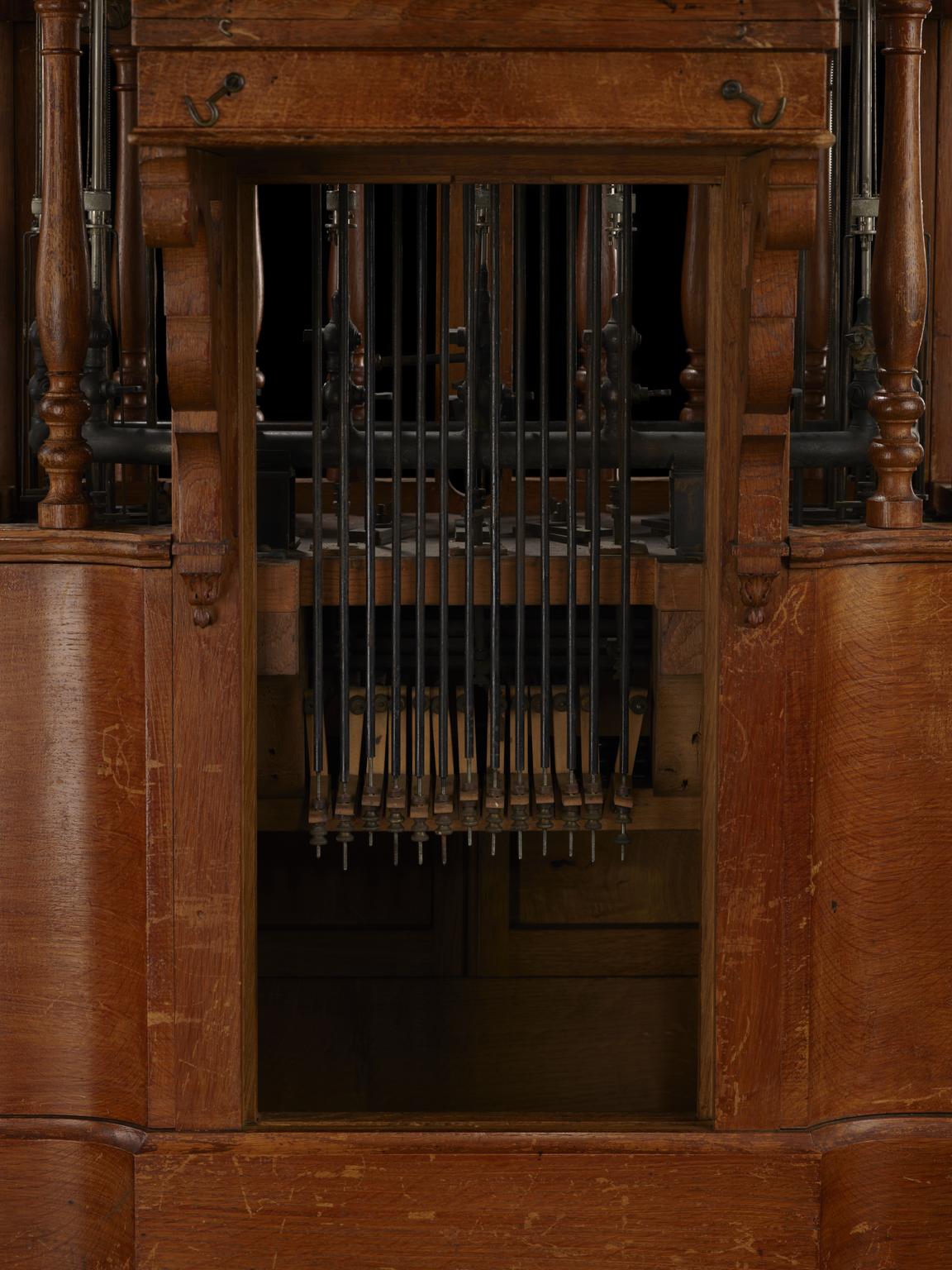
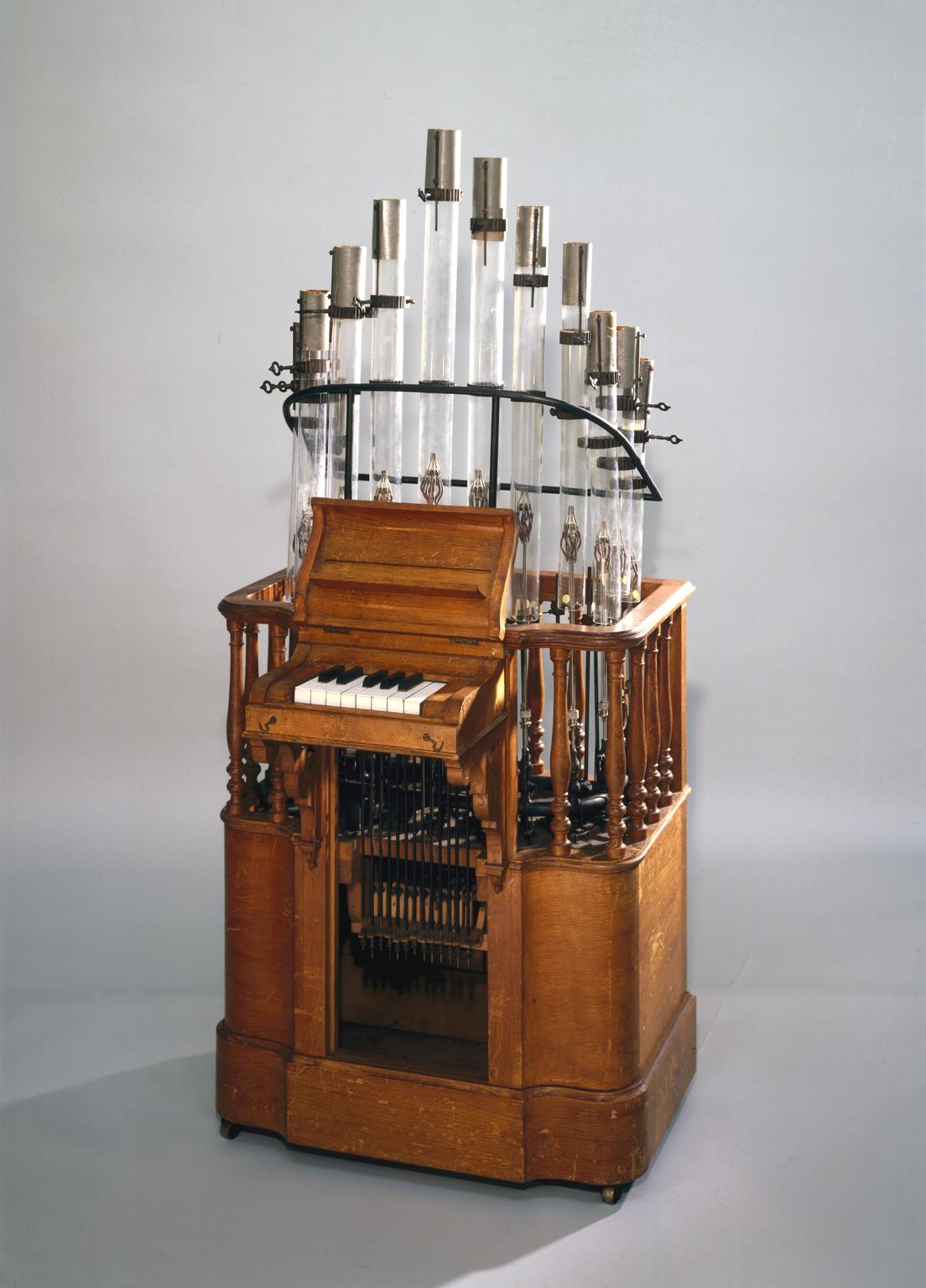
Kastner's Pyrophone, 1873-1876
Pyrophone, wood, metal, glass, Frédéric Kastner, France, 1873.
More
Patented by the Strasbourg-born musician and scientist Frédéric Kastner in 1873, the pyrophone was a musical instrument in which flames encased in pipes similar to those of a traditional organ were used to produce musical notes. Kastner took advantage of Dr B Higgins’ 1777 discovery that a hydrogen flame positioned at the lower end of glass tube could produce a note. This, combined with his musical knowledge (his father was the composer Jean-Georges Kastner), allowed him to create a “Fire Organ”, as the instrument was also known.
- Measurements:
-
overall with glass tubes: Height = 1540 mm x Width = 690 mm x Depth = 630 mm, Weight = 50 kg
base: 1160 mm (Max height without glass tubes)
- Materials:
- glass , metal (unknown) , wood (unidentified) , ivory , oak (wood) , brass (copper, zinc alloy) , beech (wood) , steel (metal) , lacquer , paint , ceramic (unspecified) , felt and cardboard
- Object Number:
- 1876-590/1
- type:
- pyrophone
- Image ©
- The Board of Trustees of the Science Museum