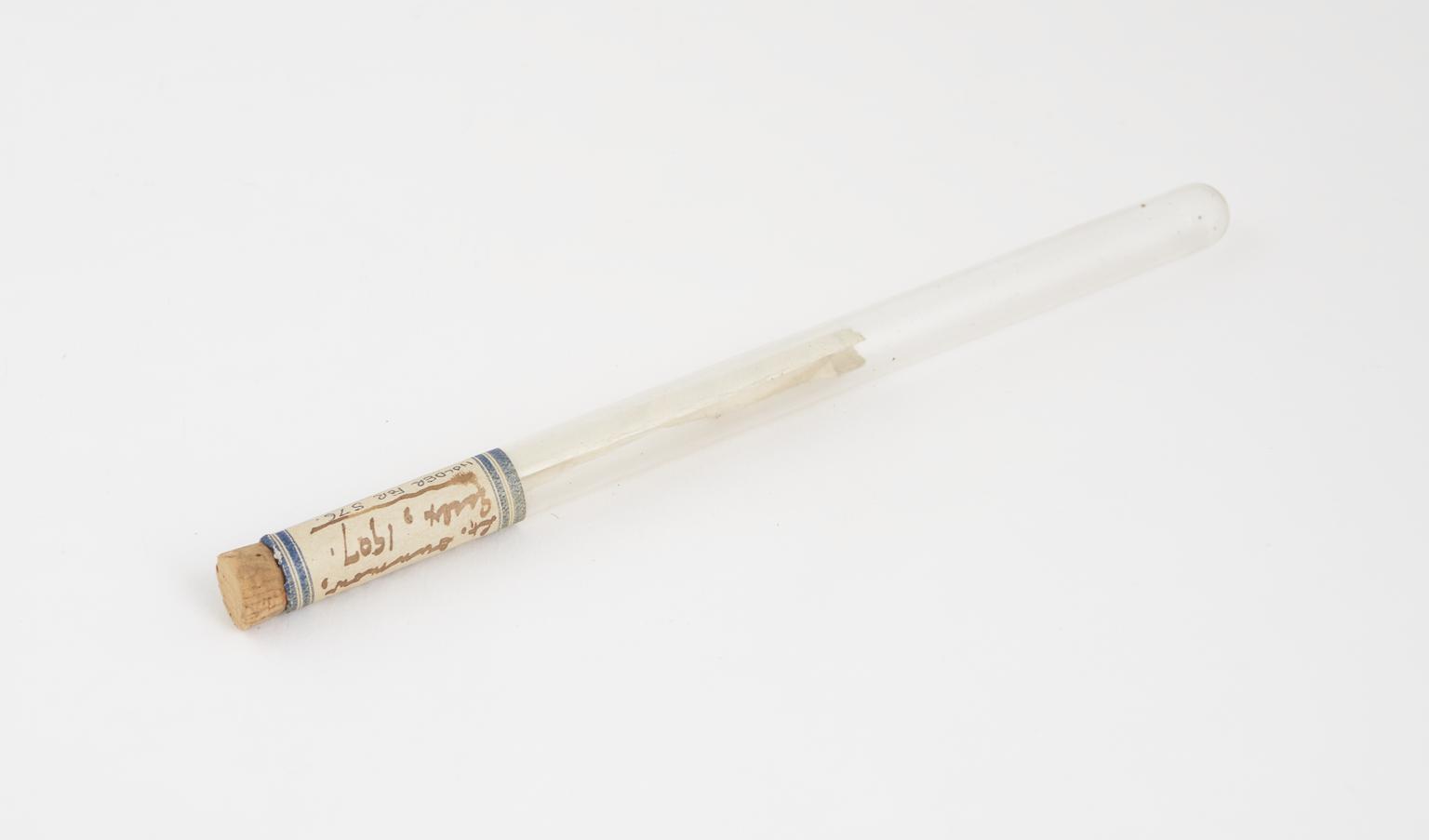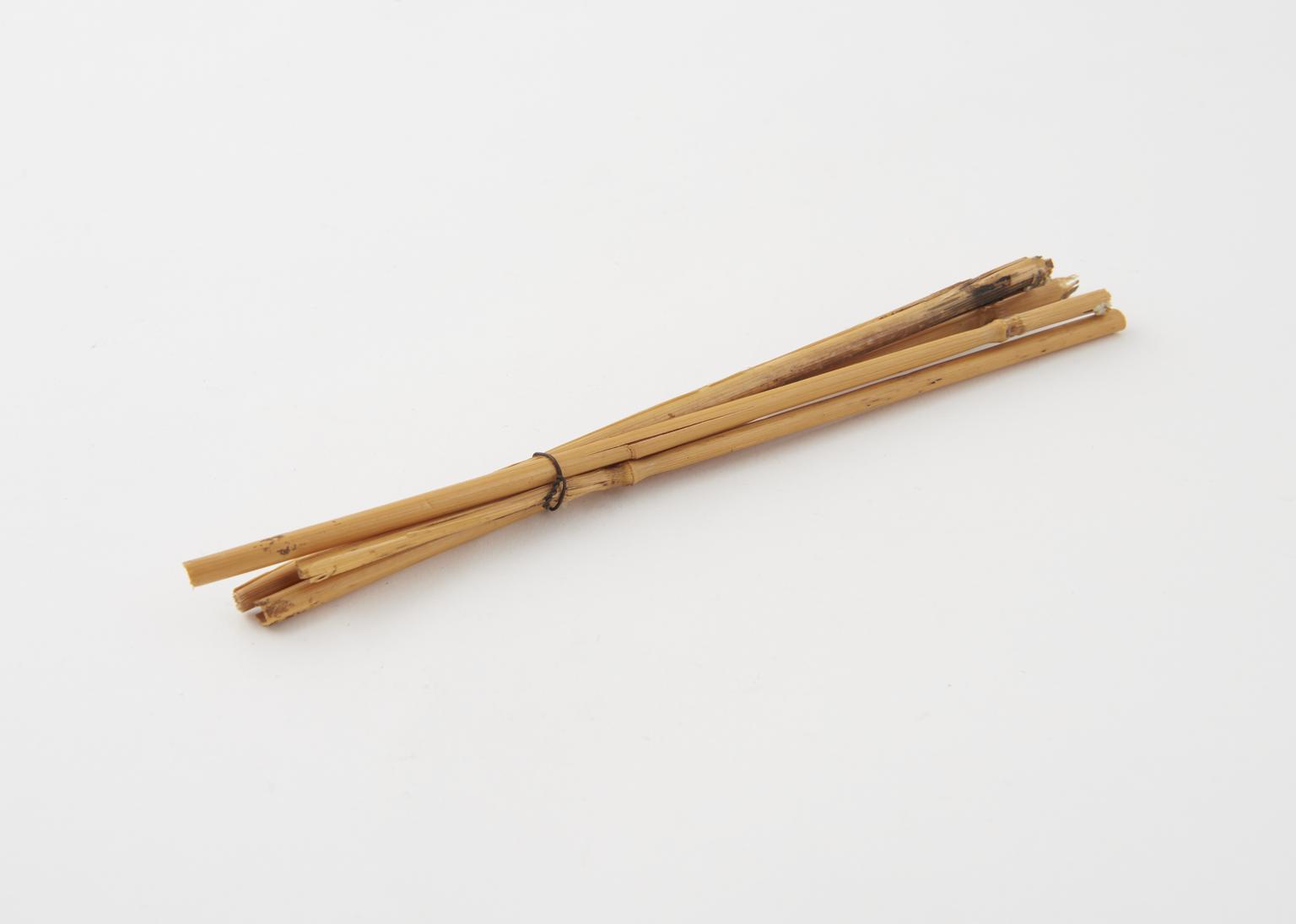
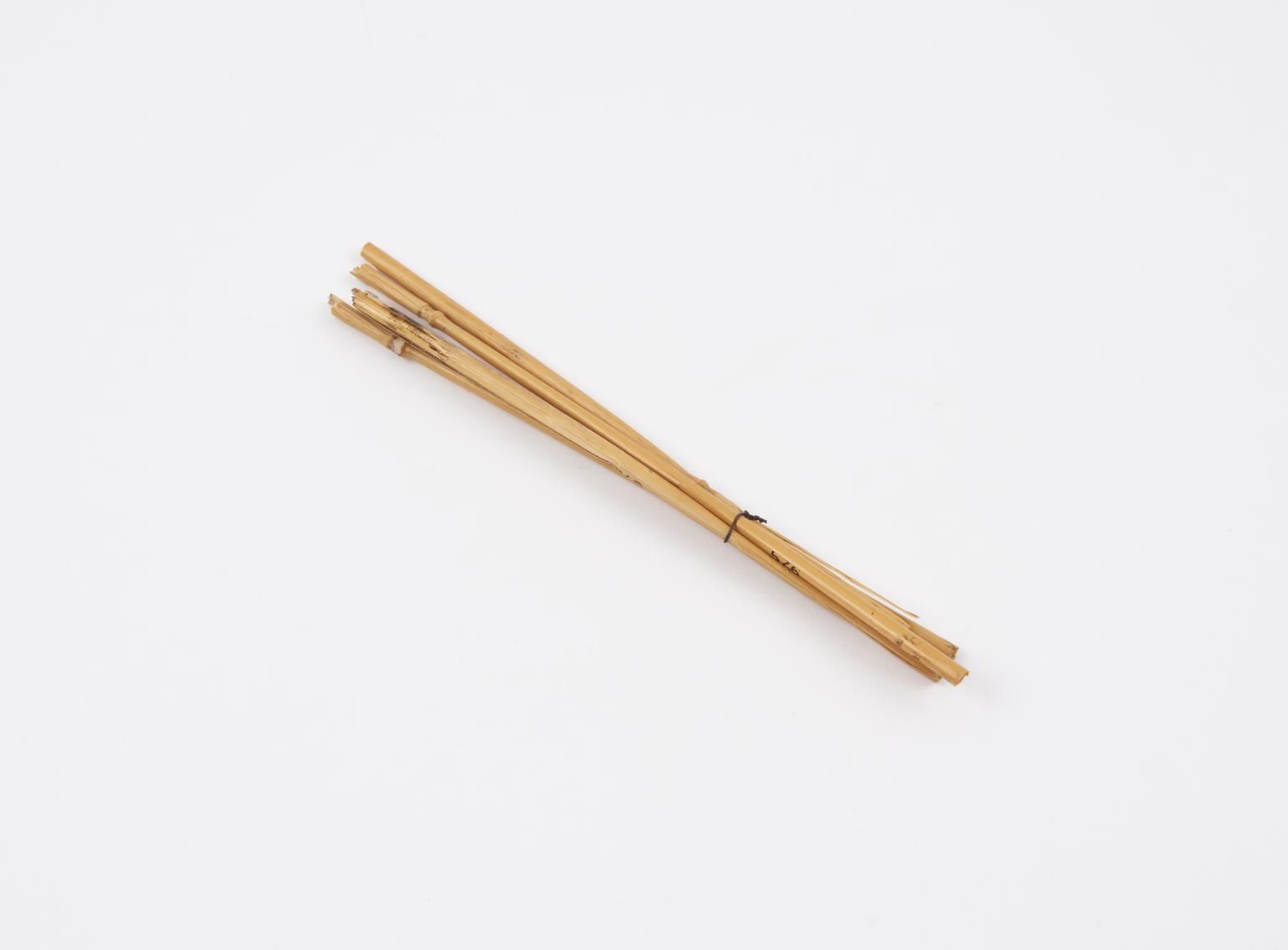
Sulphur-matches of oat-straw, Dunmow, Essex
Sulphur matches made of oat-straw, collected by Mr. Hastings Worrin in Dunmow, Essex, England
More
Humans have throughout history used different techniques and tools to create life-sustaining fires. Matches are arguably the most revolutionary innovation in the development of fire-making methods. Before British pharmacist John Walker invented the first successful friction match in 1826, matches consisted of small sticks of wood coated in sulphur. Early examples of these originated in China around 577 AD. Unlike today’s matches however, they were not self-igniting and had to be lit by an external source.
This object is part of the Bryant and May fire-making collection, which used to be displayed in a private museum within the Bryant and May match-making factory’s offices. The collection comprises around 1200 objects, dating from the Stone Age to the early 20th century that illustrate the variety of tools and techniques humans across the world have used to create fires.
- Measurements:
-
overall: 146 mm
- Materials:
- straw
- Object Number:
- 1937-682/576/1
- Image ©
- The Board of Trustees of the Science Museum