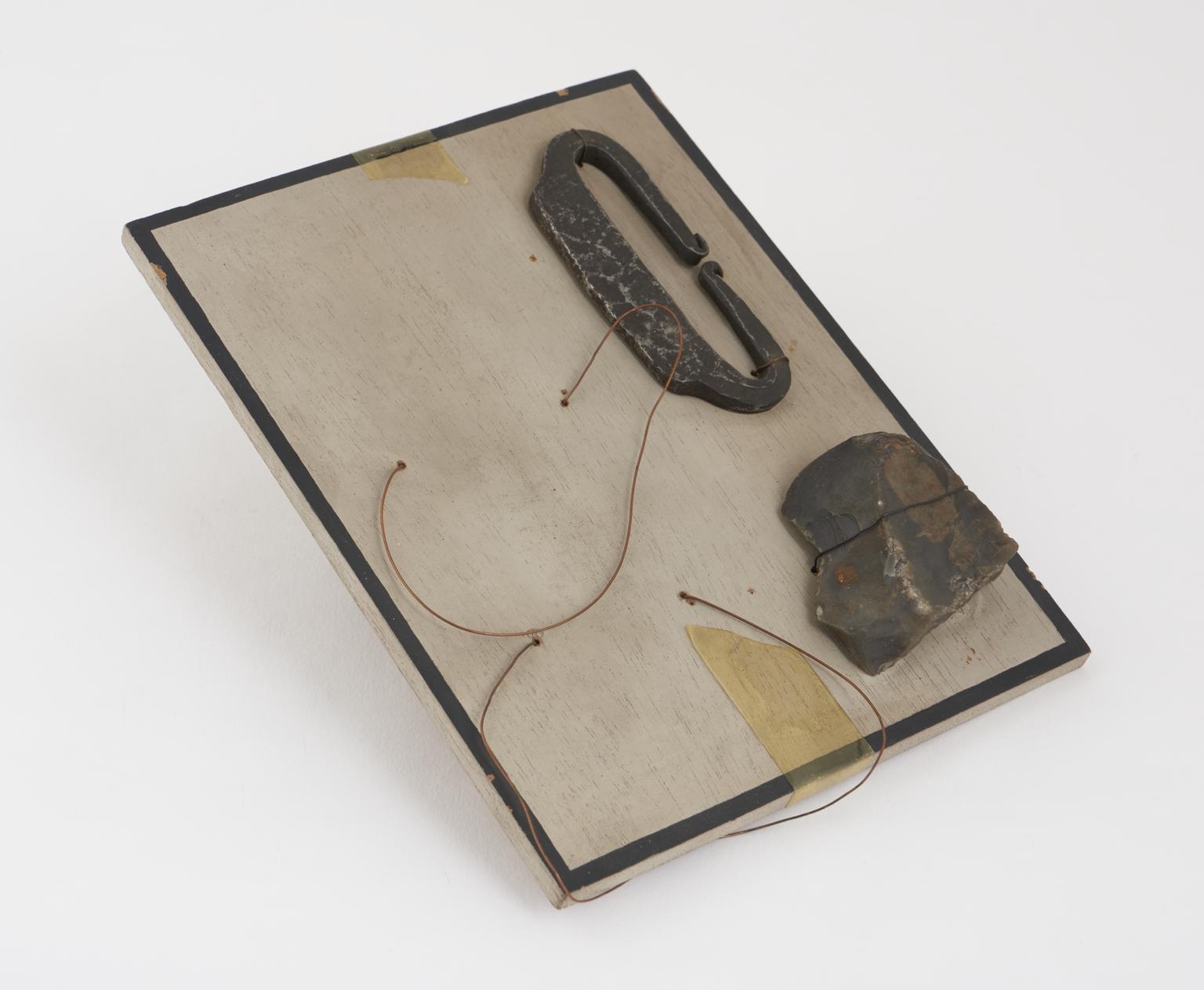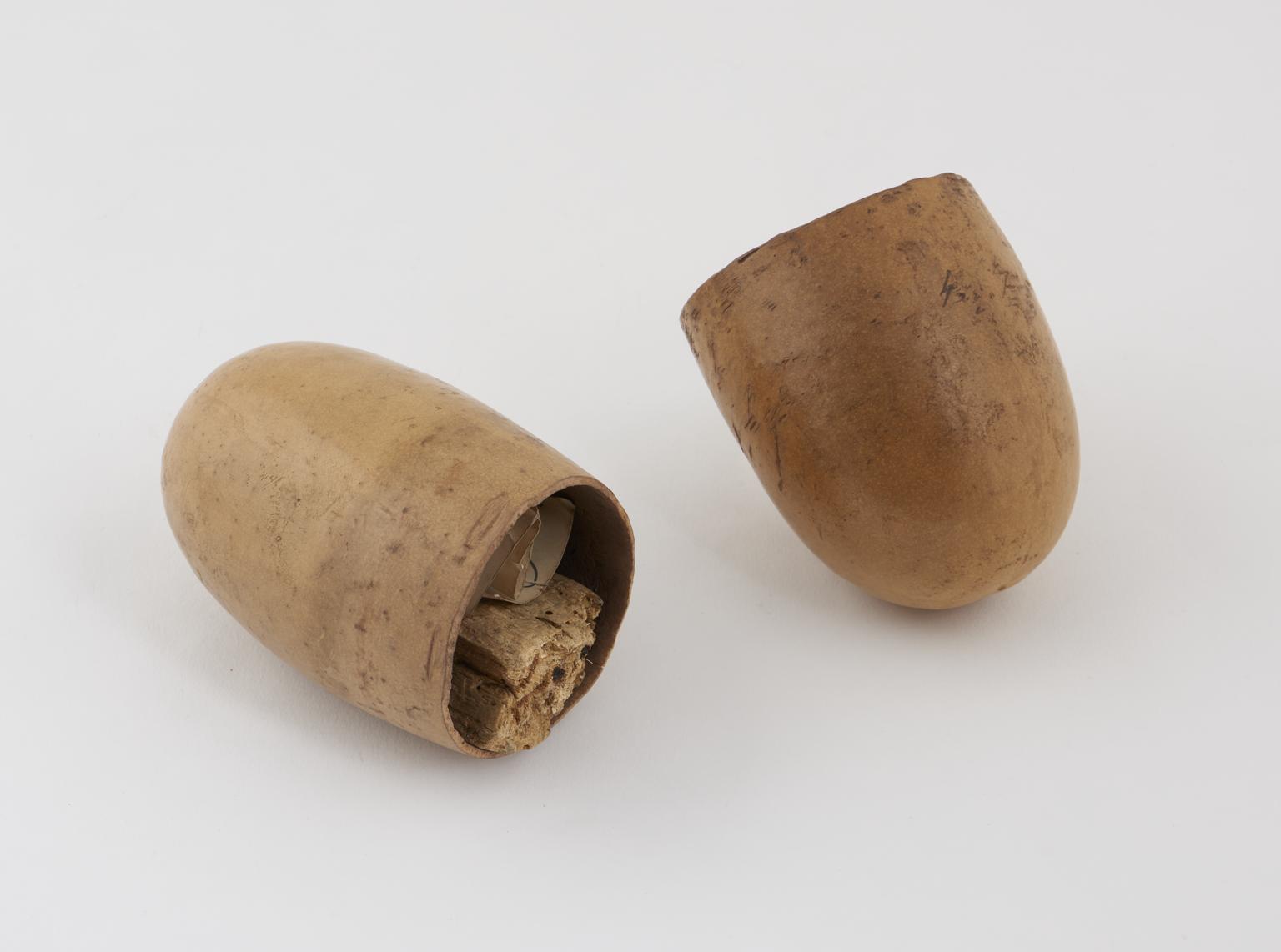
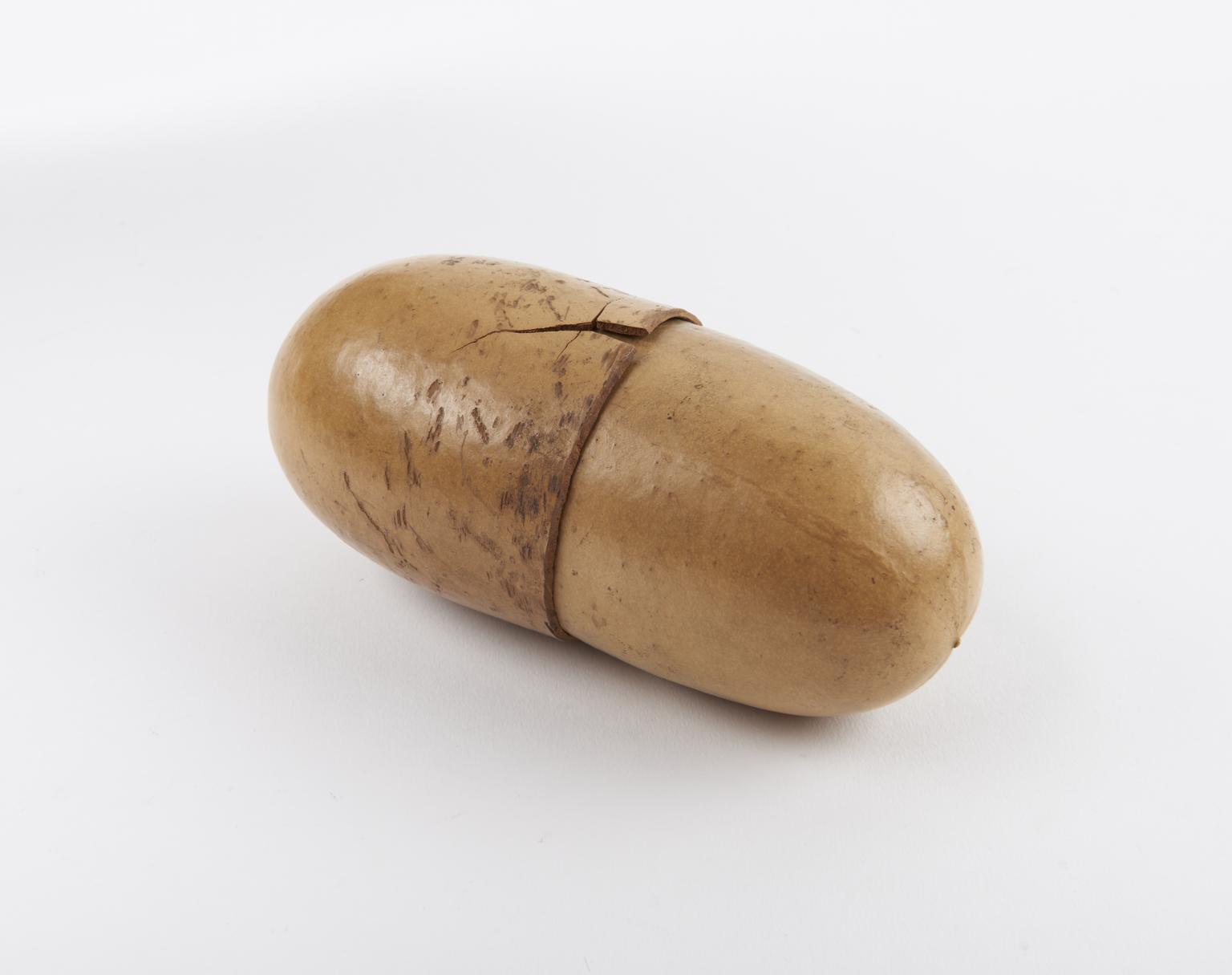
Tinder-box made from the shells of two half-gourds, West Indies, 1910
Tinder box made from the shells of two half gourds that fit into one another, containing flint, steel, and tinder in form of the pithy flower stem of an agave plant, collected by R. Kislingbury on Saint Lucia, West Indies, Caribbean Sea, in 1910
More
Humans have throughout history used different techniques and tools to create life-sustaining fires. One of the oldest and most widespread methods is by using tinder, flint, and steel. Sharp-edged flints are struck against a fire striker, which causes hot, oxidising metal particles to split off and ignite tinder. Tinder is a fine material with the ability to combust quickly and often consists of amadou made from fungus, plant fibres, or artificial materials like paper strips and petroleum.
A variety of different boxes, bags, and pouches was used to store the kits and to keep the tinder dry. While some were made for domestic use to light hearths, fireplaces, and candles in the home, others, like this one, were designed as pocket versions to start fires on the go.
This object is part of the Bryant and May fire-making collection, which used to be displayed in a private museum within the Bryant and May match-making factory’s offices. The collection comprises around 1200 objects, dating from the Stone Age to the early 20th century that illustrate the variety of tools and techniques humans across the world have used to create fires.
The collection was mostly acquired by the ornithologist and fire-making enthusiast Edward Bidwell and cared for by the collector Miller Christy. Bidwell collected between the late 19th and early 20th century – when Britain's colonial power was at its peak. Tracing the objects’ provenance is therefore difficult and part of the long and problematic history of colonial exploitation.
- Measurements:
-
overall: 165.1 mm
- Materials:
- gourd , steel (metal) , flint and agave plant
- Object Number:
- 1937-682/681/1
- type:
- tinder-box
- Image ©
- The Board of Trustees of the Science Museum