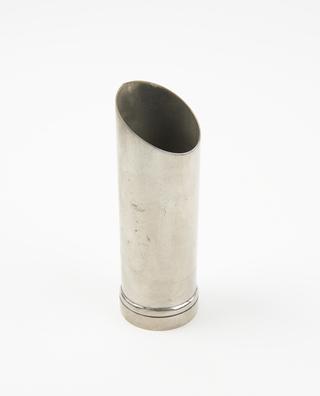
Howells ventilator apparatus prototype
- maker:
- W Watson and Sons Limited


 This image is released under a CC BY-NC-SA 4.0
Licence
This image is released under a CC BY-NC-SA 4.0
Licence
License this image for commercial use at Science and Society Picture Library
LicenseThis image is released under a CC BY-NC-SA 4.0
Licence
License this image for commercial use at Science and Society Picture Library
LicenseThis image is released under a CC BY-NC-SA 4.0
Licence
License this image for commercial use at Science and Society Picture Library
LicenseThis image is released under a CC BY-NC-SA 4.0
Licence
License this image for commercial use at Science and Society Picture Library
LicenseThis image is released under a CC BY-NC-SA 4.0
Licence
License this image for commercial use at Science and Society Picture Library
LicenseThis image is released under a CC BY-NC-SA 4.0
Licence
License this image for commercial use at Science and Society Picture Library
License
Science Museum Group
© The Board of Trustees of the Science Museum
Science Museum Group
© The Board of Trustees of the Science Museum
Science Museum Group
© The Board of Trustees of the Science Museum
Science Museum Group
© The Board of Trustees of the Science Museum
Science Museum Group
© The Board of Trustees of the Science Museum
Science Museum Group
© The Board of Trustees of the Science Museum
Howells ventilator prototype, developed by Thomas H Howells at General Barnet Hospital, London, 1950-1960
During his time at Barnet General Hospital, Dr Thomas H Howells developed a series of prototypes to develop a ventilator to use during general anaesthesia - a medication that puts a patient into a state of controlled unconsciousness. Using positive pressure to deliver air into the lungs either through a face mask or through a tube in a person's throat, Howells' design meant that the volume of air could be easily adjusted. At the time, ventilation machines were being slowly introduced as a tool of the anaesthetist.
Howells wanted to make a ventilator that was cheaper to make, lighter and more portable than other examples on the market. He was inspired by a consultant at Barnet General Hospital, James Rochford, who had designed an electronic ventilator for use in intensive care. Howells' design was a non-electric machine using the pressure of the anaesthetic gas mixture to power the machine. W Watsons & Sons Ltd went on the make the machine and advertised in medical journals and press.
Details
Related Objects
Case for Clover portable ether inhaler
Croft's mouth gag
Ether bottle graduated in grams and ounces
Portable apparatus for continuous administration of Pentothal