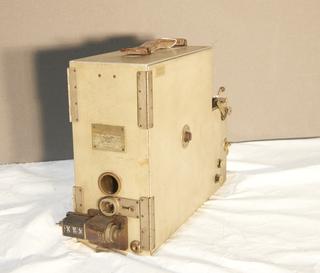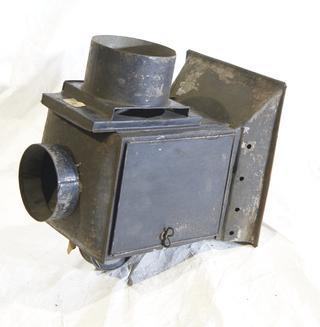
Pan-16 camera
- Made:
- 1960s in Lancashire


 This image is released under a CC BY-NC-SA 4.0
Licence
License this image for commercial use at Science and Society Picture Library
LicenseThis image is released under a CC BY-NC-SA 4.0
Licence
License this image for commercial use at Science and Society Picture Library
LicenseThis image is released under a CC BY-NC-SA 4.0
Licence
License this image for commercial use at Science and Society Picture Library
LicenseThis image is released under a CC BY-NC-SA 4.0
Licence
License this image for commercial use at Science and Society Picture Library
LicenseThis image is released under a CC BY-NC-SA 4.0
Licence
License this image for commercial use at Science and Society Picture Library
LicenseThis image is released under a CC BY-NC-SA 4.0
Licence
License this image for commercial use at Science and Society Picture Library
LicenseThis image is released under a CC BY-NC-SA 4.0
Licence
License this image for commercial use at Science and Society Picture Library
License
Science Museum Group
© The Board of Trustees of the Science Museum
Science Museum Group
© The Board of Trustees of the Science Museum
Science Museum Group
© The Board of Trustees of the Science Museum
Science Museum Group
© The Board of Trustees of the Science Museum
Science Museum Group
© The Board of Trustees of the Science Museum
Science Museum Group
© The Board of Trustees of the Science Museum
Science Museum Group
© The Board of Trustees of the Science Museum
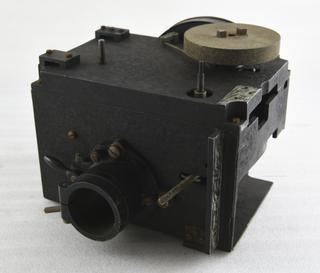
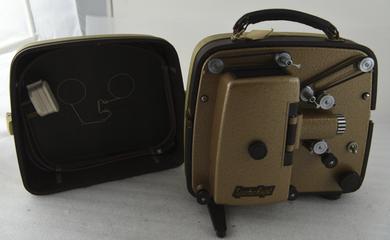
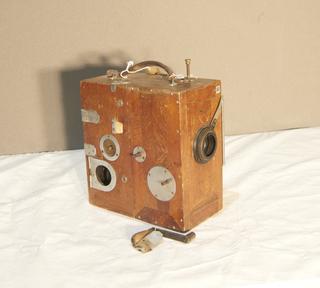
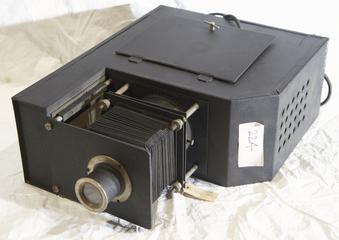
Pan-16 camera. Part of the Widescreen Association Collection.
Very few Panascope cameras or projectors were available to British amateur film makers, so some people decided to try to build their own equipment to replicate the effect of Panascope. First itterations were called Pan-8 as they used the 'double run' version of 16mm film having twice as many perforations than in it snofmral form. However, a later version was Pan-16 which used a double claw system to engage each perforation twice independently to ensure the correct pull down to expose half the frame each time.
Details
- Category:
- Cinematography
- Object Number:
- 2024-416
- Materials:
- glass and metal (unknown)
- type:
- cine camera
- credit:
- Widescreen Association