Barcode labelling for tracking COVID-19 tests
 This image is released under a CC BY-NC-SA 4.0
Licence
This image is released under a CC BY-NC-SA 4.0
Licence
License this image for commercial use at Science and Society Picture Library
License
Science Museum Group
© The Board of Trustees of the Science Museum
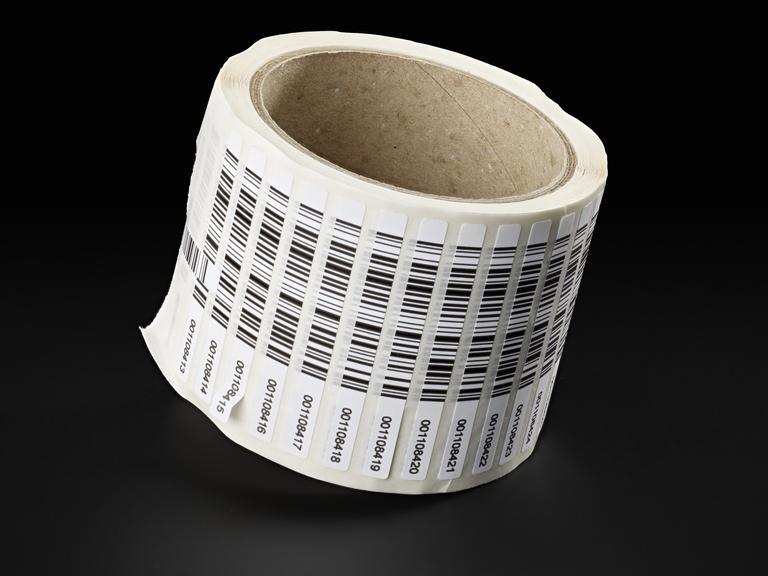
Roll of specimen bar code strips used to identify samples and well plates used at the Cambridge COVID-19 Test Centre, based at the Anne McLaren Building on the University of Cambridge Biomedical Campus, April 2020 - April 2021
Barcodes are essential for tracking COVID-19 samples through the process. Those carrying out the tests do not know who the samples belong to. When someone takes a test, they register the barcode on the kit they receive which anonymises them. Additional barcodes are added during the testing process.
Delivered in just five weeks rather than the normal six month fit out for a testing laboratory the Cambridge COVID-19 Test Centre tested 3 million samples during its year of operation. 14 robots speeded up the testing rate by six times. The Test Centre was originally a collaboration between the University of Cambridge, AstraZeneca and GSK, staffed by volunteers from the three sites, many of leaving their studies or roles for a few months, or taking on additional jobs. Volunteers worked in shift patterns in the same role to prevent the spread of COVID-19. In June 2020, the testing centre transition to a directly employed workforce, rather than relying on volunteers. The laboratory was run by Charles River Laboratories with 200 staff.
Details
- Category:
- Public Health & Hygiene
- Object Number:
- 2022-72/94
- Materials:
- paper
- Measurements:
-
overall: 68 mm x 100 mm
- type:
- barcode
Related Objects

badge produced by the George House Trust

Cotton 'Hero' face cover made by English Fine Cottons