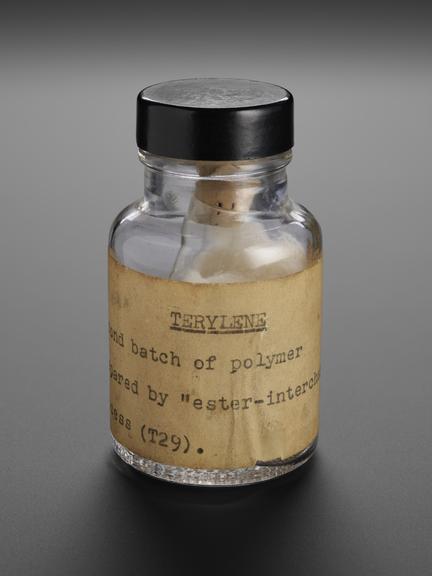
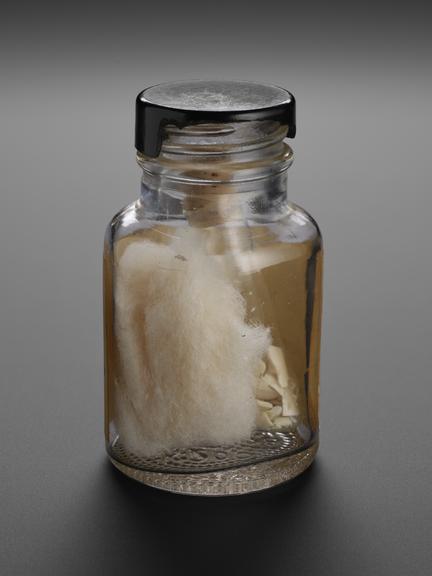
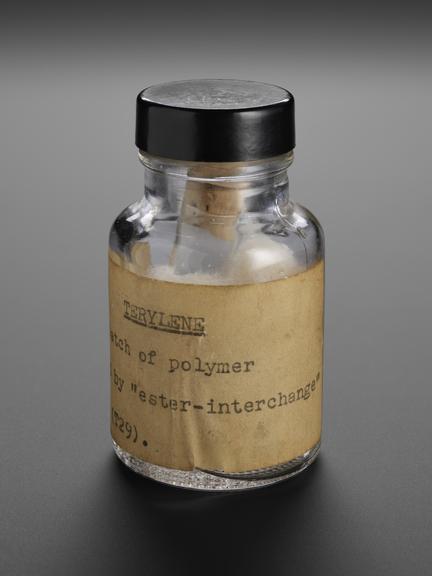
Sample of Terylene
- Made:
- 1940-1947 in Manchester



 This image is released under a CC BY-NC-SA 4.0
Licence
This image is released under a CC BY-NC-SA 4.0
Licence
License this image for commercial use at Science and Society Picture Library
LicenseThis image is released under a CC BY-NC-SA 4.0
Licence
License this image for commercial use at Science and Society Picture Library
LicenseThis image is released under a CC BY-NC-SA 4.0
Licence
License this image for commercial use at Science and Society Picture Library
LicenseThis image is released under a CC BY-NC-SA 4.0
Licence
License this image for commercial use at Science and Society Picture Library
License
Science Museum Group
© The Board of Trustees of the Science Museum
Science Museum Group
© The Board of Trustees of the Science Museum
Science Museum Group
© The Board of Trustees of the Science Museum
Science Museum Group
© The Board of Trustees of the Science Museum
Sample of Terylene, described on the label as 'second batch of polymer prepared by “ester-interchange” process', prepared in the Calico Printers Association laboratory on Oxford Road, Manchester, 1940-1947. Sample is contained within a glass vial, which is held inside a glass bottle padded with cotton wool.
The first fully synthetic fibre was Nylon, developed in America in the 1930s. Nylon quickly became a successful silk replacement. Manchester was not left behind. In 1941, scientists at the Calico Printers Association , Manchester, developed Terylene. The first polyester fibre.
Before synthetic textiles, fabrics were made from natural fibres such as cotton, wool and silk. They were generally expensive and lacked versatility. Terylene quickly became popular as it was adaptable, hard-wearing, quick-drying and crease-resistant.
The development of artificial fibres led to a massive change in the textiles industry globally. Britain, once a leader in natural fibre processing, became a significant player in the synthetic fibres industry at a time when there was a need to diversify and remain competitive with other growing centres of textile manufacturing worldwide.
Synthetic fibres, like Terylene, are still widely used in textile production today. Once heralded as wonder materials they have left us with a damaging environmental legacy: polluted water supplies and widely dispersed microplastics.
Details
- Category:
- Textile Industry
- Object Number:
- 2023-609
- Materials:
- cotton (fibre), glass, paper (fibre product) and polyester resin
- type:
- sample of terylene
Related Objects

neck tie