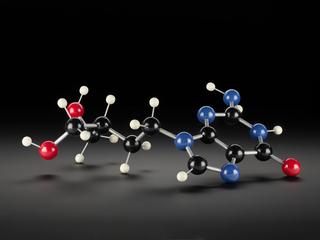
Augmentin tablets


 This image is released under a CC BY-NC-SA 4.0
Licence
This image is released under a CC BY-NC-SA 4.0
Licence
License this image for commercial use at Science and Society Picture Library
LicenseThis image is released under a CC BY-NC-SA 4.0
Licence
License this image for commercial use at Science and Society Picture Library
LicenseThis image is released under a CC BY-NC-SA 4.0
Licence
License this image for commercial use at Science and Society Picture Library
LicenseThis image is released under a CC BY-NC-SA 4.0
Licence
License this image for commercial use at Science and Society Picture Library
License
Science Museum Group
© The Board of Trustees of the Science Museum
Science Museum Group
© The Board of Trustees of the Science Museum
Science Museum Group
© The Board of Trustees of the Science Museum
Science Museum Group
© The Board of Trustees of the Science Museum
9 dispersible tablets of Augmentin in sealed foil packet made by Beecham Research Laboratories, Brentford, England, 1981-1990
Martin Cole was a microbiologist, whose career at Beecham Research Laboratories focused on the hope of developing and using semi-synthetic penicillins, including cloxacillin and amoxicillin. He led the team which first discovered and named olivanic acids and clavulanic acid and then combined the latter with amoxicillin, to produce co-amoxiclav, brand name Augmentin.
In 1957, the team at Beecham Research Laboratories discovered that penicillin grown from mould has 6-aminopenicillanic acid. By tweaking its chemical structure, scientists created medicines to treat a wider range of bacterial infections, with fewer side effects. These are known as semi-synthetic penicillins.
Details
- Category:
- Biotechnology
- Object Number:
- 2025-2162
- Materials:
- foil and materia medica
- Measurements:
-
overall: 5 mm x 110 mm x 110 mm,
- type:
- tablet
Related Objects
Raw wool
Bone saw for use in slaughtering, 20th century
Wooden carcass spreader, 20th century
Fermenter assembly first used by BP on Toprina research