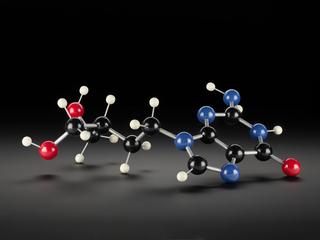
Penbritin tablets


 This image is released under a CC BY-NC-SA 4.0
Licence
This image is released under a CC BY-NC-SA 4.0
Licence
License this image for commercial use at Science and Society Picture Library
LicenseThis image is released under a CC BY-NC-SA 4.0
Licence
License this image for commercial use at Science and Society Picture Library
LicenseThis image is released under a CC BY-NC-SA 4.0
Licence
License this image for commercial use at Science and Society Picture Library
License
Science Museum Group
© The Board of Trustees of the Science Museum
Science Museum Group
© The Board of Trustees of the Science Museum
Science Museum Group
© The Board of Trustees of the Science Museum
Metal container of 100 250 mg Penbritin (ampicillin) capsules, Beecham Research Laboratories, Brentford, England, expiry date 30 November 1982
Penbritin was brand name for one of the semi-synthetic penicillins developed in the late 1950s and early 1960s by Beechams, also known as ampicillin. Effective against a broad range of bacteria including E.coli, streptoccocci, it was 5 to 10 times more effective against some bacteria compared to earlier antibiotics.
In 1957, the team at Beecham Research Laboratories discovered that penicillin grown from mould has 6-aminopenicillanic acid. By tweaking its chemical structure, scientists created medicines to treat a wider range of bacterial infections, with fewer side effects. These are known as semi-synthetic penicillins.
Details
- Category:
- Biotechnology
- Object Number:
- 2025-2183
- Materials:
- metal and materia medica
- Measurements:
-
overall: 35 mm 30 mm,
- type:
- tablet
Related Objects
Raw wool
Bone saw for use in slaughtering, 20th century
Wooden carcass spreader, 20th century
Fermenter assembly first used by BP on Toprina research