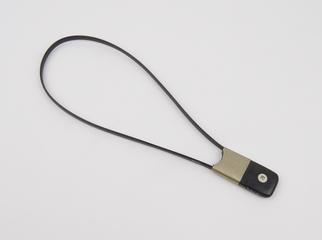
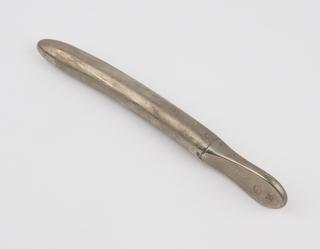
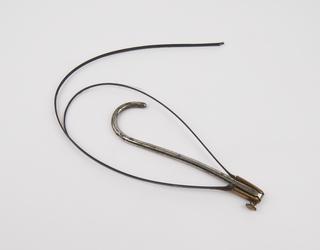
Rapid-i™ cutter, part of system for freezing eggs and embryos during IVF
- Made:
- 2013-2023 in unknown


 This image is released under a CC BY-NC-SA 4.0
Licence
This image is released under a CC BY-NC-SA 4.0
Licence
License this image for commercial use at Science and Society Picture Library
LicenseThis image is released under a CC BY-NC-SA 4.0
Licence
License this image for commercial use at Science and Society Picture Library
License
Science Museum Group
© The Board of Trustees of the Science Museum
Science Museum Group
© The Board of Trustees of the Science Museum
Rapid-i™ cutter, used to open sample straws as part of the Vitrolife Rapid-i™ Vitrification System for the cryopreservation of eggs and embryos during in vitro fertilisation (IVF), made by Millers Forge, 2013-2023
In 2021, 76,000 cycles of IVF were carried out in the UK. Cryopreservation has become an increasingly important part of IVF. Current recommendations mean that fewer embryos are implanted per IVF cycle and often additional viable embryos are frozen for use in future fertility treatment. In 2021, nearly half of all IVF cycles in the UK involved the use of frozen embryos. Egg freezing is also one of the fastest growing fertility treatments in the UK with many people choosing it to increase their fertility options. However, cryopreservation of eggs and embryos also allows for more complicated IVF techniques such as pre-implantation genetic testing, to screen for a range of genetic conditions, and newly developed techniques like mitochondrial donation therapy (MDT) which greatly reduces the risk of mitochondrial disease.
The increase in cryopreservation is partly due to better equipment. This cutter, one part of the Vitrolife Rapid-i™ Vitrification System for the cryopreservation of eggs and embryos, is used to open the sealed Rapid-i sample straws when they are thawed and used. Sealing the straws while they are frozen ensures that the eggs/embryos never come into direct contact with the liquid nitrogen, reducing the risk of contamination and removing the need to sterilise the liquid nitrogen.
Details
- Category:
- Obstetrics, Gynaecology & Contraception
- Object Number:
- 2024-487
- Materials:
- metal (unknown) and plastic (unidentified)
- Measurements:
-
overall: 133 mm x 60 mm x 5 mm,
- type:
- cutter